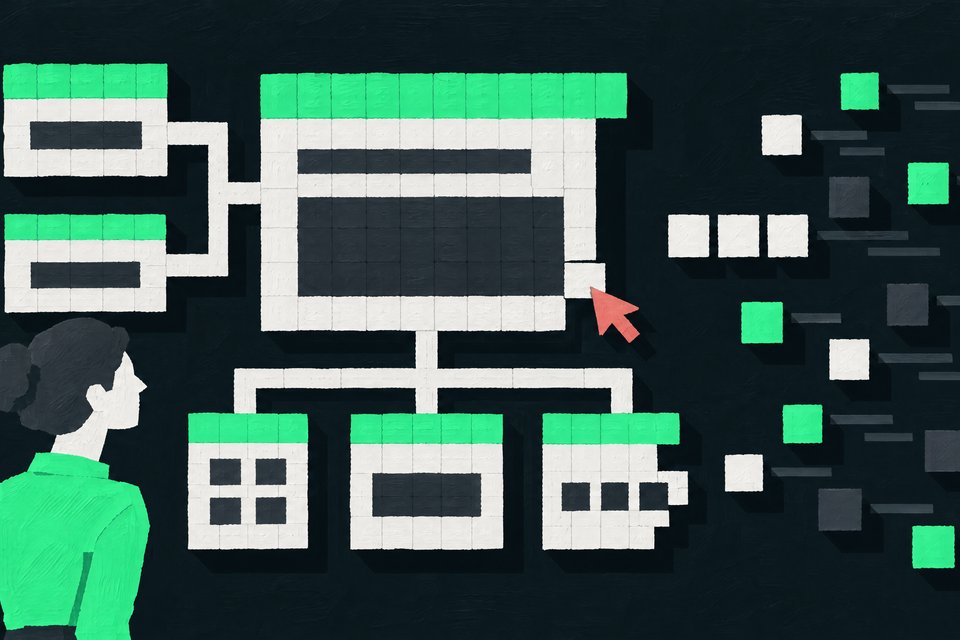
How operations teams use AI, how to do it well, and what it means for your job. Written for people who keep the business running, not people who build models.
MCP connects AI to tools. Orchestrators coordinate agents. Here's the real comparison, the security data, and why production systems need both plus governance.
Model Context Protocol vs AI OrchestratorMCP vs orchestratorwhat is MCP
Vector search, full-text search, pub/sub, transcription, and LLM inference now run on Postgres extensions and local models. Here's the benchmark and cost data.
replace SaaS with postgrespgvector vs pineconepostgres full-text search vs elasticsearch
RE4, Mario 64, and Ocarina of Time decompilers rebuilt source code by hand. Here's what that reveals about the real benefits of owning software vs SaaS.
owning software vs SaaSbenefits of software ownershipSaaS waste statistics
AI persistent memory is durable, external storage for facts and decisions outside the context window. Here's how it works and why internal tools need it.
Broadcom pulled VMware's migration toolkit after price hikes up to 1,050%. Tottenham Hotspur saved 85% and Computershare moved 24,000 VMs. Here's the data.
From 1993 Amiga assembly to 220 billion lines of COBOL, AI now automates the expensive part of modernization: understanding old code. Here's the proof.
AI legacy code modernizationmodernize COBOL with AIAI code migration
Per-check pricing makes buying identity verification look cheap. The IDScan and IDMerit breaches show what that price leaves out. Here is the real math.
cost of building vs buying identity verificationidentity verification SaaS breachKYC build vs buy
A German word explains why subscription software keeps 'improving' its way into being worse and pricier. Here's the mechanism, the cost data, and the fix.
why does saas get worse over timeverschlimmbesserungenshittification
AI coding agents can now write high-performance database code. Here's a practical framework for when to build your own infrastructure vs. buy a managed one.
build vs buy database infrastructureAI coding agents infrastructureRust key-value store AI