VMware Migration Cost Savings: What Companies Are Actually Saving by Leaving
Broadcom pulled VMware's migration toolkit after price hikes up to 1,050%. Tottenham Hotspur saved 85% and Computershare moved 24,000 VMs. Here's the data.

What are companies actually saving by migrating off VMware?
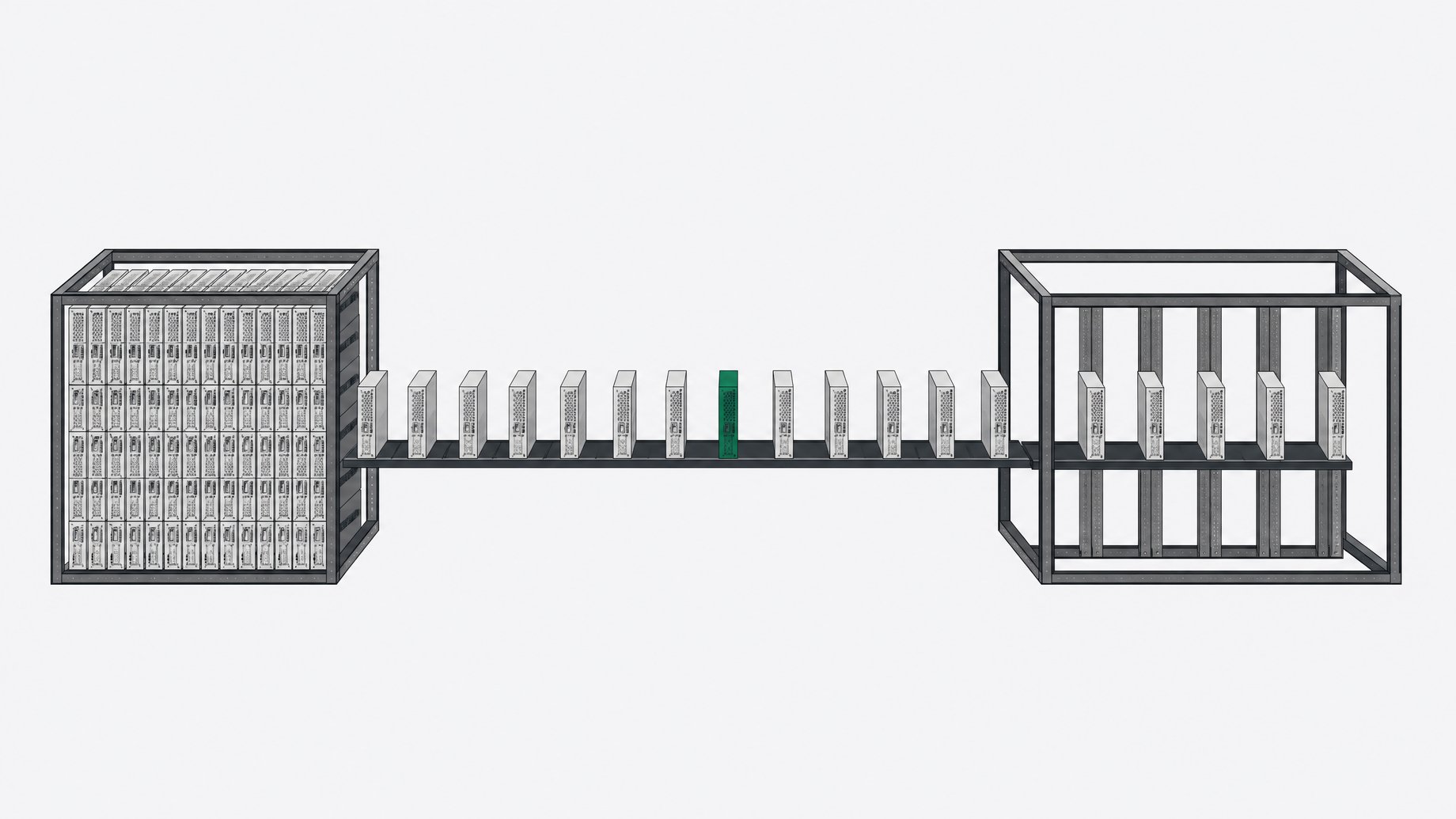
VMware migration saves real money. Tottenham Hotspur cut licensing costs by more than 85% after leaving VMware entirely, and Computershare escaped a 10x to 15x renewal quote by moving 24,000 virtual machines to a new platform in under a year. Those numbers explain why Broadcom just made leaving harder.
TL;DR
- Broadcom restricted public access to the VDDK toolkit without warning on August 25, 2026, removing a tool that backup and migration vendors depend on.
- AT&T said Broadcom proposed a 1,050% price increase, while it estimated that migrating off VMware would cost between $40 million and $50 million.
- A CloudBolt survey found that 86% of organizations are actively reducing their VMware footprint.
- Tottenham Hotspur cut VMware licensing costs by more than 85% by replacing VMware entirely with HPE GreenLake and VM Essentials.
- Computershare migrated 24,000 virtual machines onto Nutanix AHV in less than a year after a renewal quote 10 to 15 times higher than its previous contract.
- Gartner forecasts that 35% of current VMware workloads will move to alternative platforms by 2028, and it advises phased migrations rather than a single cutover.
What happened when Broadcom pulled VDDK without warning?
On August 25, 2026, Broadcom quietly restricted public access to the VMware Virtual Disk Development Kit, the toolkit that nearly every third-party VMware backup and migration tool depends on. No announcement. The public download URLs simply stopped working.
The timing isn't subtle. Customers already paying renewal increases of 300% to 1,500% now find that the one tool letting them leave has vanished overnight. A company that has spent three years raising prices on a captive customer base just removed the exit door's handle.
Why Does VDDK Matter for Leaving VMware?
VDDK is not a nice-to-have. It's the software development kit that lets external tools read and write VMware virtual disk formats, which makes it the load-bearing dependency for backup vendors, disaster recovery products, and any migration path off VMware, including tools that move workloads to KVM-based platforms.
The reason a single removal breaks an entire ecosystem comes down to licensing. VDDK's license does not permit general redistribution. That means:
- No Linux distribution can legally ship it.
- No container image can legally bundle it.
- No backup or migration vendor without a signed redistribution agreement with Broadcom can put it in their installer.
A single download page was, in effect, a hard dependency for an entire third-party software ecosystem. Pull the page, and every vendor without a direct Broadcom agreement is stuck. This is the same trap covered in The C&D Epidemic: when your business depends on someone else's API or toolkit, you're one policy change away from zero.
Is the VDDK removal a pattern rather than an accident in Broadcom's history of squeezing VMware customers?
The VDDK removal isn't an isolated incident. It's the latest entry in a pattern that started the moment Broadcom's $61 billion VMware acquisition closed in November 2023. Since then, Broadcom has ended perpetual licenses, killed free ESXi, restructured its partner program into an invite-only model, and collapsed a wide product catalog into a small number of pricier bundles.
The effect has been steady, compounding pain for customers who once treated VMware as a fixed cost. Contract renewals that used to be routine now arrive with increases of 300% to 1,500%, depending on the customer and the bundle.
What did AT&T's 1,050% price shock look like?
The clearest documented example of what this looks like at scale comes from AT&T's court fight with Broadcom. AT&T said Broadcom proposed a 1,050% price increase on its VMware contract.
AT&T runs roughly 75,000 VMware virtual machines across about 8,600 servers, which is why the company estimated that migrating off VMware entirely would cost between $40 million and $50 million and take years. That estimate is the trap in one sentence: pay the increase, or pay tens of millions to leave, and either way the meter runs while you decide. It's the same calculus behind the shift back toward self-hosting: once a vendor controls your exit costs, fixed costs you own start looking like risk management, not overhead.
How Much Are Companies Saving by Leaving VMware?
AT&T's case is extreme but not unique. A CloudBolt survey of 302 IT decision-makers found that 86% of organizations are actively reducing their VMware footprint, and some enterprises reported cost increases of 400% to 700% following Broadcom's licensing changes. Only 4% have fully migrated off VMware so far, and 85% of IT leaders say they're actively shaping their VMware strategy around expectations of further price increases. Most of the remaining organizations are running phased transitions that take 18 to 24 months, not overnight rip-and-replace projects.
Gartner's research backs the direction of travel. VP Julia Palmer forecasts that 35% of current VMware workloads will migrate to alternative platforms by 2028, driven directly by Broadcom's licensing changes and cost increases. Her caution is worth repeating: a full migration typically takes three or more years, and she counsels against planning to move everything at once.
Meanwhile Broadcom's own numbers show the strategy is working for Broadcom, even as customers churn. The company's software segment revenue grew 26% year-over-year to $27 billion in fiscal 2025, largely on VMware Cloud Foundation adoption among the customers who stayed. Fewer customers, more revenue per customer. That's the business model in one line.
How did Tottenham Hotspur achieve 85% licensing savings?
The clearest public proof that leaving pays off comes from English football. Tottenham Hotspur replaced VMware entirely with HPE GreenLake and VM Essentials as part of a datacenter refresh, and CTO Rob Pickering said the savings were the primary driver.
"Savings is a big part of the reason," Pickering told The Register. "It's a significant amount, north of 85 percent," less than the club was paying for VMware licensing. Pickering was direct about the cause: "The issues with the Broadcom takeover of VMware are well known in terms of the commercial changes to their structure."
That's not a small optimization. That's a club walking away from the majority of a line item because the vendor changed the deal.
How did Computershare move 24,000 VMs to Nutanix?
Tottenham's numbers are dramatic for a single organization. Computershare's are dramatic for scale. CTO Kevin O'Connor received a VMware renewal quote 10 to 15 times higher than the company's previous contract, and rather than absorb it, Computershare migrated 24,000 virtual machines onto Nutanix AHV in less than a year.
That's one of the largest documented VMware exits on record, and it happened fast, not over the multi-year timelines Gartner describes as typical. It shows that scale isn't automatically an excuse for inertia. A big enough price shock moves even a big enough estate.
What does this mean for anyone renting critical infrastructure?
Strip away the VMware specifics and the lesson generalizes: when you rent critical infrastructure from a single vendor, that vendor controls your exit costs, not just your run rate. Broadcom didn't just raise prices. It removed a tool that made leaving cheaper, at the exact moment more customers wanted to leave.
This is the same dynamic covered in The Hidden Toll of SaaS Lock-In: the real cost of a rented platform isn't the invoice, it's what happens when you try to stop paying it. The organizations doing best right now, Tottenham Hotspur and Computershare among them, are the ones that treated infrastructure ownership as a hedge rather than an afterthought. That same logic is why platforms like Remy are built around giving teams software they actually own, rather than a subscription someone else can reprice at will.
How Are Companies Fighting Back Against the VDDK Lockout?
None of this leaves customers without options, even after the VDDK removal. The available responses fall into a few categories:
- Archived toolkit copies. Some vendors and integrators had already downloaded VDDK before the access change and are working from cached versions while Broadcom's intent becomes clear.
- Storage-assisted migration. Tools that read virtual disks at the storage layer, bypassing VDDK entirely, are becoming the practical workaround for organizations without a signed Broadcom redistribution agreement.
- Phased modernization. Gartner's guidance is to migrate workloads in stages over multiple years rather than attempt a single cutover, which matches what the CloudBolt survey shows most enterprises are actually doing.
- Legal and contractual pushback. AT&T's public dispute over its 1,050% increase shows large customers are willing to fight pricing terms in court rather than simply pay or migrate.
None of these moves are fast or free. But Tottenham Hotspur and Computershare prove the other side of the ledger: an 85% cost reduction and a 24,000-VM migration completed in under a year aren't hypothetical outcomes. They already happened. For any enterprise still sitting on a VMware renewal, the math has stopped being close.
Frequently Asked Questions
How much can companies save by migrating off VMware?
Tottenham Hotspur reported licensing cost savings of more than 85% after replacing VMware with HPE GreenLake and VM Essentials, citing Broadcom's pricing changes as the driver.
What is VDDK and why did Broadcom removing it matter?
VDDK, the Virtual Disk Development Kit, is the toolkit nearly every third-party VMware backup and migration tool relies on to read and write VMware disk formats. Broadcom pulled public access to it in August 2026 without explanation, and its non-redistributable license means no vendor can legally mirror it, making the removal a single point of failure for the whole migration ecosystem.
How large was AT&T's proposed VMware price increase?
AT&T said Broadcom proposed a 1,050% price increase on its VMware licensing and estimated it would cost $40 million to $50 million to migrate off VMware entirely, across roughly 75,000 virtual machines.
How long does a full VMware migration typically take?
Gartner research VP Julia Palmer says a full migration usually takes three or more years, and most surveyed organizations are running phased transitions over 18 to 24 months rather than a single cutover.
How many VMware customers are actually leaving the platform?
A CloudBolt survey found 86% of organizations are actively reducing their VMware footprint, though only 4% have fully migrated off so far. Gartner forecasts 35% of current VMware workloads will move to alternative platforms by 2028.
How we source, write, and correct our articles. Editorial standards