HydraFusion vs OpenRouter: Multi-Model LLM Orchestration Explained
How multi-model LLM orchestration works, why HydraFusion and OpenRouter both beat single-model baselines, and whether to rent a gateway or build one.

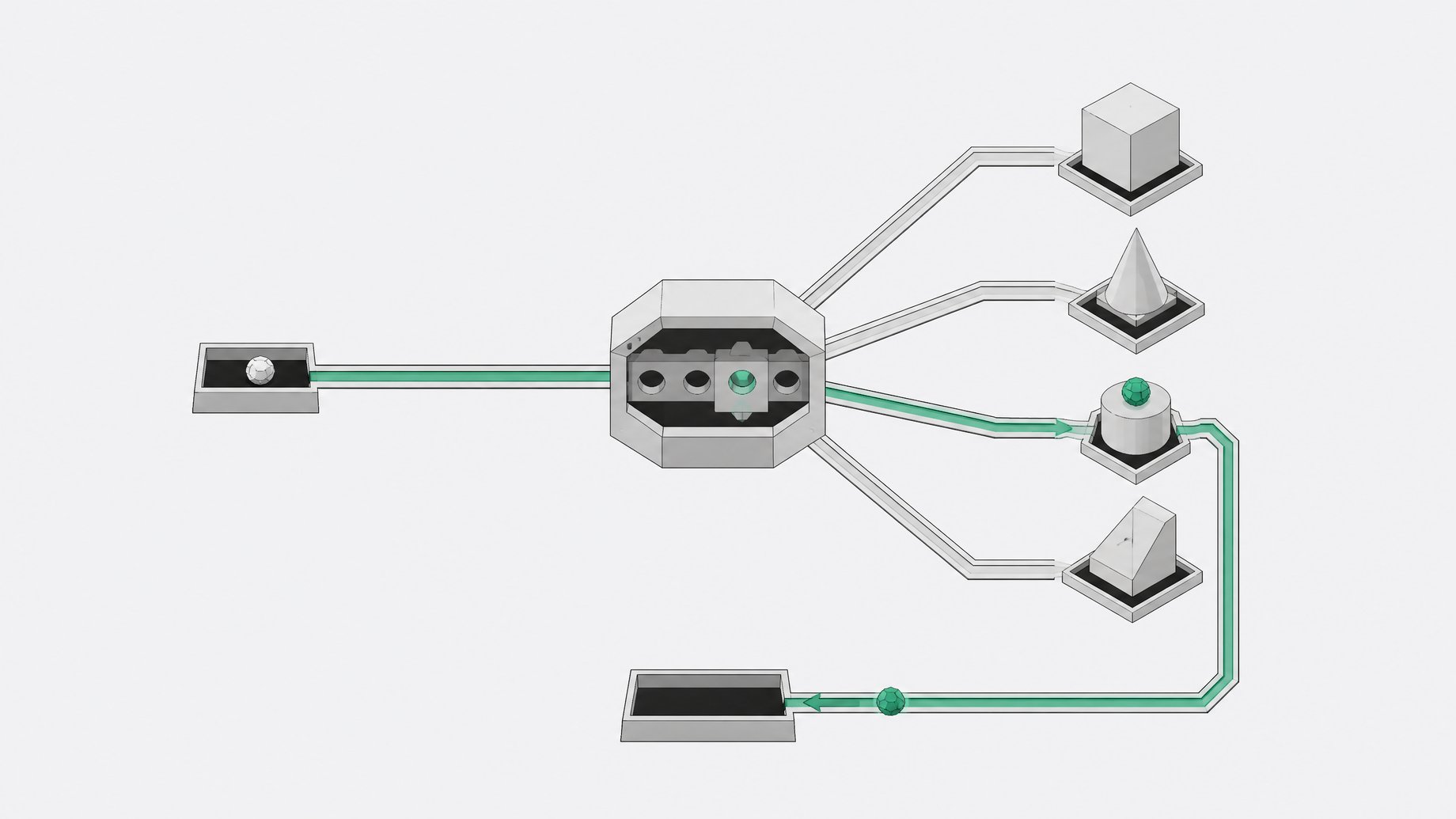
What is multi-model LLM orchestration, and how do HydraFusion and OpenRouter compare?
Multi model LLM orchestration is the practice of routing each request to whichever model or provider handles it best, on cost or quality, instead of sending every request to one fixed model. Two systems now prove this works at production scale: GitHub's HydraFusion and OpenRouter. Both beat single-frontier-model baselines. Neither requires you to pick one AI vendor and live with it.
TL;DR
- Multi-model orchestration cuts costs and improves quality compared with sending every request to a single frontier model.
- OpenRouter's usage analysis found that reasoning-optimized models now account for more than half of all tokens routed.
- GitHub's HydraFusion cut estimated cost by up to 67% versus Claude Opus 5 on TerminalBench 2.1 while improving verified task quality.
- OpenRouter is a rented gateway with broad model choice and a 5.5% fee, while HydraFusion is closed and non-configurable orchestration embedded in GitHub's product.
- Self-hosting a router like LiteLLM beats managed gateway pricing once model spend passes roughly $3,600 a month at about $200 in infrastructure cost.
- A central gateway also makes shadow AI visible, because every model call runs through one place you can log and audit.
What question should everyone building with AI now ask?
For two years the default question was "which model should I use." That question is dying. The better question is "which model should answer this specific request." A one-line refactor doesn't need the same model as a multi-file architecture decision. A support ticket triage doesn't need the same model as a legal contract summary. Treating every request identically wastes money on easy ones and risks quality on hard ones.
This is the premise behind multi-agent ecosystems: you don't need one perfect model, you need a router, a few specialists, and a plan for when they fail. HydraFusion and OpenRouter are two very different, very concrete answers to how you build that router.
What does multi-model orchestration actually mean?
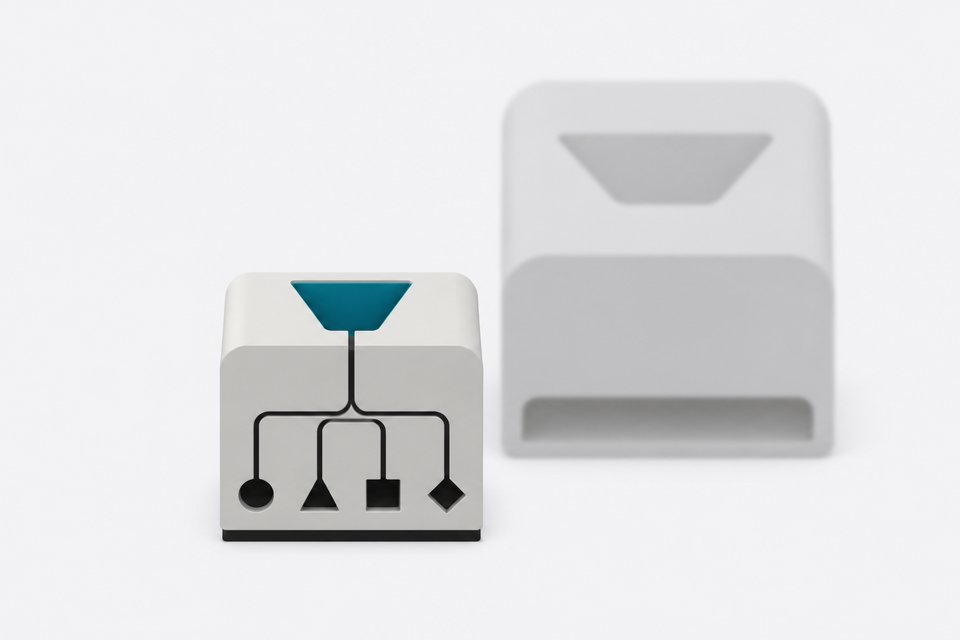
OpenRouter frames its own routing as two separate decisions running independently: model selection and provider selection. That split matters. A router has to decide roughly four things:
- Model selection. Which model family and size best fits this task's complexity and quality bar.
- Provider selection. Which hosting provider serves that model cheapest and most reliably right now.
- Load balancing. How to spread traffic across providers so no single one becomes a bottleneck or single point of failure.
- Failover. What happens when the chosen provider is down, slow, or rate-limited, and how the request gets rerouted without the caller noticing.
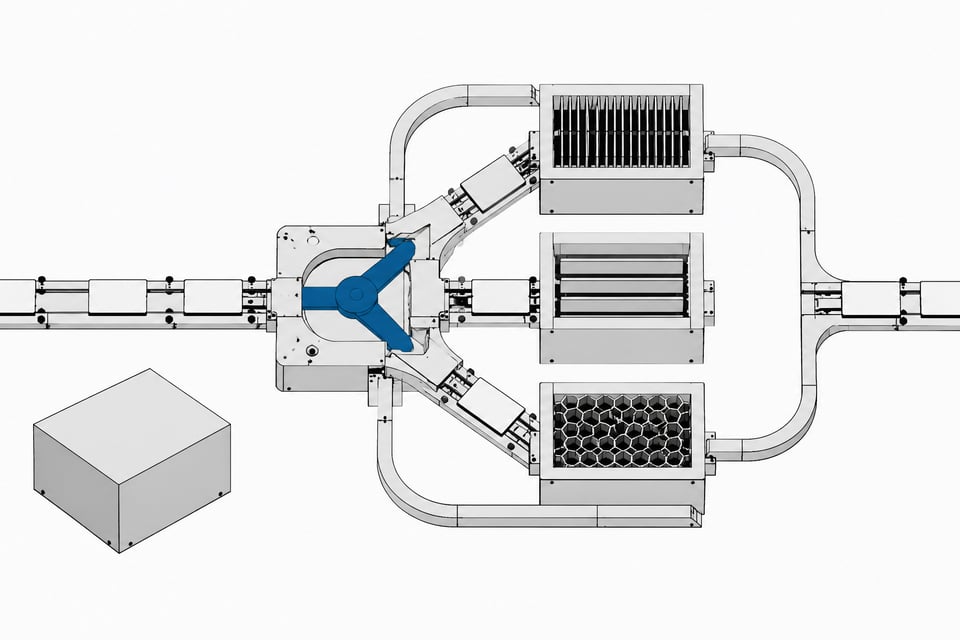
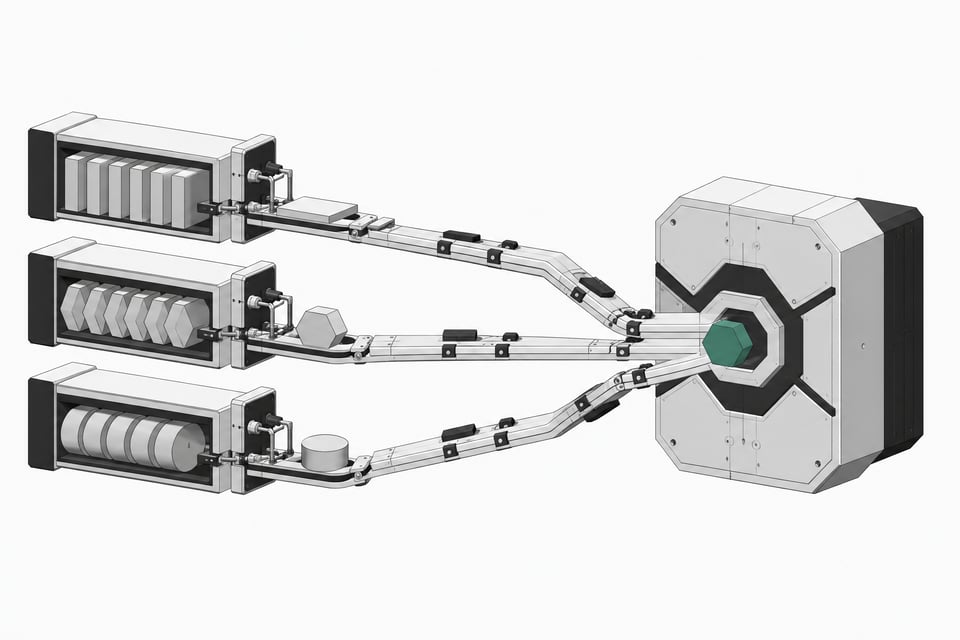
Routing is not the same as full orchestration. Routing picks one model per request. Orchestration can chain models together: a cheap model drafts, a stronger model checks the draft, and only escalates to the most expensive model if the check fails. HydraFusion is built around that distinction explicitly.
How does OpenRouter work as a managed multi-model gateway?
OpenRouter sits in front of more than 400 models across 70-plus providers behind a single OpenAI-compatible API endpoint. By default it sends each request to the cheapest reliable provider, using an inverse-square price weighting that favors cheap, stable options without chasing the single lowest price at the cost of reliability. Its Auto Router goes further, picking a model per prompt using aggregate seven-day trailing market spend data from OpenRouter's own user base rather than a static benchmark, and it charges no extra fee for that selection beyond the underlying model's standard rate.
The scale is real: OpenRouter says it processes 100 trillion tokens a month across the platform. Its own analysis of that usage, a 100-trillion-token "State of AI" study, found open-weight models grew from a negligible base to roughly a third of total token volume by late 2025, and that reasoning-optimized models now account for more than half of all tokens routed. That's the strongest evidence available that no single model or vendor dominates real workloads. If usage itself is this fragmented, betting your whole stack on one vendor is a bet against the data.
The catch: OpenRouter is a rented layer. You call it, you don't own it. It charges a 5.5% platform fee on pay-as-you-go credit purchases. That's a fair price for not running your own infrastructure, but it's still a subscription-shaped dependency on somebody else's gateway.
How does HydraFusion build orchestration into the product?
GitHub's Project HydraFusion, a research preview announced in September 2026, takes a different approach: it embeds orchestration logic directly inside a vendor product rather than exposing it as an independent layer you call. HydraFusion chooses among three execution patterns per task:
- Single. One model handles the task alone, used when the task is simple enough that added review would just add cost.
- Cascade. A cheaper model attempts the task first, escalating to a stronger model only if needed.
- Critique. A second model reviews or challenges the first model's output before it's accepted.
HydraFusion picks the least complex pattern expected to meet the quality bar, rather than defaulting to the most expensive option every time. In controlled offline evaluations, that adaptive choice paid off. On TerminalBench 2.1, HydraFusion improved verified task quality by 4.9 percentage points at 67% lower estimated cost compared to Claude Opus 5 alone. On DeepSWE it landed within 1.5 points of Opus 5 at 36% lower cost, and on CheckpointBench, GitHub's internal real-session benchmark, it came within 0.1 points at 65% lower cost. These aren't marginal savings. They're evidence that orchestration, done well, beats using the single best frontier model outright, on both axes at once.
The difference from OpenRouter is architectural. HydraFusion isn't something you point your own traffic at. It's logic GitHub owns and ships inside its own product. You benefit from it as a Copilot user, but you don't control it, extend it, or point it at a different set of models.
How do HydraFusion and OpenRouter compare side by side?
The two systems answer the same underlying problem from opposite ends of the ownership spectrum. OpenRouter is a gateway you rent and call, with visible pricing, broad model choice, and zero infrastructure to run yourself, but the routing logic and provider relationships belong to OpenRouter, not you. HydraFusion is orchestration logic embedded in a vendor's product, with strong published results, but it's closed, non-configurable, and only reachable through GitHub's own surface. If you need to swap in a different model family, add your own compliance filter, or route traffic to a self-hosted open-weight model for data residency reasons, OpenRouter gives you an API to configure. HydraFusion gives you nothing to configure at all; you get what GitHub decided to ship.
Neither is "self-owned" in the strict sense. Both are rented, one as an infrastructure layer, one as baked-in product behavior. The real ownership option sits a step further out.
Why does this matter beyond coding assistants?
The build-vs-buy math here isn't unique to coding tools. Amazon Bedrock's Intelligent Prompt Routing, generally available since April 2025, dynamically routes each request between two models in the same family based on predicted quality and cost; independent hands-on testing found roughly 65% cost savings on a mixed workload of simple and complex queries. Academic work backs the same thesis at the root: RouteLLM, from UC Berkeley and LMSYS, trained a router on human preference data and cut costs by more than 85% on MT Bench versus using GPT-4 alone while keeping about 95% of GPT-4's quality. Cascade and critique patterns, market-weighted auto routing, preference-trained routers: different mechanisms, same underlying finding. Smart routing beats a single frontier model on cost without giving up much quality, and often gives up none.
For teams that want to own this layer instead of renting it, LiteLLM is the open-source alternative: a self-hosted gateway supporting 100-plus providers behind one OpenAI-compatible endpoint, at the cost of running your own PostgreSQL, Redis, and Docker stack. The breakeven is concrete. At around $200 a month in infrastructure cost, LiteLLM gets cheaper than a managed gateway like OpenRouter once model spend passes roughly $3,600 a month; at $500 a month in infra, that crossover moves to about $9,100 a month. Below those thresholds, renting is cheaper. Above them, self-hosting pays for itself, and every dollar you save compounds as spend grows. That crossover point is the practical version of the hidden markup argument: frontier API pricing carries a real markup over raw compute, and routing is one of the few levers that closes that gap without changing what the model does.
Can orchestration act as a check on shadow AI?
There's a governance angle that's easy to miss. A centralized router or gateway, whether rented or self-hosted, is also a chokepoint you can log and audit. PagerDuty's Shadow AI Survey found 66% of office professionals say they've used an AI tool at work they believed wasn't approved. That's a visibility problem as much as a policy problem: if every model call in your org runs through one gateway, you know what's being called, by whom, and at what cost, even if you never restrict which models people can reach. Orchestration isn't just a cost optimization. It's the infrastructure that makes shadow AI visible instead of invisible.
Should you rent or build a multi-model router?
The decision isn't rent-versus-build in the abstract. It's a spend-and-control calculation:
- Low, unpredictable spend, no compliance constraints. Rent a managed gateway like OpenRouter. The 5.5% fee buys you zero ops burden and instant access to 400-plus models.
- Spend consistently above roughly $3,600 to $9,100 a month. Self-host with LiteLLM or a similar open-source router. The infra cost pays for itself and you keep full data residency.
- Coding-specific workloads inside a vendor tool you already pay for. Vendor-embedded orchestration like HydraFusion may already be doing the cascade-and-critique work for you, no configuration required.
- Regulatory or data-residency requirements. Self-hosted routing is close to mandatory, since a managed gateway means your prompts transit a third party's infrastructure by design.
| Ownership | Model/provider choice | Ops burden | Cost efficiency at high spend | Configurable routing logic | |
|---|---|---|---|---|---|
| OpenRouter (managed gateway)low, unpredictable spend with no infra team | Low | High | Low | Low | Yes |
| HydraFusion (vendor-embedded)coding workloads already inside GitHub Copilot | Low | Low | Low | Medium | No |
| RecommendedLiteLLM (self-hosted)spend consistently above ~$3,600-$9,100/mo or data residency needs | High | High | High | High | Yes |
The throughline is the same one this publication keeps coming back to: whichever layer you pick, you should be able to swap the model underneath it without swapping your whole stack. That's what a router gets you that a single-vendor contract never will, and it's the same principle behind reclaiming your dev cycle from tool sprawl you don't control. Products like Remy exist for teams that want that ownership without building the gateway from scratch. Pick a model, not a marriage.
Frequently Asked Questions
What is multi-model LLM orchestration?
It's the practice of routing individual requests to whichever model or provider best fits that request's cost and quality needs, instead of sending every request to one fixed model. It includes model selection, provider selection, load balancing, and failover.
Is OpenRouter the same thing as HydraFusion?
No. OpenRouter is an independent gateway you call via API across 400-plus models and 70-plus providers, with routing logic you can inspect and configure. HydraFusion is orchestration logic GitHub built directly into its own product, choosing between Single, Cascade, and Critique execution patterns per task, with no external API to reconfigure it.
Does multi-model routing actually save money without hurting quality?
Independent results say yes. HydraFusion cut estimated cost by 36-67% versus Claude Opus 5 alone while matching or beating its quality across three benchmarks. RouteLLM cut cost by over 85% on MT Bench versus GPT-4 alone while retaining about 95% of GPT-4's quality. Amazon Bedrock's routing showed roughly 65% savings on a mixed real-world workload.
Should we rent a gateway like OpenRouter or self-host our own router?
It comes down to monthly model spend. Below roughly $3,600 to $9,100 a month, a managed gateway like OpenRouter is cheaper once you account for its 5.5% platform fee. Above that threshold, a self-hosted option like LiteLLM pays for its own infrastructure cost and gives you full data control.
How does orchestration help with shadow AI governance?
Centralizing model calls through one gateway or router, rented or self-hosted, gives you visibility into what employees are actually calling and at what cost. That matters because 66% of office professionals report using AI tools their employer hasn't approved.
How we source, write, and correct our articles. Editorial standards