5 SaaS Tools You Can Replace With Open-Source Postgres and Local AI
Vector search, full-text search, pub/sub, transcription, and a chunk of your LLM bill can now run on a database you already own and a model you already have installed.

- 01Postgres with pgvector can handle significantly higher query throughput than managed vector databases like Pinecone.
- 02Native Postgres full-text search eliminates the need for expensive external search tools like Algolia for most workloads.
- 03Whisper provides local, offline transcription that matches cloud services in accuracy while keeping sensitive data secure.
- 04Enterprise AI inference is rapidly moving on-premises, driven primarily by security and compliance rather than cost.
- 05Local LLM inference reaches cost parity with cloud APIs only at substantial volume, such as 50 million tokens a day.
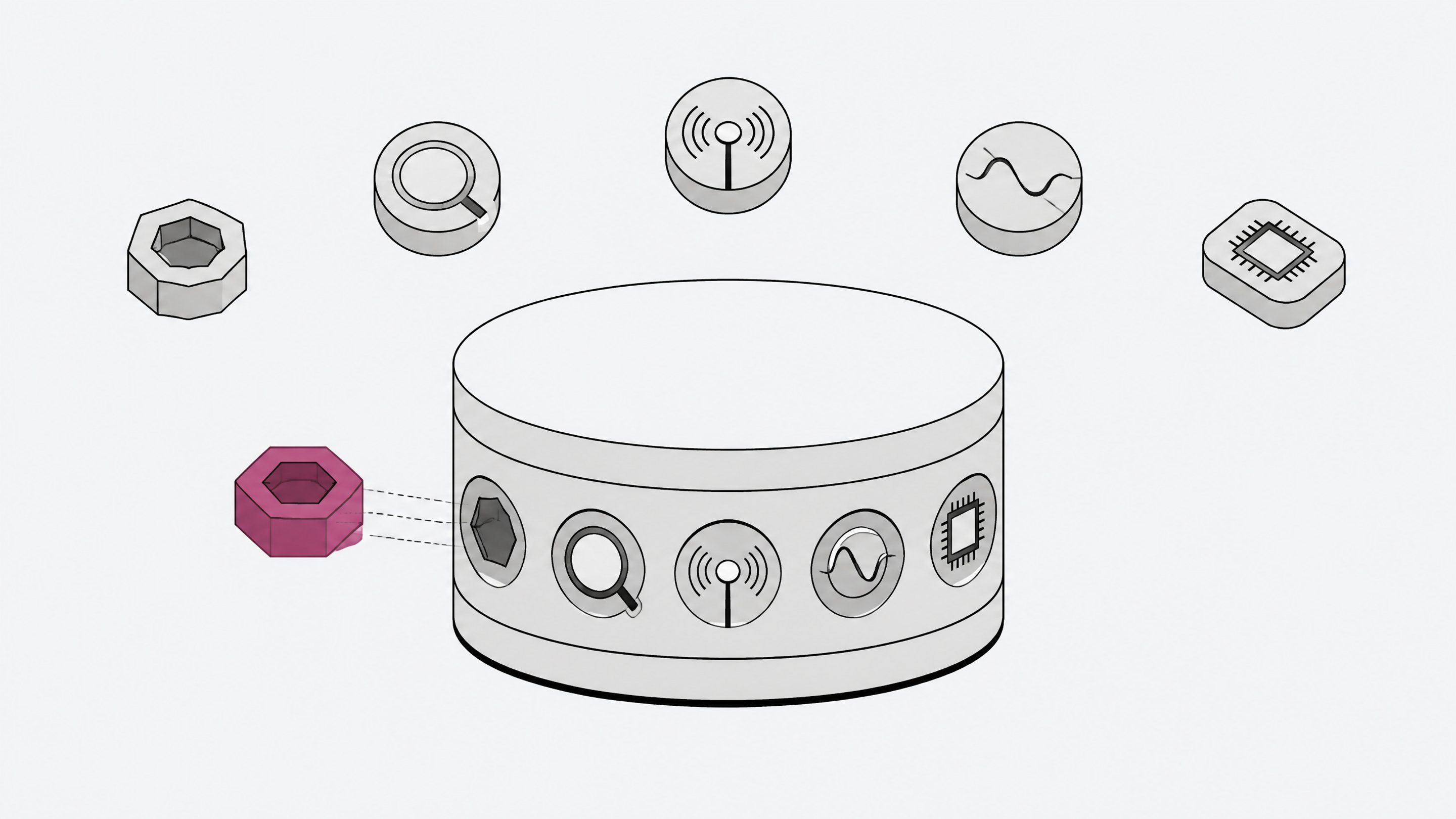
You can replace a real slice of your SaaS stack with Postgres extensions and AI models running on hardware you own. Vector search, full-text search, pub/sub queues, transcription, and a meaningful chunk of your LLM API spend now run inside or alongside a Postgres database, at a fraction of the subscription cost, if you're willing to own the ops that come with it.
That clause matters. This isn't a call to rip out every vendor contract on principle. It's an inventory of five SaaS categories where the open-source alternative has closed the capability gap, backed by real benchmark numbers, where the tradeoff is now worth weighing instead of dismissing.
Why this is a real strategy now, not a hack
The backdrop is spend, not ideology. The average company uses 275 SaaS applications, and 53% of purchased licenses go unused within 30 days.1 Every one of those line items was, at some point, a rational buy decision. Many still are. But the tools underneath them have matured to the point where owning the equivalent capability is no longer a science project. We've covered the broader shift from renting infrastructure to owning it in Build vs. Buy in 2026, and for a wider map of what's self-hostable across other categories, see Self-Hosted Alternatives to SaaS: The Category-by-Category Guide. This piece is the tactical version: five categories, five swaps, with the numbers to back each one.
1. Vector database SaaS: Pinecone and Weaviate Cloud vs. Postgres + pgvector
This is the swap with the most convincing head-to-head data. On a 1-million-vector ANN-Benchmarks test, Postgres with pgvector's HNSW index handled 1,185% more queries per second than Pinecone's cheapest pod type, while costing $70 less per month.2 Even the older IVFFlat index beat that same Pinecone tier by 143% on throughput.2
The gap holds at real scale, not just toy datasets. At 50 million vectors, self-hosted Postgres running pgvector plus the pgvectorscale extension delivered 28x lower p95 latency and 16x higher query throughput than Pinecone's storage-optimized index, for 75% less money: $835 a month self-hosted versus $3,241 a month on Pinecone.3 Against Pinecone's performance-optimized index (p2), Postgres still won on both latency and price.3
The honest counter-case: Notion, Cursor, and Linear all migrated off Pinecone, but not to Postgres. They moved to Turbopuffer, an object-storage-native vector engine, specifically because their workloads involve thousands of sparse, low-traffic namespaces, one per tenant or codebase, where a hosted index's per-namespace pricing never amortizes.4 If your workload looks like one hot, moderately sized index, pgvector wins outright. If it looks like ten thousand mostly-idle mini-indexes, the calculus changes.
2. Search SaaS: Algolia and Elasticsearch Cloud vs. Postgres full-text search
Postgres has shipped native full-text search since version 8.3 in 2008. No extension required.5 The tsvector type, GIN indexes, ts_rank for relevance, and websearch_to_tsquery for parsing what users actually type cover most of what teams reach for Algolia or Elasticsearch to solve.5 Add the pg_trgm extension and you get typo tolerance too.
ParadeDB talked to more than 50 companies evaluating this exact tradeoff and found a consistent pattern: Elasticsearch requires an ETL pipeline to sync from Postgres, which introduces data-freshness lag and its own failure modes, and it had grown into several enterprises' single largest software line item.6 Native Postgres FTS, by contrast, is real-time consistent by construction and good enough for small-to-medium tables, though it degrades on tables with tens of millions of rows and lacks BM25 scoring and faceted search out of the box.6
The cost baseline makes the case sharper. Algolia's real-world pricing runs $0.50 to $1.00 per 1,000 search requests plus per-record fees, and the median buyer pays $41,650 a year, ranging from $12,413 to $260,594 according to contract-data analysis of 144 purchases.7 A tsvector column and a GIN index eliminate that bill entirely for most applications that aren't running search-as-a-product at consumer scale.
3. Redis pub/sub and job queues vs. Postgres LISTEN/NOTIFY and SKIP LOCKED
Redis earns its keep as a cache, a pub/sub broker, and a job queue backend. Postgres can do all three natively. UNLOGGED tables handle caching, LISTEN/NOTIFY handles pub/sub, and FOR UPDATE SKIP LOCKED handles job queues with real transactional guarantees.8
One documented migration replaced an AWS ElastiCache instance costing $45 to $110 a month with Postgres, saving roughly $100 a month and simplifying operations by removing one service to back up, monitor, and fail over.8 The cost is a small amount of added latency, on the order of 0.05 to 0.3 milliseconds per operation, negligible for the vast majority of workloads.8
Worth folding in here: if part of what you're paying a hosted-cron SaaS for is scheduled jobs, pg_cron does that too. It's a production-grade extension already running inside AWS RDS and GCP Cloud SQL, and it takes standard five-field cron syntax straight into SQL, executed by a background worker inside the database itself.9 The tradeoff is real but narrow: it's SQL-only, single-database, and jobs run in UTC by default unless you configure otherwise.9 For teams already running Postgres, that's one less hosted scheduler subscription to renew.
4. Transcription SaaS: Otter.ai and Rev vs. local Whisper
This is the cleanest win on the list, because the local option is both free and fast. Whisper, OpenAI's open-source speech model, and its C++ port whisper.cpp, can transcribe a full one-hour meeting in under four minutes on an M2 MacBook Pro using the large-v3-turbo model, entirely offline.10 Since 2022, local transcription accuracy has closed the gap with paid cloud services.10
Compare that to what you're currently paying. Otter.ai's Pro plan runs roughly $0.42 to $0.85 per audio hour, and Rev.com charges $0.25 to $1.50 per minute depending on whether it's AI or human transcription.10 For a team running dozens of hours of meetings a week, that adds up fast, and it comes with a second cost that's easy to overlook: every one of those recordings leaves your infrastructure and lands on someone else's servers. For regulated data, healthcare notes, legal calls, HR conversations, local Whisper isn't just cheaper. It's the only version of this workflow that keeps the recording where it was made.
5. Cloud LLM API spend vs. self-hosted Ollama and vLLM
This one comes with the most nuance, so it's worth being precise about where the line actually sits. A 2026 total-cost-of-ownership model found OpenAI's GPT-4.1 API costs $2.00 per million input tokens and $8.00 per million output tokens.11 Local inference costs fall as usage rises, but they only reach parity at real scale: at 50 million tokens a day sustained over 36 months, enterprise-hardware local inference lands at $7.15 per million tokens, essentially tied with cloud pricing.11 Below that volume, the API is usually still cheaper once you account for hardware and ops.
So why are 55% of enterprise AI inference workloads now running on-premises or at the edge, up from just 12% in 2023, a 4.6x jump in three years?12 Mostly not cost. Compliance and latency. Local execution cuts response times from roughly 1.5 seconds to under 40 milliseconds, and 44% of enterprises cite security as their top adoption barrier for cloud AI, with 31% ranking security and privacy as the top factor in choosing an LLM provider.12 If you're weighing this tradeoff in more depth, including where a gateway layer sits between your app and either option, we've broken down the real cost math in Self-Hosted AI Gateway vs. SaaS.
When does SaaS still win?
None of this is a blanket argument to self-host everything. A few situations still favor the vendor:
- Sparse, massively multi-tenant workloads. If you're running thousands of small, mostly idle namespaces, like Notion, Cursor, and Linear were, a hosted object-storage-native engine like Turbopuffer amortizes better than one big Postgres index.4
- Search at consumer scale with faceting and BM25 needs. Native Postgres FTS degrades on tables with tens of millions of rows and lacks the faceted search many product searches need.6
- Compliance certifications you've already paid for. If your SaaS vendor holds a SOC 2, HIPAA, or FedRAMP certification your team relies on today, re-establishing that on self-hosted infrastructure is real work, not a checkbox.
- Low, bursty LLM usage. Below roughly 50 million tokens a day sustained, the flat $6.90-per-million-token cloud rate usually beats the fixed cost of running your own inference hardware.11
- Ops capacity you don't actually have. Every extension in this list moves work from a vendor's on-call rotation to yours. That's a real cost, even when the dollar math looks great on a slide.
How do you decide which SaaS tools to replace first?
Before you touch a vendor contract, run each candidate through the same short checklist:
- Volume and shape. Is this one hot dataset or thousands of sparse ones? The answer changes whether Postgres or an object-storage-native tool wins.
- Compliance posture. Does the SaaS vendor's certification cover something you'd have to rebuild from scratch, or is it boilerplate you can replicate with standard hardening?
- Latency SLO. Do you actually need sub-50ms responses, or is that a nice-to-have you're paying premium pricing for?
- Ops capacity. Do you have someone who will genuinely own patching, backups, and failover for one more self-hosted service, or will it quietly become nobody's job?
- Real usage vs. licensed seats. Given that roughly half of SaaS licenses go unused industry-wide, check whether the tool you're evaluating is even being used at the volume the contract assumes.1
| Cost Structure | Ops Burden | Built-in Compliance Coverage | Fit for Sparse Multi-Tenant Workloads | Typical Response Latency | |
|---|---|---|---|---|---|
| RecommendedSelf-hosted Postgres + Local AIOne hot, moderately sized workload where you own the ops | Fixed infra + your ops time | High | Low | Low | Low |
| Hosted SaaS (Pinecone, Algolia, Redis, Otter, OpenAI)Low usage, no ops capacity, or existing compliance certifications | Per-usage or per-seat subscription | Low | High | Medium | Medium |
| Object-storage-native (e.g. Turbopuffer)Thousands of sparse, low-traffic namespaces | Per-namespace usage pricing | Low | Medium | High | Medium |
One more thing worth planning for before you self-host five things instead of renting five things: visibility. A pile of self-hosted extensions and local models is still software your company depends on, and someone needs to know what's running, who owns it, and whether it's actually being used. That's the same governance question companies are starting to ask about the internal tools employees build themselves, which is the problem a system like Remy was built to answer.
The pattern across all five swaps is the same: the open-source option wins on cost and, in several cases, on raw performance. What it asks in return is that someone on your team actually owns it. If you have that person, or that hour a week, this is very often the right trade. If you don't, keep paying the invoice until you do.
For most single-index, moderately-hot workloads, yes. Benchmarks show pgvector's HNSW index handling over 10x more queries per second than Pinecone's entry-level tier while costing less, and at 50 million vectors, self-hosted Postgres with pgvectorscale beat Pinecone on latency, throughput, and price. The exception is workloads with thousands of sparse per-tenant namespaces, where object-storage-native engines like Turbopuffer amortize better.
For small-to-medium tables with real-time consistency needs, yes, using tsvector, GIN indexes, and pg_trgm for typo tolerance. It struggles on tables with tens of millions of rows and lacks BM25 scoring and advanced faceting, which is where Elasticsearch still has an edge, at the cost of running an ETL pipeline to keep it in sync with your database.
One documented case eliminated a $45 to $110 per month AWS ElastiCache instance for roughly $100 a month in net savings, while also removing an entire service from monitoring and failover duties. The tradeoff is a small added latency of 0.05 to 0.3 milliseconds per operation, negligible for most applications.
Only at real scale. Cloud API pricing sits at a flat $6.90 per million tokens regardless of volume, while self-hosted inference costs fall as usage rises, reaching rough parity only around 50 million tokens a day sustained over a multi-year horizon. Below that, compliance and latency requirements, not cost, are usually the real reason companies run models locally.
For most meeting and note-taking use cases, yes. Whisper's large-v3-turbo model can transcribe a full hour of audio in under four minutes on a consumer laptop, entirely offline and free, with accuracy that has closed most of the gap with paid cloud transcription services since 2022.
- 150+ SaaS Statistics Every Business Should Know in 2026CloudZero
- 2pgvector vs Pinecone: cost and performanceSupabase
- 3Pgvector vs. Pinecone: Vector Database Performance and Cost ComparisonTiger Data (Timescale)
- 4Turbopuffer vs Pinecone in 2026: Why Cursor and Notion MigratedParticula Tech
- 5You Don't Need Elasticsearch, Postgres Already Has Full-Text SearchPrisma
- 6Full Text Search over Postgres: Elasticsearch vs. AlternativesParadeDB
- 7Algolia Software Pricing & Plans 2026: See Your CostVendr
- 8I Replaced Redis with PostgreSQL (And It's Faster)DEV Community
- 9PostgreSQL pg_cron Extension GuideCronWizard
- 10AI Transcription: Local vs. Cloud (8 Tools Compared in 2026)Screenpipe
- 11Local LLMs vs Cloud APIs: 2026 Total Cost of Ownership AnalysisSitePoint
- 1228 On-Premise LLM Deployment Statistics Every Enterprise Should Know in 2026DreamFactory