Local-First Open-Source Alternatives to SaaS: What Developers Are Actually Using
What local-first software means, why developers are adopting it now, and a category-by-category map of open-source alternatives to popular SaaS tools.

What local-first open-source alternatives to SaaS are developers actually using?
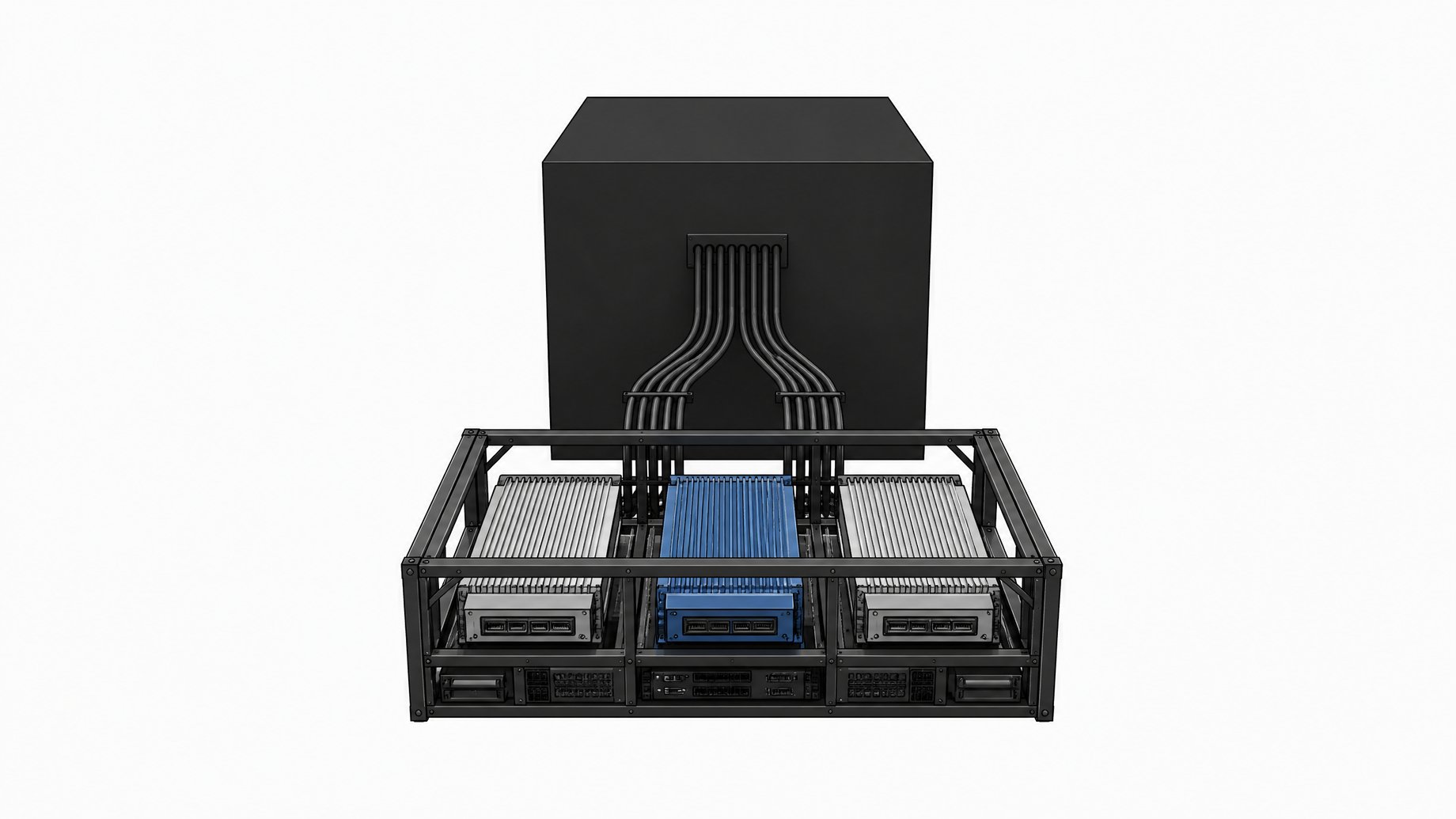
Local-first open-source alternatives to SaaS are self-hosted or on-device tools that store your data on your own machine or server first, sync it across devices without a vendor's cloud as the authoritative copy, and keep working when you're offline. Password managers like Sesame, creative tools like StemDeck, and self-hosted clones of Notion, Auth0, Firebase, Zoom, and Slack are the clearest examples of the category right now.
TL;DR
- Local-first software keeps the primary copy of your data on your own device, which makes the cloud optional infrastructure.
- Capable local LLMs and mature sync tooling have removed the technical barriers to self-hosting developer tools.
- Open-source substitutes exist for most SaaS staples, such as AppFlowy for Notion and Mattermost for Slack.
- More than half of SaaS licenses go unused while average annual spend is roughly $4,830 per employee, which drives the push toward self-hosting.
- Despite developer enthusiasm, enterprise AI workloads are shifting toward closed cloud models, with only 13% running on open-source models in mid-2025.
- Going local-first has real costs, including sync complexity and the burden of maintaining your own servers.
What does 'local-first' actually mean?
The term was coined in 2019 by researchers at Ink & Switch, including Martin Kleppmann. Their essay defined local-first software around seven ideals: no spinners (data operations feel instant), multi-device access, full offline function, real-time collaboration, long-term data longevity, security and privacy by default, and user ownership and control.
The key architectural swap is who holds the authoritative copy of your data. In a conventional cloud app, the server's copy is the source of truth and your device just displays it. Local-first software inverts that: your device holds the primary copy, and sync runs in the background instead of gatekeeping access.
That's a stronger claim than 'offline-first' (which just tolerates a dropped connection) or 'self-hosted' (which can still centralize data on a server you don't fully control). Local-first means you own the data, full stop. The cloud becomes optional infrastructure, not the whole point.
Ink & Switch also singled out software engineers as a group that had already been resisting cloud tooling for years, holding onto local text editors, IDEs, and version control long after other professions moved everything to the browser. Developers weren't converts to this idea. They were the holdouts who never fully left.
Why is local-first software resurging now?
The philosophy is six years old. The current wave is new because three things matured at once.
- Local LLMs got good enough to matter. Running a capable model on your own hardware via Ollama or similar tooling removes the last reason a developer tool needed a cloud API call. Search, summarization, and code assistance can now happen entirely on-device.
- Sync tooling stopped being a research problem. CRDTs and sync engines that were experimental in 2019 are now packaged into usable libraries. Real-time collaboration without a central server authority is a practical engineering choice now, not an academic one.
- SaaS fatigue turned into SaaS economics. Shadow IT and subscription sprawl created a financial argument, not just a philosophical one, for owning your stack instead of renting it. Gartner projects that 75% of employees will purchase, adapt, or build technology outside official IT's knowledge by 2027, up from 41% in 2022. That's the same DIY impulse driving both the shadow-app problem and the local-first solution to it, a tension covered in The Shadow AI Tech Stack.
What do the new local-first, open-source tools look like?
Two recent examples show what this looks like in practice, not theory.
Sesame is a 2026 open-source, local-first password manager licensed under AGPL-3.0. The vault never reaches a vendor's server. The desktop app, sync server, browser extension, and marketing site are all separate open repositories, so a user can audit every line, self-host the whole stack, or fork and rebuild the product from scratch if the maintainers vanish.
StemDeck is a free, open-source stem-separation tool that isolates vocals, drums, bass, piano, and guitar from a track, replacing paid cloud stem-splitters that musicians and producers previously rented by the month. It has 2,900 GitHub stars and 298 commits, evidence of an active project rather than an abandoned side experiment.
Both tools share a pattern: narrow scope, permissive or copyleft licensing, and an explicit design choice that your files or your vault never have to leave your machine to be useful.
Which open-source tools replace which SaaS staples?
A widely referenced community list tracks live open-source substitutes across nearly every SaaS category. The mapping developers actually reach for looks roughly like this:
- Notion → AppFlowy. Local-first workspace and notes, block-based like Notion.
- Auth0 → Hanko or Stack Auth. Self-hostable authentication and identity, no per-user pricing.
- Firebase → Supabase, Appwrite, or PocketBase. Backend-as-a-service you run yourself.
- Zoom → Jitsi. Self-hosted video conferencing with no seat limits.
- Slack → Mattermost. Team chat you control end to end.
- Zapier → n8n. Self-hostable workflow automation.
- Retool → ToolJet. Open-source internal tool builder.
The pattern holds across the list: each substitute trades a monthly per-seat fee for infrastructure you run, in exchange for full control of the data and the roadmap.
What does renting your software stack actually cost?
The economic case isn't abstract. The average company runs about 275 SaaS applications, and more than half of the licenses attached to those apps go unused. Average annual SaaS spend is roughly $4,830 per employee. Multiply that across a mid-sized engineering org and the wasted spend alone often exceeds the cost of standing up self-hosted alternatives for the tools people actually touch every day.
This is the same math explored in Build vs. Buy in 2026 and in The API Trap: usage-based cloud pricing and license sprawl both push the same direction, toward owning the pieces of the stack that carry the most volume or the most sensitive data.
Are local LLMs actually the missing piece?
For years, the argument against local-first software was that cloud AI features were too good to give up. That's weakening. Open-weight models running locally via tools like Ollama now handle code completion, document search, and summarization well enough for daily developer work, closing the capability gap that used to force a cloud dependency.
Oddly, this shift isn't yet visible in enterprise workload numbers. Menlo Ventures found that only 13% of enterprise AI workloads ran on open-source models in mid-2025, down from 19% six months earlier, even as total enterprise LLM API spend more than doubled to $8.4 billion. Enterprises, in aggregate, are spending more on closed cloud models, not less.
That gap between enterprise workload share and developer adoption is the story. The local-first AI movement right now is a developer and hobbyist phenomenon, driven by cost and ownership motives, not yet an enterprise procurement trend. Individual engineers are running open-weight models on their own laptops for the same reason they're adopting Sesame over a cloud password manager: they don't want a vendor sitting between them and their own work. Tools like Remy fit this same instinct, letting developers build and own software directly instead of renting another SaaS seat for it.
What are the limits and trade-offs of going local-first?
This isn't a free lunch. Local-first architecture has real costs that get glossed over in the enthusiasm.
- Sync complexity is a genuine barrier. Projects like AppFlowy and Affine rely on block-based CRDT syncing, and setting up a self-hosted sync server can be far more intimidating than spinning up a basic Nextcloud instance.
- Self-hosting shifts the burden, it doesn't remove it. Someone now has to patch, back up, and monitor the server that used to be a vendor's problem.
- Open-weight models still lag frontier cloud models on the hardest reasoning and coding tasks, even as they close the gap for everyday work.
- Team adoption is harder than individual adoption. A single developer choosing Sesame is a five-minute decision. Getting a whole team onto a self-hosted Mattermost instance requires migration, training, and an owner for the infrastructure.
The honest read: local-first wins clearly for individual developers and small teams with technical staff on hand. It gets harder to justify the moment you need to support non-technical colleagues at scale.
| Data Ownership | Setup Effort | Ongoing Maintenance Burden | Fit for Non-Technical Teams | Per-Seat Cost | |
|---|---|---|---|---|---|
| Local-first / self-hosted (e.g., Sesame, AppFlowy, Mattermost)individual developers and small technical teams | High | High | High | Low | $0 (infra cost only) |
| RecommendedConventional cloud SaaSnon-technical teams needing zero setup | Low | Low | Low | High | ~$4,830/yr avg |
How should you decide between local-first and SaaS?
Before ripping out a SaaS subscription, run the decision through a short checklist:
- Data sensitivity. If the tool touches credentials, source code, or customer data, weight heavily toward owning it.
- Team technical capacity. Self-hosting only pays off if someone on the team can maintain the server without it becoming a second job.
- Actual usage, not license count. Check which of your current SaaS seats are active. If usage is already low, that's a signal the tool was never load-bearing enough to justify renting.
- Sync and collaboration needs. If real-time multi-user editing is core to the workflow, budget extra time for the CRDT and sync-server learning curve.
- Exit cost of the incumbent. If the current SaaS vendor makes data export hard, that's itself a reason to move, independent of price, as covered in Bricked Hardware and Missing Git Tags.
Start with the highest-friction, highest-cost tool in your stack, not the whole stack at once. Local-first adoption that works tends to be incremental: one password manager, one internal tool, one chat server at a time, each one replacing a rented dependency with something the team actually owns.
Frequently Asked Questions
What is local-first software?
Software that treats your device's copy of the data as the primary, authoritative copy instead of the vendor's server, letting you work offline, keep full ownership, and sync across devices without a cloud middleman.
Is local-first the same as self-hosted?
No. Self-hosted just means you run the server yourself; the server can still be the single source of truth. Local-first goes further, making your local device the authoritative copy and treating any server as optional sync infrastructure.
What are good open-source alternatives to popular SaaS tools?
Examples include AppFlowy for Notion, Supabase or Appwrite for Firebase, Mattermost for Slack, Jitsi for Zoom, n8n for Zapier, and ToolJet for Retool, alongside newer tools like Sesame for password management and StemDeck for stem separation.
Do I need a local LLM to go local-first?
No, but it helps close the last gap. Tools like Ollama let developers run open-weight models on their own hardware, removing the need for a cloud AI API for many everyday coding and search tasks.
What's the biggest downside of local-first tools?
Sync and self-hosting complexity. CRDT-based syncing in tools like AppFlowy or Affine can be harder to set up than a simple self-hosted app, and someone on your team has to own ongoing maintenance that a SaaS vendor used to handle.
How we source, write, and correct our articles. Editorial standards