What Is Panda Code and How Does It Run Multiple Coding Agents?
Panda Code is a free, open-source desktop app that runs Claude Code, Codex, Kimi and GLM agents in one window. Install steps and key features.
Claude Code, Codex, Cursor and other coding agents: how to use them, hidden commands, workflows, and which one to pick.

Panda Code is a free, open-source desktop app that runs Claude Code, Codex, Kimi and GLM agents in one window. Install steps and key features.

A creator's tests put Panda Code at about 0.3 seconds to open and 130 to 160MB idle, versus about 3 seconds and 700MB for T3 Code. Here's why.

How to start a one-person AI services business with Claude Code: what to build, real project earnings, the sales funnel and the offer formula.

Learn how to build a 24/7 AI software factory with GPT-6 Astra: the seven infrastructure stations, model routing, verification, and real build costs.

Claude found new DNA machinery in 21 hours, yet AI agents solve only 25% to 39% of real enterprise coding tasks. See the benchmark data and failure modes.

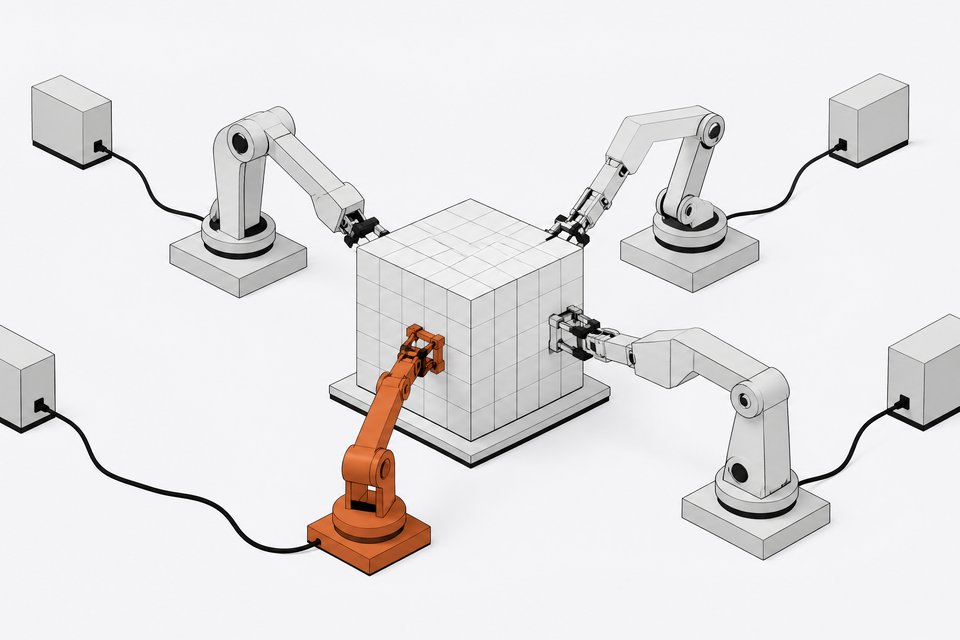
Learn how to run Claude Code, Copilot, Cursor, and Codex together with a secrets vault, git worktrees, task routing, human review gates, and audit trails.

Set up a free local AI coding agent with Ollama, Qwen2.5-Coder or Devstral, and Aider or Cline. Covers hardware, benchmarks, costs vs Copilot, and tradeoffs.

Learn how to review AI-generated pull requests with automated security gates, slopsquatting defenses, and a human checklist built for how AI agents fail.

Learn how to run several AI coding agents on one repo without merge conflicts, using git worktrees, ownership-based task splits, serial merges, and CODEOWNERS.

AI code bloat explained: how duplication, falling code reuse, and error-masking show up in GitClear, DORA, and CodeRabbit data, plus metrics to track.

Learn how explainable AI and reverse engineering help you audit AI-generated code, reduce cognitive debt, and meet compliance needs, with data from recent studies.

METR, DORA, and Faros data show AI can slow developers and hurt delivery stability. Learn five signs your AI coding stack adds output but not value.

Can you build a full-stack app with no cloud compute? We tested WebContainers, WebVM, Pyodide, HiGHS-js, and WebLLM to find what works and where it breaks.

Human review can't keep up with AI-generated code and math. Here's why formal, machine-checkable verification is becoming the real governance control.

Diagrams and canvases now generate working code. See how tldraw, Figma, and Coinbase's own agent turn sketches into shipped internal tools.

How to test AI-generated code: automated security gates, mutation testing over coverage, integration tests at the boundary, and risk-tiered review.

Developers are burned out by shallow AI prompting. The fix: redirect AI toward boilerplate and owned internal tools, not another rented SaaS subscription.

Bao and LLM-QO beat Postgres's planner by 20-70%. Here's whether a cheap, fine-tuned 4B model can be owned outright instead of rented from a vendor.

Cline Desktop and Whiteboard show what an open-source, agent-native IDE requires: model flexibility, self-hosting, and real governance controls.

The research is consistent: AI code ships faster and breaks more. Here's the churn, duplication, and complexity toolkit that quantifies it.

AI hit IMO gold medal reasoning in 2025. That same machinery now verifies code correctness, changing the risk math behind build vs. buy decisions.

AI agents now outpace CI/CD, review, and staging. The data on the bottleneck, what an intent conflict is, and the five fixes teams are building.

AI made writing code cheap. Correctness is the expensive part now. Here's how to write specs that actually guide coding agents to build it right.

Losing an AI coding vendor means losing sealed chat history and reasoning, not just code. Here's how to keep that context portable and owned.