Verschlimmbesserung: Why SaaS Software Gets Worse Over Time
A German word explains why subscription software keeps 'improving' its way into being worse and pricier. Here's the mechanism, the cost data, and the fix.

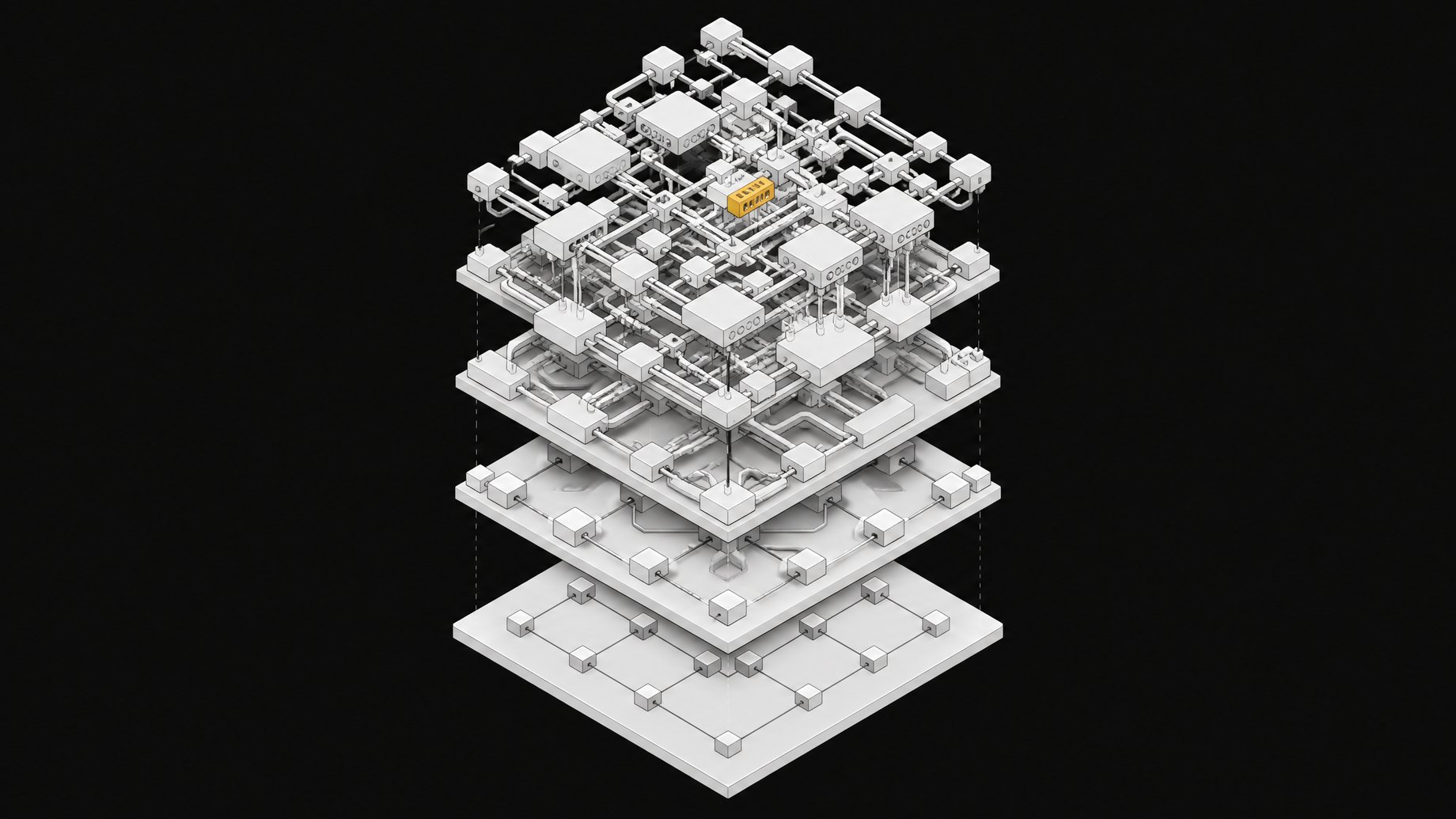
Why does SaaS software get worse over time?
SaaS software gets worse over time because vendors are paid to keep changing the product, not to keep it working the way you learned it. Retention metrics, upsell targets, and roadmap pressure push every product team toward constant "improvement." Apply constant improvement to something that already works and you tend to make it worse. German has a word for this: verschlimmbessern, the verb behind Verschlimmbesserung, a portmanteau of verschlimmern (to worsen) and verbessern (to improve). It describes a sincerely intended fix that backfires, and the usage traces back to physicist and aphorist Georg Christoph Lichtenberg. It isn't sabotage. It's structural. Once you see the structure, the pattern in your own SaaS stack is obvious.
TL;DR
- SaaS vendors are rewarded for constant updates, and that pressure produces feature bloat that degrades the user experience.
- Verschlimmbesserung describes a sincerely intended fix that backfires, which is what redesigns, forced overhauls, and repriced tiers often are.
- Companies use only 49% of their provisioned licenses, wasting an average of $18M a year on unused or underutilized SaaS.
- The average company runs dozens of redundant apps across training, project management, and collaboration, each with its own subscription and review.
- Over five years, renting can cost roughly four times more than a one-time perpetual license for the same functionality.
- Owning means choosing durability over roadmap theater, through perpetual licenses, self-hosted infrastructure, or internal tools you control.
What does Verschlimmbesserung mean, and why does SaaS need the word?
English doesn't have a clean term for an upgrade that degrades the thing it touches. We say "feature creep" or "bloat," but those describe the symptom, not the intent. Verschlimmbesserung captures both: the improvement is real, the worsening is real, and neither cancels the other out. That's exactly what a redesigned dashboard, a forced UI overhaul, or a "simplified" pricing tier usually is. Someone on the product team genuinely believed it would help. It shipped anyway. Now you're relearning a workflow that used to take three clicks.
Why do vendors get rewarded for breaking what works?
SaaS companies don't sell you a finished product. They sell access to a product that has to look alive every quarter, because a subscription lives or dies on renewal, expansion revenue, and a roadmap that convinces the board the company is still growing. Cory Doctorow named the resulting decay pattern "enshittification": a predictable three-stage arc where a platform is first good to its users, then abuses users to benefit its business customers, then abuses those business customers too, clawing the value back for itself. It's not a bug in any one company's culture. It's what happens when the metric that gets rewarded is retention and expansion, not the durability of the thing the customer already bought.
This is also why so much of what ships looks like a fix nobody asked for: a navigation redesign, an AI panel bolted onto a workflow that didn't need one, a pricing restructure that quietly moves a feature you rely on behind a paywall. Each change is defensible in a roadmap review. Each one is also, from the user's chair, a small Verschlimmbesserung.
If enshittification is the theory, what does feature bloat look like in your product?
Industry analysis draws a specific distinction: feature creep is the process of a product's scope quietly expanding, and feature bloat is the resulting object, an overloaded, poorly integrated tool that costs more to deliver and returns less value per feature. Software bloat predates SaaS. Engineers have documented for decades that successive software versions get slower and heavier without a matching gain in usefulness. What SaaS adds is the release cadence. You can't opt out of the update. You can't run the version that worked. The vendor updates the product out from under you, on their timeline, and calls it progress.
Forbes, citing Zluri's co-founder, traces a related cause inside companies: decentralized purchasing, free-trial-led adoption, and no standardization produce "SaaS Sprawl," a stack full of redundant, half-used, bloated tools nobody centrally owns or prunes. Bloat isn't only pushed down by vendors. It's also waved in by procurement chaos on the buyer's side.
What does SaaS feature bloat actually cost buyers?
The waste shows up in the numbers, not just the anecdotes.
- License utilization is roughly half. Zylo's 2024 index found companies use only 49% of their provisioned SaaS licenses, wasting an average of $18M a year, a 7% jump from 2022.
- Waste keeps climbing. Later Zylo indices put annual wasted spend as high as $19.8M per organization, even as utilization has recovered somewhat, from 47% to 54%.
- Redundancy is baked in. The average company runs 15 duplicative training apps, 11 project management tools, and 10 collaboration apps, each one a separate subscription, separate onboarding, separate security review.
- Per-employee spend keeps rising regardless. Average SaaS spend per employee has climbed to roughly $5,607 a year, a 7% increase in a single year, even as the tools themselves get less consistently used.
The pattern across all of it: spend goes up, usage stays flat or worse, and the tools consuming the budget are the ones being "improved" the hardest.
Is it cheaper to own software than to rent it?
Run the comparison over a real time horizon and the case for owning gets concrete. One widely cited total-cost-of-ownership analysis for scheduling software found a 5-user deployment cost $18,000 over five years under a one-time perpetual license, versus $75,000 over the same five years under a typical SaaS subscription. That's roughly four times the cost to rent the same functionality, and the SaaS side of that comparison assumes the product stays useful the whole time, which the Verschlimmbesserung pattern says it won't.
User sentiment tracks the same math from the ground up. One aggregated account of the current SaaS backlash puts it plainly: a tool that cost $30 a month now runs closer to $90 adjusted for inflation, and that price used to buy a permanent version 4, not a permanently shifting subscription. Add in the difficulty of exporting your own data when you want to leave, and renting starts to look less like convenience and more like a hostage arrangement.
| Upfront Cost | 5-Year TCO | Control Over Change | Maintenance Burden | Data Portability | |
|---|---|---|---|---|---|
| SaaS Subscriptionquick adoption with no upfront spend | Low | $75,000 | Low | Low | No |
| Perpetual Licensestable, well-defined workflows | High | $18,000 | Medium | Medium | Yes |
| Self-Hosted Open Sourceteams with in-house technical capacity | Medium | Variable (labor-driven) | High | High | Yes |
| RecommendedInternally Built Toolteams wanting to fully own the roadmap | Medium | One-time build cost | High | Medium | Yes |
What does owning your software actually look like now?
Ownership doesn't mean building everything from scratch. It means choosing durability over roadmap theater where it's available: perpetual licenses instead of per-seat subscriptions where vendors still offer them, self-hosted open-source infrastructure instead of managed SaaS for the parts of the stack that don't need to change every quarter, and internal tools your own team builds and controls rather than rents. Teams already do an informal version of this, wiring together shadow AI tools to patch over the gaps SaaS vendors leave behind. The more durable version of that instinct is deliberate: build the internal tool, own the code, stop paying rent on software that gets worse the longer you use it. For teams weighing that build call, platforms like Remy exist specifically to make owning the internal tool as fast as renting the SaaS alternative, without signing up for someone else's roadmap.
How can you check a SaaS tool for Verschlimmbesserung risk before renewal?
- Change frequency. How often has the core workflow changed in the past year, and did any of those changes make your job harder rather than easier?
- License utilization. What share of your seats are actually active? If it's near the 49-54% industry average, you're already funding waste.
- Data portability. Can you export everything you need in a usable format today, without a support ticket?
- Redundancy check. Does this tool overlap with two or three others already in your stack doing roughly the same job?
- Five-year TCO. What would the same functionality cost as a one-time purchase or an internally built tool, run out to the same horizon as your subscription contract?
A tool that fails most of these isn't broken. It's doing exactly what its incentive structure was built to do. That's the point of naming it: Verschlimmbesserung isn't a flaw in any one product. It's the default output of renting software from a company that gets paid to keep changing it.
Frequently Asked Questions
What does Verschlimmbesserung mean?
It's a German word combining verschlimmern (to worsen) and verbessern (to improve), describing a sincere attempt at improvement that ends up making something worse. Usage is traced back to physicist Georg Christoph Lichtenberg.
Why does SaaS software get worse over time?
Because vendors are structurally rewarded for constant visible change, not for keeping a product stable. Retention and expansion metrics push teams to ship redesigns, new tiers, and added features on a schedule, whether or not the existing product needed fixing, a pattern Cory Doctorow calls enshittification.
How much SaaS spend goes to waste on unused licenses?
Zylo's research found companies use only about 49-54% of their provisioned SaaS licenses, wasting roughly $18-20 million a year per organization on average, with redundant tools like a dozen or more project management apps stacked on top of each other.
Is it actually cheaper to own software than to rent it as SaaS?
In some documented cases, yes, by a wide margin. One total-cost-of-ownership comparison for scheduling software found a 5-user perpetual license cost $18,000 over five years versus $75,000 for the equivalent SaaS subscription, about four times more expensive to rent.
What's the difference between feature creep and feature bloat?
Feature creep is the process of a product's scope quietly expanding over time. Feature bloat is the resulting product: an overloaded, poorly integrated tool that costs more to build and deliver, and returns less usefulness per added feature.
How we source, write, and correct our articles. Editorial standards