Model Context Protocol vs. AI Orchestrator: What Each One Actually Does
MCP standardizes how AI reaches your tools. It was never built to coordinate multiple agents or govern them at scale. Here's what each layer does, and why production systems end up needing both.

- 01MCP connects agents to tools through a single standard interface but cannot orchestrate complex tasks.
- 02Optional authentication in MCP's design has exposed thousands of servers to severe security breaches.
- 03Shadow AI usage is surging as developers deploy unauthorized agents with unmonitored data access.
- 04Major enterprise vendors are backing rival protocols like A2A for true agent-to-agent coordination.
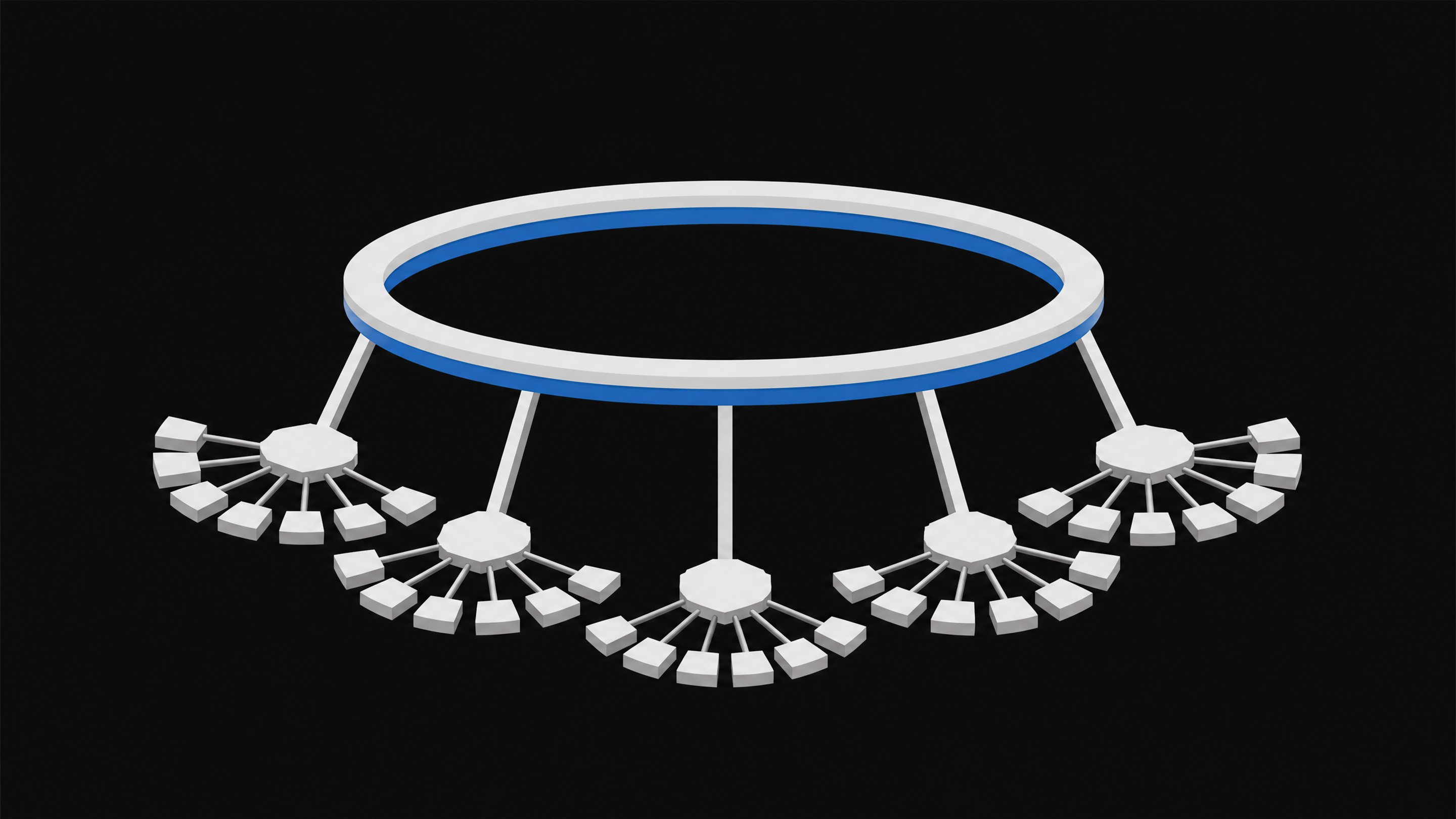
Model Context Protocol (MCP) and an AI orchestrator solve different problems. MCP is a protocol: it lets a model call a tool or read a data source through one standard interface instead of a custom integration for every app. An orchestrator is the layer that decides which agent does what, in what order, with what state. Most systems that work in production need both, plus a third layer, governance, that neither one supplies out of the box.
What is Model Context Protocol (MCP)?
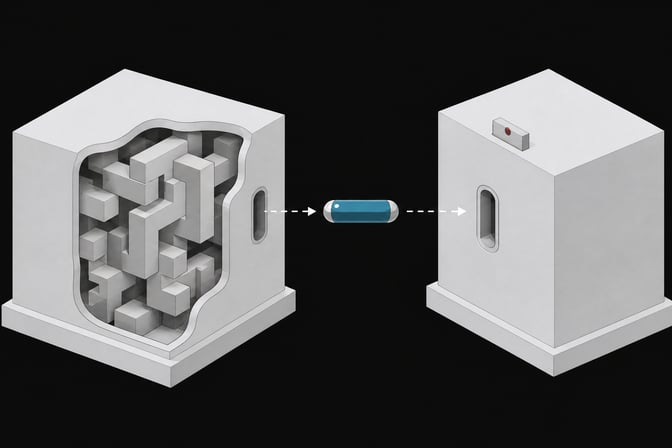
Anthropic introduced MCP as an open standard in November 2024 to fix a specific, annoying problem: every AI application was building its own bespoke connector to every data source, and none of that work carried over to the next one.1 MCP replaced the pile of one-off integrations with a single client-server pattern, where an "MCP client" (the AI app) talks to an "MCP server" (a wrapper around a tool, database, or API) the same way every time.12
The official docs call it "a USB-C port for AI applications," describing MCP as a standardized way to connect AI applications to external systems, the same way USB-C provides a standardized way to connect electronic devices.2 One practitioner put it more plainly: adding a new MCP server to your app is "as simple as adding its URL... to your app's list of servers."3
That simplicity is why it spread fast. OpenAI added support in March 2025, calling it a standard that helps models "produce better, more relevant responses" by giving them cleaner access to data.4 Google followed in April 2025.5 By December 2025, Anthropic donated MCP outright to a new Linux Foundation Agentic AI Foundation, alongside OpenAI's AGENTS.md and Block's Goose framework, to make it neutral, vendor-independent infrastructure rather than an Anthropic product. As MCP co-creator David Soria Parra told TechCrunch, "the main goal is to have enough adoption in the world that it's the de facto standard."6
What MCP does not do is decide anything. It has no concept of a plan, a task queue, or a second agent waiting on the first one's output. If you've looked into what AI connectors actually do inside ChatGPT or Claude, you've already seen this pattern: the connector gives the model read access, and something else decides what to do with it.
What does an AI orchestrator do that MCP doesn't?
An orchestrator is the missing decision layer. Frameworks like LangGraph, CrewAI, Google's ADK, the OpenAI Agents SDK, and AutoGen handle task decomposition, state tracking, routing between steps, and handoffs between multiple agents working the same problem.7 MCP isn't built for any of that. As one analysis of MCP-based multi-agent systems puts it: "MCP is not an orchestration engine in itself, it's a protocol layer."7
MintMCP draws the distinction even sharper, separating "orchestration" (how agents work together) from "management" (how you govern agents as infrastructure), and notes that MCP contributes directly to neither.
If you're wiring up your own internal agents, the practical takeaway is this: MCP standardizes how an agent reaches a tool, an orchestrator standardizes how multiple agents reach a goal. Teams building this in-house often end up orchestrating their own office of clones with an open framework running on top of MCP servers, rather than paying per seat for a platform that bundles both, badly.
MCP vs. orchestrator, side by side
- Architecture. MCP is a stateless client-server protocol over JSON-RPC.12 An orchestrator is the layer that defines how a workflow is structured, often as a graph (LangGraph) or a crew of role-based agents (CrewAI).7
- State. MCP has none between calls. Orchestrators handle task decomposition and routing across steps.7
- Coordination. MCP connects one agent to one tool at a time. Orchestrators enable agents to discover and invoke other agents as tools, chaining them into multi-step workflows.7
- Governance. MCP offers no built-in identity, audit, or policy layer. Governance is a separate discipline layered on top of both.
- Security. MCP's spec makes OAuth 2.1 authorization optional, not mandatory, which contributes to its exposure problem.8 Orchestrators inherit whatever security posture the tools and MCP servers beneath them have.
- Adoption. MCP has cross-vendor, standards-body backing: OpenAI, Google, the Linux Foundation.456 Orchestration frameworks remain fragmented across vendors and open-source projects, with no single dominant standard.
- Ideal use case. MCP: giving one agent clean, standardized access to your data and tools. Orchestrator: coordinating multiple agents or steps toward a larger workflow.
| Primary function | State across calls | Multi-agent coordination | Built-in governance | Cross-vendor standard | |
|---|---|---|---|---|---|
| MCPGiving one agent standardized, reusable access to tools and data | Standardizes tool/data access for one agent | Low | Low | Low | Yes |
| OrchestratorCoordinating handoffs between multiple agents or steps | Coordinates multiple agents/steps toward a goal | High | High | Low | No |
| Governance layerAny org where more than one person can spin up an agent or MCP server | Identity, audit, and policy control across agents | Medium | Low | High | No |
Why does MCP alone break down at enterprise scale?
MCP's optional authorization was a deliberate design choice, and it's produced measurable damage. A July 2025 internet-wide scan found at least 1,862 MCP servers publicly exposed and responding to unauthenticated requests.8 Independent research from Trend Micro found 492 servers with no client authentication or traffic encryption at all, a direct route to data breaches for anyone who finds them.9
It got worse in 2026. OX Security disclosed a systemic flaw in Anthropic's own official MCP SDKs, across Python, TypeScript, Java, and Rust: the STDIO transport passes configuration straight to the host shell without sanitizing it first, an estimated 200,000 vulnerable instances sitting across a supply chain with more than 150 million package downloads.8 Anthropic confirmed the behavior was intentional and declined to change the protocol, pushing sanitization responsibility onto whoever builds on top of it.8
The incidents aren't hypothetical:
- postmark-mcp. A malicious npm package shipped 15 clean releases before quietly BCC'ing every outgoing email to an attacker, affecting roughly 300 organizations.8
- Supabase-Cursor. An attacker planted a SQL-embedded prompt injection inside a support ticket that manipulated a privileged database agent into exfiltrating integration tokens.8
- CVE-2025-6514. A critical OAuth proxy flaw in the popular mcp-remote package, downloaded more than 437,000 times, allowed remote code execution.9
As of May 2026, security researchers count seven confirmed high- or critical-severity CVEs across major MCP-integrated platforms.8
There's a deeper critique underneath the CVE list: MCP doesn't remove custom integration work, it relocates it. Most "MCP servers" are just proxies wrapping a third-party API, which means the organization still owns and maintains that adapter logic, just inside a differently shaped wrapper.10 MCP doesn't eliminate integration work. It moves it, and if you're not careful, it moves it somewhere less visible.
The governance gap: shadow AI and agent sprawl
None of this exposure requires a sophisticated attacker, because most of it starts inside the building. Gartner surveyed 302 cybersecurity leaders in early 2025 and found that 69% of organizations suspect or have evidence that employees are already using prohibited public GenAI tools.11 Gartner predicts that by 2030, more than 40% of enterprises will have a security or compliance incident traced directly to unauthorized shadow AI, and names "ecosystem lock-in and interoperability" and "shadow AI" specifically as blind spots CIOs aren't tracking.11
MCP makes this easier to do quietly and worse when it happens. A developer can spin up an MCP server pointed at a production database in an afternoon, with no ticket, no review, and, per the exposure data above, often no authentication either. Multiply that across a few hundred engineers experimenting with agents and you get "agent sprawl": the same technical debt enterprises accumulated with API sprawl in the 2010s, now with embedded credentials and no audit trail. Getting a handle on how much context these agents pull in, and at what cost, is its own discipline worth understanding before you scale it, which is why agentic context management matters as much as governance does.
The distinction between orchestration and management matters here. Orchestration answers "how do agents work together." Management answers "how do we govern agents as infrastructure": identity, credentials, audit, compliance.12 MCP touches neither directly. It just gives a governance gateway a consistent seam to sit on, if someone builds one.12
The protocol wars: MCP is one layer, not the whole stack
Even the biggest AI vendors don't treat MCP as sufficient on its own. Google launched its own Agent2Agent (A2A) protocol in April 2025 with more than 50 enterprise partners on board, including Salesforce, SAP, Workday, and ServiceNow.13 Google framed A2A as complementary to MCP: MCP handles agent-to-tool connections, A2A handles agent-to-agent, peer-level communication.13 Read the partner list and the subtext is obvious, as one industry observer noted: "Salesforce, SAP, Workday and Oracle don't want to be anybody's 'tool.'"14 Large enterprise software vendors will adopt a protocol that lets their software act as a peer agent. They will not adopt one that reduces them to a dumb tool behind someone else's assistant.
A 2025 academic survey goes further, identifying four distinct, competing interoperability protocols in active use: MCP, ACP, A2A, and ANP, each targeting a different layer of the stack. It proposes a phased roadmap: start with MCP for tool access, add ACP, then A2A, then ANP as coordination needs grow.15 That's the clearest evidence available that no single protocol, MCP included, covers the ground a real multi-agent enterprise system needs today.
Which do you need: MCP, an orchestrator, or both?
For most teams building internal AI tools, the honest answer is all three layers, sized to what you're actually doing:
- You need MCP if you're giving one agent standardized, reusable access to your internal tools and data sources, and you want to stop hand-rolling a connector for every new source.
- You need an orchestrator the moment more than one agent, or more than one distinct step, has to hand off work, share state, or run in a specific sequence. MCP alone won't coordinate that for you.7
- You need a governance layer as soon as more than one person can spin up an MCP server or agent without review. Given that 69% of organizations already suspect unauthorized GenAI use inside their walls, this isn't a someday problem.11
This is a build-vs-buy question dressed up as a protocol question. Renting a platform that bundles orchestration and governance behind a per-seat price tag looks simple at first, but it hands you someone else's assumptions about how your agents should be identified, audited, and constrained. Owning that layer, the routing logic, the credential handling, the audit trail, means you can adapt it as your agent count grows instead of waiting on a vendor roadmap. A governance layer built to sit above your MCP traffic is a more durable answer than assuming the protocol underneath was ever meant to provide one.
MCP earned its adoption by solving a real, narrow problem well: getting a model to talk to your tools without a thousand bespoke integrations. It was never designed to coordinate multiple agents, and it was never designed to govern them either. Treat it as the transport layer it is. Put an orchestrator above it for coordination, and a governance layer above both, before your agent count outgrows your ability to track who built what and what it can touch.
No. MCP is a protocol that standardizes how an AI application connects to a tool or data source over a client-server model. An orchestrator is the layer that decides task sequencing, routing, and handoffs across one or more agents. MCP has no orchestration logic built in and relies on a separate controller for that.
Most production systems do. MCP handles standardized tool access for a single agent. An orchestrator like LangGraph, CrewAI, or the OpenAI Agents SDK sits above it to coordinate multiple agents or multi-step workflows. Neither one governs identity, credentials, or audit, which is why a separate governance layer is also emerging.
MCP's specification makes OAuth 2.1 authorization optional rather than mandatory. That protocol-level choice is a documented root cause of widespread unauthenticated exposure: a 2025 internet scan found at least 1,862 publicly exposed MCP servers, and a 2026 disclosure found a systemic STDIO command-injection flaw across Anthropic's own official SDKs.
Not really. Most MCP servers are proxies wrapping an existing third-party API, so the organization still builds and maintains that adapter logic. MCP standardizes the interface an agent uses to reach the wrapper, but it relocates the integration work rather than removing it.
MCP governs agent-to-tool connections; Google's Agent2Agent (A2A) protocol governs agent-to-agent, peer-level communication between separate systems. A2A launched with more than 50 enterprise partners, including Salesforce, SAP, and Workday, vendors that wanted their software to act as a peer agent rather than a tool called by someone else's assistant.
- 1Introducing the Model Context ProtocolAnthropic
- 2What is the Model Context Protocol (MCP)?Model Context Protocol (official docs)
- 3Model Context Protocol explained as simply as possibleseangoedecke.com
- 4OpenAI adopts rival Anthropic's standard for connecting AI models to dataTechCrunch
- 5Google to embrace Anthropic's standard for connecting AI models to dataTechCrunch
- 6OpenAI, Anthropic, and Block join new Linux Foundation effort to standardize the AI agent eraTechCrunch
- 7MCP Agent Orchestration: Chaining, Handoffs, and Multi-Agent Patterns ExplainedKnit
- 8MCP Security Crisis: Systemic Design Flaws in AI Agent InfrastructureCloud Security Alliance Labs
- 9MCP Security: Network-Exposed Servers Are Backdoors to Your Private DataTrend Micro (Trend AI Security)
- 10To MCP or Not to MCP Part 1: A Critical Analysis of Anthropic's Model Context ProtocolMedium (Sanjeev Mohan / SanjMo)
- 11Gartner Identifies Critical GenAI Blind Spots That CIOs Must Urgently AddressGartner
- 12AI Agent Orchestration vs. Agent Management: Key Differences ExplainedMintMCP
- 13Announcing the Agent2Agent Protocol (A2A)Google Developers Blog
- 14Google's A2A protocol: a challenge to Anthropic's MCP?LinkedIn (Sam Charrington)
- 15A Survey of Agent Interoperability Protocols: Model Context Protocol (MCP), Agent Communication Protocol (ACP), Agent-to-Agent Protocol (A2A), and Agent Network Protocol (ANP)arXiv
- 16The state of MCP security in 2025: Key risks, attack vectors, and case studiesData Science Dojo