The Great Unbundling: How AI APIs Are Replacing SaaS Subscriptions
Cheap multimodal AI APIs now replace point-solution SaaS tools for pennies. Here's the framework, real examples, and cost math for doing it right.

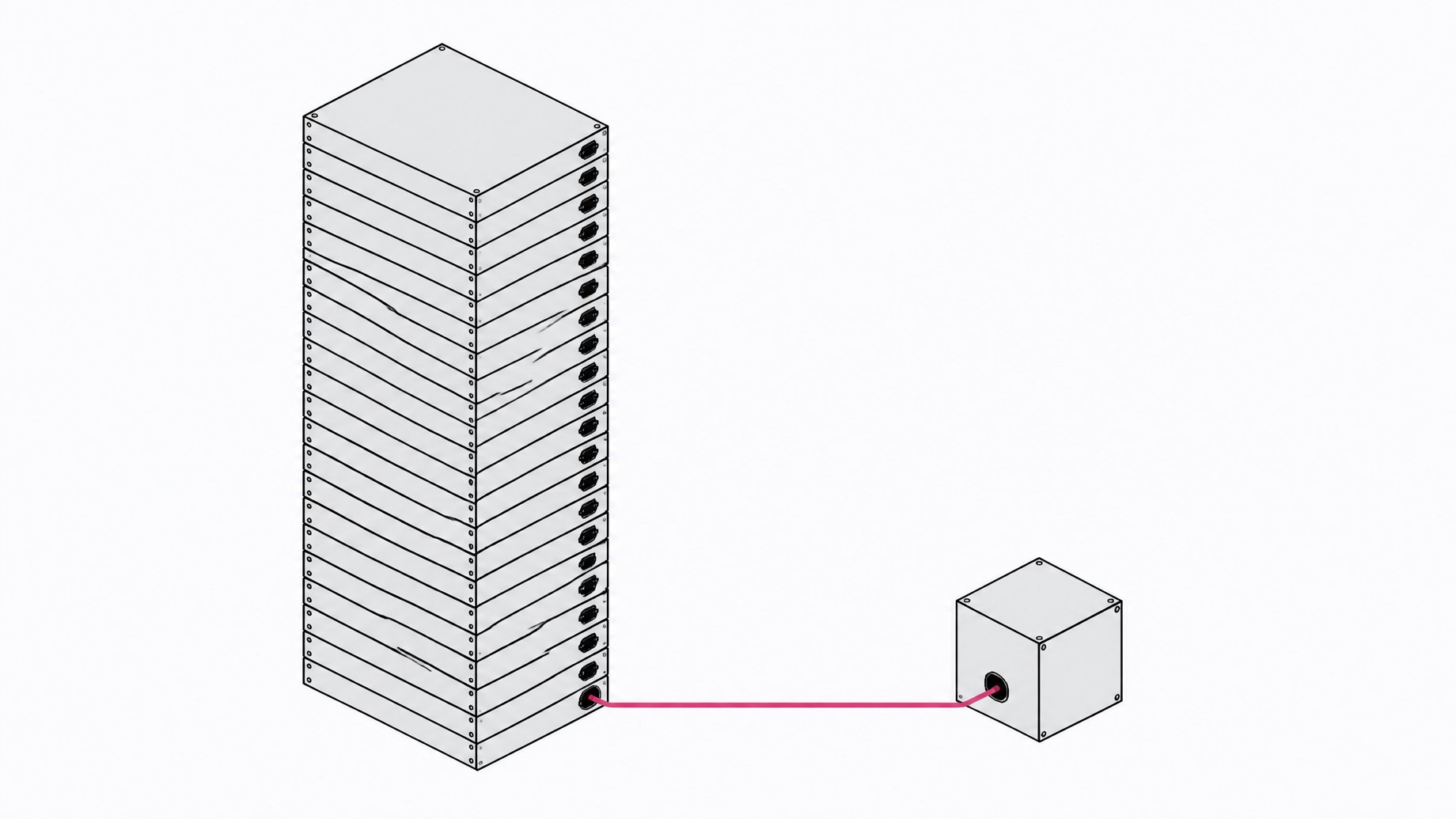
Can you actually replace a SaaS subscription with an AI API?
Yes, for a specific and growing category of software, and the economics already work today. If a tool's core job is to take some input, run it through a model, and hand back an answer or a document, a direct API call to GPT-4o mini, Claude, or Gemini Flash can now do that job for a fraction of a cent per run instead of a flat monthly seat fee. That's why employees and finance teams are quietly building their own narrow replacements instead of renewing the contract.
TL;DR
- A classifier, lead scorer, or report summarizer that runs thousands of times a month on GPT-4o mini now costs pennies instead of a per-seat license.
- Lines of business, not IT, now control 70% of SaaS purchasing decisions, so the people closest to a bad tool are the ones building their own fix.
- Gartner projects up to $234 billion in enterprise application software spend is at risk from agentic arbitrage between now and 2030.
- Replacing single-function SaaS tools with direct API calls often pays back fast, with SMB audits commonly landing in a 3 to 9 month payback range.
- Point solutions and thin wrappers are the most exposed, while systems of record, compliance software, and network-effect platforms are much harder to replace.
- A tool someone builds without asking is only a good trade if it has a clear owner and governance, since shadow AI adds real breach risk.
Why is the $4,830-per-employee problem driving this?
Start with the number that explains the motive. Average enterprise SaaS spend hit $4,830 per employee in 2025, up 21.9% year over year, the first increase in three years. Organizations separately waste an average of $21 million a year on licenses nobody uses.
That waste isn't evenly spread. It piles up in point-solution tools one team bought and everyone else forgot about, exactly the software this piece is about. Our breakdown of where SaaS budgets actually leak covers the pattern in full.
What's new is who's noticing. Lines of business, not IT, now control 70% of SaaS purchasing decisions, against just 26.1% for IT. The people closest to the pain of a bad tool are also the people with a company credit card and, increasingly, the coding fluency to build their own fix. At the same time, spending on AI-native apps grew 75.2% year over year even as total SaaS costs rose. Budget is moving toward tools people build or buy specifically because they run on AI.
Idle seats make the waste figure more concrete. Zylo's 2025 SaaS Management Index found that 53% of licenses in the average portfolio sit unused or underused. A metered API workflow can't waste money that way, because a task nobody runs never gets billed.
The seat itself is also losing ground as a pricing unit. Seat-based pricing's share of total SaaS revenue fell from 21% to 15% in a single twelve-month window through 2025, and Atlassian reported a historic decline in enterprise seat counts as AI let existing teams cover more ground with fewer licenses. Buyers are paying more per seat for a unit that vendors are themselves moving away from.
The builders are changing too. Retool's 2025 survey of 1,128 builders found that 65% of the people building internal software are non-engineers, and 51% can solve a problem in days or weeks instead of months or quarters.
What actually changed when API costs collapsed and models got multimodal?
The technical shift underneath all this is straightforward. OpenAI's GPT-4o mini prices out at $0.15 per million input tokens and $0.60 per million output tokens, roughly an order of magnitude cheaper than the frontier models that came before it. A support-reply classifier, a lead scorer, or a report summarizer that runs thousands of times a month now costs pennies, not a per-seat license. We've written before about how this zero-marginal-cost shift is breaking the logic behind $99-a-seat pricing, and the pattern shows up again here from the buyer's side of the table: if the intelligence inside the SaaS tool costs almost nothing to run directly, the markup on the wrapper around it becomes very visible, very fast.
Multimodal capability matters just as much as price. A model that can read a spreadsheet, parse a PDF, or look at a screenshot removes the last excuse for needing a dedicated app with a polished UI. The UI was often the product. Once a model can do the task without one, the app underneath starts to look optional.
Are real teams already doing this?
This isn't hypothetical. Netlify employees have used AI coding tools like Bolt and Lovable to build internal replacements for an employee survey tool that would normally be bought from Qualtrics or Momentive, a CPQ pricing calculator, and an interview-training app. Andreessen Horowitz general partner Martin Casado built his own AI-powered CRM that syncs his calendar and email and prepares weekly meeting briefings. His reasoning was blunt: "For some software, it's becoming quicker to code my own version with AI than learn someone else's non-intuitive, shit UI."
Netlify CEO Mathias Biilmann frames this as a change in who gets to build software, not just a change in tools. AI-native "software composers" in ops and business roles, not only engineers, can now ship functional internal tools. That changes the buy-versus-build calculus: what one internal developer can build inside a company just went up dramatically.
The most vivid example is also the smallest. One consultant described replacing a client's "Enterprise AI Suite," in his words a fancy dashboard wrapped around a standard API, with a direct Python connection to an LLM API and a cron job. The build took about four hours. It eliminated a $20,000-a-year subscription with, in his account, the same output quality.
Where does this work, and where doesn't it?
Not every SaaS category is equally exposed. Gartner projects up to $234 billion in enterprise application software spend is at risk from what it calls agentic arbitrage between now and 2030, roughly 20% of enterprise SaaS spending, as AI agents complete cross-system tasks and bypass software interfaces entirely. Separately, Gartner predicts that by 2030, 35% of point-product SaaS tools will be replaced by AI agents or absorbed into agent ecosystems.
That 35% figure implies the other 65% survives, and the reason is instructive. Tools built around structured data ownership, audit trails, and network effects don't unbundle easily, because AI agents still need something to read from and write to. A useful filter for your own stack:
- Point solutions and workflow tools. Survey tools, report generators, lead scorers, meeting-prep assistants. High replacement risk, because the value is mostly "run this task," not "hold this data."
- Systems of record. Your core CRM database, your accounting ledger, your HRIS. Low replacement risk, because switching means migrating the actual data of record, not just the interface.
- Compliance and regulated software. Tools tied to audit requirements or legal attestations. Low replacement risk, because the vendor is often selling liability coverage, not just software.
- Network-effect platforms. Tools whose value comes from other people also using them, like a shared design tool or a marketplace. Low replacement risk, because you can't build the other side of the network yourself.
- Thin wrappers over commodity APIs. Dashboards that mostly reformat a model's output. Highest replacement risk of all, because there's often nothing proprietary underneath to protect.
| AI Replacement Risk | Data Ownership Importance | Audit/Compliance Needs | Typical Build Time | Typical Annual Cost | |
|---|---|---|---|---|---|
| Point solutions & thin wrapperstask-only tools like surveys, dashboards, report generators | High | Low | Low | Hours to days | $1k-$20k typical point-tool spend |
| Systems of record & compliance toolscore CRM, ledgers, HRIS, regulated workflows | Low | High | High | Months (data migration) | Often $50k+ enterprise contracts |
How do you calculate whether replacing a SaaS tool pays off?
A useful data point comes from InsiderAITrends' review of SMB stacks: a targeted audit typically surfaces three to five tools, support chatbots, lead enrichment, internal knowledge bases, reporting, form-to-CRM pipelines, that can be replaced with lightweight AI builds running $10 to $40 a month each, against typical SaaS costs of $100 to $500 a month per tool. Gartner's SMB figures put the average annual SaaS bill at $9,062, while the average SMB only actively uses about 30% of the features it's paying for. That gap between what's bought and what's used is where most of the payback comes from.
A rough version of the model looks like this:
- Current SaaS cost. Annual subscription price, all seats.
- API cost. Estimated monthly token spend at current usage volume, priced at published rates like GPT-4o mini's $0.15/$0.60 per million tokens.
- Build hours. Time to write and test the replacement, often measured in hours, not sprints, for narrow tasks.
- Payback period. Build cost divided by monthly savings. SMB audits commonly land in the 3 to 9 month range.
We walk through this same build-versus-buy arithmetic in more depth in our look at how AI has repriced the calculus for 2026, and the short version holds here too: once the payback period drops under a year, the conversation inside most companies shifts from "should we" to "who owns it."
The payback model above leaves out one cost: upkeep. RBC Capital Markets built an interactive build-vs-buy calculator and concluded that building your own business software usually costs more than buying it once maintenance, security, and the opportunity cost of the builder's time are priced in. The math holds up for simpler, lower-stakes tools and rarely for core systems like payroll, customer records, or compliance-heavy platforms.
Retool's 2026 survey of 817 builders shows what this looks like in practice. About 35% of teams have already replaced at least one SaaS tool with a custom AI-assisted build, and 78% expect to build more in 2026. Workflow automation and internal admin tools are the most likely to be replaced, while tools with deep integrations and compliance coverage are the least likely. Most of these builds are not one-prompt jobs. Among builders who shipped working AI-assisted software, 72% use AI to write snippets they integrate by hand, and only 8% deploy AI-generated code with zero changes. Budget for that hand integration and for ongoing maintenance, not just the first weekend.
The savings cases are real but specific. One marketing team cut a credit bill of more than $3,000 a month for an email-extraction tool to under $200 a month, and a support team walked away from a helpdesk charging more than $100 per seat per month.
A per-task comparison shows where the break-even sits. CodeRabbit's Essentials plan costs $24 per developer per month on annual billing, or $30 billed monthly, no matter how many pull requests that developer opens. Macroscope bills by usage instead, at $0.05 per KB of code diff, with an average of $0.95 per review and half of all reviews costing $0.50 or less. At those prices a developer needs roughly 25 reviews a month before the flat seat becomes the cheaper option, and most individual contributors never get close. For a 10-person team running 160 reviews a month, that works out to about $152 in usage fees against $240 to $300 in seats.
Two figures help set expectations on the long run. Research on build-versus-buy in the AI era estimates the post-build "ownership tail" of maintenance, governance, model drift, and operations at 60% to 80% of a system's lifetime cost. Even so, custom AI-agent builds showed a 28% lower total cost of ownership than per-seat SaaS AI tools in 200-user enterprise deployments over 24 months. Treat the tail as a line item in step 3 above, not a footnote.
Are vendors closing the wrapper loophole?
This movement isn't unlimited or risk-free. Model providers are already pushing back on its most exposed version. Anthropic's updated commercial API terms now restrict using a single company-held API key to authenticate requests on behalf of third-party paying end users, directly targeting the classic wrapper pattern of marking up per-token costs into a flat subscription. Genuinely internal tools, where every user is an employee under one organization, are still explicitly fine. The line Anthropic is drawing is exactly the line this article is about: build for your own company, don't resell the API back out as a product.
Pricing is shifting underneath vendors too. GitHub moved Copilot from flat-rate premium requests to usage-based billing tied to input, output, and cached token counts, a change that took effect in 2026, and Zendesk and Workday made similar moves. Consumption pricing is spreading because flat subscriptions no longer match what AI actually costs to deliver, on either side of the transaction.
Seat-based pricing is looking worse for the vendors selling it, too: companies still using it are 1.6 times more likely to miss growth targets than consumption-priced peers, and 58% of SaaS companies report declining net revenue retention because AI lets customers do the same work with fewer seats. The unbundling pressure and the vendor pricing pressure are the same force, viewed from two sides of the same invoice.
What is the governance catch?
A tool an employee builds without asking anyone isn't automatically a safe one.
- Gartner's 2025 survey of 302 cybersecurity leaders found 69% of organizations suspect or have evidence that employees are using prohibited public GenAI tools.
- The 2025 Verizon Data Breach Investigations Report found 15% of employees routinely access GenAI systems on corporate devices, and 72% of that access happens through non-corporate email accounts, entirely outside company logging and authentication.
- IBM's 2025 Cost of a Data Breach report found shadow AI added an average of $670,000 to global breach costs.
That's the tradeoff nobody puts on the four-hour build's slide. A cron job that saves $20,000 a year is only a good trade if someone knows it exists, knows what data it touches, and can turn it off. The same builder instinct that unbundles a wasteful SaaS contract also creates a new asset that needs an owner, a review cycle, and a place on the books, not a folder on someone's laptop.
There is also legal exposure in the act of rebuilding a tool you currently license, and few teams price it in.
- Breach of contract. Standard SaaS terms typically prohibit reverse engineering and using the platform to build a substitute product. Studying a licensed account closely enough to replicate it can violate the contract you are still paying under.
- Trade secret misappropriation. Under the Defend Trade Secrets Act, software architecture, proprietary algorithms, UX logic, and data models can count as protectable trade secrets. A close clone can become a federal claim, not just a contract dispute.
- Weak ownership of the replacement. Current US Copyright Office guidance holds that AI-generated code without meaningful human creative selection or modification may not be copyrightable, so the company may not enforceably own what it built.
This has already reached court. In 2026, Runlayer sued Rippling in the Southern District of New York, alleging that Rippling used its position as a licensed commercial partner to study and clone Runlayer's AI product. Rebuilding a narrow internal tool that calls a model API is a different act from cloning a vendor's product screen by screen, so keep the build focused on the task, not on the vendor's interface and logic.
How do you run your own unbundling audit?
A practical version of this process, in order:
- Audit the stack. List every SaaS tool by category and annual cost. Flag anything whose core function is summarizing, classifying, extracting, or generating text or images from input data.
- Classify by risk tier. Sort flagged tools against the five categories above. Systems of record and compliance tools stay put. Point solutions and thin wrappers go to prototyping.
- Prototype with a narrow wrapper. Build the smallest version that does the one task the SaaS tool was bought for. Time-box it. Most of the examples here took hours, not weeks.
- Calculate payback. Compare current subscription cost against projected API cost plus build and maintenance hours. Anything under a year's payback is worth a serious look.
- Keep governance in place. Log what the tool touches, who owns it, and how it's reviewed, the same rigor you'd expect from a vendor contract, not less.
Teams that treat this as an ongoing practice, rather than a one-time cost-cutting exercise, tend to build the audit itself into a lightweight internal system. That's the same instinct behind platforms like Remy, which exist to help companies keep the tools they build, and the budget behind them, as an owned asset rather than something scattered across personal laptops and forgotten cron jobs.
The unbundling underway right now isn't a rejection of software. It's a rejection of renting software whose core function you could run yourself for the price of a few thousand tokens. Not every SaaS line item deserves that scrutiny. But the ones that do are easy to spot, once you know the filter to use.
Frequently Asked Questions
Can AI APIs really replace SaaS subscriptions?
For narrow, task-based tools like report summarizers, survey platforms, lead scorers, and internal dashboards, yes. Cheap multimodal APIs like GPT-4o mini can now do the underlying task for fractions of a cent per run. Systems of record, compliance software, and network-effect platforms are much harder to replace because their value depends on data ownership or other users, not just task completion.
How much does it cost to build an internal AI tool instead of buying SaaS?
SMB audits typically find lightweight AI/API replacements running $10 to $40 a month, versus $100 to $500 a month for the SaaS tool they replace, with payback periods of 3 to 9 months once build time is factored in.
What SaaS tools are safest to keep instead of replacing with AI?
Systems of record like your core CRM database or accounting ledger, compliance and regulated software, and network-effect platforms whose value depends on other companies also using them. Gartner expects roughly 65% of point-product SaaS tools to survive AI disruption largely because of this structural protection.
Is it legal or allowed to build a wrapper around an AI API instead of paying for SaaS?
Building genuinely internal tools where every user is an employee of your own company is explicitly permitted under providers' terms, including Anthropic's. What providers restrict is using a single API key to resell access to third-party paying customers, which is the classic markup-and-resell SaaS pattern, not internal use.
What are the risks of employees building their own AI tools to replace SaaS?
The main risk is governance, not cost. Tools built without oversight can become unmanaged shadow AI. Gartner found 69% of organizations suspect employees are using unapproved GenAI tools, and IBM found shadow AI adds an average of $670,000 to the cost of a data breach.
How we source, write, and correct our articles. Editorial standards
Related articles
We Replaced a $500/mo Admin SaaS Tool With a 20-Hour AI Agent

Build vs. Rent: Why Owning Your Company's Knowledge Base Beats Renting SaaS Search
Internal AI Workflows Cost Pennies. SaaS Subscriptions Still Cost $9,324 a Seat.