We Replaced a $500/mo Admin SaaS Tool With a 20-Hour AI Agent
We replaced a $500/mo admin SaaS with a 20-hour GPT-6 Astra agent. Here's what broke, what it cost, and the governance problem building doesn't solve.

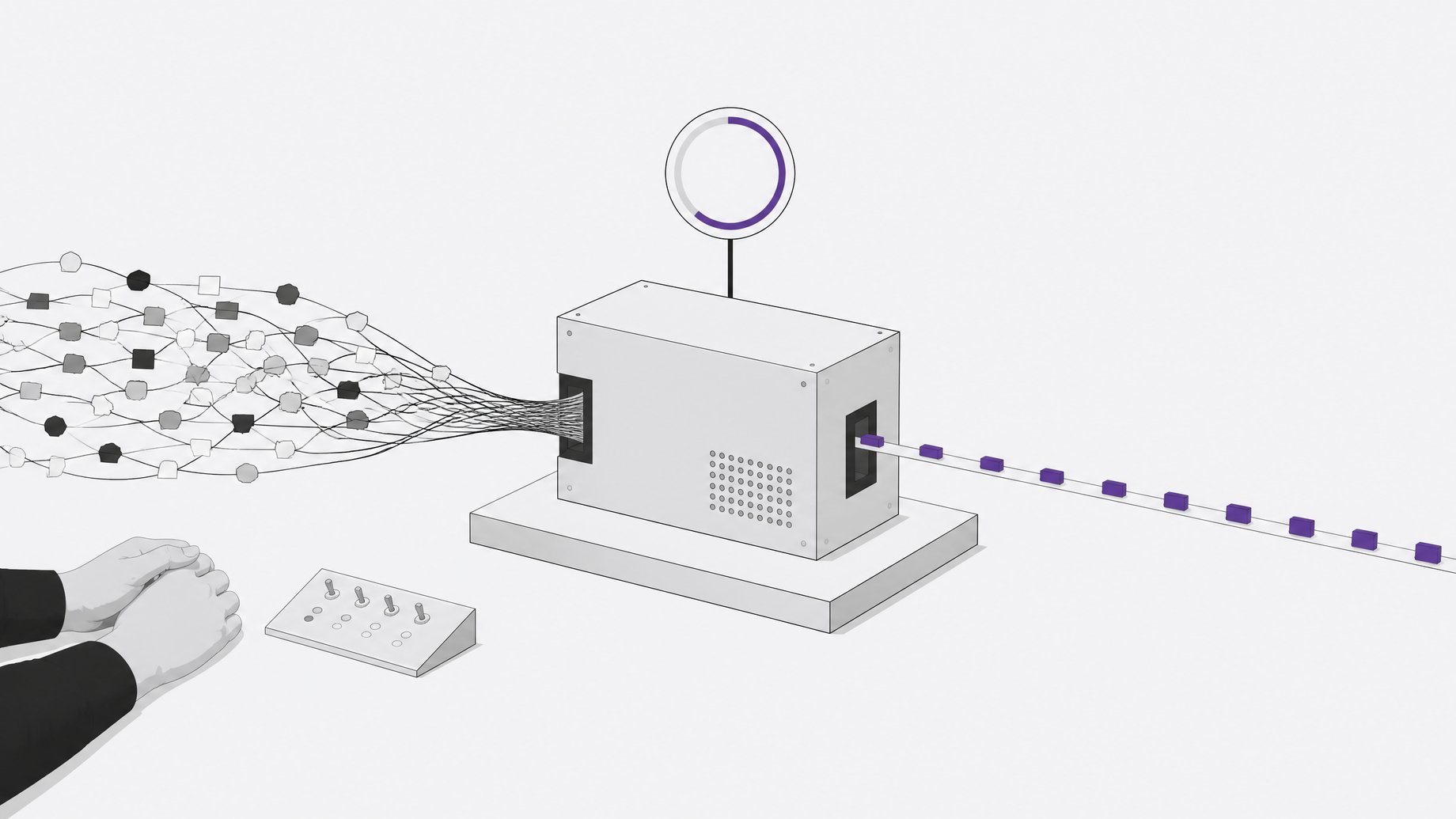
How do you replace a $500/mo admin SaaS tool with an AI agent?
You automate admin tasks with AI agents by giving a long-running model direct tool access and letting it work in extended, mostly unsupervised sessions. But the build isn't the hard part. The hard part is deciding who watches the agent, how you measure whether it's actually working, and who owns it a year from now, once the vendor who used to own that problem is gone.
We ran the experiment ourselves. We took a $500-a-month admin SaaS tool, the kind that handles scheduling, intake forms, approval routing, and status emails, and replaced it with a self-built agent running on GPT-6 Astra. Its longest session ran roughly 20 hours. It worked. That's the interesting part, and also the least important one.
TL;DR
- A custom AI agent ran a 20-hour unsupervised admin loop and replaced a $500/mo SaaS tool.
- Real-world agent runs stay short because users pause for oversight on ambiguous or high-stakes steps.
- The agent's failures were not in raw task execution but in judgment calls at the edges, which a human checkpoint caught.
- Internal admin tools are the third most at-risk SaaS category for replacement by custom AI builds.
- Shadow AI is the default for these builds, and breaches linked to it cost $670,000 more on average.
- Before canceling the subscription, decide who owns maintenance and set a measurement baseline on day one.
What happens when a 20-hour agent replaces a $500/mo tool?
The SaaS tool we replaced did four things: routed intake requests to the right person, tracked approval status, sent reminder emails, and generated a weekly summary report. None of it was novel. It's the kind of tool that exists because building it yourself used to cost more developer time than a subscription was worth.
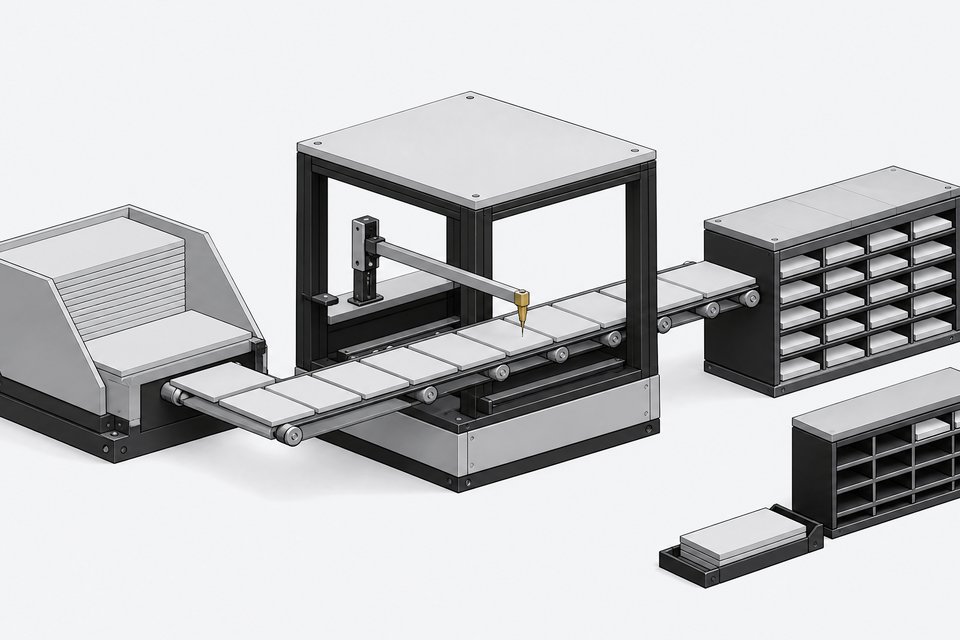
We gave the agent read/write access to a shared inbox, a project database, and a calendar API, then asked it to run the full admin loop end to end: read new requests, classify them, assign owners, chase overdue approvals, and produce the weekly report, without a human touching each step. The longest continuous run was about 20 hours, spanning a full business day plus overnight cleanup work.
That 20-hour figure isn't a stunt number. It sits right at the edge of what current frontier models can actually sustain.
Why does a 20-hour agent run matter?
METR has spent years measuring how long a task an AI agent can complete autonomously with 50% reliability, and that time horizon has been doubling roughly every seven months since 2019. Since 2023 the pace has quickened to roughly every four months, and by early 2026 frontier models like Claude Opus 4.6 reached a 50%-reliability time horizon of around 14.5 hours. A 20-hour agentic run for admin work sits right at the edge of that curve. Ambitious, but not fantasy.
Benchmarked capability and how people actually use these agents are two different things, though. Anthropic's own usage data on Claude Code shows that even as raw capability climbs, real-world autonomous run lengths stay much shorter: the 99.9th percentile turn length only reached about 45 minutes by early January 2026, up from under 25 minutes the previous September. Users, and the agents themselves, keep choosing to pause for oversight, especially on ambiguous or high-stakes steps. The gap between "could run for 20 hours" and "should run for 20 hours unsupervised" is exactly where this experiment got interesting.
What did we build, and what broke?
The build itself was closer to a weekend project than a quarter-long engineering effort. That tracks with what other teams report as coding agents mature; see the comparison of orchestration approaches in Build vs. Buy in the Agent Era for how open frameworks are changing that math.
We broke the admin loop into discrete, checkpointed tasks rather than one continuous instruction, because that's where things actually failed:
- Intake classification ran cleanly almost every time. Sorting requests into categories is close to the model's home turf.
- Approval chasing stalled twice when the agent hit ambiguous thread context, two people replying to the same request with contradictory instructions, and it correctly paused rather than guessing.
- Calendar conflicts produced the one real hallucination: the agent invented a meeting time that didn't exist on anyone's calendar and sent a confirmation before a checkpoint caught it.
- Weekly report generation worked well but needed a human nudge on tone twice, since the agent defaulted to a formality mismatched to the team's usual voice.
None of these failures were catastrophic. All of them required a human checkpoint to catch. That's the pattern worth remembering: the failures weren't in raw task execution, they were in judgment calls at the edges, exactly where Anthropic's data says real users keep pulling agents back for oversight.
How much does it actually cost to replace a $500/mo SaaS tool?
$500 a month sounds small until you compare it to what companies actually spend. Average enterprise SaaS spend hit $4,830 per employee in 2025, up 21.9% year over year, the first increase in three years, driven partly by AI-native app pricing. A single $500/mo admin tool is a modest slice of that stack, which is exactly why it's a realistic first target rather than an edge case.
Build cost is where the real comparison happens, and it's not just the initial engineering hours. It's compute for long agentic runs, the time spent designing checkpoints and guardrails, and then the ongoing cost of maintaining an agent as your admin workflows drift over months. Retool's 2026 Build vs. Buy Report backs up that this tradeoff now lands in most teams' favor: 35% of surveyed organizations have already replaced at least one SaaS tool with a custom AI-assisted build, and 78% expect to build more in 2026. Internal admin tools specifically rank as the third most at-risk SaaS category, cited by 33% of builders, just behind workflow automations at 35%.
Real companies are already citing wins in this exact shape. ClickUp says it cut $200,000 a year in automation software spend by building six internal AI tools instead of buying more subscriptions. Harmonic replaced a $20,000-a-year third-party tool with a Retool-built version because it was faster for their own team to fix than waiting on vendor support. The pattern isn't unique to admin tools either. It shows up across dashboards, workflow orchestration, and even database infrastructure once teams stop treating build cost as a one-time event, as covered in Building Dashboards with AI.
Is this an isolated experiment, or a trend?
The shape of our experiment matches what's happening broadly, and mostly outside official channels. 60% of builders in Retool's survey built something outside official IT oversight in the past year, citing speed (31%) and unmet needs (25%) as their top reasons. About half of builders who shipped production software with AI say it saves them six or more hours a week. Admin tools and workflow automation are consistently the first things people build for themselves, not the last, because they're well-scoped and low-glamour enough that nobody in IT prioritized replacing the SaaS tool that already handled them.
Who owns an agent that runs for 20 hours unsupervised?
Here's where the experiment stops being fun. An agent that runs unsupervised for 20 hours, reading inboxes, writing to calendars, sending confirmations, is not a toy. It's a system with write access to real business processes, built without the review a vendor contract would have forced.
Shadow AI is already the default mode for this kind of build, and the data on it is not reassuring. 59% of U.S. employees use AI tools their employer hasn't approved, rising to 93% among executives and senior managers. Three-quarters of shadow-AI users admit sharing sensitive data with unapproved tools, and IBM found that breaches linked to shadow AI cost $670,000 more on average than breaches involving sanctioned AI. An agent with inbox and calendar access for 20 hours at a stretch is precisely the kind of system that turns a governance gap into a breach statistic.
Measurement is the other half of the problem, and it's arguably worse. Only 19% of organizations describe their AI automation maturity as advanced, and 35% have no AI productivity metrics in place at all. If you can't measure whether the agent actually did the job correctly across those 20 hours, you're not managing a system, you're hoping one works. Retool's report draws the parallel to Gartner's prediction that by 2027, half of organizations that cut customer service staff assuming AI would replace them will end up rehiring. Replacing a SaaS tool with an agent carries the same risk if you skip the step of proving the swap actually worked before you cancel the subscription.
Verdict: build, buy, or both?
The capability question is basically settled. A 20-hour agentic run for well-scoped admin work is achievable today, and the METR and Anthropic data both point toward that ceiling rising fast, not slowing down. The decision that actually matters is whether your organization is set up to own what you build. A practical framework:
| Monthly Cost | Time to Deploy | Maintenance Burden on Your Team | Oversight/Checkpoints Needed | Vendor Support Included | |
|---|---|---|---|---|---|
| SaaS Subscriptionteams that want zero ownership of maintenance or on-call | $500/mo | Days | Low | Low | Yes |
| Self-Built AI Agentwell-scoped workflows where a team will own ongoing checkpoints | Compute + build time | ~1 weekend | High | High | No |
- Scope the failure modes before you scope the features. Our agent's real risks weren't in classification or reporting, they were in ambiguous judgment calls. Map those before you build, not after something breaks.
- Put a checkpoint at every write action, not just at the end. The hallucinated calendar confirmation only got caught because a checkpoint existed there. Build the same into your own workflow, and treat any tool that promises fully unsupervised runs on write-access tasks with suspicion.
- Decide who owns maintenance before you cancel the subscription. A SaaS vendor's $500/mo included someone else's on-call rotation. If nobody in your org will be on-call for the agent, you haven't replaced the tool, you've just deferred the outage.
- Set a measurement baseline on day one. With 35% of organizations tracking no AI productivity metrics at all, don't be one of them. Measure hours saved and error rate from the first week, not after six months when someone asks if it's actually working.
- Treat shadow-built agents with write access as a governance decision, not a side project. The breach cost premium on unsanctioned AI tools is real money, not a hypothetical.
For a narrowly scoped, well-checkpointed admin workflow, an agent can fully replace a subscription today, and platforms built for exactly this kind of orchestration, like the model compared in Claude Fable 5.1 vs OpenAI Astra, are making that build faster every quarter. Tools like Remy are built around the same premise, giving teams a way to run and govern these long-lived agents without treating each one as a bespoke maintenance burden. What no agent replaces is the discipline a SaaS contract quietly enforced: someone accountable, a support path when things go wrong, and a number you can point to that proves it's worth keeping. Build that discipline yourself, or you haven't saved $500 a month. You've just moved the risk somewhere nobody's watching it.
Frequently Asked Questions
Can an AI agent really automate admin tasks without human oversight?
It can for well-scoped, well-checkpointed work, but 'without oversight' is misleading. METR's benchmarks show frontier models can now sustain tasks well into the double-digit hours, but Anthropic's real-world usage data shows people still pause agents for review far more often than raw capability would allow, especially on ambiguous steps.
How much does it actually cost to build an agent to replace a SaaS tool?
The build itself is often cheap, sometimes a weekend of engineering time plus modest compute costs. The real cost is ongoing: maintaining the agent as workflows drift, monitoring for errors, and owning the support burden a vendor used to carry. Teams that skip budgeting for maintenance usually underestimate the true cost.
Is replacing SaaS with a self-built AI agent a common trend or a one-off experiment?
It's increasingly common. Retool's 2026 survey found 35% of organizations have already replaced at least one SaaS tool with a custom AI-built tool, and 78% expect to build more in 2026, with internal admin tools and workflow automations ranking among the top categories at risk.
What's the biggest risk in building your own AI agent instead of buying software?
Governance, not capability. Most of these builds happen outside official IT oversight, and shadow AI use is linked to a $670,000 higher average breach cost. Most organizations also lack any way to measure whether the agent is actually delivering value, which makes it hard to know if the replacement is working.
When should a company buy SaaS instead of building an AI agent?
When the task requires broad, unpredictable judgment calls, when nobody on the team is willing to own long-term maintenance, or when you have no way to measure the agent's output quality. For narrow, repeatable admin workflows with clear checkpoints, building is increasingly the rational default.
How we source, write, and correct our articles. Editorial standards