What Is Explainable AI for Code? How to Audit AI-Written Code
Learn how explainable AI and reverse engineering help you audit AI-generated code, reduce cognitive debt, and meet compliance needs, with data from recent studies.


What is explainable AI for code, and how do you audit AI-written code?
Explainable AI for code means reconstructing the reasoning a model never gave you, and you audit AI-written code with two disciplines: explainable AI on the way in and reverse engineering on the way out. When an AI assistant hands you code that compiles, passes the tests, and does the job, you don't have a bug problem. You have a knowledge problem. The fix isn't better prompting. It's doing this work before someone has to change that code under pressure and finds nobody who can explain it.
TL;DR
- AI is reshaping commit behavior, with code duplication up 81% while refactoring activity falls.
- AI now accounts for 42% of committed code, yet 96% of developers don't fully trust it.
- Developers using AI assistants wrote measurably less secure code while reporting higher confidence that it was secure.
- Using AI to learn a new library reduces comprehension and debugging ability unless you use it interactively, asking follow-up and conceptual questions.
- Cognitive debt lives in people's heads rather than the repo, so static analysis alone won't find it.
- Organizations must adopt reverse engineering techniques like static analysis to audit opaque AI code.
What does "explainable AI" actually mean?
Explainable AI, or XAI, is the set of processes and methods that let humans understand and trust what a machine learning system produced. IBM's framing names the real problem plainly: as models get more capable, their internal calculation process becomes a black box that even the engineers who built it can't fully retrace. That's not a hedge. It's a description of how modern neural networks work.
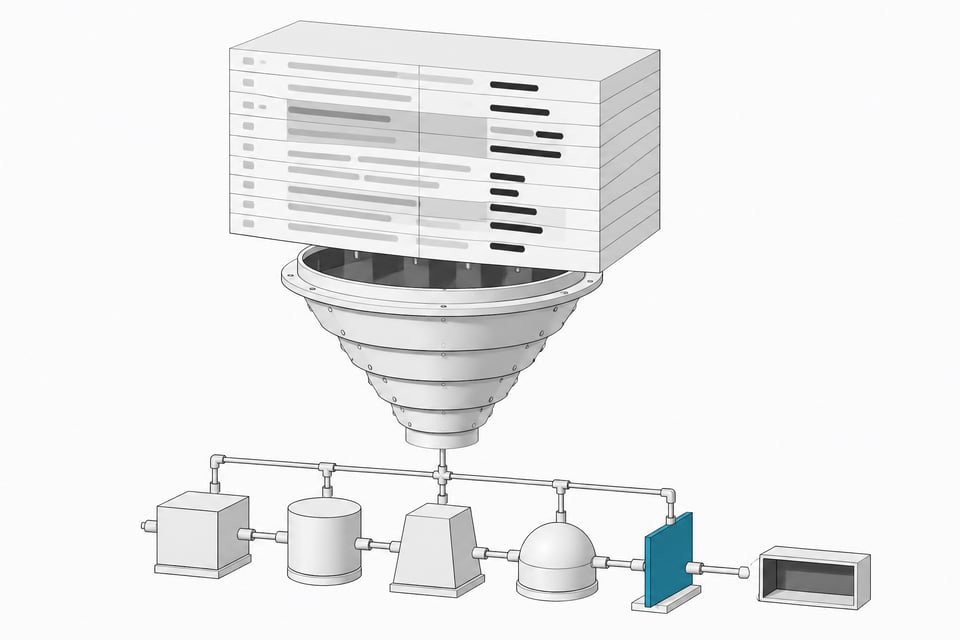
Most of the XAI toolkit built so far was built for a different job. Techniques like LIME and SHAP attach explanations to discriminative models, systems that classify or score something: approve the loan, flag the transaction, predict the churn. They assign weight to input features and tell you which ones moved the decision. A code-generating LLM isn't making a classification. It's producing an artifact, a block of logic with no single decision to attribute. The explainability toolbox built for scoring models doesn't map cleanly onto generated code, and the research community knows it. A scenario-based study out of IBM Research, built from workshops with 43 software engineers, found 11 distinct categories of explainability needs specific to generative code AI: understanding what the model actually saw, why it chose one approach over another, where its limits are, how confident it is. The study's authors proposed four fixes: AI-generated documentation, indicators of model uncertainty, visualizations of what the model attended to, and "social transparency," meaning visibility into how other developers treated the same suggestion. None of that exists as a standard feature in mainstream coding assistants yet. The gap is real and measured, not theoretical.
Why is AI-written code so hard to understand?
Two separate mechanics are at play here, and conflating them is where most teams go wrong.
The first is architectural: a code-generating model has no persistent reasoning to hand back to you. It predicted the next most plausible token given a prompt and a context window. There was no design discussion, no weighing of tradeoffs written down anywhere you can retrieve. Ask it to explain itself after the fact and you get a plausible-sounding story generated after the code, not a transcript of the process that actually produced it.
The second is a measurable shift in what the code itself looks like. GitClear analyzed 623 million code changes from 2023 through 2026 and found the AI era rewriting the shape of commits: code duplication up 81%, refactor-and-move activity (the signal of real reuse) down 70%, legacy-code refactoring down 74%, and error-masking or obfuscation constructs up 47%. That's not developers getting lazier. It's the natural output of a tool that's very good at generating a plausible new block and much worse at noticing a similar block already exists three files over.
The term for the human-side consequence is cognitive debt: understanding that never formed in the first place because the AI skipped the iterative struggle that normally builds a developer's mental model of a system. Unlike technical debt, cognitive debt doesn't live in the repo. It lives in people's heads, which means static analysis won't find it. Nobody notices it accruing until a production incident forces someone to explain code that nobody, including the person who committed it, ever actually understood.
What does this actually cost teams?
Three independent studies converge on the same finding from different angles, and that kind of corroboration is worth taking seriously.
- Sonar's 2026 survey of more than 1,100 developers found AI now accounts for 42% of committed code, on a trajectory toward 65% by 2027. Despite that volume, 96% of developers say they don't fully trust AI-generated code, and only 48% say they always verify it before committing. Thirty-eight percent say reviewing AI-written code takes more effort than reviewing a human colleague's. That's the verification bottleneck: the tool outruns the trust needed to use it safely, and the review step meant to catch the gap is itself the slowest part of the pipeline.
- A Stanford study found the mismatch runs deeper than slow review. Developers given access to an AI code assistant wrote measurably less secure code than developers without one, while reporting higher confidence that their code was secure. Worse output paired with more confidence is exactly the condition where nobody double-checks the thing that needed double-checking. (We've written before about governance rules for securing code your AI wrote, and this is the root cause those rules exist to address.)
- A 2026 Anthropic randomized controlled trial of 52 software engineers found that using AI assistance to learn a new library produced a 17% lower score on a comprehension quiz taken minutes later, nearly two letter grades, with the biggest gap in debugging: the ability to recognize why code is wrong. The one bright spot: participants who used AI to ask follow-up and conceptual questions, instead of just generating code, retained significantly more understanding. The tool isn't inherently a comprehension killer. How you use it determines whether you end up owning the knowledge or just the output.
How does reverse engineering work as the audit layer?
If explainability has to happen at generation time and mostly doesn't, reverse engineering is what reconstructs the "why" after the fact, using the only reliable source left: the code itself.
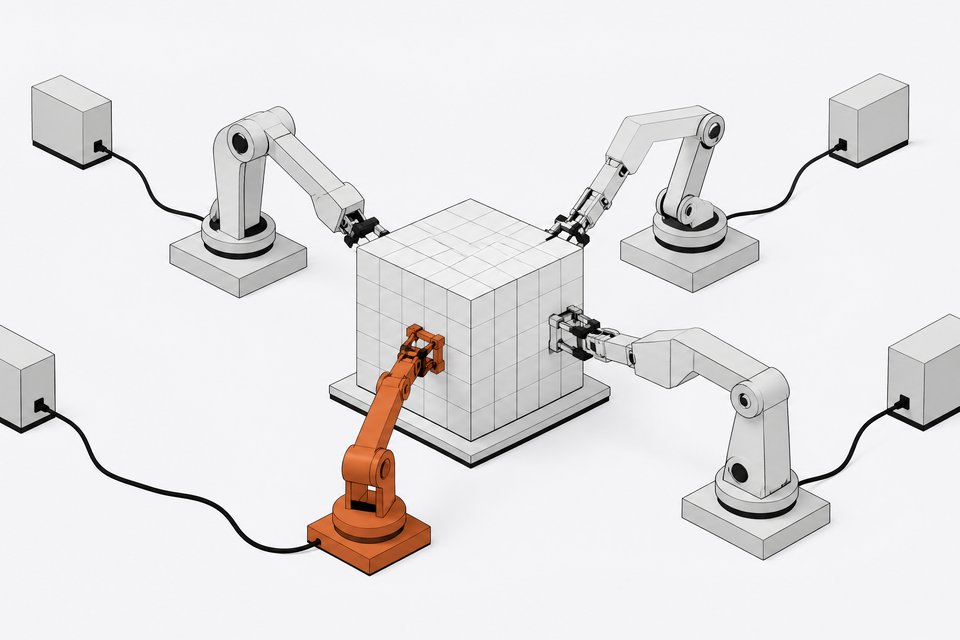
Architecture verification tools, the kind vendors like Axivion build for safety-critical codebases, extract the real structure, dependencies, and hidden couplings directly from the code when original design documentation is missing, outdated, or never existed because an AI assistant wrote the module in an afternoon. That's a direct answer to the gap left when a model can't explain its own logic: stop trying to recover intent from the model and recover structure from the artifact instead.
In practice this looks like a small set of recurring techniques:
- Automated architecture recovery. Static analysis tools map the actual call graph, module boundaries, and dependencies from the compiled or parsed code, independent of what any comment or commit message claims.
- AST-level parsing and delta analysis. Rather than re-reviewing an entire legacy file, teams hold only the new or changed code to a stricter bar, isolating what the AI actually touched.
- Line-level uncertainty indicators. Some tooling flags which lines a model generated with low confidence, giving reviewers a place to start instead of scanning everything equally.
- Attention visualization. Surfacing what context the model actually weighed when it produced a block helps a reviewer spot when it generated something based on the wrong file or a stale pattern.
This is the same instinct behind testing AI-generated code like adversarial code rather than trusting it like a coworker's work: treat the artifact as something to interrogate, not something to take on faith because it came from a tool that sounded confident.
What does a working playbook look like before code ships?
None of this requires exotic tooling. The practices that actually hold up are mundane and disciplined:
- Ask the model to explain itself before you accept the output. The explanation it gives you may not be reliable, but formulating the question forces you to notice what you don't yet understand.
- Rotate code review specifically for knowledge transfer, not just defect-finding, so understanding of AI-generated modules doesn't collapse onto one person.
- Keep AI-generated changes small and atomic so each diff can be understood, and reverted, on its own.
- Embed architecture and static-analysis checks in CI, flagging suggestions that violate existing boundaries before they merge rather than after.
- Document as you go, treating the explanation as part of the deliverable, not an afterthought written months later when someone's trying to debug it.
Teams that have formalized this into an actual review cadence have published a six-step framework for auditing AI-generated code in the enterprise, worth pairing with the technical checks above since the organizational process matters as much as the tooling.
Where is regulation already forcing the issue?
This stopped being a purely technical concern once regulators started writing explainability into law. The EU AI Act's transparency and human-oversight obligations for high-risk systems are increasingly treated by internal-audit teams as a compliance checklist item, not a research nicety: can you show how a system arrived at an output, and can a human trace and override it. That expectation is starting to extend to the code running the systems auditors examine. "We don't know why it works" is a fine answer at a hackathon. It is not an acceptable answer in a regulated audit.
The cost of ignoring that is already on the balance sheet. Deloitte estimates technical debt now consumes 21% to 40% of total IT spend, and Forrester projected 75% of technology leaders would see debt severity rise to moderate or high by 2026, pointing directly at AI-generated code entering systems without architectural guardrails as the driver.
Do you own your code, or are you just renting it?
Strip away the vendors and the acronyms and the question is simple: do you own this code, or are you just hoping it keeps working. Code you can't explain, that no reverse-engineering pass has mapped, that no reviewer has stress-tested, isn't an asset. It's a rental you've forgotten you're paying for, and the invoice arrives the day you have to change it under a deadline.
Explainability on the way in and reverse engineering on the way out are how a team converts AI output back into something it actually owns, the same discipline behind the shadow AI governance work companies are now doing for the tools employees build themselves. The alternative to understanding your own software is renting someone else's black box and hoping it never needs an explanation. Eventually it will. Better to have one ready before you're asked.
Frequently Asked Questions
What is explainable AI in simple terms?
Explainable AI (XAI) is a set of methods that let humans understand and verify why a machine learning system produced a given output, instead of trusting a black box. It was originally built for models that classify or score things, like fraud detection, and is only now being adapted for generative code models.
Why can't AI explain the code it writes?
A code-generating model predicts the next most likely token based on patterns in training data and the current prompt. It doesn't retain a design rationale or a record of tradeoffs it weighed. Any explanation it gives you after the fact is a plausible-sounding reconstruction, not a transcript of the reasoning that actually produced the code.
What is cognitive debt and how is it different from technical debt?
Technical debt lives in the codebase as shortcuts that need fixing later. Cognitive debt lives in people's heads: understanding that never formed because AI skipped the iterative process developers normally use to build a mental model of a system. It's invisible until someone has to debug or change code that nobody on the team ever actually understood.
Can static analysis tools reconstruct the logic behind AI-generated code?
Yes, to a degree. Architecture verification and static analysis tools extract the real structure, dependencies, and hidden couplings directly from the code itself, which is useful precisely when original design documentation never existed because an AI assistant generated the module quickly.
Does using AI coding assistants make developers worse at understanding code?
Research suggests it depends on how the tool is used. A 2026 Anthropic study found developers who used AI purely to generate code scored 17% lower on a comprehension quiz than those who coded by hand, but developers who used AI to ask follow-up and conceptual questions retained significantly more understanding.
How we source, write, and correct our articles. Editorial standards