How to Test AI-Generated Code: A Practical QA Framework
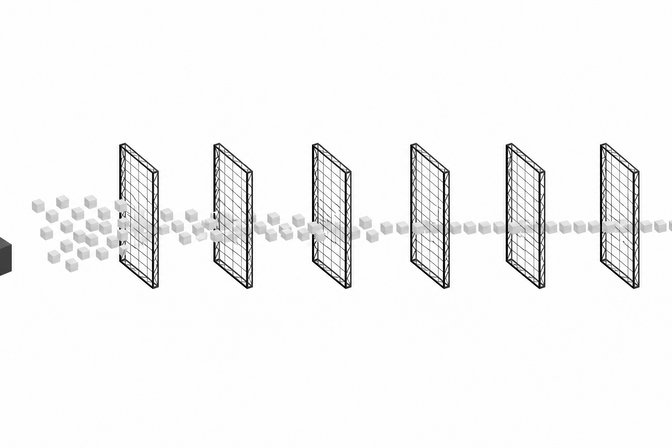
Traditional QA assumed a human wrote the code slowly enough for someone else to check it. AI coding agents broke that assumption. Here's the lightweight framework that replaces the old gate.

- 01Roughly 27% of staff use unsanctioned AI tools that often bypass traditional quality assurance.
- 02AI models introduce security vulnerabilities in 45% of tests, and larger models do not fix this.
- 03AI-assisted developers are more likely to write insecure code while falsely believing it is safe.
- 04Mutation testing is crucial because AI models that write both code and tests verify nothing.
- 05Shadow AI breaches cost organizations an average of $670,000 more than typical data breaches.
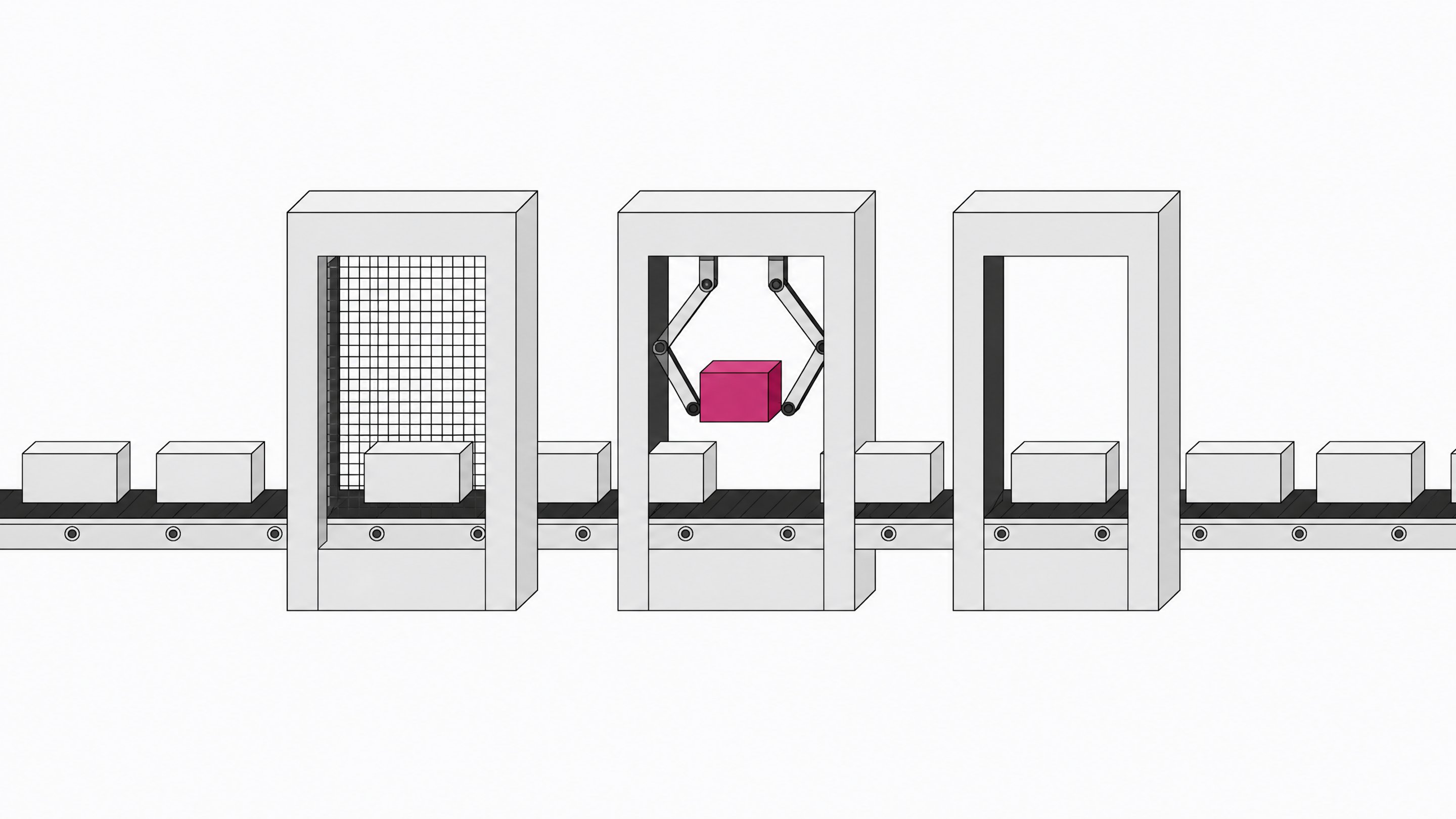
To test AI-generated code, run automated security and static analysis before any human reviews it, verify your tests actually catch bugs with mutation testing rather than trusting coverage numbers, favor integration and end-to-end tests over mocked unit tests for anything touching real data, and apply a risk tier so a throwaway prototype doesn't get the same scrutiny as a tool that reads customer records.
That's the short version. Here's why the old process can't keep up.
Why traditional QA breaks when employees generate their own software
For most of software history, the bottleneck was writing the code. A developer spent days on a feature, and that time bought room for a QA cycle: a ticket, a staging environment, a reviewer with a checklist. The pace of writing set the pace of checking.
AI coding agents removed that constraint. A marketing manager can now describe a tool, watch an agent write it, and have something running by lunch. Gartner had already projected in 2021 that 70% of new enterprise applications would use low-code or no-code platforms by 2025, up from under a quarter in 2020, so the shift toward employee-built software predates generative AI.1 What AI coding agents did was generalize that shift to anyone who can type a prompt, and compress the timeline from weeks to hours.
The result is a lot of software nobody planned to govern. Reco's 2025 State of Shadow AI Report found companies with 11 to 50 employees average 269 unsanctioned AI tools per 1,000 employees, roughly 27% of staff actively using tools IT never approved.2 These tools are rarely as disposable as people assume. Some stick around for over 400 days before anyone formally reviews them.2 A grey-literature review of vibe coding practice found speed is the dominant motivation, cited in 62% of coded reasons for the approach, while quality assurance is often skipped, delegated back to the AI, or replaced with what researchers call "run-and-see" validation, which confirms the code runs but not that it's correct.3 That gap is the QA crisis this framework is built to close.
How AI-generated bugs differ from human bugs
Old review habits assumed certain failure patterns: a forgotten edge case, a typo, an off-by-one error. AI-generated code fails differently, and reviewers who skim for familiar problems miss the new ones.
- Confident incorrectness. The code reads as clean, idiomatic, well-commented, and wrong. Plausible is not the same as correct, and modern agents produce plausible output at a volume no human reviewer can fully verify line by line.4
- Hallucinated APIs and packages. Agents invent methods, endpoints, and even open-source packages that don't exist, which attackers can exploit by registering the fake package name first.
- Insecure defaults. Veracode's analysis of over 100 large language models found AI-generated code introduced a security vulnerability in 45% of tests, and that rate has held flat even as models have grown more capable.5 Bigger models are not measurably safer models.
- False confidence in the person reviewing it. A Stanford study gave one group of developers an AI coding assistant and left another group without one. The assisted group wrote measurably less secure code and was more likely to believe it was secure. On a signing task, only 3% of the assisted group produced a secure solution compared with 21% of the control group.6
That last point should worry you most. The people generating this software aren't being careless. They're being reasonably confident in output that hasn't earned the confidence it gets.
Step 1: Run automated security and static analysis before any human looks at it
Don't start review by reading the code. Start by running it through tools that don't get tired or reassured by clean formatting.
- Secret scanning for hardcoded keys, tokens, and credentials, which agents will happily embed if a prompt or example nudges them toward it.
- Static application security testing (SAST) to catch the injection, auth, and access-control flaws that Veracode's research shows AI models introduce at a stubbornly high rate.5
- Dependency and package verification, since hallucinated package names are a real supply-chain risk unique to AI-generated code.
- Agency audit: check what the tool and any agent that built it can actually do. OWASP's 2025 Top 10 for LLM applications named Excessive Agency as a distinct risk category, the danger that an agent is granted more functionality, permissions, or autonomy than the task needs, including performing high-impact actions like deletions without confirmation.7 An agentic CLI that can read and write files or call internal APIs unsupervised is exactly this risk in practice.
This is the gate, not a suggestion. CIOs who are actively encouraging non-engineers to vibe-code their own tools, at companies like EnFi, Skillsoft, and Agiloft, still route every branch through the same automated checks and human review before production, regardless of who wrote it.8 As EnFi's CTO Scott Weller put it, opening development to non-engineers risks code that works but doesn't follow project conventions, creating technical debt faster than manual development.8 The fix isn't to slow the writing down. It's to make the checking automatic. Our step-by-step security workflow for AI agent code walks through how to wire these scans into a merge gate rather than a manual chore.
Step 2: Don't trust coverage, verify tests actually test something
Here's the trap. You ask the agent that wrote the code to also write the tests. The tests pass. You conclude the code works.
This is the verification paradox: if the same model writes both the implementation and the test, you have verified nothing. A bug simply agrees with itself.9 The test suite can hit 90% line coverage while never actually asserting the thing that matters, because the model that wrote the assertions inherited the same misunderstanding that produced the bug.
Mutation testing is the fix. It deliberately introduces small changes, or mutations, into the code, then checks whether the test suite notices. A test suite that still passes after you flip a comparison operator or swap a return value isn't testing anything, no matter what its coverage number says. Practitioners recommend targeting a mutation score of 60 to 70% on critical modules, a metric that can't be gamed by a model optimizing for coverage alone.9 Our companion piece on how to test AI-generated code before it breaks production goes deeper into building this into a pipeline rather than a one-off audit.
Step 3: Test behavior at the boundary, not the mock
AI-generated unit tests tend to mock aggressively. The agent isolates the function, stubs out the database call, the API response, the auth check, and confirms the function behaves correctly against the stub. That's a real result about the stub. It's not a real result about production.
For anything that touches real data, real authentication, or a real external system, weight your testing toward integration and end-to-end checks instead of mocked units. This matters more than it used to, because the code changing around those boundaries is accumulating faster than it's being cleaned up. GitClear's analysis of over 211 million changed lines of code found that as AI-assisted coding spread, refactored code fell from about 25% of changes in 2021 to under 10% in 2024, while copy-pasted code rose from 8.3% to 12.3%, for the first time exceeding the rate of code being moved and cleaned up.10 With 63% of professional developers now using AI in their workflow, according to the same research, that duplication compounds across every tool your employees generate.10 A unit test that mocks around messy, duplicated boundary code will keep passing long after the boundary itself has broken.
Step 4: Apply a risk tier, not one bar for everything
Not every tool your employees generate deserves the same scrutiny. A script that reformats a spreadsheet for one person's use is not the same risk as a tool that writes to a shared database or touches customer records. Applying full QA rigor to both wastes effort on the low-risk tool and, worse, gives the high-risk one a false sense of having been checked.
A workable tiering looks like this:
- Personal or throwaway tools. Single user, no persistent data, no connection to production systems. Automated security scan only. No mutation testing required.
- Team tools with shared access. Multiple users, some stored data, limited external connections. Automated scans plus integration tests on any data-writing path, and a human review of the diff before it's shared beyond its creator.
- Tools touching customer data or production systems. Full gate: SAST, dependency checks, mutation testing on critical logic, end-to-end tests at every boundary, and mandatory human review treating the AI-authored code exactly like a junior engineer's pull request.
| Scope | Automated security scan | Mutation testing | Integration/E2E tests | Human review rigor | |
|---|---|---|---|---|---|
| Tier 1: Personal/throwaway toolssingle-user, no persistent data | Single user, no persistent data, no production link | Yes | No | No | Low |
| Tier 2: Team tools with shared accessmulti-user tools with some stored data | Multiple users, some stored data, limited external connections | Yes | No | Yes | Medium |
| RecommendedTier 3: Tools touching customer data or productioncustomer data or production systems | Customer data or production systems | Yes | Yes | Yes | High |
The tier isn't about trust in the employee. It's about the blast radius if the tool is wrong.
Step 5: Put a governance gate around who can ship what, and where the tool lives
QA alone doesn't solve the underlying problem, because a tool can pass every check and still be a tool nobody in IT knows exists. Shadow AI breaches already cost organizations an average of $670,000 more than a typical data breach, and roughly one in five organizations has experienced a breach or leak tied to unauthorized AI use.211 The cost isn't hypothetical.
Testing needs to sit inside a lightweight governance layer that tracks, at minimum, which tools exist, what data they touch, who can access them, and how they get decommissioned once they've outlived their purpose. That's a different problem from code quality, but it's the one that turns a well-tested tool into an accountable one. Teams building this layer from scratch are recreating the sandbox model described in our guide to managing employee AI agents without banning them outright, and it's worth reading alongside this framework rather than after it. If you're weighing whether to keep building this verification layer in-house or adopt a platform built for it, tools like Remy are built to own and govern the software employees build with AI, rather than treat each tool as a one-off risk to manage by hand.
What should your AI-generated code testing checklist include?
Before any AI-generated tool moves from one person's laptop to shared use, run through this:
- Automated secret scan and SAST completed, with no unresolved high-severity findings.
- Dependencies verified against real, existing packages, not hallucinated ones.
- Agent permissions reviewed for excessive functionality or autonomy beyond the task.
- Mutation testing run on critical logic, with a target score of 60 to 70%, not just line coverage.
- Integration or end-to-end tests covering any path that touches real data, auth, or external systems.
- Risk tier assigned, matching QA effort to what the tool can actually break.
- Tool logged somewhere IT can see it, with an owner and a decommission plan.
None of this requires rebuilding a full software development lifecycle. It requires treating every piece of AI-generated code, regardless of who wrote the prompt, as a pull request from someone you haven't met yet. That's the posture that matches the risk.
Run automated secret scanning and static analysis first, then verify your test suite with mutation testing rather than trusting coverage alone, prioritize integration and end-to-end tests for anything touching real data or auth, and match the depth of testing to how much damage the tool could do if it's wrong.
It reads as clean and confident even when it's wrong, and studies show developers using AI assistants are more likely to believe their code is secure when it measurably isn't, which undermines the instinct-based review that worked for slower, human-paced code.
Mutation testing deliberately introduces small bugs into code to see if the test suite catches them. It matters here because when the same AI writes both the implementation and its tests, the tests can encode the same errors as correct, so a high coverage number can hide a suite that verifies nothing.
No. A personal, single-user tool with no stored data needs only a basic security scan, while a tool touching customer data or production systems needs the full gate: security scanning, mutation testing, end-to-end tests, and mandatory human review.
Beyond bugs, it's ungoverned exposure. Shadow AI-related breaches already cost organizations an average of $670,000 more than a typical breach, and these unsanctioned tools tend to stay in use for over a year before anyone reviews them.
- 1Gartner Predicts 70% of Enterprise Apps Will Use Low-Code by 2025Forbes
- 2Popular Doesn't Mean Secure - The 2025 State of Shadow AI Report FindingsReco
- 3Vibe Coding in Practice: Motivations, Challenges, and a Future Outlook – a Grey Literature ReviewarXiv (Massey University / University of Auckland)
- 4How to Review AI-Generated Python Code EfficientlyReal Python
- 5October 2025 Update: GenAI Code Security ReportVeracode
- 6Do Users Write More Insecure Code with AI Assistants?Stanford University / arXiv (CCS '23)
- 7LLM06:2025 Excessive AgencyOWASP Gen AI Security Project
- 8CIOs are enlisting business users to vibe code their own appsCIO.com
- 9How to Test AI-Generated Code: Best Practices & Checklist (2026)TestDino
- 10AI Copilot Code Quality: 2025 Look Back at 12 Months of DataGitClear
- 11The Invisible Enterprise: Shadow AI and the Ungoverned FrontierCloud Security Alliance