How to Manage Multiple AI Coding Agents: A Practical Guide
Learn how to run Claude Code, Copilot, Cursor, and Codex together with a secrets vault, git worktrees, task routing, human review gates, and audit trails.

How do you manage multiple AI coding agents?
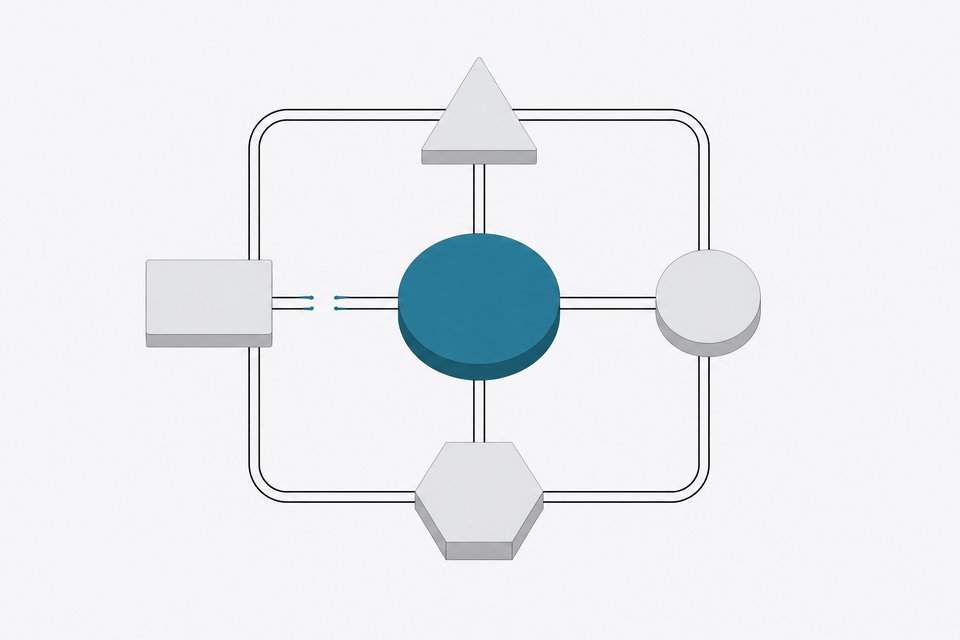
You manage multiple AI coding agents by treating orchestration as infrastructure, not improvisation: centralize credentials in a vault instead of per-tool keys, isolate each agent's workspace with git worktrees, route tasks deliberately instead of letting employees free-run their favorite tool, enforce one mandatory human review gate regardless of which agent wrote the diff, and log every agent's actions in an audit trail that survives an actual incident.
Here's why each piece matters, and what breaks if you skip it.
TL;DR
- By mid-2026, 90% of professional developers use AI coding agents at work at least weekly, so multi-agent use is the baseline rather than a pilot.
- Private internal repositories are six times more likely to contain a hardcoded secret than public ones, so credentials belong behind a vault with short-lived tokens per agent session.
- Giving each agent its own git worktree keeps sessions from touching each other's uncommitted files and makes "which agent broke this" a
git loglookup. - Routing tasks through hierarchical delegation, pipeline handoff, or fan-out/fan-in replaces individual tool preference with a deliberate decision about which agent gets which job.
- AI-written code produces 1.7x more issues per pull request than human-written code, so every diff needs a human review gate before merge regardless of which tool wrote it.
- Organizations with high shadow AI usage paid a $670,000 premium on average per data breach, which is why an exportable audit trail matters.
Why is 'just use more AI agents' already a management problem?
This stopped being a hypothetical a while ago. As of mid-2026, 90% of professional developers use AI coding agents at work at least weekly, and 68% use them daily. That's not a pilot program. That's the baseline.
The bigger shift is which tools they're using, and how many at once. Claude Code adoption jumped from 18% to 39% of developers worldwide between January and mid-2026, hitting 47% in the US, while GitHub Copilot's share fell from 29% to 21% over the same stretch. Read that as what it is: most engineering orgs now have two or three agents running in active use simultaneously, not one sanctioned default. And it's not just engineers. Nearly 80% of new developers on GitHub try Copilot within their first week of signing up, meaning AI-assisted coding is now a day-one default for people who aren't full-time software engineers either.
We've covered elsewhere how this plays out when individual employees start shipping real software with these tools in an afternoon, often without IT ever seeing a ticket (see how IT keeps employee-built AI apps accountable). The multi-agent version of that problem is sharper. When five people are each running a different combination of Claude Code, Copilot, Cursor, and Codex against the same internal codebase, the risk isn't that any one of them picked a bad tool. It's that nobody owns the system connecting them. Here's how to build that system.
Why should you centralize API keys and secrets first?
Start here, because this is where the damage compounds silently. GitGuardian found 28.65 million new hardcoded secrets exposed in public GitHub commits in 2025, a 34% year-over-year jump and the largest single-year increase on record. Secrets tied to AI services specifically were up 81%, and MCP configuration files, now common in agent setups, exposed more than 24,000 unique secrets in their first year of adoption alone.
Two findings should change how you think about this specifically for coding agents:
- AI-assisted commits leak more. Commits co-authored by Claude Code leaked secrets at roughly double the human baseline rate across 2025, peaking at 2.4x in August before converging toward baseline by December as workflows matured. The lesson isn't that Claude Code is uniquely risky. It's that any agent given broad file access during an immature rollout will find and expose credentials faster than a human would.
- Private repos are not safer. Internal and private repositories are six times more likely to contain a hardcoded secret than public ones (32.2% vs. 5.6%). If your mental model is "it's fine, nobody outside the company can see it," that model is backwards for exactly the repos your internal tools live in.
The fix is structural, not behavioral. Don't ask each employee or each tool to "be careful" with keys. Put credentials behind a vault with non-human-identity scoping, issue short-lived tokens per agent session, and make key rotation a platform function instead of a per-project chore. If an agent needs an API key to call an internal service, it should request one from a broker that knows which agent, which task, and which human requested it, not pull a static secret out of a config file that four other tools can also read.
How do you give every agent its own isolated workspace?
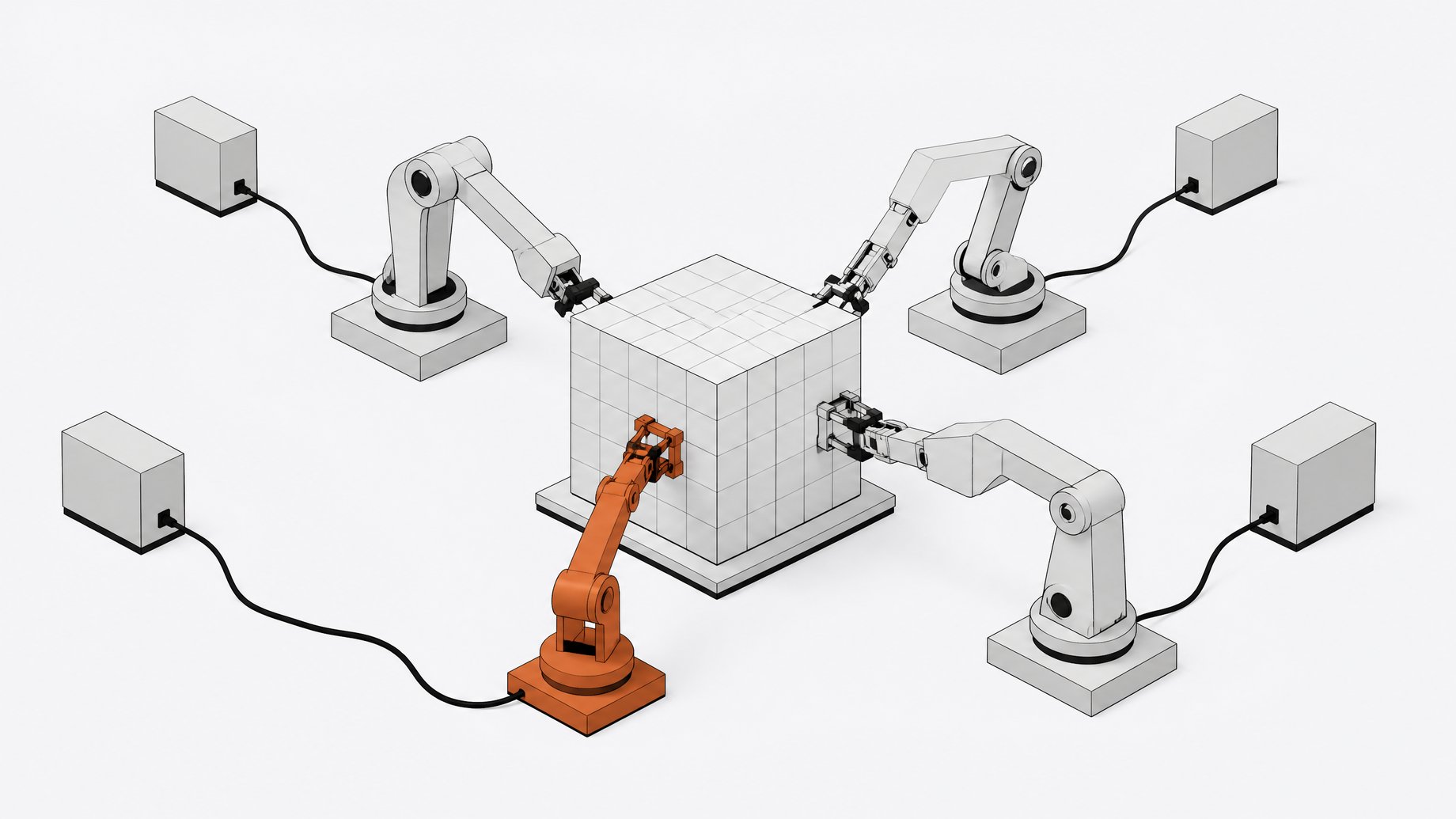
File collisions are the most mundane way multi-agent setups fail, and they're also the easiest to fix. The standard pattern is git worktrees: each agent session gets its own checked-out working directory from the same repository, sharing one .git history but never touching another session's uncommitted files.
Anthropic's own documentation describes worktrees as one of several mechanisms for running Claude in parallel, alongside subagents that split work inside a single session and cross-session messaging that lets separate worktree sessions pass findings to each other. In practice, teams running three, four, or five agent sessions against the same codebase use worktrees specifically so none of them interferes with the others' edits.
This matters more as you mix tools, not fewer. A Cursor session, a Codex session, and a Copilot-assisted human editing the same file in the same checkout is a recipe for merge conflicts nobody can explain later. Isolating each agent's workspace turns "which agent broke this" from a forensic exercise into a git log lookup.
Why should you route tasks by job instead of by preference?
Once credentials and workspaces are handled, the next failure mode is coordination: five people each defaulting to whichever agent they personally like, applied to whatever task is in front of them, with no sense of who's doing what.
The better pattern borrows from how distributed teams have always worked, just with agents in some of the roles:
- Hierarchical delegation. One orchestrating agent or lead developer breaks a feature into subtasks and assigns each to a specific agent based on its strengths, then integrates the results.
- Pipeline handoff. One agent scaffolds, another writes tests, another refactors for style and performance, each stage gated before the next starts.
- Fan-out/fan-in. Multiple agents attack independent parts of a problem in parallel (separate worktrees help here too) and a single reviewer merges the results.
What all three have in common is a decision point: someone or something decides which agent gets which task, instead of leaving that decision to individual preference. This is also where our piece on the best AI coding agents of 2026 is useful groundwork; knowing each tool's actual strengths is what makes deliberate routing possible instead of arbitrary. The goal isn't to ban Cursor in favor of Claude Code or vice versa. It's to stop a five-person team from running five uncoordinated agents against the same ticket queue with no shared sense of who owns what.
Why require a human review gate before every merge?
This is the gate that doesn't move, no matter which tool wrote the diff. The evidence for why is consistent across three independent studies, which is rare enough to take seriously.
- Veracode. Tested over 100 LLMs writing code across Java, Python, C#, and JavaScript and found 45% of code samples failed security tests and introduced OWASP Top 10 vulnerabilities, with Java hitting a 72% failure rate. Newer, larger models performed no better on security, even as they got more functionally correct.
- CodeRabbit. Its analysis of 470 real-world pull requests found AI-generated code produced 1.7x more total issues than human-written code (10.83 vs. 6.45 findings per PR, widening to 26 vs. 12.3 at the 90th percentile) and was up to 2.74x more likely to introduce cross-site scripting vulnerabilities.
- An independent academic analysis. Of 7,703 AI-attributed code files, 87.9% had no CWE-mapped vulnerability overall, but risk varied sharply by language: Python code showed 16-18.5% vulnerability rates versus 2.5-8.99% for JavaScript and TypeScript.
That last point matters for how you write the policy, not just whether you have one. A flat rule works for the gate itself (every diff gets human review before merge, full stop), but your scrutiny level should flex by language and risk surface. Python backend code touching data handling deserves a harder look than a TypeScript UI tweak, because the data says the risk isn't evenly distributed.
The mechanics are familiar: branch protection, required CI checks, and a named code-owner approval, applied identically whether the diff came from Copilot, Cursor, Codex, or a human. If you're also trying to figure out how your pipeline validates all this AI-generated volume in the first place, that's the exact problem we cover in how teams are fixing the CI/CD bottleneck.
How do you build an audit trail that survives an incident?
The first four practices reduce risk. This one determines what happens when risk turns into an incident anyway.
IBM and Ponemon's 2025 Cost of a Data Breach study, covering 600 breached organizations, found that those with high levels of shadow AI paid an average of $4.74 million per breach versus $4.07 million for organizations with low or no shadow AI, a $670,000 premium. Shadow AI breaches disproportionately exposed customer PII (65%) and intellectual property (40%). The access-control gap behind that premium is stark: 97% of organizations that had an AI-related security breach lacked proper AI access controls, and 63% of all breached organizations had no AI governance policy or were still developing one.
That gap exists partly because AI tool use spreads faster than policy does. More than 80% of employees reportedly use unapproved AI tools at work, and once source code, credentials, or sensitive documents go into an unsanctioned tool, they typically can't be retrieved or deleted. A ban-only policy doesn't close that gap. A sanctioned, logged workflow does.
The practical version of an audit trail connects the task, the agent's identity, the policy version in force, the commit, test results, review findings, human approval, and the deployment, all in one exportable record. That's not a nice-to-have for compliance season. It's the thing that lets you answer, in minutes instead of weeks, exactly which agent touched what, under whose approval, when an incident happens. If runaway API spend from employee-wired agents is also on your worry list, this piece on capping agent costs before they blow the budget is worth pairing with this one.
What is the standardization payoff of fewer shadow tools and fewer surprises?
None of these five practices depend on picking the "right" agent. That's the point. A vault for credentials, worktrees for isolation, deliberate task routing, a non-negotiable review gate, and an audit trail that survives scrutiny: none of that cares whether the diff came from Claude Code or Copilot or Cursor or Codex. That's what makes it infrastructure instead of a workflow hack.
Teams that skip this step don't end up with no AI coding agents. They end up with all of them, running unmanaged, each with its own keys, its own blind spots, and no shared record of what shipped and why. Teams that build this layer end up with the opposite: a system they own, that happens to run whichever agent is best for the job. That ownership layer, not the agent itself, is what turns scattered employee-built tools into something a company can actually stand behind. That's the real difference between managing multiple AI coding agents and just hoping they manage themselves.
Frequently Asked Questions
What's the biggest risk of running multiple AI coding agents at once?
It's not picking the wrong agent. It's the absence of a shared system for credentials, task routing, and code review. Without that, you get overlapping file edits, inconsistent security scrutiny, and no record of which agent did what, which is exactly the setup that drives up breach costs when something goes wrong.
Do git worktrees really stop AI agents from conflicting with each other?
They stop the most common failure mode, which is simultaneous edits to the same files. Each agent session gets its own checked-out directory sharing one git history, so multiple Claude Code, Cursor, or Codex sessions can work on the same repo without stepping on each other's uncommitted changes.
Should every AI agent's code go through the same review process?
Yes. Independent studies from Veracode and CodeRabbit found AI-generated code fails security tests and introduces vulnerabilities at meaningfully higher rates than human code, and the rate varies by tool and language. The safest policy applies one mandatory human review gate to every diff, regardless of which agent wrote it.
Why do private or internal repos need the same secrets protection as public ones?
Because the data runs opposite to intuition: internal and private repositories are six times more likely to contain a hardcoded secret than public repos. The assumption that private means safe is the exact assumption that leads to exposed credentials.
What should an audit trail for AI coding agents actually record?
At minimum, it should connect the task, the agent's identity, the policy version in force, the commit, test results, review findings, the human approver, and the deployment. That record is what lets a team reconstruct exactly what happened during an incident instead of guessing.
How we source, write, and correct our articles. Editorial standards