Open Source AI IDEs for Agents: Inside the Workspace Replacing Solo Coding
Cline Desktop and Whiteboard prove the coding agent has outgrown the sidebar. Here's what an open-source, agent-native IDE actually is, and what it takes to own one instead of renting a closed subscription.

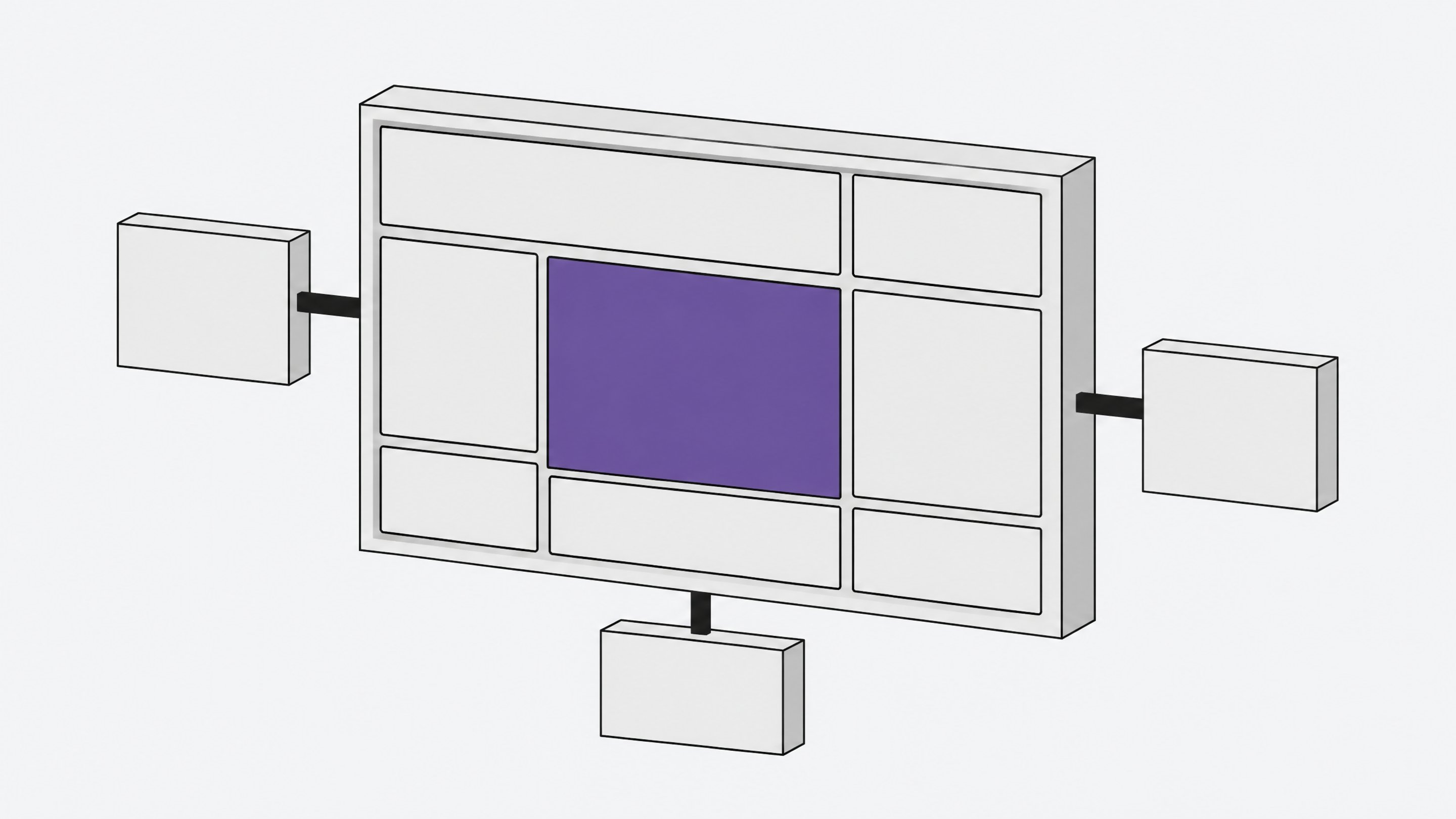
An open-source AI IDE for agents is a development environment built around a coding agent as a first-class user, not a plugin bolted onto one. It's self-hostable, model-agnostic, and licensed so you can inspect, modify, and run it on your own infrastructure. Cline Desktop and Whiteboard are the two clearest examples in 2026, and neither one looks like the IDE you learned to code in.
The IDE was built for one typist. It isn't built for this.
The modern code editor assumes a single human typing, with autocomplete filling in the next few tokens. That model held up fine when AI's job was finishing your sentence. It stopped holding up once agents started finishing your tickets.
Coding agents now plan a task, touch a dozen files, run tests, and hand back a result that looks less like a keystroke and more like a colleague's pull request. Reviewing that inside an editor extension means scrolling through a raw diff and trying to reconstruct intent from line changes. That's the wrong interface for the job. It's the same problem that showed up when the best AI coding agents moved from autocomplete to full task execution: the editor kept the agent's output, but nothing was built to hold its reasoning. A distinct category of tooling had to show up to fill that gap, which is why "open source AI IDE for agents" has become something people actually search for, rather than a phrase vendors invented.
What does "open source AI IDE for agents" mean in 2026?
The category sits between three older ones, and it borrows from all three:
- IDE extensions, like Cline's original VS Code plugin, which put an agent inside a familiar editor but kept the editor's assumptions about single-file, single-user editing.
- Terminal agents, like Aider and OpenCode, which strip the interface down to a chat loop over your shell and git history.
- Full desktop or canvas apps, like Cline Desktop, Whiteboard, OpenHands' Agent Canvas, and Goose, which give the agent its own standalone surface, separate from any editor window.
What makes a tool count as "agent-native" rather than "agent-assisted" is design, not marketing. The workspace assumes an agent will act inside it unsupervised for stretches of time, the model behind it is swappable rather than fixed to one vendor's API, and the license lets you run the whole thing on hardware you control. Whiteboard and Cline Desktop both clear that bar, and they clear it in almost opposite directions.
Case study: Whiteboard turns code review into a shared canvas
Whiteboard, from YC W26 startup /dev/fast, is an MIT-licensed desktop app that plugs into agents you already run, including Claude Code and Codex, and gives them an SDK to draw their own work.1 Instead of writing a diff, the agent draws a sequence diagram, an entity-relationship diagram, or logs a decision to a chronological Decision Log, so a human can see the shape of a design before reading a single line of implementation.12
Under the hood it's a vendored, trimmed fork of Code OSS, the open-source base of VS Code, with roughly 45% of the upstream codebase removed, mostly the Copilot integration and telemetry code Whiteboard has no use for.2 A custom Rust engine parses code into Tree-Sitter ASTs and produces what its builders call a semantic diff: boilerplate collapses into pseudocode summaries instead of raw text changes, so a reviewer sees what actually changed in behavior rather than in syntax.2
The deliberate limit is that Whiteboard cannot edit code. It's read-only by design, meant to sit alongside a real IDE rather than replace one.13 It launched via Show HN on September 24, 2026, picked up roughly 313 points, and its repository sat near 850 GitHub stars soon after.3 That's a small tool by download counts. It's a large signal about what developers are asking for: a place to negotiate design with an agent before code exists to diff at all.
Case study: Cline Desktop makes the agent a standalone worker
Cline Desktop takes the opposite approach. Announced September 14, 2026, it pulls the same Cline agent harness that started as a VS Code extension out of any editor entirely.45 Point it at a workspace and it works there directly, reading, editing, and running code with no editor window open.4
Its other bet is on the model layer. Cline Desktop is built around open-weight models, including DeepSeek V4 Flash/Pro, GLM 5.3 Flash, and Kimi K3, available through the paid ClinePass tier, or through bring-your-own-key access spanning 300 models and more than 50 providers.45 Readers weighing which open model actually holds up for real coding work can see the current field laid out in the best local open-source LLM options for coding.
The app is Apache 2.0 licensed, matching the extension and CLI it's built on.56 Cline has grown fast under that license: GitHub's Octoverse 2025 report named it the fastest-growing AI-focused open-source project by contributor count, up 4,704% year over year, and it now counts more than 11 million developers using it.75
The feature that changes the risk profile is scheduling. Cline Desktop supports parallel agent sessions and cron-style scheduled tasks, meaning the agent can now run on a timer, unattended, holding its own credentials and its own network access.85 That's no longer a supervised pair-programming session. It's closer to a background service.
Why open-weight models are the other half of this story
Neither Whiteboard nor Cline Desktop would matter much if open-weight models were still a compromise. They aren't, at least not for long. OpenRouter and a16z's 100-trillion-token State of AI study found open-weight models reached roughly one-third of total token volume by late 2025, and programming queries are the fastest-growing use case on the platform, up from about 11% of token volume in early 2025 to more than half in recent weeks.9
MIT Sloan-affiliated research from Nagle and Yue found that open models land at about 90% of closed-model performance on release and close that gap within roughly 13 weeks, while costing about 87% less per token to run.10 Closed models still account for close to 80% of usage on OpenRouter despite that gap, which the researchers estimate leaves roughly $25 billion a year in unrealized savings on the table.10 A separate read of the same dataset finds open-source share has actually held fairly stable in the 22-25% range over the past year, with a brief spike near 35% during a wave of Chinese model releases, even as coding specifically becomes the sharpest area of open-versus-closed competition: programming now makes up 60% of Anthropic's usage and 45% of xAI's.11 Coding is where this fight is happening first, and an agent-native IDE that treats the model as swappable is the tool built for that fight, not against it.
The governance catch: who is accountable when the agent runs unattended?
A scheduled agent with its own credentials and its own network egress is not a feature request. It's a new kind of thing on your network. ibl.ai's read of Cline Desktop makes this explicit: once an agent runs on a cron job with its own identity, it behaves like a build runner or a service account, not like a developer's session, and it needs the controls that come with that: per-agent identity, allowlisted egress, approval gates on consequential actions, and an audit trail independent of the agent's own logs.8
None of that arrives by default just because the client is open source. Open source gives you the ability to add those controls. It does not add them for you. That distinction matters because the underlying risk is already showing up in the numbers. IBM's 2026 Cost of a Data Breach Report found shadow AI, including tools employees adopt or configure without formal governance, was present in 43% of security incidents, more than double the prior year's share.12 A developer who installs a scheduled desktop agent on their own laptop, outside procurement, outside any change log, is the exact profile that statistic describes. The fixes are the same ones that apply to any ungoverned AI tool in the building, laid out in detail in how to govern shadow AI tools with open-source controls.
Where Whiteboard and Cline sit in the wider field
OpenHands' comparison of seven leading self-hosted coding agents, including itself, OpenCode, Cline, and Aider, maps the category along a few practical axes rather than hype:
- License. Most of the field, Cline included, is MIT or Apache 2.0, which is what makes self-hosting and modification legally straightforward in the first place.13
- Interface. OpenCode and Aider stay terminal-first; Cline spans extension, CLI, and now desktop; Whiteboard and OpenHands' Agent Canvas go visual.131
- Enterprise governance. Cline stands out here specifically, with on-prem and air-gapped deployment, plus an Enterprise tier adding RBAC, SSO, SCIM, audit logs, VPC deployment, and OpenTelemetry.13
- Popularity as a proxy for momentum. OpenCode leads on raw GitHub stars, north of 185,000, which says more about developer curiosity than about production readiness.13
Use those axes, not the marketing copy, to place any new entrant you run across. A team building a full self-hosted pipeline around these agents will recognize most of this from the practical guide to self-hosting AI coding agents.
Should you build your own agent IDE or rent one?
An open-source, model-agnostic, self-hostable agent IDE is a form of ownership, in the same sense the rest of this publication uses that word. You are not locked to one vendor's roadmap, one model's pricing, or one company's decision about what your agent is allowed to see. Renting a closed IDE subscription buys convenience today at the cost of that flexibility later, and the bill compounds as your agent fleet grows from one assistant to a scheduled team of them.
Before adopting any tool in this category, run it through a short checklist:
- License. Confirm it's genuinely permissive (MIT, Apache 2.0) rather than source-available with restrictions that block self-hosting or forking.
- Self-hosting viability. Check whether it runs air-gapped or on your own infrastructure without phoning home to the vendor for core functionality.
- Model flexibility. Verify it works with open-weight models and your provider of choice, not just one frontier API.
- Governance controls. Look for identity, audit logging, and approval gates on unattended actions, not just a chat window.
- Scope of autonomy. Decide upfront whether the tool should be allowed to run scheduled or parallel tasks unsupervised, and build the guardrails before you turn that on, not after.
This is also where a platform like Remy is built for a different piece of the puzzle: not the IDE itself, but the record of what agents decided and why, so ownership survives past the tool you happened to install this quarter. The tools will keep changing shape. Whiteboard proved the review surface could be visual instead of textual. Cline Desktop proved the agent could leave the editor entirely and still be accountable to open licensing. Neither proved that governance comes free. That part is still yours to build.
The editor built for one typist is not coming back. What replaces it will look less like software you subscribe to and more like a workspace you actually own, complete with the boring parts: the identity system, the audit log, the model you chose instead of the one you were sold.
| License | Interface | Can Edit Code | Enterprise Governance | |
|---|---|---|---|---|
| Cline Desktopunattended, scheduled agent work with enterprise oversight | Apache 2.0 | Extension, CLI, Desktop | Yes | High |
| Whiteboardreviewing agent design and reasoning before code exists | MIT | Desktop canvas | No | Low |
| OpenCodeterminal-first workflows with the largest community | MIT/Apache 2.0 | Terminal | Yes | Low |
| Aidera minimal chat loop over shell and git history | MIT/Apache 2.0 | Terminal | Yes | Low |
It's a development environment designed around an AI coding agent as a primary user, not a plugin. These tools are self-hostable, work with multiple models rather than one vendor's API, and are released under permissive licenses like MIT or Apache 2.0, so teams can run and modify them on their own infrastructure. Cline Desktop and Whiteboard are current examples.
The Cline Desktop app itself is open source under Apache 2.0. Using it with open-weight models like DeepSeek V4 or GLM 5.3 through Cline's own provider requires the paid ClinePass tier, but you can also bring your own API key to access over 300 models across more than 50 providers at no extra cost to Cline itself.
No. Whiteboard is read-only by design. It's built to sit alongside your existing IDE as a review and design surface where an agent draws diagrams and logs decisions, not as a replacement editor. Actual code changes still happen in your normal coding agent or IDE.
They're closing the gap fast. Research from MIT Sloan found open models reach about 90% of closed-model performance at release and close that difference within roughly 13 weeks, while costing about 87% less per token to run. Coding-specific usage on OpenRouter has also grown faster than any other category, now exceeding half of total token volume in recent weeks.
A scheduled agent holds its own credentials and network access and runs unattended, which makes it behave like a service account rather than a supervised developer session. Without a distinct identity, allowlisted egress, and an independent audit trail, it becomes exactly the kind of ungoverned shadow AI tool that IBM's 2026 breach report found in 43% of security incidents.
- 1devdotfast/whiteboard: open-source IDE for architecting software with agentsGitHub
- 2Architecting in the Age of Slop: Inside devdotfast/whiteboardSingularity Moments
- 3Whiteboard (YC W26): Visual Review for Claude Code & CodexOflight Inc.
- 4Cline for Desktop (Beta)Cline Bot Inc.
- 5Cline Desktop: An open-source app for open-weight modelsCline Bot Inc.
- 6Introducing Cline CLI 2.0: from sidebar to the terminalCline Bot Inc.
- 7Cline: The Fastest Growing AI Open Source Project on GitHub in 2025, Thanks to YouCline Bot Inc.
- 8Cline's Desktop App Turns the Coding Agent Into a Serviceibl.ai
- 9State of AI: An Empirical 100 Trillion Token Study with OpenRouterOpenRouter / a16z
- 10AI open models have benefits. So why aren't they more widely used?MIT Sloan
- 11The Bifurcation in the AI MarketTomasz Tunguz / Theory Ventures
- 12Cost of a Data Breach Report 2026IBM / Ponemon Institute
- 13Top 7 Self-Hosted and Open-Source AI Coding Agents in 2026OpenHands