Is Local AI Cheaper Than APIs? DeepSeek Ban and Self-Hosting Costs
DHS banned DeepSeek from 100+ federal agencies. See what running AI models locally costs, from a $6,000 CPU build to H100 clusters, and when it beats APIs.

Is local AI cheaper than cloud APIs after the DeepSeek ban?
Local AI is cheaper than cloud APIs once usage passes roughly 2 million tokens per day, and it also takes away a third party's power to cut you off. The Department of Homeland Security has banned DeepSeek from every US civilian federal agency. The real story isn't about one Chinese AI company. It's that renting inference from any third party, foreign or domestic, puts a kill switch in someone else's hands. Owning the model and the hardware it runs on is the only way to take that switch away.
TL;DR
- DHS banned DeepSeek from more than 100 civilian federal agencies over data security and surveillance risks.
- Self-hosted inference generally becomes cheaper than cloud APIs once usage exceeds roughly 2 million tokens per day.
- Running local models can cost as little as about $6,000 for a CPU-only build or as much as around $250,000 for the H100 hardware needed for the full DeepSeek-R1 model.
- 44% of organizations cite data privacy and security, not price, as the biggest barrier to broader LLM adoption through cloud APIs.
- A hardware purchase brings a fixed cost and a knowable payback period, while API billing scales linearly with usage forever.
- The practical move is to audit which workloads are high-volume, sensitive, or mission-critical enough to justify owning the inference layer.
What actually happened in the DeepSeek ban?
On October 19, DHS published a Federal Register notice ordering all US civilian federal agencies to strip DeepSeek-affiliated products and services from their IT systems and barring any future purchase of them, citing the Federal Acquisition Supply Chain Act and a review by the Federal Acquisition Security Council.
The timeline is stranger than it looks. The order was formalized in a letter from DHS Secretary Markwayne Mullin dated June 26, 2026, but the ban had quietly been in force since late July, months before the public notice landed. Agencies spent most of a summer operating under a rule nobody outside government had seen yet.
The scope is broad but not total. More than 100 civilian agencies, including Treasury, State, and Justice, are covered. The Department of Defense is explicitly excluded, which tells you this is being treated as a civilian IT supply-chain problem, not a blanket judgment on the technology. And the exception process is deliberately narrow: an agency that wants to keep using DeepSeek has to file a justification 60 days in advance. That's not a waiver process built to be used. It's a process built to make removal the only practical option.
Why did DHS single out DeepSeek?
Mullin's letter laid out the reasoning directly. DeepSeek stores data on servers in China, where national security law gives Beijing "extensive authority" to compel data from domestic companies. The models, DHS said, can track or digitally fingerprint users, and the ordinary prompt-and-response cycle of using the tool "may result in the transfer of sensitive data" to the Chinese government.
That concern isn't hypothetical. DeepSeek's own privacy policy states plainly that it stores user data, including prompts, chat logs, and device identifiers, on servers in the People's Republic of China, subject to Chinese cybersecurity and national security law. Independent researchers found the company's infrastructure wasn't even keeping that data locked down on its own terms: an exposed, unauthenticated ClickHouse database leaked API secrets and chat logs, and the models were measurably easier to jailbreak than competitors that had already patched similar flaws.
Did the DeepSeek ban come out of nowhere?
The federal ban is a capstone, not a bolt from nowhere. Commerce had already barred DeepSeek from government devices. The Navy told personnel not to use it. New York banned it from state devices in February 2025, and Texas and Virginia followed with their own state-level restrictions, all citing the same mix of foreign surveillance, censorship, and data-harvesting risk that DHS later formalized.
The pressure has run in both directions, too. OpenAI and Anthropic have separately accused DeepSeek, along with Moonshot AI and MiniMax, of running an "industrial-scale" distillation campaign: Anthropic says the three firms generated more than 16 million exchanges with Claude using roughly 24,000 fraudulently created accounts, harvesting outputs to train cheaper rival models. Whether you're the company being banned or the company whose API is quietly being scraped to build a competitor, the exposure is structurally the same: you don't control what happens on the other side of your own API call.
Does renting inference mean renting your risk?
Strip away the DeepSeek-specific politics and the mechanism generalizes uncomfortably well. Any cloud AI API, regardless of where the vendor is headquartered, can be cut off by regulation, repriced overnight, subpoenaed, or quietly altered in its terms of service. DeepSeek just happened to be the vendor where that risk became policy first. Nothing about a US-based API makes those same risks structurally impossible. They're just less politically visible right now, as the recent run of GitHub outages that grounded developers everywhere already made clear in a different context.
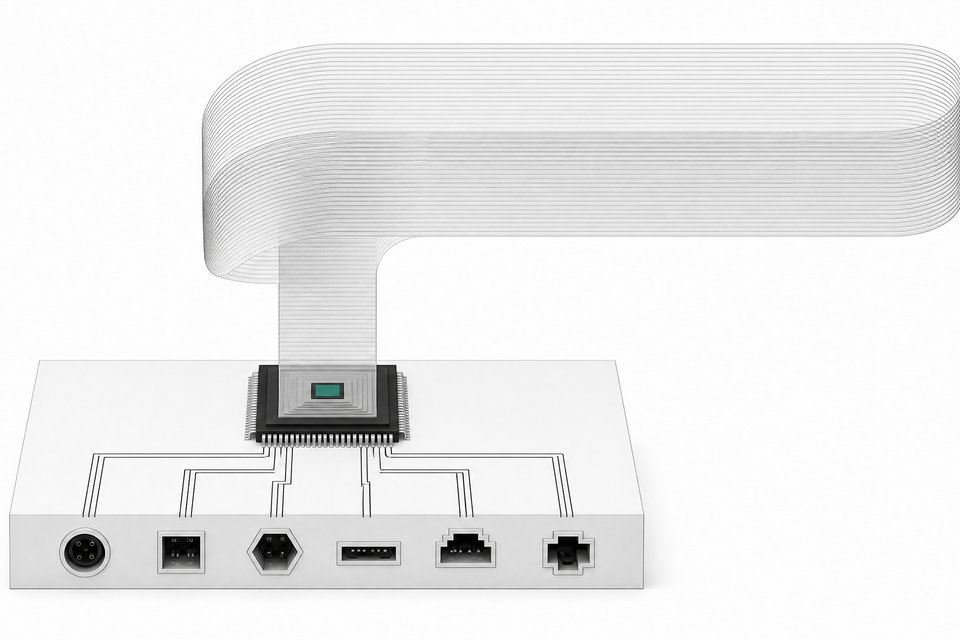
That's the argument for sovereignty over your inference layer, not just a "safer" vendor. Analysts are already describing a broader architectural shift: training can stay in the cloud, but inference is moving back on-premises and to the edge, driven by predictable economics, latency, compliance mandates, and what one analysis calls "data gravity," the pull of keeping compute close to the data it touches. The DeepSeek ban is a geopolitical accelerant on a trend already underway for cost and compliance reasons alone.
How much does it cost to run AI models locally?
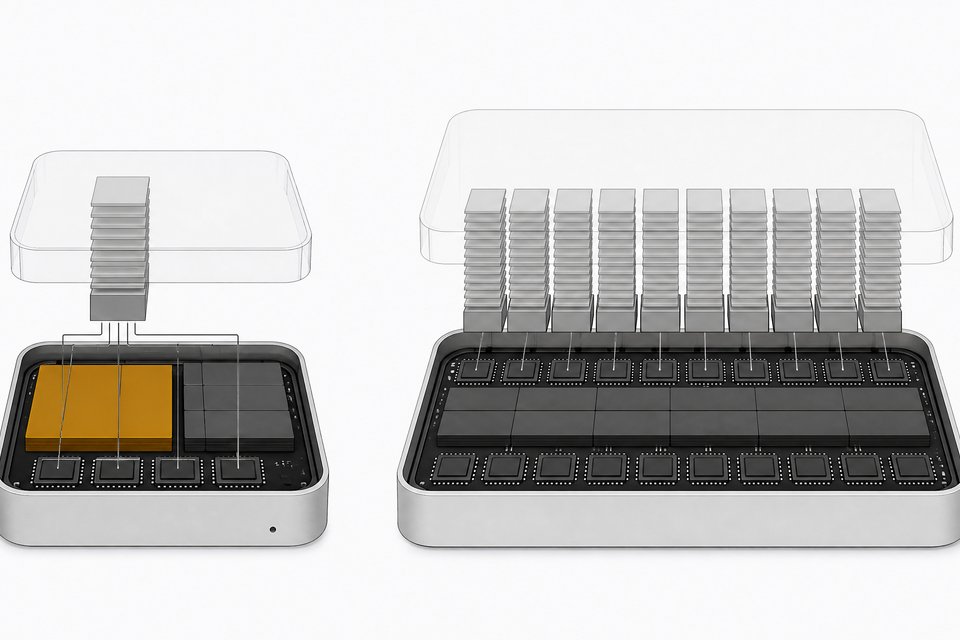
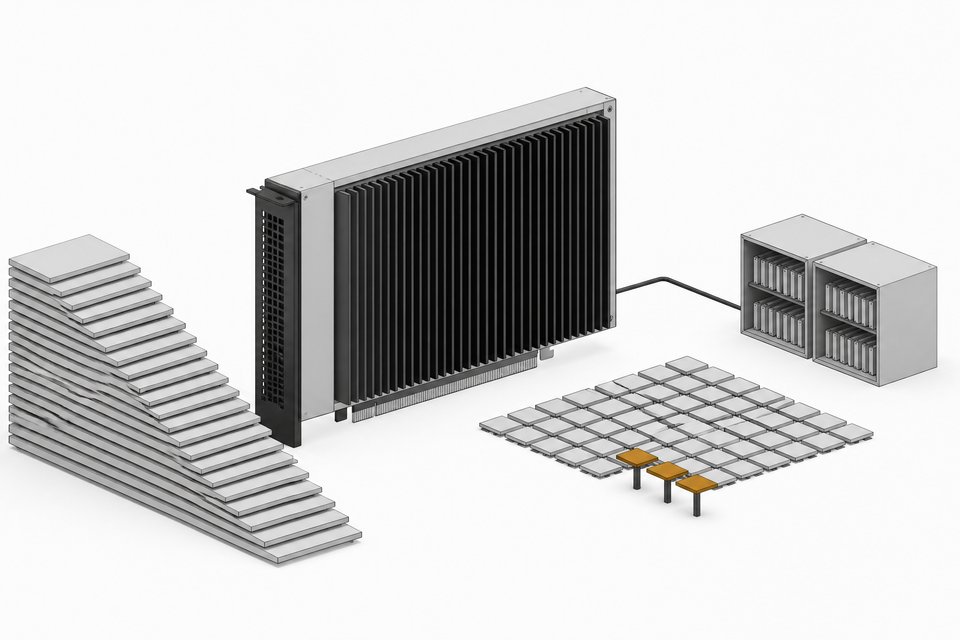
The hardware math is more concrete than it was a year ago. Running the full 671-billion-parameter DeepSeek-R1 model takes roughly 768GB of memory. On Nvidia H100 GPUs, that means about 10 of them, putting the acceleration hardware alone around $250,000, though leaner GPU configurations can bring that closer to $100,000. On the other end, a CPU-only build using two AMD Epyc server processors can run the same model for about $6,000, at a slower 6 to 8 tokens per second. Open tools like Ollama and vLLM handle the serving layer on either path, and teams weighing self-hosting their company's AI stack don't need to build a custom inference layer from scratch to get there.
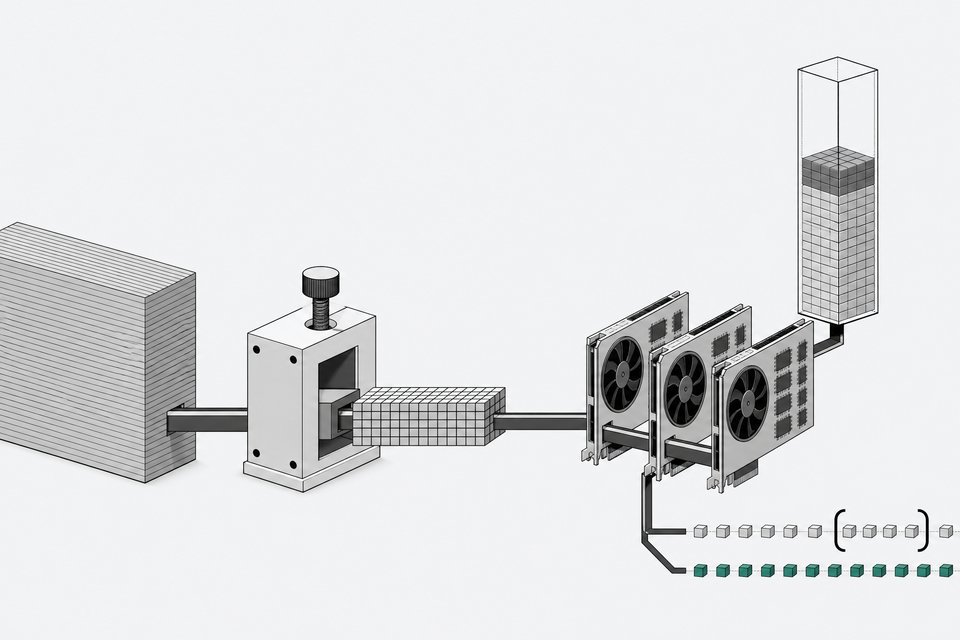
The breakeven math is the part finance teams actually care about. Industry analysis puts the crossover point at roughly 2 million tokens per day: below that, cloud APIs are usually still cheaper, but above it, self-hosted inference increasingly wins on cost. One fintech company cut its monthly AI spend from $47,000 to $8,000, an 83% reduction, by moving to a hybrid self-hosted approach once its volume crossed that line.
What is the business case for local AI: cost, compliance, control?
The cost argument alone is getting harder to ignore. Enterprise spending on LLM API costs doubled to $8.4 billion in 2025. But cost isn't even the top concern driving the shift: 44% of organizations now cite data privacy and security, not price, as the biggest barrier to broader LLM adoption through cloud APIs. That lines up exactly with what DHS just acted on at the federal level. Regulated industries, HIPAA-covered health systems, GDPR-bound operations, defense contractors needing air-gapped environments, are reaching the same conclusion through a compliance lens that DHS reached through a national-security one.
Owning your inference layer turns three separate risks into one controllable asset:
- Vendor risk. A government can ban a vendor, a company can change its terms, or a provider can simply go down, the scenario laid out in detail here. Hardware you own answers to none of those.
- Data exposure. Every prompt sent to a third-party API leaves your perimeter. A self-hosted model keeps prompts, outputs, and logs on infrastructure you control, which is the same privacy case that's pushing regulated teams toward open-weight models, and the whole reason GDPR- and HIPAA-constrained teams are moving this direction.
- Cost volatility. API billing scales linearly with usage forever. A hardware purchase has a fixed cost and a knowable payback period once you're past the token-volume breakeven.
| Upfront Cost | Ongoing Cost | Data Control | Latency | Compliance Fit | Best Token Volume | |
|---|---|---|---|---|---|---|
| Cloud APIlow-volume or early-stage workloads | $0 | Scales linearly with usage | Low | Medium | Low | Below ~2M tokens/day |
| Self-hosted GPU righigh-volume, latency-sensitive workloads | $100k-$250k | Fixed, low marginal cost | High | High | High | Above ~2M tokens/day |
| Self-hosted CPU buildbudget-constrained, latency-tolerant workloads | ~$6k | Fixed, low marginal cost | High | Medium | High | Above ~2M tokens/day, latency-tolerant |
For a deeper walkthrough of that breakeven math against specific hardware, including what a Mac Studio or an on-prem GPU rig actually costs against a year of metered API bills, see Mac Studio vs Cloud APIs: The Real Cost of Running Local AI Agents.
What's the real local AI alternative to DeepSeek?
None of this requires training your own frontier model. DeepSeek itself trained V3 for roughly $6 million, a fraction of the estimated $100 million spent on GPT-4, which is exactly what triggered the original wave of US-China AI anxiety behind this whole episode. Open-weight models have made frontier-class capability something you can download and run, not just something you rent by the token.
The practical move for most teams isn't picking a new "safe" vendor to replace DeepSeek. It's auditing which workloads are high-volume, sensitive, or mission-critical enough to justify owning the inference layer outright, and which low-stakes tasks can stay on a metered API a while longer. The DeepSeek ban will fade from the news cycle. The math it exposed, that rented inference carries risk you don't price in until a regulator or a vendor forces the issue, isn't going anywhere.
Frequently Asked Questions
Why did the US government ban DeepSeek?
DHS cited national security risk: DeepSeek stores user data on servers in China, where national security law lets the government compel access to that data, and the models can digitally fingerprint users and transfer prompt data to Chinese authorities.
Does the DeepSeek ban apply to the military?
No. The ban covers more than 100 civilian federal agencies but explicitly excludes Department of Defense agencies.
What are the local AI alternatives to DeepSeek and other cloud APIs?
Open-weight models like DeepSeek-R1 itself can be run on infrastructure you own using tools like Ollama or vLLM, ranging from roughly $6,000 CPU-only builds to $100,000-$250,000 GPU setups, depending on speed requirements.
At what point does self-hosting AI become cheaper than paying for a cloud API?
Industry analysis puts the breakeven around 2 million tokens per day; below that, APIs tend to be cheaper, and above it self-hosted inference usually wins on cost.
Is the risk of relying on a rented AI API limited to Chinese vendors?
No. The mechanism generalizes: any API vendor, regardless of country, can be banned, repriced, subpoenaed, or altered in its terms of service, which is why inference is increasingly moving back on-premises across the industry.
How we source, write, and correct our articles. Editorial standards