AI Decision Models vs. Execution Models: Which Does What?
Decision models return typed choices and scores; execution models and sandboxed code act on them. Compare latency, cost, and real benchmarks.


What is the difference between AI decision models and execution models?
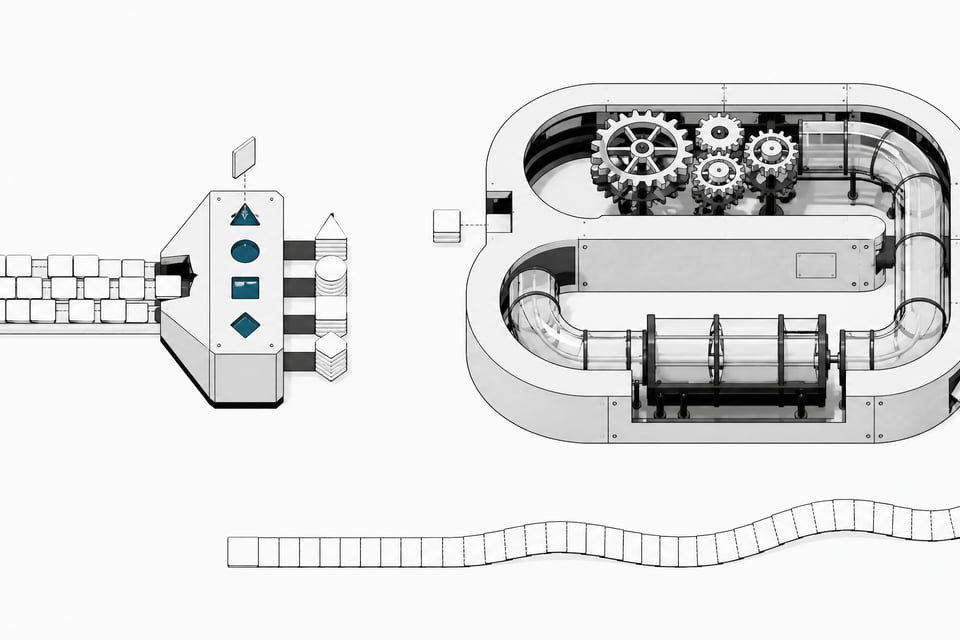
An AI decision model and an AI execution model differ in what they're built to do. A decision model takes a defined state and a bounded question and returns a typed, calibrated answer: a choice, a score, a yes or no. An execution model, and the code and tools wrapped around it, takes that answer and actually does something: writes code, calls an API, moves a file, closes a ticket. One judges. The other acts. Neither one alone is enough to automate real work.
TL;DR
- A decision model returns a typed answer such as a choice, a score, or a yes or no, while the execution layer acts on that answer.
- Around 78% of AI users now bring their own AI tools to work, which is driving demand for custom automation.
- Dedicated decision models like Jev can run up to 200x faster and 400x cheaper than generative LLMs on narrow decision tasks.
- Swapping an LLM for a decision model in a browser-automation framework cut median latency from 1.97 to 0.46 seconds.
- Production examples use a confidence-threshold fallback, deferring to a bigger model only when the decision model isn't sure.
- Gartner forecasts spending on specialized GenAI models will grow 210% in 2026, outpacing the 104% growth projected for general-purpose models.
Why are employees already past the chatbot?
The demand for this split didn't come from AI labs. It came from employees who stopped waiting for IT to build them something and started building it themselves. Microsoft's Work Trend Index found that 78% of AI users bring their own AI tools to work, a number that climbs to 80% at small and midsize companies and holds across every generation in the workforce.
A single chatbot window can't satisfy that behavior. Employees aren't asking an AI to write a paragraph. They're asking it to classify incoming requests, approve or deny something, route a file, update a record, and do it the same way every time. That's a different job than generating prose. It needs a different kind of model.
What is a decision model, and what isn't it?
A decision model, sometimes called a System One model, is built to answer narrow, bounded questions fast and consistently. Microsoft's own documentation of its GitHub Copilot routing system draws the line precisely: "A Decision Model is not prompted with 'write an article.' ... It returns typed results and probabilities that software can act on immediately." It isn't handed an open-ended prompt. It's handed a state, a set of explicit options, and grading criteria, and it returns a typed result: a choice, a score, a probability.
TypeSafe AI's Jev is the clearest commercial example of this category. Jev's outputs are primitives like choice, score, and noul rather than free text, and the company's own framing is blunt about the limits: "Jev agents do make for cool demos. But even the best demos aren't ready to be deployed to production," because the model has no generative or reasoning capacity of its own. It's a classifier, not a brain. Our earlier explainer on System 1 models and Jev covers how that category got named in the first place, and a follow-up comparing Jev to the open-source CLM model goes deeper on the numbers behind running decision models yourself.
Microsoft's equivalent, Microsoft-Decision-1, is a post-trained Qwen3.5-9B model specialized for exactly this kind of single-pass scoring. It's evaluated on different criteria than a generative model: not how good the writing sounds, but how consistent the judgment is.
What is an execution model (code, tools, sandboxes)?
Execution is the other half, and it's not one model so much as a layer. TypeSafe AI frames the full stack in three tiers: "LLM = Reason & Generate, Jev = Decide, Code = Control & Execute." That breaks down cleanly:
- The generative LLM writes code or a plan.
- The decision model picks between known options.
- Deterministic code and sandboxed tools carry out the result: running a shell command, calling an API, writing to a file, executing a transaction.
Academic work on terminal-based coding agents describes this as an explicit architectural separation, with workload-optimized multi-model setups that route between planning, action, and decision phases rather than funneling everything through one model call. The execution layer is where the harness lives: sandboxes, tool registries, file I/O, retries, fallback chains. It's built for reliability and containment, not judgment. It's the part of the system doing the thing, not deciding what thing to do.
How do decision models and execution models compare side by side?
Line the two up and the contrast is sharp:
- What it takes as input. Decision models get a state plus bounded questions. Execution models and tools get a plan, a prompt, or a selected option, and turn it into action.
- What it returns. Decision models return typed, calibrated results: a choice, a score, a probability. Execution layers return a side effect: code written, a file moved, an API called.
- Latency. Decision models run in tens to a few hundred milliseconds. Jev's vendor-reported end-to-end latency tops out around 500ms. Generative execution calls routinely run several seconds.
- Cost. Decision models are built to be cheap at volume, because they're called constantly inside a workflow, not once per task.
- Failure handling. A decision model that's unsure returns a low-confidence score and defers. A failed execution step needs retries, rollbacks, or a sandboxed blast radius.
- Role in the system. The decision model judges what should happen. The execution layer, including the model router around it, is what Microsoft calls making that judgment "usable, compliant, executable, observable and recoverable."
Why Split Decision and Execution Models?
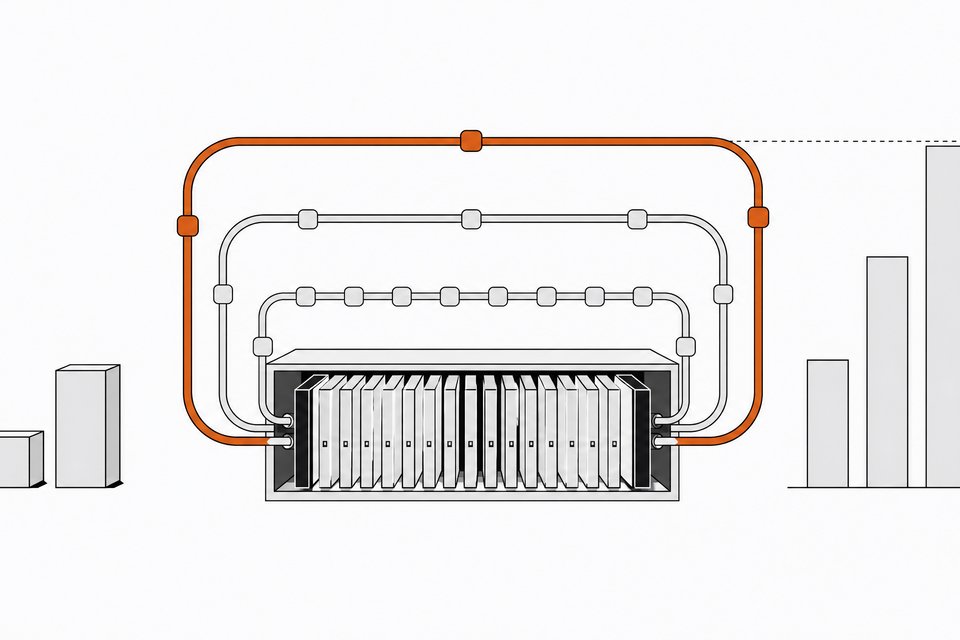
The case for unbundling isn't philosophical. It's economic. TypeSafe reports Jev running up to 200x faster and 400x cheaper than leading LLMs on narrow, System One-style decision tasks.
Browserbase put that claim to the test by rebuilding the act() function in its Stagehand browser-automation framework around Jev, using a 0.7 confidence threshold to fall back to an LLM only when the decision model wasn't sure. Median latency dropped from 1.97 seconds to 0.46 seconds, about 4.3x faster. LangChain's team saw a similar pattern in a LangGraph document-review pipeline: swapping an LLM judge for Jev on page classification was 5-6x faster across trials, while the LLM stayed in the loop for genuinely open-ended work like PII redaction and privilege calls that needed human review.
Microsoft reports its own decision model running at a P50 latency roughly 35x faster than a comparable generative model, with an average decision-flip rate of just 1.3% across eight perturbation tests, a measure of how often the model changes its answer when the input is nudged slightly. That number matters more than it sounds. A generative model is judged on how interesting its output is. A decision model is judged on how boring and repeatable it is. Consistency, not creativity, is the product.
LangChain calls the broader pattern "the great unbundling of intelligence": capabilities that used to get bundled into one frontier LLM call are being pulled apart so each piece lands on the cheapest, fastest tool that can actually handle it. A comparison of multi-model routing systems covers how that unbundling plays out at the orchestration layer in our look at HydraFusion versus OpenRouter.
How does the stack fit together through orchestration and the runtime?
None of this works without glue. Decision models return typed answers. Execution tools carry out actions. Something has to hold state, sequence the steps, and know when to escalate. That's the job of an orchestration layer, whether it's a graph-based runtime like LangGraph, a router that handles entitlement and policy the way Microsoft's Model Router does for Copilot, or a custom agent harness built around fallback chains.
TypeSafe AI's manifesto puts the trust logic plainly: "You let a component run unattended once it's reliable; you only build on top of it if it's trustworthy." That's why decision models get called constantly inside a pipeline rather than left to run agents on their own, and why the confidence-threshold pattern (defer to a bigger model when the decision model isn't sure) shows up across every production example cited here.
How does this architecture show up when employees build bespoke software?
This is where the architecture stops being an engineering curiosity and starts being the reason a non-technical employee can replace a SaaS subscription with something they built themselves. One account describes a company swapping a $40,000-a-month SaaS bill for internal AI tools that cost $560 a month to run, built not by engineers but by non-technical staff describing workflows in plain language.
That only works if the decision-plus-execution split is handled underneath the employee's natural-language request, not left for them to wire together. Tools that turn a plain-language description of a workflow into standard code the organization owns, rather than vendor-locked configuration, keep both halves of that split under the organization's control.
That ownership question is also a governance question. The same shadow-AI behavior that's driving employees to build their own tools is the behavior IT departments worry about most, because tools built on personal accounts disappear when the employee leaves and nobody audits what they actually do. Our guide to governing shadow AI with open-source controls covers the practical side of that tension in more depth.
| Input | Output | Typical Latency | Cost at Scale | Failure Handling | |
|---|---|---|---|---|---|
| Decision Modelnarrow, repeatable judgment calls | A defined state plus a bounded question | Typed, calibrated result: choice, score, probability | Low | Low | Returns a low-confidence score and defers |
| Execution Layercarrying out an action reliably | A plan, prompt, or selected option | A side effect: code written, file moved, API called | High | High | Needs retries, rollbacks, or a sandboxed blast radius |
| Orchestration Layersequencing and escalation | Typed answers from decision models plus execution results | Sequenced steps, routing, and escalation decisions | Medium | Medium | Escalates via confidence thresholds and fallback chains |
Where is this headed?
The market is already betting on specialization over one giant model. Gartner forecasts spending on domain-specific and specialized GenAI models will grow 210% in 2026, from $1.58 billion to $4.9 billion, dramatically outpacing the 104% growth projected for general-purpose foundation models. Gartner also predicts that 40% of enterprise applications will include integrated, task-specific AI agents by the end of 2026, up from less than 5% in 2025.
Read those two numbers together and the direction is clear. The next wave of enterprise software isn't one bigger chatbot answering everything. It's narrow decision models making fast, typed calls, execution layers carrying them out, and an orchestration layer stitching the two together, often invisibly, inside tools an employee never had to learn to call "architecture" at all.
Frequently Asked Questions
What is the main difference between an AI decision model and an AI execution model?
A decision model takes a bounded question and a defined state and returns a typed, calibrated answer like a choice, score, or probability. An execution model, plus the code and tools around it, takes that answer and carries out an action, like writing code, calling an API, or moving a file. One judges; the other acts.
Can a decision model like Jev work on its own as an agent?
No. Browserbase found that decision models make for impressive demos but aren't production-ready alone, because they have no reasoning or generative capability. They need to be paired with an execution-capable LLM and deterministic code to actually do anything.
Why are companies splitting decision and execution instead of using one big model?
Speed and cost. TypeSafe reports its Jev decision model running up to 200x faster and 400x cheaper than leading LLMs on narrow tasks, and Browserbase cut median latency from 1.97 seconds to 0.46 seconds by routing bounded decisions to Jev instead of a generative model.
What is Microsoft-Decision-1?
It's Microsoft's decision model, a post-trained Qwen3.5-9B model specialized for single-pass scoring used in GitHub Copilot's routing system. It reports P50 latency roughly 35x faster than a comparable generative model and an average 1.3% decision-flip rate across perturbation tests.
How does this architecture let non-technical employees build their own software?
When a tool handles the decision-plus-execution split automatically, an employee can describe a workflow in plain language and get a working application, without personally architecting typed decision logic and execution code. One account describes a company replacing a $40,000-a-month SaaS bill with internal tools built this way for $560 a month to run.
How we source, write, and correct our articles. Editorial standards