When the Cloud Breaks: Why Local AI Is the Ultimate Software Asset
Cloud AI outages keep hitting OpenAI, Anthropic, and AWS. Here's why local AI execution is becoming the safer, cheaper standard for software ownership.

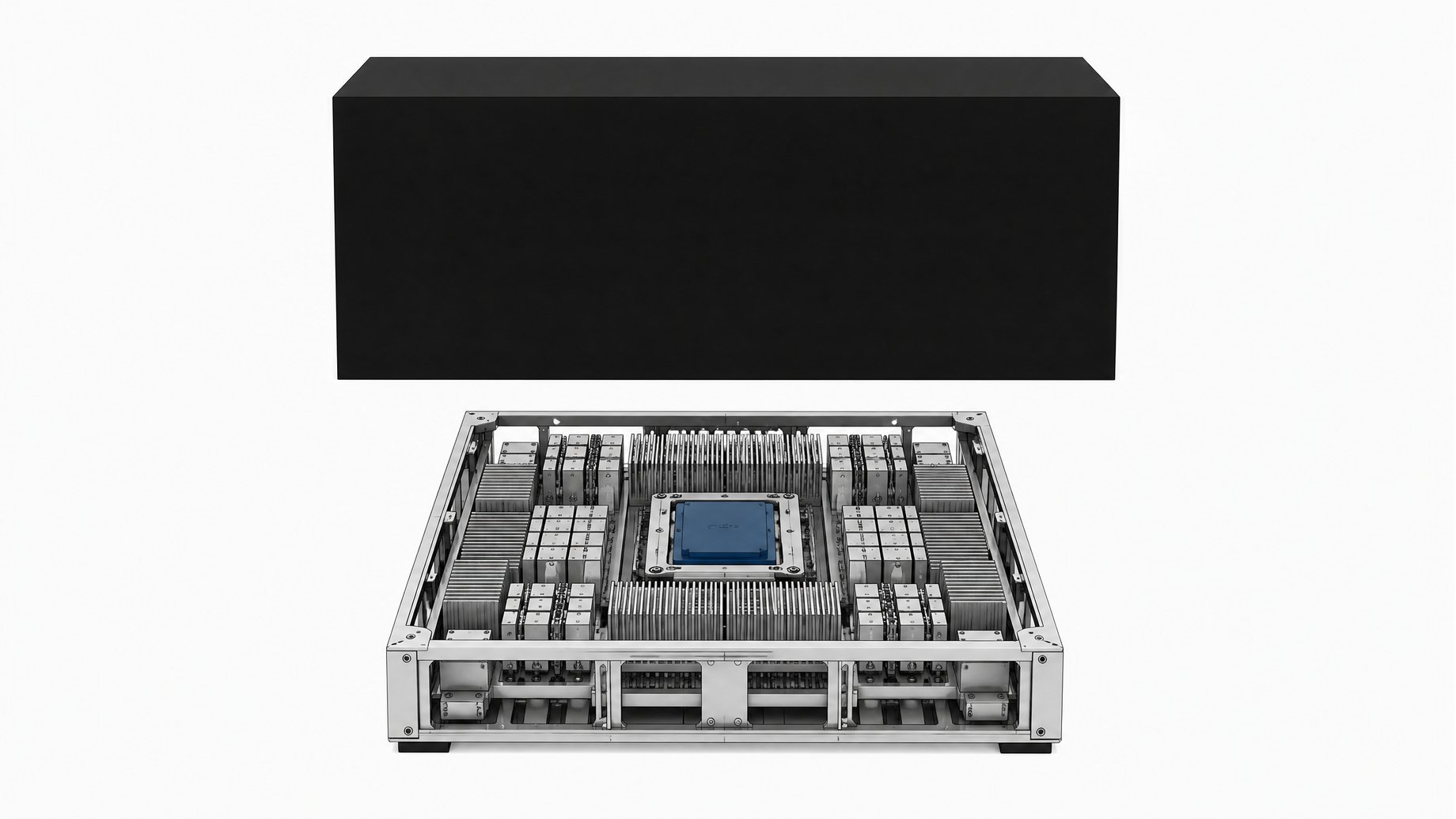
Why is local AI more reliable than cloud AI?
Local AI is more reliable than cloud AI because it removes the single point of failure that comes with renting someone else's servers. When you run a model on your own hardware, a status page incident at OpenAI, Anthropic, or AWS cannot take your product down. When you rent inference over an API, their bad day becomes your bad day, instantly and without warning.
That is not a theoretical risk. It is a pattern that has repeated every few months for the last two years.
TL;DR
- Running a model on your own hardware removes the single point of failure that comes with renting inference from OpenAI, Anthropic, or AWS.
- Outages at major providers are routine, and a single 30-day window showed 34 separate outages across 32 components on OpenAI's status page.
- AI is now wired into support triage, code review, and data pipelines, so it has quietly become critical infrastructure rather than a chatbot feature.
- Open-weight models and consumer-grade hardware make local execution a business decision, and the cost comparison favors owning the hardware at scale.
- Owning your AI means building a fallback plan, including graceful degradation, local models for suitable workloads, and an audit of how dependent your team really is.
- Companies with even a partial local-first fallback keep shipping while everyone else is refreshing a status page.
Do the outages keep happening, and are they getting bigger?
OpenAI's own status history shows just how routine disruption has become. A third-party monitor tracking OpenAI's public status page counted 34 separate outages across 32 components in a single 30-day window. Some were minor and resolved in minutes. Others, like a ChatGPT and API disruption in December 2024, stretched for hours and were traced back to a third-party internet service provider issue, not even OpenAI's own infrastructure.
Anthropic has had its own steady drumbeat of trouble. In late July 2026, Claude went down hard enough to generate more than 2,000 outage reports on Downdetector, with roughly half of the complaints coming from developers using Claude Code. The failure mode was a 529 "capacity constraints" error, Anthropic's polite way of saying its servers could not keep up with demand. That was not an isolated event. Anthropic logged repeated "elevated errors across all models" incidents through the same month, hitting Opus, Sonnet, Haiku, and newer experimental models in overlapping waves.
Then in June 2026, a global Claude disruption knocked out Opus 4.6, the Claude API, and the Claude Code CLI at once. Thoughtworks' Ken Mugrage covered it plainly: this was not the first major Claude outage of the year, and it would not be the last. His conclusion is the one every engineering leader should sit with: "AI tools should amplify engineers' capabilities. It shouldn't act as a structural crutch."
And it is not just the model providers. In October 2025, a DNS and network monitoring failure inside AWS's US-EAST-1 region cascaded into a multi-hour outage that took down over 100 AWS-dependent services, including Perplexity, whose CEO confirmed on social media that the root cause was AWS, not anything Perplexity built. The outage stretched from just after 3 a.m. ET until nearly 7 p.m. ET before Amazon called it resolved. As Check Point's head of enterprise, Charlotte Wilson, put it afterward: "Today's outage is another reminder that the digital world doesn't stop at borders. A local fault can ripple worldwide in minutes. We've built convenience on shared systems, but resilience still depends on people and process."
What is the rough shape of the problem?
The exact numbers vary by provider and by month, but the pattern across public status pages is consistent: dozens of incidents per month, ranging from brief blips to multi-hour blackouts.
Why does this matter more than it used to?
Two years ago, an LLM API going down meant a chatbot stopped answering questions. That was annoying, not existential. In 2026, AI is wired into support triage, code review, data pipelines, and customer-facing features. Mugrage's framing is the right one: generative AI has quietly become critical infrastructure, and most companies are treating it with far less care than they'd give a database or a cloud region. When the provider goes down, so does developer velocity, customer support automation, and any pipeline that depends on semantic analysis of incoming data.
Renting an API endpoint and hardcoding it into production used to be an acceptable availability strategy. It no longer is.
What is the case for owning your inference?
This is where local execution stops being a hobbyist trend and starts being a business decision. Open-weight models have closed most of the quality gap with proprietary frontier models, and consumer-grade hardware can now run genuinely capable models entirely offline. Nothing about that setup depends on a vendor's status page.
The economics back this up too. One detailed cost comparison found that a team burning 1 million tokens a day against a GPT-4o-class API could expect to pay $12,000 to $18,000 a year, while a single RTX 5090 workstation running the equivalent workload locally amortizes to roughly $2,500 over the same period. At 5 million tokens a day, the gap widens to $60,000-$90,000 a year in API spend versus about $5,000 for a dual-GPU local build. The break-even point on the hardware typically lands within one to three months of moderate usage.
There is also a quieter benefit: determinism and control. Local inference eliminates network round-trips, and running the same model version indefinitely means your outputs do not shift underneath you when a vendor silently updates a model. As the SitePoint guide to local LLMs put it, local inference answers the most uncomfortable question in any data protection review, "where does the data go," with a simple one: nowhere.
What does owning AI actually look like?
Owning local AI does not mean abandoning frontier models entirely. It means treating inference the way you'd treat any other piece of infrastructure you depend on for revenue: with a fallback plan. Practically, that means a few things.
Graceful degradation. If a semantic feature fails, users should see a plain fallback, not a spinner or a raw error. Thoughtworks recommends building deterministic degraded modes, like falling back to keyword search when AI-powered search is unavailable, rather than exposing the failure directly to users.
Local models for the workloads that can bear it. Internal tools, coding assistants, document summarization, and anything that touches sensitive data are strong candidates for local inference using tools like Ollama or vLLM, which both expose OpenAI-compatible APIs so migration from a cloud provider is mostly a config change, not a rewrite.
Auditing how dependent you actually are. If your team's output drops by half the moment an AI coding assistant goes offline, that is a signal your engineering documentation and onboarding have quietly atrophied, not a signal that you need a better AI vendor.
This is the same instinct behind treating software you run as an asset instead of a subscription you rent. A tool like Remy makes that concrete for teams building their own internal software: instead of renting a workflow tool forever, you own the app that runs it, on infrastructure you control, with none of the recurring exposure to someone else's outage.
What is the bottom line?
Cloud AI providers will keep having bad days. The question is not whether the next outage happens, it is whether your business notices. Companies that build a local-first fallback, even a partial one, are the ones that keep shipping while everyone else is refreshing a status page.
How we source, write, and correct our articles. Editorial standards