GitHub Is Down, But Local AI Isn't: The Case for Owning Your Dev Stack
AWS, Cloudflare, and GitHub all went down in 2025. Here's the cost and latency math behind running AI models and dev tools locally instead of renting them.

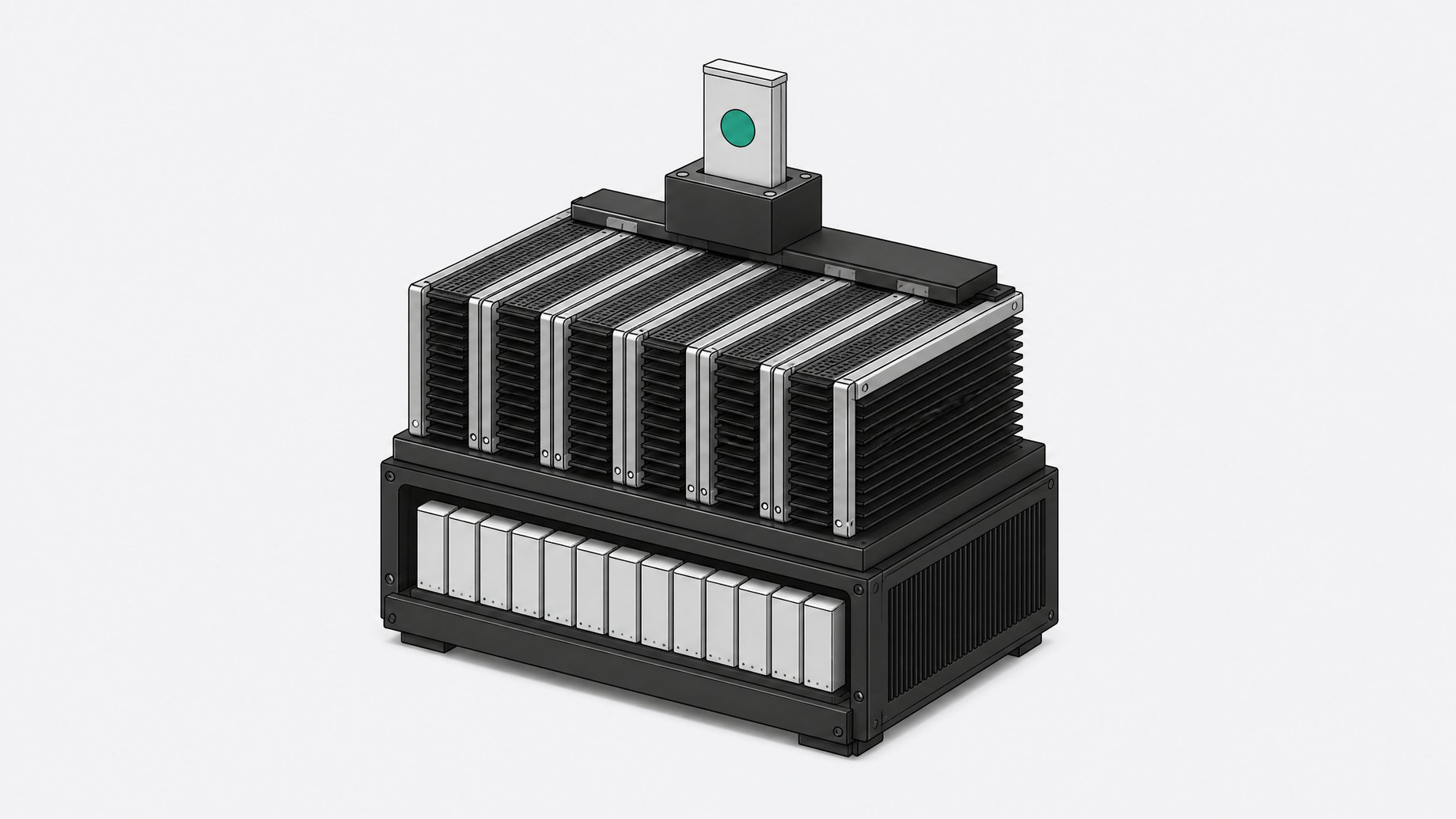
Why run AI and databases locally when cloud outages keep stopping developers?
Running AI models and databases locally means your work does not stop when someone else's data center does. Cloud AI is faster to start and easier to scale, but it makes your daily output hostage to a third party's uptime. Local models trade some convenience for control: no outage windows, no per-token meter running while you wait, and no scramble when a vendor's status page turns red.
TL;DR
- Local models keep you working through vendor failures, because no outage windows apply to a machine you own.
- The fall of 2025 saw major outages at AWS, Cloudflare, and GitHub, and a former AWS vice president called the next one a matter of "not if, but when."
- A Carnegie Mellon study found that small local models on a roughly $2,000 GPU break even within about 3 months against commercial APIs.
- Against premium-priced services like Claude Opus, local deployment pays for itself almost immediately, while cheaper services weaken the case unless volume is high or data must stay in-house.
- Local models skip the network round trip, landing in the 10ms to 200ms range versus 200ms to 2,000ms for cloud calls.
- Cloud AI still wins for bursty, frontier-quality workloads and for teams without staff to manage GPUs, so the point is owning more layers, not abandoning the cloud.
Was the fall of 2025 a stress test that the cloud failed?
Start with the numbers, because they are the whole argument.
On October 20, 2025, a race condition in AWS's DynamoDB DNS automation deleted every IP address for the database's regional endpoint in US-East-1. The failure cascaded into EC2, Lambda, ECS, and EKS, and the outage ran roughly 15 hours before full recovery. CyberCube, a cyber risk analytics firm, estimated insured losses between $38 million and $581 million, based on an impact that hit more than 2,000 large organizations and around 70,000 organizations overall. Downdetector logged more than 8.1 million problem reports worldwide, from banking apps to Ring doorbells to a smart mattress company that had to ship a Bluetooth failover so customers could still adjust their beds.
Three weeks later, Cloudflare went down twice in under a month, most severely on November 18 when a misconfigured file crashed the traffic-handling system behind roughly a fifth of the web, hitting X, OpenAI, and Spotify. A DNS and infrastructure researcher summed up the pattern bluntly: "This is the fourth major global outage, large enough to be noticed by non-technical media and affect regular people around the world, since 20 October."
Then it was GitHub's turn. An eight-hour incident produced a 50% error rate on repo downloads and knocked out Actions, APIs, webhooks, pull requests, and Copilot. This was not an isolated event. GitHub's own CTO has acknowledged the platform's infrastructure has been overwhelmed by a surge in AI-driven usage, and the company is projecting a 1,400% increase in commit volume from 2025 to 2026, most of it from AI tooling. GitHub started a plan to raise capacity tenfold in October, then realized in February it needed thirty times the capacity, and still logged eight further outages the following month.
None of this is a conspiracy or a single vendor's incompetence. It's math. A former AWS vice president told CRN the AWS outage was simply "inevitable" given the scale and complexity of distributed systems, and that the real question for any business is "not if, but when" the next one hits. Multiply that inevitability across AWS, Cloudflare, GitHub, Azure, and every other layer of the modern dev stack, and outages stop being rare events. They become a recurring cost of renting your infrastructure.
What does local AI actually buy you?
Local inference is not romantic. It is a cost and control decision, and the numbers back it up more than most people expect.
A 2025 academic cost-benefit study out of Carnegie Mellon modeled 54 deployment scenarios comparing on-premise open-source models against commercial APIs from OpenAI, Anthropic, Google, and xAI. The results split cleanly by scale:
- Small models (30B parameters or fewer, running on a single roughly $2,000 consumer GPU) broke even against commercial APIs in as little as 0.3 months and almost never took longer than 3 months.
- Medium models (70B to 120B parameters, needing $15,000 to $30,000 in hardware) broke even in 2.3 to 34 months depending on which commercial service they were compared against.
- Large models (200B+ parameters, requiring $60,000 to $240,000 in GPU clusters) had break-even windows stretching from 3.5 months to nearly 9 years, and made sense mostly for organizations already running GPU clusters for other work.
The clearest finding: against premium-priced services like Claude Opus, local deployment pays for itself almost immediately even at small scale, because Opus runs $15 to $75 per million tokens depending on direction. Against aggressively priced services like Gemini 2.5 Pro or GPT-5, the case for local weakens unless you're running high, sustained volume or have compliance reasons to keep data in-house.
The point isn't that local always wins on price. It's that for a large and growing set of workloads, especially steady, high-volume, or sensitive ones, it wins outright, and the break-even period is often measured in weeks, not years.
What about the latency and control nobody bills you for?
Cost is the number you can chart. Latency and control are the numbers you feel.
A cloud API call has to leave your machine, hit a data center, get processed, and come back. Cloud latency commonly runs 200ms to 2,000ms depending on load and network conditions. A local model skips the round trip entirely, typically landing in the 10ms to 200ms range because there's no network hop at all. For interactive developer tools, that's the difference between a tool that feels instant and one that feels like it's thinking about billing you.
Then there's the control question, which the outage season made concrete. When GitHub Copilot goes down alongside GitHub Actions, alongside API requests, alongside authentication, you don't have four separate problems. You have one problem: you rented the thing your whole workflow depends on, and the landlord had a bad day. A local model running on a machine you own doesn't care what AWS's DNS automation did to us-east-1 at 2:48am. It's still sitting there, waiting for your next prompt.
Where does the ownership argument get stronger?
This is the same logic that applies to local databases, local search indexes, and local build pipelines. Every layer you rent is a layer someone else can take offline, re-price, or deprecate on their schedule instead of yours. Every layer you own is a layer that answers only to you.
That's the deeper thesis behind treating your software stack as an asset rather than a subscription. It's also the idea behind Remy, which is built around the premise that the tools running your business should belong to you the same way your office chair does, not the way your Netflix subscription does.
None of this means abandon the cloud. Cloud AI still wins for teams that need frontier-model quality on bursty, unpredictable workloads, or that lack the staff to babysit GPUs. But 2025's outage season made the tradeoff visible in a way spreadsheets never quite manage: uptime has a price, and right now you're paying it in someone else's currency.
How we source, write, and correct our articles. Editorial standards