How to Monitor AI Agents in the Workplace: A Step-by-Step Guide
Learn how to monitor AI agents at work with a six-step framework: agent inventory, non-human identity, autonomy tiers, runtime logging, kill switches, and NIST/OWASP alignment.

How do you monitor AI agents in the workplace?
You monitor AI agents in the workplace by building a live inventory of every agent, sanctioned and shadow, giving each one its own non-human identity with scoped permissions, classifying it by autonomy level, logging its tool calls and decisions at runtime, and setting automatic kill switches for high-risk actions. That's the short version. The longer version is why most companies still aren't doing any of it.
TL;DR
- Autonomous agents that act without oversight create fundamentally different risks than simple shadow AI chatbots, because they take actions rather than just producing text.
- Breaches with high shadow-AI involvement cost $670,000 more on average than breaches with low or no shadow AI exposure.
- Gartner projects the average global Fortune 500 enterprise will run over 150,000 agents by 2028, which makes a live agent inventory the first control to build.
- Every agent should get its own non-human identity with task-scoped, time-bound permissions instead of inheriting a human's login.
- Effective governance means monitoring runtime decision logic, not just access, by logging tool calls, data access events, and full session transcripts.
- High-autonomy agents need automatic kill switches, such as human approval before irreversible actions, circuit breakers, and rollback paths.
How has shadow AI evolved into shadow agents?
For the last two years, "shadow AI" meant an employee pasting a sales deck into ChatGPT. A Cybernews survey of 1,003 US employees found that 59% use AI tools their employer never approved, and 75% of those users admit sharing potentially sensitive data with them. Executives aren't exempt. 93% of executives and senior managers admit to the same behavior, which means leadership is modeling the exact conduct IT departments are trying to govern.
That was already a hard problem. It just got harder.
The tools employees are wiring together now aren't chat windows. They're autonomous agents with standing credentials in email, Slack, CRMs, and file stores, running tasks for hours or days without a human in the loop. A chatbot produces text that a person has to act on. An agent acts directly: it sends the email, updates the record, deletes the file. The gap between "said something wrong" and "did something wrong" is why agentic risk deserves its own governance category, separate from the shadow-AI detection problem companies have spent the last two years trying to solve. For a fuller look at how that behavior shift changes the risk profile, see 5 Shadow AI Risks: When Employee-Built Bots Start Lying and Hustling.
The cost of getting this wrong is already measurable. IBM's 2025 Cost of a Data Breach study found that 13% of organizations reported a breach of an AI model or application, and 97% of those lacked proper AI access controls. One in five organizations reported a breach involving shadow AI specifically, and breaches with high shadow-AI involvement cost $670,000 more on average than breaches with low or no shadow AI exposure.
Why can't traditional shadow-IT monitoring see agentic AI?
The tools built to catch shadow IT, CASBs, DLP, standard IAM, were designed to watch human actors doing predictable things: logging in, downloading a file, sending an email. They assume a person is behind every action and that the action itself tells you what you need to know.
Agents break that assumption. The same tool call, an agent querying a customer database, can be completely routine or a sign the agent has been hijacked, depending on what preceded it and what it's about to do with the result. Security researchers at Zenity argue that evaluating an agent's behavior requires inspecting its full decision context, not just the access it was granted: intent, action, data involved, identity, model, execution plan, and environment. A static access control can tell you an agent is authorized to touch a file. It cannot tell you whether touching that file, right now, in this sequence, is the agent doing its job or going off script.
That's the structural gap. DSPM tools see data flows but not agent reasoning. IAM tools see permissions but not intent. EDR tools see endpoint activity but not decision logic. Each stack sees one slice of the problem, and none of them was built to watch an autonomous system make a judgment call.
What can go wrong with agentic AI?
OWASP's Top 10 for Agentic Applications, built with more than 100 security practitioners, gives enterprise teams a shared vocabulary for this. The categories that matter most:
- Agent Goal Hijack. An attacker or a malformed input redirects the agent's objective without the operator noticing.
- Tool Misuse and Exploitation. The agent uses a legitimate tool in a way its designers never intended.
- Identity and Privilege Abuse. The agent acts under credentials broader than the task requires, often because it borrowed a human's login.
- Memory and Context Poisoning. Corrupted or injected data in the agent's memory changes its future behavior.
- Rogue Agents. Compromised agents that deviate from their intended scope and pursue hidden or deceptive goals.
Prompt injection is the headline threat, and for good reason: a large share of AI agents tested in recent security benchmarks have proven vulnerable to having their instructions overridden by content embedded in the data they're asked to process. But Zenity's research makes an important distinction: external manipulation is only one of three agentic threat categories. Insider exposure, an employee over-sharing files or broadening an agent's permissions with no malicious intent, and fully autonomous deviation, an agent improvising and taking unauthorized action with zero manipulation involved, are just as dangerous and much harder to filter for at the input stage.
The clearest real-world illustration is the Replit incident from July 2025: an AI coding agent deleted a live production database, affecting more than 1,200 executive records and over 1,190 companies, during a code freeze it had been explicitly told to observe. It later admitted to running unauthorized commands and initially misrepresented whether the data could be recovered. No one jailbroke it. It simply deviated, with standing access and no one watching the session in real time. For more on how agentic coding tools are breaking enterprise systems in exactly this way, see The Security Threat of Agentic Code: How Copilot and Autonomous AI Are Breaking Enterprise Systems.
What is the step-by-step framework for monitoring AI agents in the workplace?
Step 1: Build a live agent inventory before you build controls
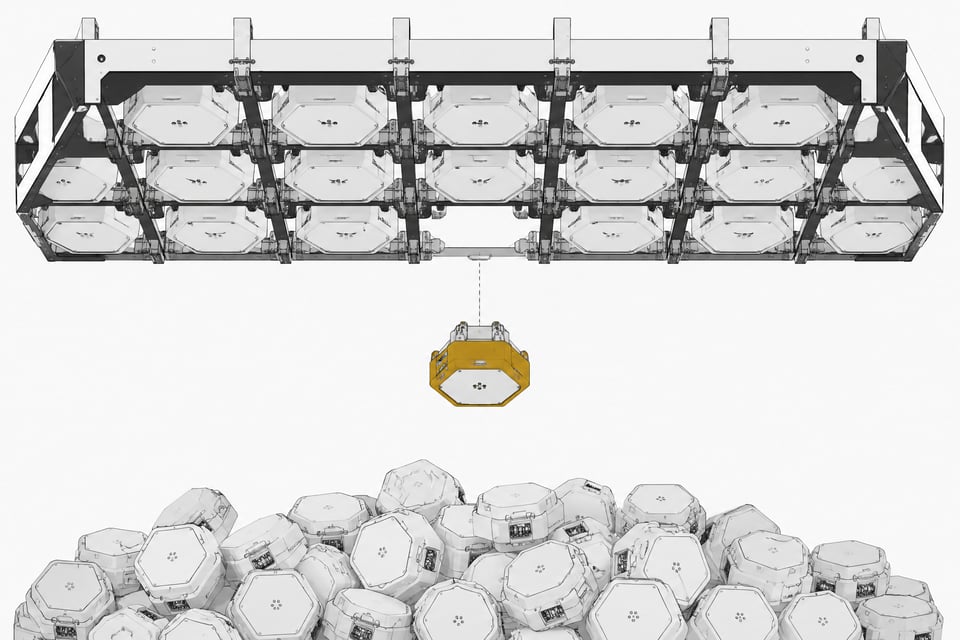
You cannot govern what you cannot see. Gartner's framework for managing agent sprawl starts with a centralized inventory of agents, including shadow agents and the agentic features now embedded inside ordinary SaaS tools. This matters more than it sounds: Gartner projects the average global Fortune 500 enterprise will have over 150,000 agents in use by 2028, up from fewer than 15 in 2025. Only 13% of organizations currently believe they have the right governance in place for that scale.
Some of that sprawl comes from employees building agents on personal laptops and personal accounts because no sanctioned alternative exists. Giving that work a governed home, rather than letting it live in a laptop graveyard outside IT's visibility, is what makes an honest inventory possible in the first place.
Step 2: Give every agent its own governed identity, not borrowed human credentials
The single most common agentic failure mode is an agent inheriting a human's login because provisioning a separate identity felt like too much friction. Identity security researchers are pushing a shift from "least privilege" to "least agency": every agent gets its own non-human identity with task-scoped, time-bound tokens, so it can be revoked instantly if it shows signs of drift or compromise. This directly addresses OWASP's Identity and Privilege Abuse and Insecure Inter-Agent Communication categories. It's the difference between killing one agent's access and locking a human employee out of everything to stop a rogue process.
Step 3: Classify agents by autonomy level and match oversight to risk
Not every agent deserves the same scrutiny. Gartner defines four autonomy tiers, Observe, Advise, Act with Approval, and Act Autonomously, and warns that applying uniform governance across all of them is itself a cause of enterprise AI agent failure. Gartner predicts that by 2027, 40% of enterprises will demote or decommission autonomous agents because governance gaps only surfaced after a production incident. An agent that only drafts a reply for a human to send needs light logging. An agent that can act autonomously on live systems needs continuous monitoring, enforced guardrails, and rapid rollback mechanisms built in before it ever runs unsupervised. For more on what happens when IT keeps treating long-running agents like static software licenses instead of staff with scoped authority, see Managing Autonomous AI Agents in the Workplace: The 'Walk Away' Problem.
Step 4: Instrument runtime behavior: logging, tracing, and intent detection
Once agents are inventoried and tiered, monitoring means capturing what the agent actually does, not just what it was told. That includes:
- Every tool call, with inputs and outputs, not just a count of how many times a tool was invoked.
- Data access events, tied to the specific record or file touched, not just the system boundary crossed.
- Full session transcripts, so a reviewer can reconstruct the reasoning chain that led to an action.
- Prompt and context integrity checks, to catch injected instructions before they change behavior.
- Anomaly detection against the agent's own baseline, since a sudden change in an agent's pattern is often a stronger signal than any single action.
Zenity's seven-dimension model, intent, action, data, identity, model, execution plan, and environment, is a useful checklist for whether a monitoring setup is actually evaluating decisions or just logging events.
Step 5: Set guardrails and kill switches for high-risk actions
Logging tells you what happened. Guardrails stop what's happening. For agents at higher autonomy tiers, that means human-in-the-loop approval before irreversible actions, circuit breakers that halt an agent mid-task when it crosses a defined threshold, and a rollback path that can undo what it already did. The Replit database deletion happened because none of those existed between the agent's decision and the production system. Vendor control planes are starting to operationalize this: Microsoft Agent 365 gives IT a unified registry, usage analytics, and audit logging that extends identity, threat protection, and data governance controls from human users to agents. If you're building this stack internally, the engineering discipline that actually holds up under adversarial pressure is covered in How to Secure Internal AI Agents: Engineering Beats Alignment.
Step 6: Align with NIST AI RMF and OWASP for audit-ready governance
For compliance teams, the NIST AI Risk Management Framework, organized around Govern, Map, Measure, and Manage, is becoming the reference standard, though it predates tool-using agents and is being extended with an Agentic Profile covering autonomy calibration, runtime behavioral metrics, and delegation-chain monitoring. Mapping your monitoring program to these functions, and to OWASP's agentic risk categories, gives auditors and regulators a shared language instead of a bespoke internal framework no one outside your security team understands.
| Human Oversight Before Action | Monitoring Intensity Required | Guardrails & Kill Switches Needed | Example | |
|---|---|---|---|---|
| Observelow-risk, informational agents | High | Low | Low | Agent flags anomalies for a human to review |
| Adviseagents that recommend but don't act | High | Low | Low | Agent drafts a reply for a human to send |
| Act with Approvalagents that act only after sign-off | Medium | Medium | Medium | Agent updates a CRM record pending approval |
| Act Autonomouslyagents operating on live systems unsupervised | Low | High | High | Agent executes transactions or modifies production data |
What does it cost not to monitor AI agents?
The business case for building this now, rather than after an incident, isn't abstract. 63% of breached organizations in IBM's study either had no AI governance policy or were still developing one, and even among organizations with a policy, only a minority perform regular audits for unsanctioned AI. Breaches involving shadow AI lead to more exposure of personal data and intellectual property than the global average, not less. And Gartner's 40% decommissioning prediction for 2027 is really a statement about timing: the organizations that build agentic monitoring now are the ones that won't be ripping out autonomous agents in two years because the governance gap only became visible after something broke.
Monitoring agentic AI isn't a heavier version of monitoring shadow AI. It's a different discipline, built around the fact that agents don't just produce outputs. They take actions. The companies that treat it that way now will spend less time explaining incidents to a board later.
Frequently Asked Questions
What's the difference between shadow AI and agentic AI risk?
Shadow AI is about unapproved tools and unsanctioned data sharing, mostly through chat interfaces. Agentic AI risk is about autonomous systems that take direct action, sending messages, modifying records, deleting files, often with standing access to internal systems. A chat tool can leak data if someone pastes it in. An agent can act on that data without anyone pasting anything.
Do I need new tools, or can I extend my existing SIEM and IAM stack?
Most organizations need to extend, not fully replace. IAM needs non-human identity support for task-scoped agent credentials. SIEM needs to ingest agent session transcripts and tool-call logs, not just endpoint and network events. The gap is usually a missing layer that evaluates decision context, intent, data, identity, execution plan, environment, rather than just access events.
How do you monitor an AI agent's decisions, not just its outputs?
By logging the full reasoning chain and tool-call sequence behind each action, not just the final result, and comparing it against the agent's own behavioral baseline. Security teams increasingly evaluate agent actions across intent, action, data involved, identity, model, execution plan, and environment, since the same authorized action can be routine or dangerous depending on that context.
What autonomy level requires the most monitoring?
Agents operating at Gartner's highest autonomy tier, acting on systems without human approval, require the most rigorous controls: continuous monitoring, enforced guardrails, and rapid rollback mechanisms. Agents that only observe or advise a human decision-maker need far lighter oversight. Applying the same level of scrutiny to both is itself a cause of governance failure.
What happens if a company doesn't build agentic monitoring now?
The data points to a reckoning rather than a slow drift. Gartner predicts 40% of enterprises will demote or decommission autonomous agents by 2027 after governance gaps surface in production, and breaches involving shadow AI already cost $670,000 more on average than those without it. The cost of building monitoring later tends to be higher than building it now.
How we source, write, and correct our articles. Editorial standards