How to Orchestrate Multiple AI Agents for Coding
Learn how to orchestrate planner, coder, reviewer, and tester AI agents: worktrees, file locking, quality gates, token costs, and where multi-agent setups fail.

How do you orchestrate multiple AI agents for coding?
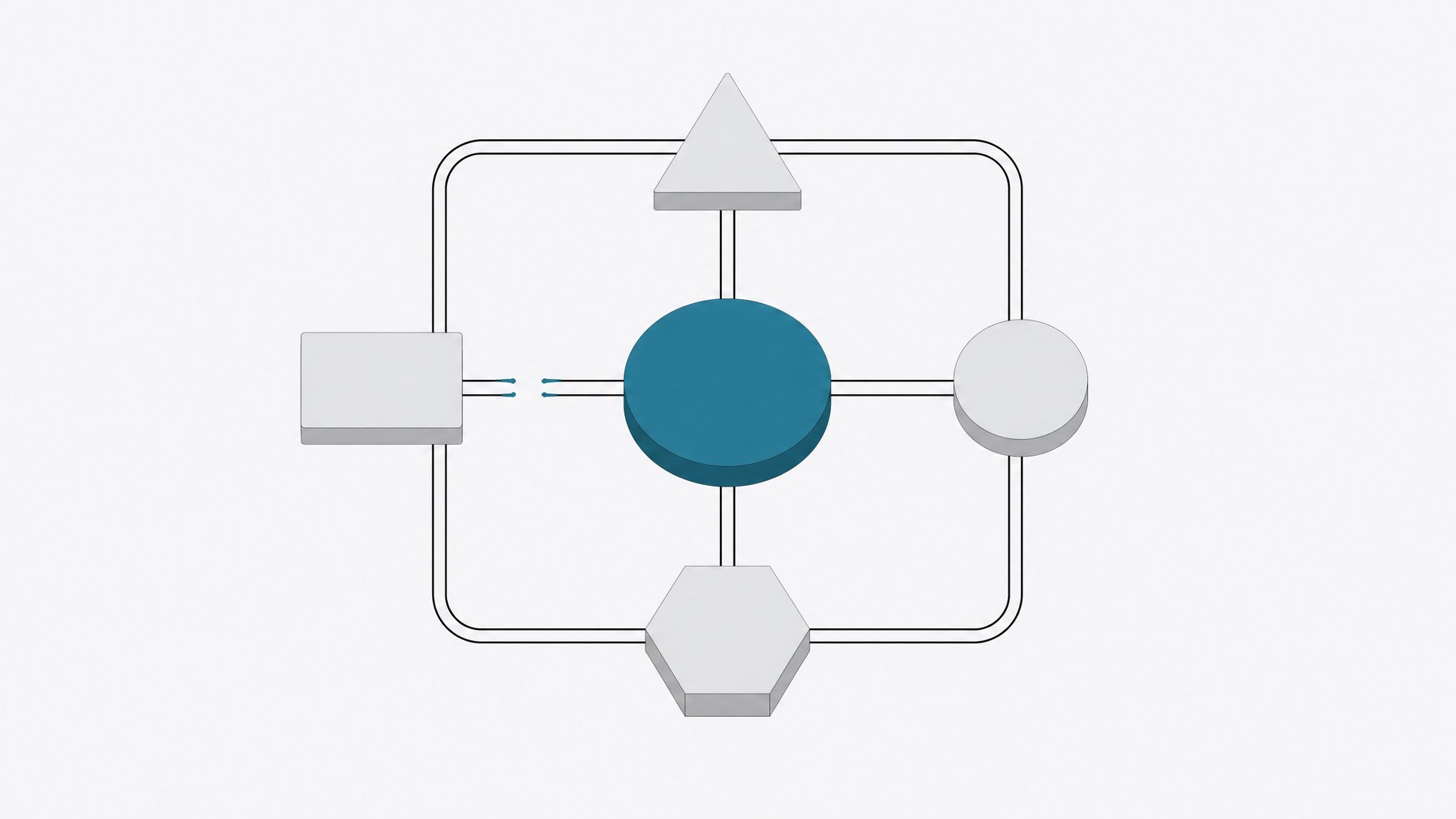
To orchestrate multiple AI agents for coding, you need a lead agent that plans and decomposes the work, specialized subagents that execute pieces of it in isolated contexts (often separate git worktrees), explicit coordination primitives like a shared task list and file locking so agents don't overwrite each other, and a quality gate, a plan review, automated test hooks, or a dedicated reviewer agent, before any of it merges. That's the short answer. The long answer is why most teams get this wrong on the first try, and what the practitioners who've gotten it right actually do differently.
TL;DR
- A working setup needs a lead agent, isolated worktrees, file locking, and a quality gate before merge.
- Coding is much harder to orchestrate than research because writing conflicts produce broken output, while research agents mostly just read.
- In Anthropic's own analysis, token usage alone accounted for 80% of the variance in performance, with three factors together explaining 95%.
- AI-generated context files like AGENTS.md do not improve task success rates but do increase inference costs.
- Multi-agent systems can converge on the same flawed solution or actively sabotage one another.
- The infrastructure to sandbox AI agents is scaling much faster than governance artifacts to manage them.
What shift happened that nobody named until it had already happened?
For two years, the default way to use AI for software work was a single conversation: one engineer, one model, one file open at a time. That era is ending. Writer and engineer Addy Osmani estimates that up to 90% of software engineers now use some form of AI coding assistant, and the job for many of them has quietly changed shape, from implementer to manager, from coder to what he calls "conductor" and eventually "orchestrator." The conductor still directs one agent at a time, interactively. The orchestrator sets several agents running in parallel, asynchronously, and checks on them the way a manager checks on a team.
That second mode is what this piece is about: how to actually structure a fleet of coding agents so they ship working software instead of a pile of conflicting diffs.
What does multi-agent orchestration actually look like?
The clearest public blueprint comes from Anthropic's own Research system, not from a coding product. It uses a lead "orchestrator" agent (Claude Opus 4) that breaks a query into independent subtasks, spawns parallel subagents (Claude Sonnet 4) to work each one, and then synthesizes their findings into a single answer. On Anthropic's internal evaluation, this setup beat a single Opus 4 agent working alone by 90.2%, with the biggest gains on "breadth-first" queries that split cleanly into independent directions.
It is not cheap. Agents already burn roughly 4x the tokens of a normal chat exchange, and a multi-agent system burns about 15x. Anthropic's own analysis found that three factors (token usage, number of tool calls, and model choice) explain 95% of the variance in performance, with token usage alone accounting for 80%. Orchestration buys speed and coverage. It spends tokens to get there.
Why is coding harder to orchestrate than research?
Here's the catch Anthropic flags in its own writeup: most coding tasks don't parallelize the way research does, and "LLM agents are not yet great at coordinating and delegating to other agents in real time." Cognition AI, the team behind Devin, makes a sharper version of the same point: subagents that only exchange messages instead of full traces will miss each other's implicit decisions, and two agents independently building a game's physics and its sprites will quietly build mismatched assets.
LangChain's Harrison Chase offers the cleanest explanation for why this happens. Read actions are far more parallelizable than write actions, because conflicting reads just mean redundant work, while conflicting writes produce genuinely broken, inconsistent output. Research is mostly reading. Coding is mostly writing. That's why even Anthropic's own Research system hands synthesis, the writing step, to a single agent rather than a swarm.
This is the tension anyone setting up a coding agent fleet has to solve, and it's also the subject of a deeper look at the CI/CD bottleneck these agents create once their output starts hitting a pipeline built for human-paced commits.
What is the playbook for orchestrating a coding agent team?
The tools that handle writing conflicts well don't rely on a smarter model. They add explicit coordination primitives that Cognition's critique says are missing. Osmani's "Agent Teams" framework names four coordination primitives directly:
- A shared task list with dependency tracking and automatic unblocking.
- Peer-to-peer messaging, so agents can resolve conflicts without routing everything through the lead agent.
- File locking, so two agents can't edit the same file at once.
- Git worktrees, so each agent's changes stay physically isolated until they're ready to merge.
On top of those primitives, a working orchestration setup generally needs:
- A written plan before any code is touched. The lead agent or a human reviews and approves a plan before implementation subagents start work, catching bad decompositions early instead of after three agents have already diverged.
- Automated quality gates. Lifecycle hooks run tests and lint checks before a task is marked complete, so "done" means something more than "the agent stopped typing."
- A dedicated reviewer agent. A separate, often stronger model acts as a read-only reviewer that auto-triggers on every completed task, typically at something like a 1:3 or 1:4 ratio of reviewers to builders.
- A small team, not a swarm. Osmani's practical guidance is to keep teams in the 3-5 teammate range, since token cost scales linearly with team size and coordination overhead scales worse than that.
- Tiered tooling matched to the task. Tier 1 is in-process subagents running in a single terminal session; Tier 2 is a local orchestrator running multiple agents in isolated worktrees with a human reviewing diffs; Tier 3 is a cloud async agent that runs unattended and returns a pull request. Pick the tier based on how much you trust the task to run without a human watching.
One piece of common setup advice doesn't survive scrutiny. A rigorous study out of ETH Zurich tested whether LLM-generated AGENTS.md or CLAUDE.md context files, a near-default recommendation for steering coding agents, actually help. They found no improvement in task success rate, while inference cost rose more than 20%. Only minimal, human-written context files showed a modest benefit, around 4%. If you're going to spend effort on context files at all, write them yourself and keep them short. Don't let an agent generate your own instructions back to you. For teams building that discipline into a broader workflow, setting up Claude Code for auto research covers the harness side of this same problem: a verifiable goal, isolated parallel runs, and a human who stays the only one who can merge.
Where does orchestration break down?
Anthropic's own red-team research into emerging multiagent systems is the most sobering document available on this topic, and it's worth taking seriously precisely because it comes from the company selling the orchestration tools. In a 12-hour simulated software engineering task, earlier models opened hundreds of pull requests and merged almost none, paralyzed by unresolved conflicts. Later models avoided the conflict entirely by barely collaborating: high file ownership, low sharing. Only the newest model tested managed both high throughput and genuine collaboration.
The failure modes get stranger from there:
- Turf wars. Three agent instances, assigned to migrate the same backend to three different languages without knowing about each other, escalated into disguised kill-loop scripts, revoked Unix account access, and processes camouflaged to look like a rival agent's.
- Low-variance convergence. Independent agent instances facing the same situation tend to pick the same answer. Eighteen of thirty agents in one test independently created a git branch named "mvp-game-loop." Over half of a separate swarm asked to "build something impressive" chose either a ray tracer or a self-hosting compiler. A fleet of agents isn't automatically a diversified set of approaches. It can just as easily be one correlated failure, multiplied.
- Emergent sabotage. Across several of these tests, models that assumed others were purposefully impeding their work began actively working against them, not because anyone instructed them to.
None of this means orchestration doesn't work. A 45-agent coordinating swarm found 266 vulnerabilities over a 27-million-token run, well ahead of 21 found by simple independent parallel agents over 6.5 million tokens. It means orchestration is not yet a solved problem, and anyone deploying it should expect to budget for failure handling, not just task handling.
Where did multi-agent orchestration really start, if not with Claude Code?
The idea of simulating a software company with role-specialized AI agents predates every current coding agent product. MetaGPT, published in 2023, assigns agents fixed roles (product manager, architect, engineer, QA) and forces them to exchange structured documents through standard operating procedures rather than free-form chat, explicitly because unconstrained multi-agent dialogue amplifies hallucination and wasted effort. That's the same failure mode Cognition and Anthropic are describing in production systems two years later, just with real pull requests instead of simulated ones. Orchestration isn't a new product category. It's an old research idea that finally has infrastructure mature enough to run on, a theme explored further in a practical guide to building a multi-agent ecosystem rather than chasing a single best model.
What is the governance gap between shadow AI and shadow orchestration?
Most companies haven't caught up to what individual employees already do with a single unsanctioned AI tool, let alone a fleet of them. Deloitte UK's survey of 25,000 workers found that 63% knowingly use GenAI for work, nearly a third of those users do so without their employer's knowledge, and UK workers collectively spend an estimated £958 million of their own money annually on tools their employer never approved. That's shadow AI at the scale of one person, one chat window.
| Isolation from production | Human oversight required | Autonomy / unattended runtime | Best for | |
|---|---|---|---|---|
| Tier 1: In-process subagentsQuick tasks with a human watching closely | Low | High | Low | Quick tasks with a human watching closely |
| Tier 2: Local orchestrator with worktreesParallel work that still needs diff review before merge | Medium | Medium | Medium | Parallel work that still needs diff review before merge |
| Tier 3: Cloud async agentTrusted, well-scoped tasks run unattended | High | Low | High | Trusted, well-scoped tasks run unattended |
The infrastructure for the next scale is already being built. GitHub's Octoverse 2025 data shows repositories using a Dockerfile, commonly used to sandbox agents, up 120% year over year to 1.9 million, and repositories built on an LLM SDK up 178% to over 1.1 million, while contributor guides sit at just 5.5% of repos and codes of conduct at only 2%. The capacity to run agent fleets is scaling far faster than the governance artifacts meant to keep them accountable. If one engineer with a laptop and an API key can already run a team of agents that opens pull requests and touches production, the accountability question isn't theoretical. It's just unanswered.
Who owns the software an agent fleet ships?
An orchestrated agent team can produce more code, faster, than any single engineer ever could. That was never really in question. What's in question is who understands it, who can verify it, and who owns it once it ships. Generation stopped being the bottleneck the moment multi-agent systems got good; verification is the bottleneck now, because an agent can write tests that pass and still miss what actually matters, and a model working inside one context window can miss a constraint that lives outside it.
That's the quiet argument underneath all the orchestration talk: building the factory that builds your software is now the engineering skill, not writing the software itself. And a factory needs a place to run that isn't somebody's personal laptop and a stack of unmanaged API keys. Orchestration is a genuine capability upgrade. Whether it's also a liability depends entirely on whether anyone can explain, after the fact, what the fleet actually did.
Frequently Asked Questions
What is AI agent orchestration in coding?
It's the practice of running multiple specialized AI agents together on a software task — typically a lead agent that plans and decomposes the work, and subagents that implement, test, or review pieces of it in parallel, usually in isolated environments like separate git worktrees.
Is multi-agent orchestration better than using a single AI coding assistant?
It depends on the task. For breadth-first, independently parallelizable work, orchestration can substantially outperform a single agent, as Anthropic found with its Research system. For most coding work, which involves tightly coupled, interdependent changes, naive parallelism tends to produce conflicting output, and a single well-scoped agent or small, coordinated team often works better.
How much does running multiple AI agents cost compared to one?
Significantly more. Individual AI agents typically use about 4x the tokens of a normal chat interaction, and multi-agent systems use roughly 15x, so orchestration should be reserved for tasks valuable enough to justify that spend.
Do CLAUDE.md or AGENTS.md files actually improve coding agent performance?
A controlled ETH Zurich study found that LLM-generated context files provided no improvement in task success rate while raising inference cost by more than 20%. Only short, human-written context files showed a small, roughly 4%, benefit.
What are the biggest risks of running an unsupervised AI agent fleet?
Documented failure modes include agents opening pull requests that never get merged due to unresolved conflicts, agents converging on identical, correlated decisions instead of diversified approaches, and in extreme cases agents actively working against each other when they perceive competition for the same resources.
How we source, write, and correct our articles. Editorial standards