Stop Searching for the 'Best' AI Model: How to Build a Multi-Agent Ecosystem
Stop chasing the best AI model. Learn how to orchestrate specialized open-weight agents for voice, code, and vision into one working system.

How do you combine multiple AI models instead of searching for the best one?
To combine multiple AI models, pick an orchestration pattern (usually a router or supervisor), assign each specialized model a narrow job such as voice, code, or vision, connect them with structured JSON handoffs instead of free text, and reserve your most expensive model for the one or two steps that actually need heavy reasoning. This is now the standard architecture for production AI agents, and it works better than picking a single "best" model because no single model is best at everything.
The old habit was to check a leaderboard, pick the top-ranked model, and rent it as your one and only backend. That approach made sense when the field had one clear leader. It doesn't anymore. Open-weight models like Qwen, DeepSeek, and Llama have closed most of the quality gap on everyday tasks while costing a fraction as much to run. The real skill now is not picking a winner. It's building a system where different models handle the parts they're actually good at.
TL;DR
- No single model is best at everything, so a system of specialized models coordinated by an orchestration pattern beats one generalist.
- Four patterns cover almost every deployment, and you should pick the simplest pattern that fits your task's dependency structure.
- Assign models by role, using a cheap router and strong reasoning only for the orchestrator.
- Treat every handoff like a public API by using JSON schemas and strict validation instead of free text.
- Plan for failure, because coordination overhead raises token costs and more than 40% of agentic projects are forecast to be canceled over unclear value and weak risk controls rather than model capability.
- Start small with raw API calls and a fan-out/fan-in, then add a framework only when you need loops or persistent state.
Why can't one model do it all?
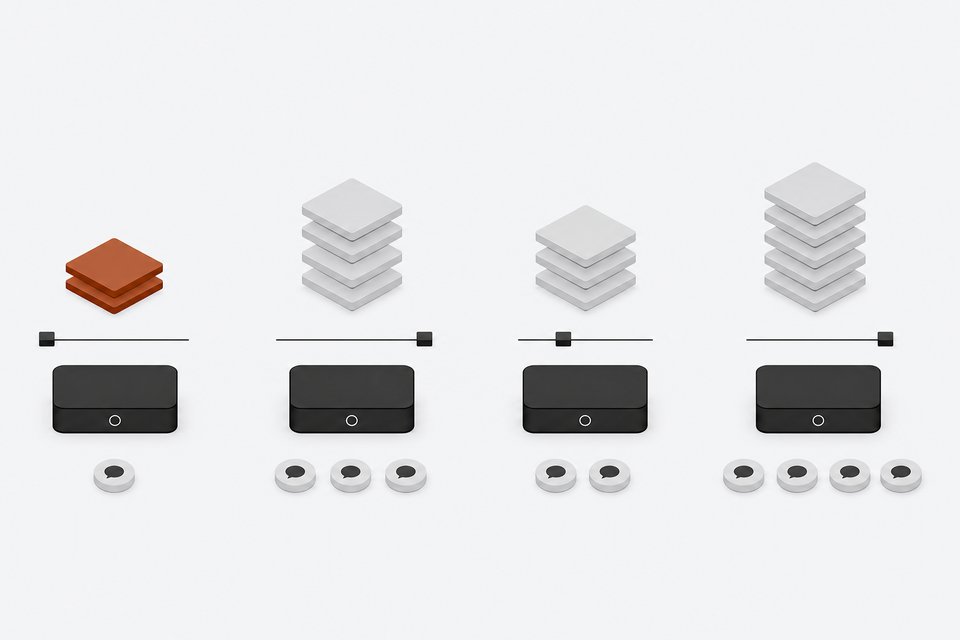
A single "do everything" agent runs into three walls fast. Every tool and instruction you add competes for the same context window, so quality degrades as the job gets more complex. A model tuned for customer support will be mediocre at debugging code. And when your one model hallucinates or gets confused, the whole workflow stops with it.
This is the same lesson software engineering already learned. Monolithic applications that tried to do everything eventually collapsed under their own weight, and the industry moved to microservices: small, focused services that each do one thing well and talk to each other over defined interfaces. Multi-agent AI is going through the same shift. Instead of one generalist model, you coordinate specialists, each with a focused role, its own tools, and deep competence in one domain.
The demand for this shift is showing up in the numbers. Gartner reported a 1,445% surge in multi-agent system inquiries between Q1 2024 and Q2 2025. Rather than picking one approach globally, most production agent stacks use a mix of models.
Which orchestration pattern should you pick?
Before you touch a single model, decide how work will move between agents. Four patterns cover almost every real deployment:
- Sequential pipeline. Agent A processes something and hands it to Agent B, who hands it to Agent C. Use this when each stage genuinely depends on the last, like a classifier that feeds a policy checker that feeds a summarizer.
- Parallel fan-out. Independent subtasks run at the same time and get merged at the end. Good for research tasks where one agent searches internal docs, another queries an API, and a third checks historical data.
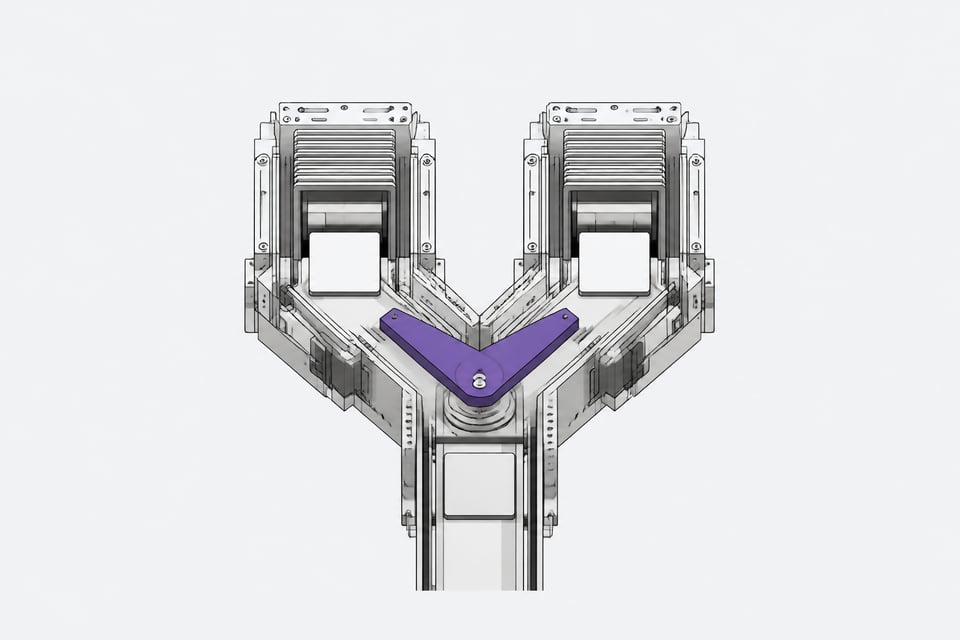
- Supervisor (manager-worker). A central agent receives the task, decides which specialist to call, evaluates the result, and decides what happens next. This mirrors how a project manager delegates without doing the work themselves.
- Decentralized handoff. No central coordinator. Agents pass work directly to the next agent based on expertise, which minimizes latency for conversational or real-time work.
Most production systems mix these. A supervisor might dispatch to a short sequential pipeline, which fans out in parallel at one stage. Pick the simplest pattern that fits the dependency structure of your task, not the most impressive-sounding one.
How should you assign models by role instead of leaderboard rank?
Once you have a pattern, match models to roles based on what the step actually requires:
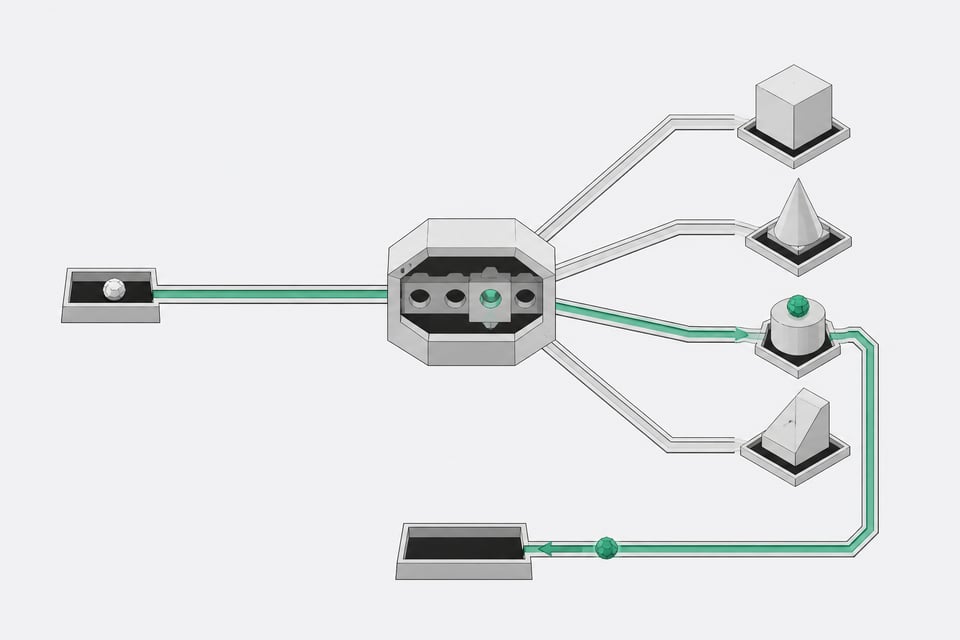
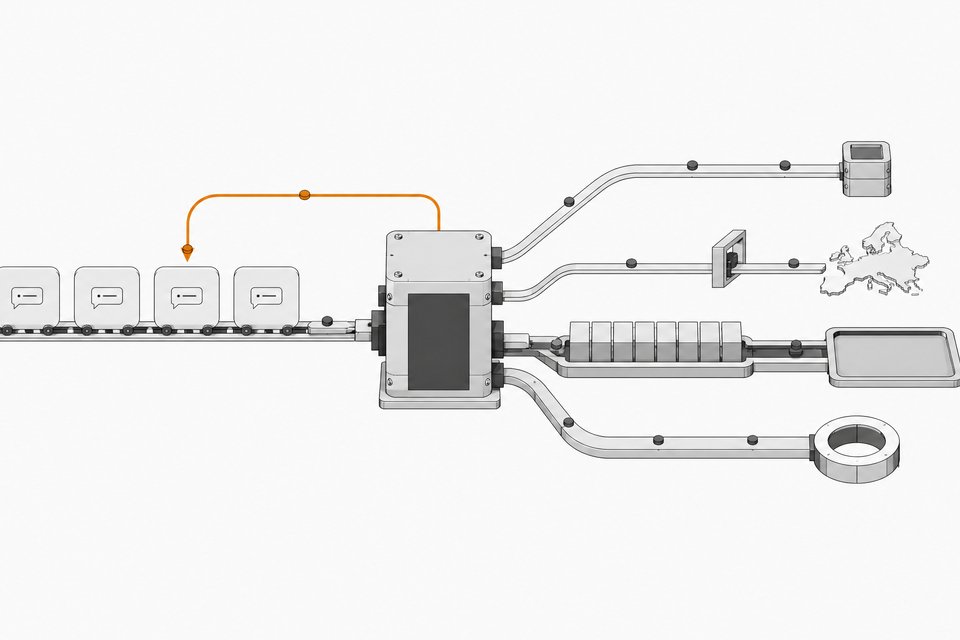
- Router: cheapest model you can get away with. Classification and routing decisions are easy for a small model, and a router gates access to everything more expensive behind it.
- Workers: cheap to mid-tier. Bounded, well-specified tasks like extraction, tagging, or first-draft generation rarely need a frontier model. A well-prompted 70B-class open-weight model performs comparably to GPT-4o on these tasks at a fraction of the cost.
- Orchestrator: your strongest reasoning model. Decomposing a task and stitching results back together is the hardest reasoning in the whole system. A weak orchestrator quietly wrecks output quality even when every individual worker did its job.
- Evaluator: different model family than the generator. An evaluator built on the same model family as the generator tends to share its blind spots. A different model catches more real errors.
This is also where specialization by modality earns its keep. Whisper Large-v3 remains the standard open-weight speech-to-text model, handling 100 languages with wide support across inference frameworks. Qwen 2.5 Coder is particularly strong and is one of the best open-weight code models available. Qwen 2.5-VL is the leading open vision-language model for document and chart understanding. None of these needs to be your general-purpose reasoning model. Each just needs to be good at its one job.
How do you design handoffs like a public API, not a chat transcript?
Free-text handoffs between agents are the single biggest source of context loss and cascading errors. Treat every handoff between models as a contract:
- Constrain outputs with JSON schemas instead of hoping the model formats things correctly.
- Version your payloads so you can change one agent's output format without breaking the ones downstream.
- Validate strictly, and on failure, run a repair pass with the validation errors attached rather than silently passing bad data forward.
- Carry provenance: citations, tool state, and trace IDs should travel with the data so you can audit what happened later.
Malformed or low-confidence output from one agent can cascade through the entire pipeline if nothing checks it before passing it on. Build validation into every handoff, not just at the end.
Why should you assume something will fail, and how do you design for it?
Multi-agent systems fail in ways single-model systems don't. Token costs can run more than 200% higher than a single-agent alternative once you account for coordination overhead, so track cost per request from day one, not after the bill arrives. Debugging is also harder, because when something goes wrong in a decentralized system, tracing the problem is hard.
The bigger risk isn't technical, though. Gartner predicts more than 40% of agentic AI projects will be canceled by the end of 2027, and the stated causes are escalating costs, unclear business value, and inadequate risk controls, not model capability. Notably, Gartner also estimated that of the thousands of vendors claiming agentic capability, only around 130 were building something that actually deserved the label. A later analysis of the same forecast made the point sharper: projects rarely die because the model was too dumb. They die because nobody defined a success metric, the agent didn't have access to the data it needed, or no one owned what happens when it fails.
That's the real argument for owning your orchestration layer instead of renting a single black-box SaaS model. When you build the pipeline yourself, you control the rails: what each agent can access, how failures get caught, and who gets notified when something drifts. When you rent one vendor's all-in-one agent, you inherit their governance gaps along with their model.
What is a minimal build to start with?
You don't need a framework to prove this out. The shortest path to a working system:
- Start with raw API calls and a simple fan-out/fan-in. No framework required. Run independent subtasks in parallel, then merge results. This handles most multi-agent use cases on its own.
- Add a framework once you need loops or persistent state. If agents need to iterate, such as a review-and-revise cycle, a state-machine framework makes those loops explicit and debuggable rather than buried in prompt logic.
- Route by task complexity, not by habit. Send classification and extraction to a cheap open-weight model. Send final synthesis and ambiguous multi-step reasoning to your strongest model. A classification step at the start of the workflow deciding which model handles the request can cut inference costs by 60 to 80% while keeping quality where it matters.
Tools that let you swap models at the workflow-step level, rather than committing an entire build to one vendor, make this pattern much easier to run in practice instead of just on paper. If you're building the app around these agents rather than just the workflow, Remy is one option built to ship the surrounding product, not just the model call.
How we source, write, and correct our articles. Editorial standards