Build vs. Buy in the Agent Era: Orchestrating Your Own Office of Clones
Per-seat and per-conversation pricing on agent platforms adds up fast. Open orchestration frameworks plus MCP now let you build the same workflows and own them outright.

- 01Enterprise agent platforms charge steep per-seat and per-conversation fees that scale exponentially.
- 02Open frameworks like LangGraph let you build agents for just the cost of LLM tokens and compute.
- 03The Model Context Protocol eliminates integration complexity by standardizing agent tool connections.
- 04Shadow AI usage is rampant, costing organizations an average of $670,000 in additional breach costs.
The short answer
You build internal AI agent workflows by pairing an open orchestration framework (LangGraph, CrewAI, or similar) with the Model Context Protocol for tool access, then running it on infrastructure you control instead of a vendor's metered platform. The frameworks are free and MIT-licensed. MCP is an open, vendor-neutral standard now stewarded by the Linux Foundation. Together they replace what used to require a six-figure SaaS agent contract.
That is not a hypothetical. It is the actual architecture available today, and the economics behind it are worth spelling out plainly, because the vendors selling the alternative are not spelling them out for you.
What you are actually renting when you buy an agent platform
Enterprise agent platforms have stacked a second meter on top of the old per-seat one. Salesforce Agentforce runs three pricing models at once: $2 per conversation, Flex Credits at roughly $0.10 per action, and per-user licenses from $125 to $650 a month.1 Microsoft's path looks simpler on the surface, $30 per user per month for Microsoft 365 Copilot, but the moment you build a custom agent in Copilot Studio you are back to consumption billing: $200 for a 25,000-credit pack, with pay-as-you-go overage on top.
Run the math on a modest deployment. One analysis puts a 500-seat Microsoft 365 Copilot rollout at $180,000 a year before any Copilot Studio usage, and pegs a realistic first-year Agentforce deployment at $150,000 to $600,000 once Data Cloud and implementation are included.2 At 100,000 Agentforce conversations a year, list price alone is $200,000. At a million, it is $2 million, before volume discounts.3 These are not hypothetical worst cases. They are the vendors' own worked examples.
Compare that to the open stack. LangGraph and CrewAI are both free and MIT-licensed. If you self-host, your cost is LLM API tokens plus infrastructure, full stop. Even with a managed layer bolted on, LangSmith's paid tier is $39 per seat per month and CrewAI's hosted Professional plan is $25 a month, orders of magnitude below a per-conversation meter running at enterprise volume.
What the framework cost comparisons actually show
| Approach | License cost | What you actually pay for |
|---|---|---|
| LangGraph (self-hosted) | $0, MIT | LLM tokens + your own compute |
| CrewAI (self-hosted) | $0, MIT | LLM tokens + your own compute |
| LangGraph + LangSmith Plus | $0 framework | $39/seat/mo observability + tokens |
| Salesforce Agentforce | List: $2/conversation or $125-$650/user/mo | Conversations, Flex Credits, or seats, stacked |
| Microsoft Copilot Studio | $30/user/mo base | + $200 per 25,000-credit pack, overage at ~$0.01/credit |
One independent total-cost-of-ownership study found that a production multi-agent system typically runs $0.50 to $3.00 per agent execution on a frontier model, and that 90 to 98 percent of that cost is model tokens, not platform fees. That is the number that should reframe the build-vs-buy decision. The platform tax vendors charge on top of token costs is discretionary. You can choose not to pay it.
MCP removed the excuse that integration is too hard
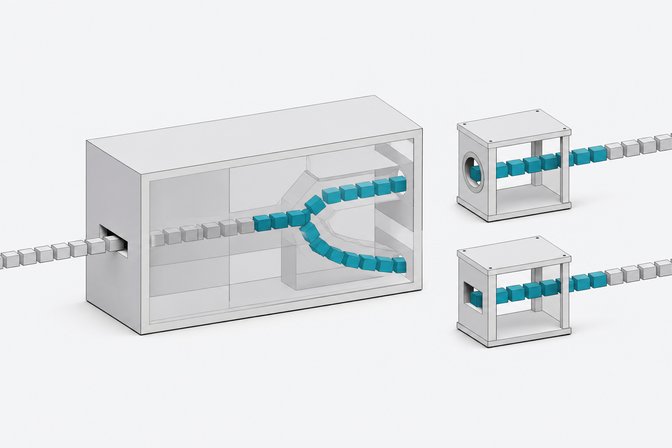
The old argument for buying a platform was integration complexity. Before MCP, connecting M different AI applications to N different tools meant M times N custom connectors, an exponential problem. Anthropic open-sourced MCP in November 2024 specifically to collapse that into a linear one: build a server once per tool, a client once per application, and any compliant agent can use any compliant tool.4
The standard did not stay a single vendor's pet project. In March 2025 OpenAI integrated MCP across ChatGPT and its Agents SDK, and in April 2025 Google DeepMind added support in Gemini, calling it rapidly becoming an open standard for the AI agentic era. By December 2025, Anthropic donated MCP outright to the newly formed Agentic AI Foundation, a directed fund under the Linux Foundation backed by AWS, Google, Microsoft, Bloomberg, Cloudflare, and OpenAI as platinum members. The Linux Foundation's own announcement cites more than 10,000 MCP servers already in circulation. This is the same governance model that hosts Kubernetes and Node.js. No single company can unilaterally change the protocol or start charging rent on it.
That matters for a build decision because it means your custom agent workflow is not stuck talking to a proprietary connector layer that could change terms on you. It talks MCP. Swap the underlying model, swap the orchestration framework, keep the same tool connections.
Why this is happening off the books already
Here is the uncomfortable part for anyone still deciding whether to formally approve a build project: your employees are already doing it, just without governance. Microsoft and LinkedIn's 2025 Work Trend Index found 78 percent of AI users at work bring their own tools rather than wait for IT, climbing to 80 percent at small and mid-sized companies. MIT's Project NANDA found that workers at more than 90 percent of companies use personal AI chatbot accounts for daily tasks, while only 40 percent of companies have official LLM subscriptions. That is a shadow orchestration layer running on personal ChatGPT logins and copy-pasted prompts, with no audit trail and no ownership.
IBM's 2025 Cost of a Data Breach report put a number on the risk: organizations with high shadow AI involvement absorbed $670,000 in additional breach costs on average. The choice is not really build versus buy versus do nothing. It is build with a real architecture, buy a metered platform, or let it happen anyway in a form nobody can see.
A practical starting point
If you are weighing this for your own team, the sequence that works looks like this. Pick one workflow that is currently manual and repetitive, something like ticket triage or contract review, not your whole operations stack. Stand up an MCP server for the two or three systems it needs to touch. Wire an orchestration graph in LangGraph or a role-based crew in CrewAI to run the actual logic. Put a lightweight observability layer on it so you can see what the agents did and why. Only then decide whether it needs a managed hosting tier or whether self-hosting is fine.
Companies going this route are increasingly building these internal tools on platforms designed for exactly this ownership model, where the resulting app is standard code in a repo you control rather than a locked configuration inside someone else's SaaS console. Remy, for instance, is built around that idea: describe the workflow, get an owned application with its own database, auth, and audit log, not a rented seat.
The per-seat and per-conversation model was built for a world where software was a fixed thing you licensed. Agents are not fixed. They are workflows you keep changing as you learn what your team actually needs. Renting that by the action was never going to be the cheaper long-term answer, and the tools to build it yourself are no longer half-finished.
MCP is an open standard that lets an AI model or agent connect to outside tools and data, like a database or Slack, through one consistent format instead of a custom integration for every pairing.
No. Both are free, open-source, MIT-licensed frameworks. You only pay for the LLM API calls your agents make and whatever compute you run them on.
At meaningful volume, usually yes. Vendor platforms charge per conversation or per credit on top of token costs, while a self-hosted stack pays only for tokens and infrastructure.
No longer solely. Anthropic donated MCP in December 2025 to the Agentic AI Foundation, a directed fund under the Linux Foundation with several major companies in governance.
Employees will build their own version anyway using personal AI accounts, outside any audit trail, which is already the norm and carries a measurable breach-cost premium.