Oct 25, 2026
Break-even math on local AI: a $4,000 machine over three years versus ChatGPT or Claude plans, plus what data sovereignty and access are worth.
is local AI worth it local AI vs ChatGPT cost local LLM vs Claude subscription
Oct 25, 2026
Kimi K3.1 Pro claims near-Opus results, but a six-task KingBench run scored it 5.37/10. See task scores, cost, and how it compares to rivals.
Oct 24, 2026
Perplexity Computer is reported to run on a Mac with Qwen 3.6 instead of cloud machines. What the 36GB unified memory figure means and what to check first.
Perplexity Computer Mac run Perplexity Computer locally Qwen 3.6 Mac
Oct 24, 2026
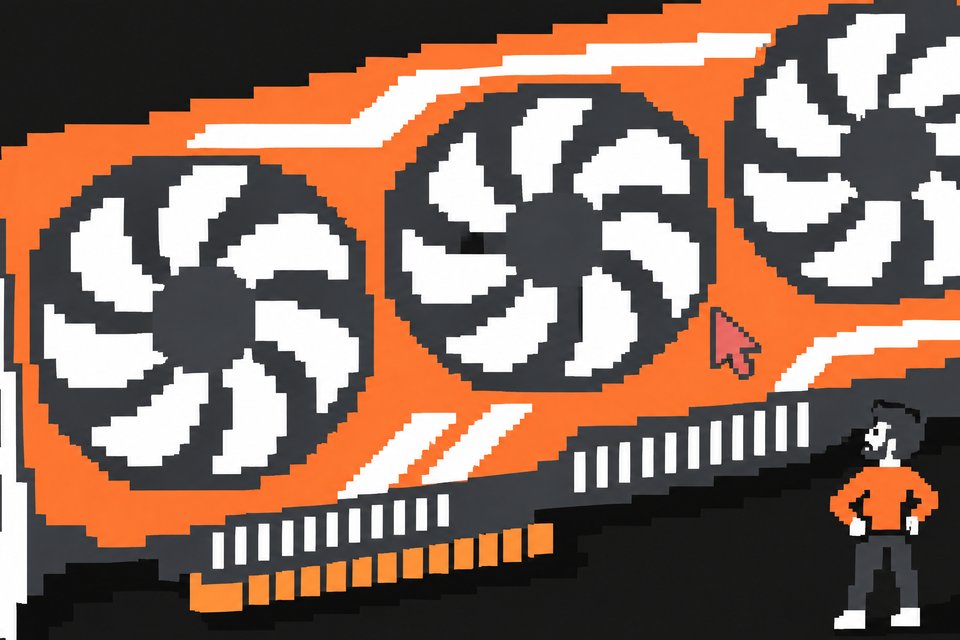
Local LLM hardware tiers compared: RTX 4090, RTX 5090, RTX Pro 6000 Blackwell and Mac Studio, with prices, tokens per second, and multi-agent limits.
local LLM tokens per second RTX 5090 local AI Mac Studio local LLM
Oct 24, 2026
Flint is roughly 10x faster than dense Qwen 3.8 27B but scores 55 vs 73 on Terminal Bench. Here is where each local coding model fits.
Flint vs Qwen 3.8 27B Flint benchmarks MoE vs dense coding model
Oct 24, 2026
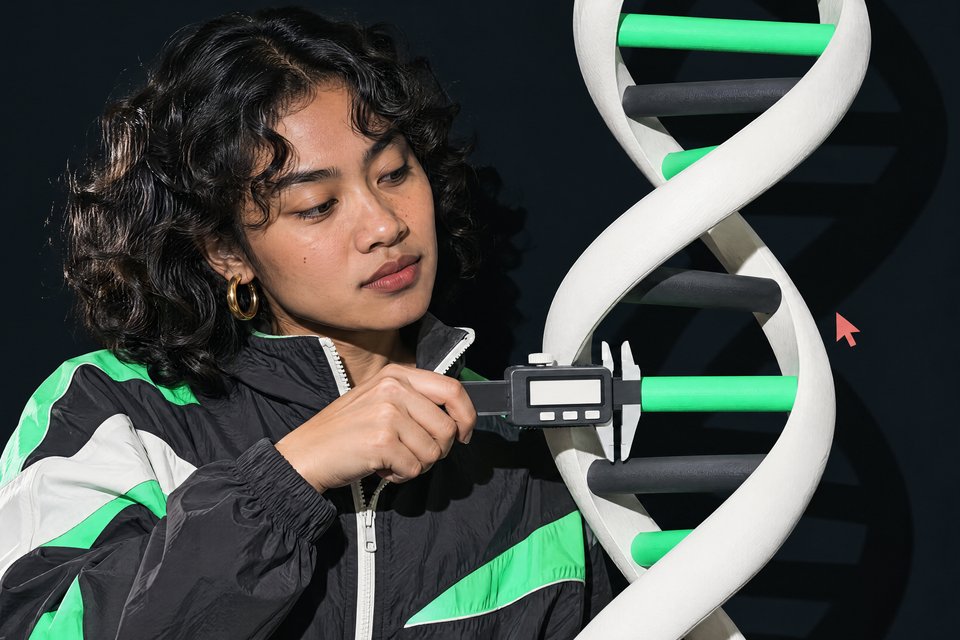
Carbon-X is a 14.8B open DNA and text model that fits on one 80 GB GPU. Set up Transformers v5 or vLLM, handle DNA tokens, and call it from an agent.
Carbon-X DNA language model run Carbon-X vLLM
Oct 24, 2026
InclusionAI's MIT-licensed Ling-3.0 Flash Santé is a 124B MoE healthcare model. See clinical test results, benchmark standing, and its lack of vision.
Ling-3.0 Flash Santé InclusionAI medical LLM open source
Oct 23, 2026
Carbon-X, a 14.8B DNA model, averages 66.7% on five benchmarks versus 67.5% for GPT-6.1 Sol at far lower cost. Results, weak spots, and limits.
Carbon-X benchmarks DNA benchmark variant effect prediction
Oct 23, 2026
Flint 40B scores 54.9% on Terminal-Bench 2.1 and 74.2% on SWE-bench Verified. See M4 Pro speed, NVFP4 vs BF16, and where Qwen 3.8 still wins.
Flint benchmarks Flint Terminal-Bench Flint SWE-bench
Oct 23, 2026
Sage-A1.5, a 35B MoE agentic model, hits 95.1 on GAIA and 61.2 on SWE-bench Pro. Here is where it beats or trails Kimi-K3, GLM-5.3 and GPT-5.6-sol.
Sage-A1.5 benchmarks Sage-A1.5 vs Kimi-K3 35B agentic model
Oct 23, 2026
Install Flint 40B locally with Ollama, llama.cpp or SGLang. Covers VRAM needs (about 32GB for the quant), GGUF Q4, NVFP4, MLX and BF16 on H200 or B300.
Flint 40B run Flint locally Recursive Flint Ollama
Oct 23, 2026
Serve Sage-A1.5 with SGLang or vLLM: standard and MTP launch commands, parsers, and the YaRN factor 2.0 setup that extends 256K context to 512K.
Sage-A1.5 SGLang Sage-A1.5 vLLM Sage-A1.5 512K context
Oct 23, 2026
Hands-on look at Vast-10M, which swaps attention in DeepSeek V4 and GLM 5.2 for VSA. Results from a game build, HTML art, a legal corpus and 81 languages.
Vast-10M 10 million token context VSA attention
Oct 23, 2026
Sage-A1.5 is a 35B MoE agentic model from Shanghai AI Lab. See GAIA, BrowseComp and SWE-bench Pro scores against larger models, plus SGLang and vLLM serving.
Sage-A1.5 Sage-A1.5 benchmarks InternScience Sage
Oct 23, 2026
Raon-1 mini preview is KRAFTON AI's Apache 2.0 30B-A4B MoE with hybrid attention and 262K context. Specs, NVFP4 on a 32GB RTX 5090, and benchmarks.
Raon-1 mini KRAFTON Raon Raon-1 mini NVFP4
Oct 23, 2026
Fish Audio Drama 3 is an open-weight MoE text-to-speech model. Here are the VRAM needs, the 4-bit quant, bracket directions, and how it ranks.
Fish Audio Drama 3 run Drama 3 locally open-weight text to speech
Oct 22, 2026
Temperature 0 isn't always deterministic. Batch composition changes GPU math and flips tokens. Here's why, and when to use batch-invariant inference.
temperature 0 non-deterministic batch invariant inference LLM reproducible outputs
Oct 22, 2026
Buying a Mac mini to run AI agents all day? Here is how to size RAM and storage, what local models change, and why a bigger machine won't fix agent bloat.
Mac mini for AI agents how much RAM for AI agents Mac for running local models
Oct 22, 2026
Ornith-1.5-122B posts 76.9 on SWE-bench Pro and 84.5 on Verified. Here is how it compares with Qwen3.8, Nemotron 3.5 Super VL, DeepSeek-V4-Flash and Beam.
Ornith 1.5 122B benchmarks SWE-bench Pro Ornith vs Qwen 3.8
Oct 22, 2026
Tencent's Hy-Memory-30B-A3B memory writer averages 55.49 across four harnesses vs Claude Opus 5 at 54.62. Per-harness and per-benchmark scores inside.
Hy-Memory-30B-A3B Tencent Hunyuan memory model Mem0 memory writer benchmark
Oct 22, 2026
Spark-X2.6-4B claims best-in-class small-model results and efficiency on par with Qwen3.5-4B and Gemma-E4B. What the card says and what it leaves out.
Spark-X2.6-4B Spark vs Qwen3.5-4B Gemma E4B comparison
Oct 22, 2026
Run Ornith-1.5-122B locally: llama.cpp GGUF setup, VRAM and context trade-offs, runtime versions to check, and how to handle thinking-mode output.
Ornith 1.5 122B run Ornith locally Ornith llama.cpp GGUF
Oct 22, 2026
DeepSeek-V4.1-Flash-1017 gains 11.1 points on Terminal-Bench 4.0 over V4.1-Flash. See how it stacks up against Opus 5, GPT-5.6 Sol, GLM-5.3 and K3.
DeepSeek-V4.1-Flash-1017 DeepSeek V4.1 Flash benchmarks Terminal-Bench 4.0 DeepSeek
Oct 22, 2026
Serve Tencent's Hy-Memory-30B-A3B with vLLM as hy-memory, call it via the OpenAI-compatible API, and use it as the write path in Mem0 or MemOS.
Hy-Memory-30B-A3B vLLM run Hy-Memory locally Mem0 local memory model