How does Spark-X2.6-4B compare with Qwen3.5-4B and Gemma-E4B?
Spark-X2.6-4B claims best-in-class small-model results and efficiency on par with Qwen3.5-4B and Gemma-E4B. What the card says and what it leaves out.

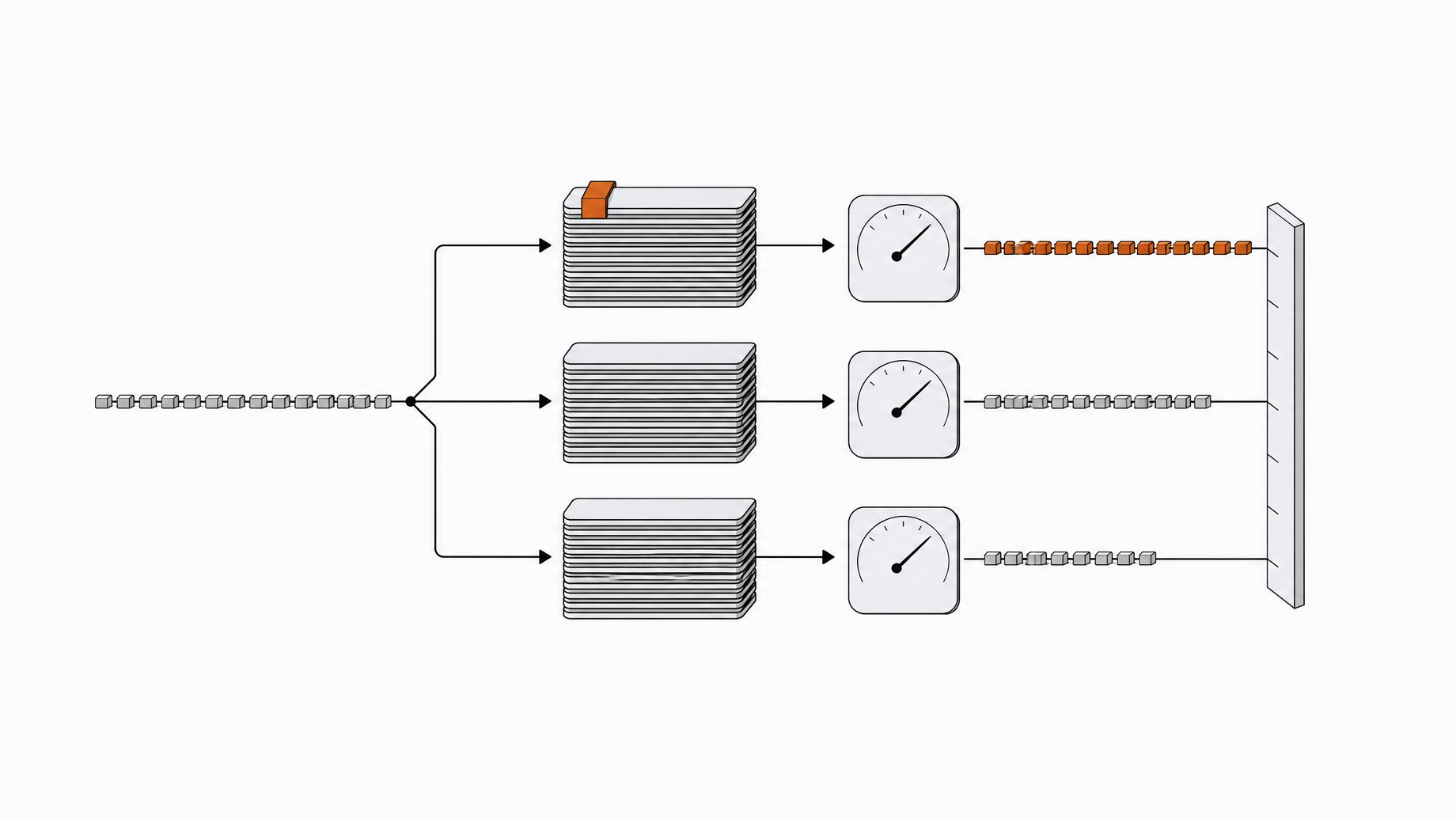
How does Spark-X2.6-4B compare with Qwen3.5-4B and Gemma-E4B?
According to its model card, Spark-X2.6-4B is a 4B-class open-weight model that beats comparable on-device models on agent, code, math, general and knowledge benchmarks, and matches or exceeds some 9B models on several of them. The card also says its inference efficiency is on par with or better than Qwen3.5-4B and Gemma-E4B. These are the authors' own claims. The score tables are published as images, so the exact numbers are not in the card text.
TL;DR
- Spark-X2.6-4B keeps exactly the same architecture as Spark-X2.5-4B, so every gain the card reports comes from better post-training.
- The card claims best-in-class results among similarly sized models and says it matches or surpasses some roughly 9B models on several benchmarks.
- On efficiency, the card says it is on par with or better than Qwen3.5-4B and Gemma-E4B, while being more capable.
- A three-level thinking budget (none, low, high) lets you trade reasoning quality against latency and cost per request.
- The weights ship under Apache 2.0 with documented paths for Transformers, SGLang, vLLM, MLX, llama.cpp, Ollama, LM Studio and Unsloth.
- All comparisons are self-reported, so run your own evals on your own tasks before switching.
What is Spark-X2.6-4B?
Spark-X2.6-4B is the latest release in the SparkLLM team's compact, general-purpose line for on-device deployment. The model card describes it as built for agents doing real-world tasks. It arrives a little over a month after Spark-X2.5, which the authors cite as evidence of how fast agent models are moving.
The release is a post-trained model in Hugging Face Transformers format. The card lists improvements in coding, agentic workflows, long context, multilingual use and reasoning.
What changed from Spark-X2.5?
Nothing in the architecture. The card states that X2.6 "retains exactly the same architecture" as X2.5-4B and gets its gains through improved post-training.
That has practical consequences for builders:
- Tooling built for X2.5 should be close to compatible. The card's own runtime commands still reference
spark25for the tool-call parser and, in the vLLM examples, the served model name. - Memory footprint and per-token compute should not differ from X2.5, since the network is the same shape. The card doesn't publish X2.5 versus X2.6 efficiency figures, so treat this as inference, not a measured result.
- The gains come from data and training recipe, not new components. That makes the claimed jump in agentic and software engineering behavior a statement about post-training quality.
What does the card claim about coding, agents and long context?
The card says the models deliver "substantial improvements in agentic workflows involving complex tool use, multi-step planning, and software engineering." It says these put the model at state-of-the-art among similarly sized open-source models, "matching or even surpassing" models of about 9B parameters.
The benchmark section repeats this in softer terms. Spark-X2.6-4B is "best-in-class" among comparable sizes and matches or exceeds 9B models "on several benchmarks." Note the wording. "Several" is not "all," and the card doesn't name which benchmarks fall on which side in the text.
On long context, the card lists it among the improved areas. Its SGLang example configures a maximum context length of 1,048,576 tokens and warns that this needs enough device memory, advising you to lower --context-length if necessary. The card does not claim that every task works well at that length. The configuration shows what the server can be set to, not a measured quality guarantee.
How efficient is it compared with Qwen3.5-4B and Gemma-E4B?
The card's Edge Inference section says Spark-X2.6-4B delivers "inference efficiency on par with or better than comparable on-device models, including Qwen3.5-4B and Gemma-E4B." The supporting data is a chart image, and the text gives no tokens-per-second, memory or latency figures.
What you can take from this:
- The authors position it as no slower or heavier than the two named rivals.
- The pitch is capability at equal cost, not a cheaper model. If the benchmark claims hold, you get more accuracy for the same footprint.
- The card does not say on what hardware the efficiency was measured. Efficiency on a data-center GPU can differ from a phone, laptop or NPU, so measure on your own target.
How does the thinking budget work?
The model exposes three thinking levels: none, low and high. The goal is to let an application spend reasoning tokens only where they pay off. A quick classification or routing call can skip thinking. A multi-step coding task can use the high level.
In the card's examples, thinking is on by default through both the chat template and the Qwen3 reasoning parser. To turn it off for a request on an OpenAI-compatible server, pass "chat_template_kwargs": {"enable_thinking": false}. In Transformers, the same switch is the enable_thinking argument to apply_chat_template. The card's examples only show the on/off switch. It doesn't document how to select the low versus high level, so check the chat template in the repo.
The suggested sampling settings are temperature 1.0 and top_p 0.95, with top_k disabled.
How do you run Spark-X2.6-4B?
The card documents many routes, which matters for an on-device model.
| Runtime | What the card specifies |
|---|---|
| Transformers | transformers==4.57.1, trust_remote_code=True |
| SGLang | Docker image for NVIDIA GPUs or Ascend NPUs, --tool-call-parser spark25, --reasoning-parser qwen3 |
| vLLM | Official Docker image for NVIDIA, Ascend images for NPUs, plus a Spark plugin installed from GitHub |
| MLX (Spark-MLX-LLM) | Apple silicon GPU, Linux CPU, or CUDA on Linux, no GGUF conversion needed |
| llama.cpp | Native support needs build b10828 or later |
| Ollama | v0.34.1 or later, ollama run SparkLLM/Spark-X2.6-4B |
| LM Studio | 0.4.0 or later, search "Spark-X2.6" |
| Unsloth Studio | Native GGUF inference in the latest version |
For fine-tuning, the card recommends Llama-Factory. According to the card, the Spark-X2.6 model series is licensed under the Apache 2.0 License.
A minimal local test with Ollama looks like this:
ollama run SparkLLM/Spark-X2.6-4B
Should you trust the comparison?
Treat it as a strong lead, not a verdict. A few reasons for caution:
- Self-reported results. The benchmark and inference charts come from the model's authors. No independent evaluation is cited.
- Selective phrasing. "On par with or better than" and "several benchmarks" leave room for tasks where Qwen3.5-4B, Gemma-E4B or a 9B model still wins.
- Missing numbers in text. Scores, hardware and settings are in images, so you can't copy a figure into a decision doc without opening the chart.
- Agent benchmarks are sensitive to scaffolding. Tool-call format, parser choice and thinking level can swing results. The card's reliance on a custom
spark25tool-call parser suggests you should test with that exact setup.
A reasonable evaluation plan is to run the three models on 30 to 50 of your own tasks, covering your real tool schemas, your typical context lengths and your target hardware. Test the thinking levels separately, since they change both quality and latency.
Frequently Asked Questions
Is Spark-X2.6-4B a new architecture?
No. The card says it keeps exactly the same architecture as Spark-X2.5-4B. All the reported gains in coding, agents, long context, multilingual use and reasoning come from improved post-training.
Does Spark-X2.6-4B beat 9B models?
The card says it matches or exceeds approximately 9B models on several benchmarks, not across the board. It does not name those 9B models in the text, so check the benchmark image and test on your own workload.
Can I use Spark-X2.6-4B commercially?
The model series is licensed under Apache 2.0, according to the card. Read the license file in the repository for the exact terms before shipping.
Can it run on a laptop or phone-class hardware?
The card lists Apple silicon via MLX, Linux CPU, llama.cpp, Ollama and LM Studio as supported paths. It doesn't publish memory or speed numbers for specific devices, so benchmark on the hardware you plan to target.
How do I turn thinking off?
Set enable_thinking to false in the chat template call, or send "chat_template_kwargs": {"enable_thinking": false} to an OpenAI-compatible server. The card describes three levels (none, low, high) but only shows the on/off switch in its examples.
How we source, write, and correct our articles. Editorial standards