What is Raon-1 mini and can it run on one RTX 5090?
Raon-1 mini preview is KRAFTON AI's Apache 2.0 30B-A4B MoE with hybrid attention and 262K context. Specs, NVFP4 on a 32GB RTX 5090, and benchmarks.

What is Raon-1 mini?
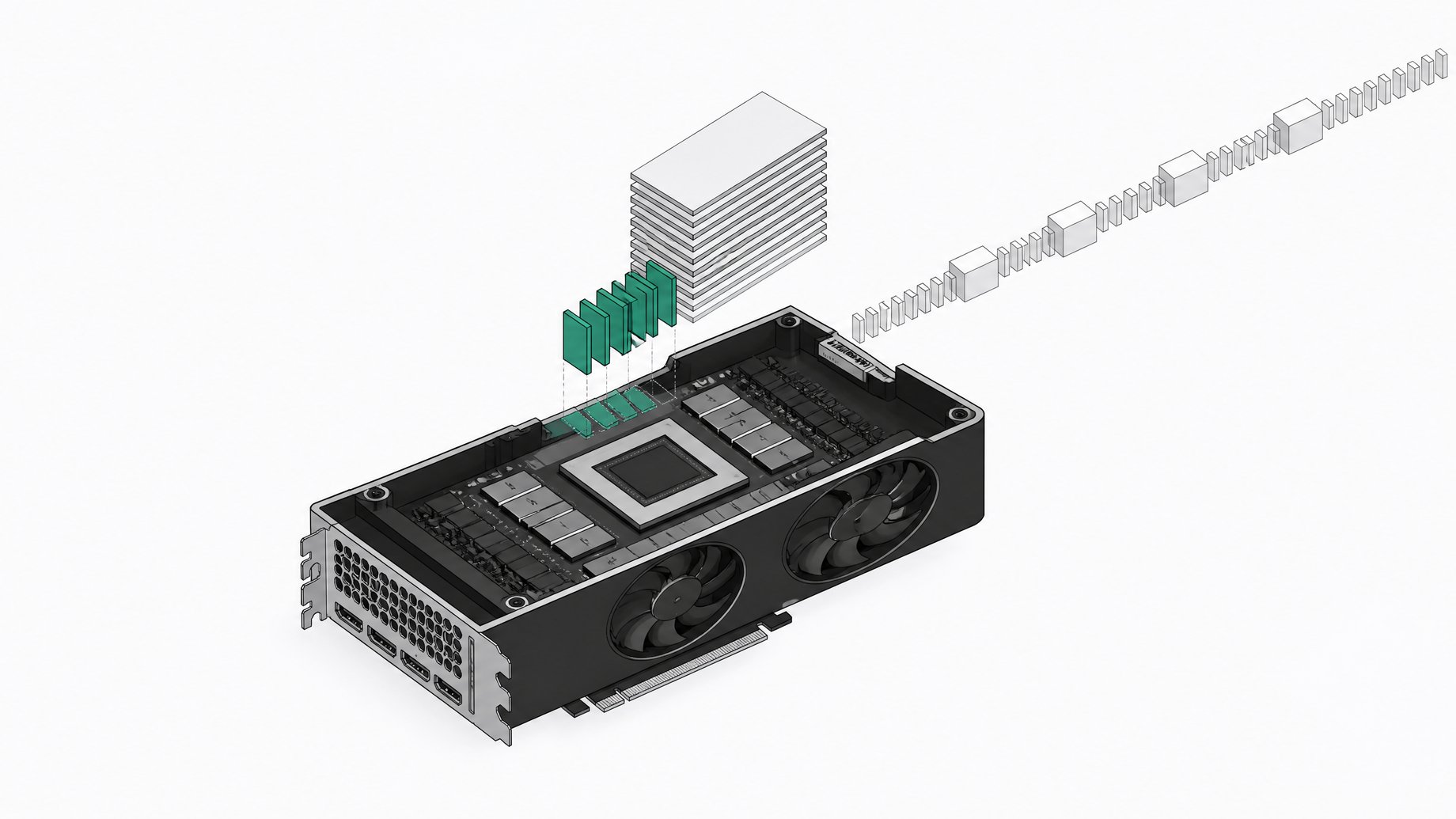
Raon-1 mini is an open-weight Mixture-of-Experts language model from KRAFTON AI, trained from scratch and released under Apache 2.0. It has 28.8B total parameters and 4.3B active per token, which is why it is labeled 30B-A4B. It uses a hybrid attention design, supports 262,144 tokens of context, and ships in MXFP8 and NVFP4 formats. The NVFP4 version is meant to fit on a single 32 GB RTX 5090. It is a preview, not a final release.
TL;DR
- Raon-1 mini preview is a 30B-A4B MoE (28.8B total, 4.3B active) trained from scratch by KRAFTON AI and licensed under Apache 2.0.
- The model uses a hybrid attention stack of 18 Raon Delta Attention layers and 7 Gated MLA layers, so only 7 layers keep a KV cache.
- The NVFP4 checkpoint is the one KRAFTON positions for inference on a single RTX 5090 with 32 GB of VRAM. An MXFP8 version also exists.
- On KRAFTON's own table, it leads its MoE peers on GPQA Diamond, AIME 2026 and AA-Omniscience, but trails them on MMLU Pro.
- It targets Korean conversation and agentic tool use, with listed support for Hermes Agent, Pi and OpenCode, plus a DFlash2 draft model for speculative decoding.
- KRAFTON says specs and results may change before the final version.
What are the Raon-1 mini specs?
The model card lists these figures:
| Field | Value |
|---|---|
| Architecture | Sparse MoE |
| Total / active parameters | 28.8B / 4.3B |
| Layers | 25 |
| Hidden size | 2,560 |
| Experts | 128 routed, 6 routed + 1 shared active per token |
| Expert intermediate size | 1,088 |
| Attention heads | 40 (both RDA and Gated MLA) |
| Position encoding | NoPE (none) |
| Vocabulary | 259,840 |
| Context length | 262,144 tokens |
| License | Apache 2.0 |
A few details stand out. The first layer uses a dense FFN (intermediate size 12,032) instead of experts. The LM head is untied. Residual connections use Raon-mHC with four streams. The model was trained on Korean, English, Japanese, Chinese, Spanish, French and Thai, and it has built-in thinking.
How does the hybrid attention work?
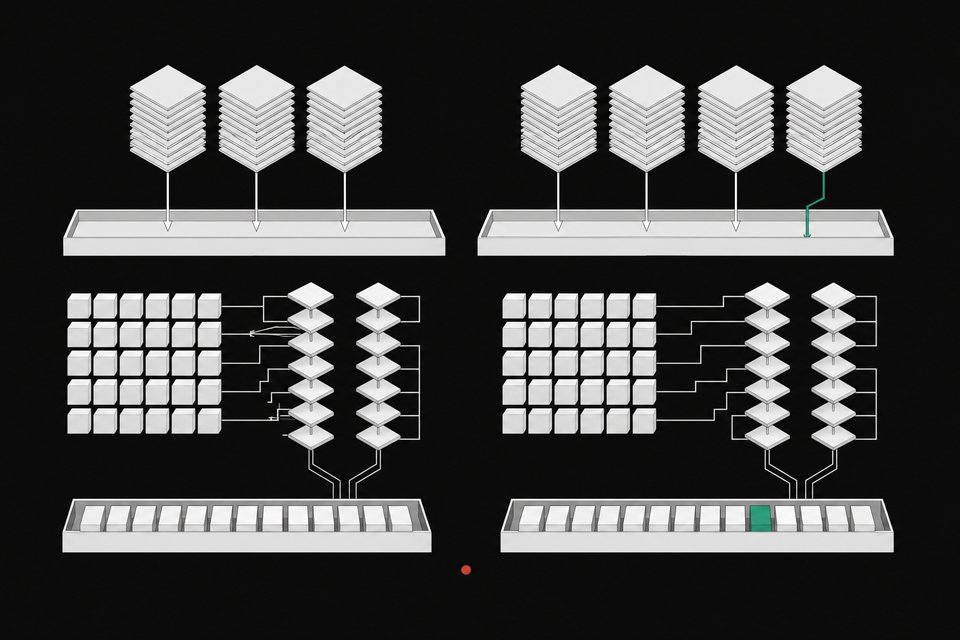
Eighteen of the 25 layers are Raon Delta Attention (RDA), a linear attention variant. The other seven are Gated MLA layers, a full attention type. The ratio is 3 RDA layers to 1 Gated MLA layer.
KRAFTON describes RDA as a change to Kimi Delta Attention (KDA). It decouples the erase and write gates, and the model card says this improves long-context performance over KDA.
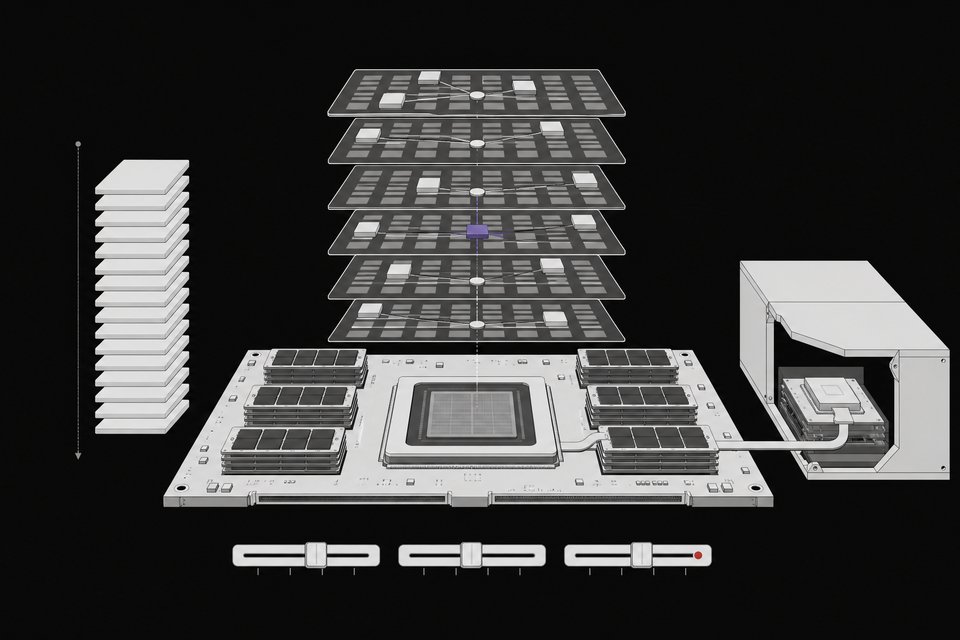
The practical payoff is memory. RDA layers carry a fixed-size state instead of a growing cache. Only the seven MLA layers keep a KV cache, at about 8 KiB per token in BF16. By simple arithmetic, a full 262,144-token context would need roughly 2 GiB of KV cache. That is a back-of-envelope figure from the model card's number, not a measured result. A dense-attention model of similar size would typically need far more.
The model also uses no positional encoding (NoPE). Separately, Raon-mHC is KRAFTON's cheaper take on DeepSeek's manifold-constrained hyper-connections. The card says it speeds up training, so it matters to the builders more than to the people running the model.
Can Raon-1 mini run on a single RTX 5090?
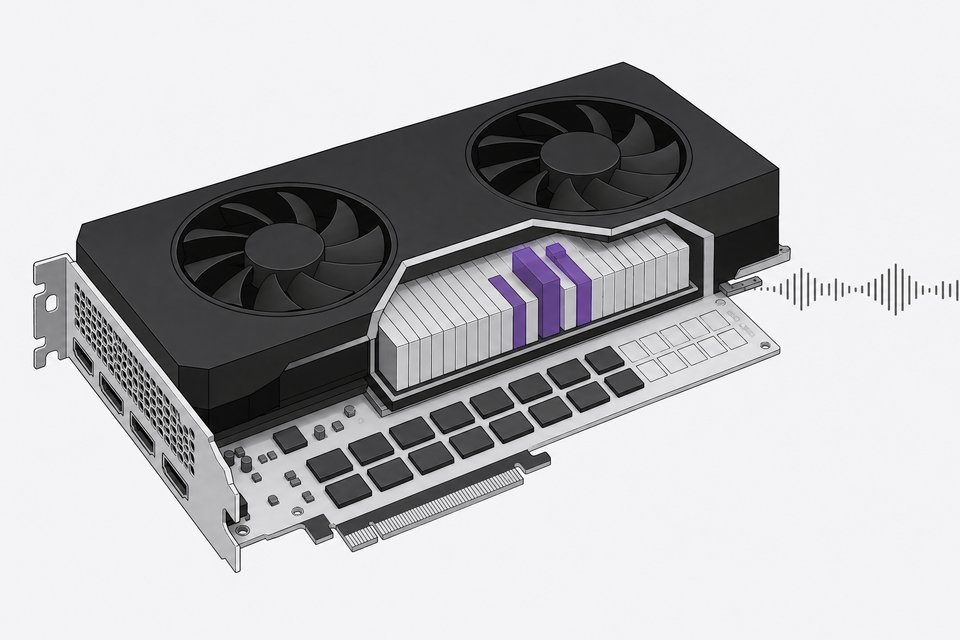
According to the model card, yes, with the NVFP4 build. The card says NVFP4 enables inference on a single NVIDIA RTX 5090 (32 GB VRAM).
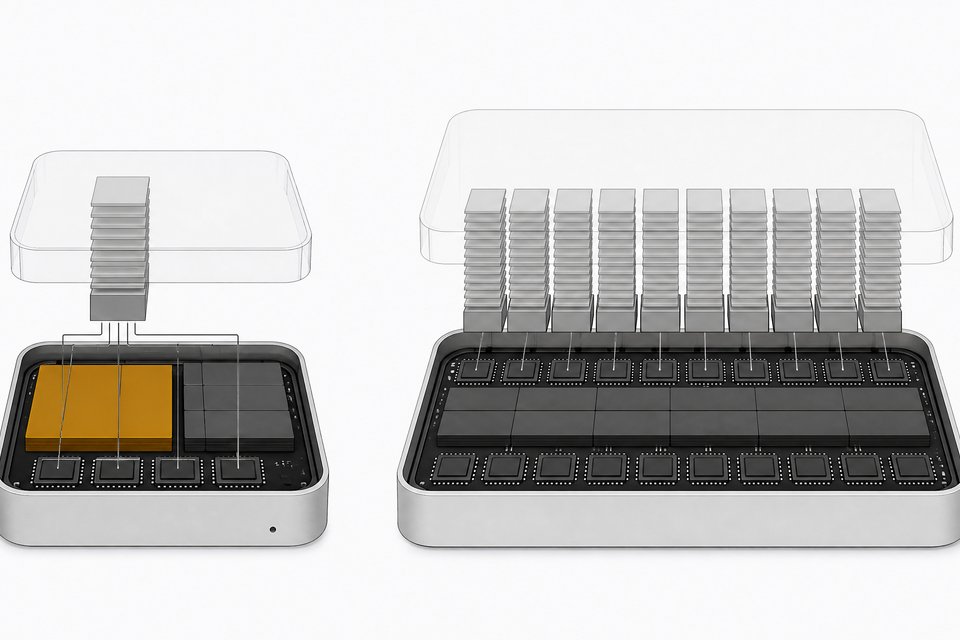
Rough math shows why this is plausible. All 28.8B parameters must sit in memory, even though only 4.3B are active per token. At 4 bits per weight, the weights come to around 15 GB before scale factors and overhead. That leaves room for the small KV cache and activations. An 8-bit MXFP8 copy would need about 29 GB for weights alone, which is tight on a 32 GB card once you add cache. Treat these as estimates and check the actual checkpoint sizes.
Two caveats:
- NVFP4 is a 4-bit floating point format that NVIDIA's recent GPUs handle natively. Your inference stack has to support it. The sources here do not list supported runtimes or throughput numbers, so I won't quote any.
- Quantization can shift quality. The published benchmarks do not say which precision produced them.
For faster decoding, KRAFTON provides a DFlash2 draft model for speculative decoding.
How does Raon-1 mini compare on benchmarks?
KRAFTON compares the preview against Qwen3.6-35B-A3B and Gemma 4 26B-A4B (MoE peers), plus Qwen3.8-27B and Muse Glimmer 30B (dense). These are the vendor's own numbers, and the table I could read cuts off partway through.
| Benchmark | Raon-1 mini | Qwen3.6-35B-A3B | Gemma 4 26B-A4B | Qwen3.8-27B (dense) | Muse Glimmer 30B (dense) |
|---|---|---|---|---|---|
| MMLU Pro | 76.5 | 85.9 | 82.9 | 85.7 | 84.0 |
| AA-Omniscience | 3.5 | -7.2 | -46.6 | -0.5 | -34.7 |
| GPQA Diamond | 84.3 | 83.2 | 80.7 | 89.7 | 82.6 |
| AIME 2026 | 93.3 | 92.9 | 87.1 | 98.8 | 92.9 |
| HMMT Feb 2026 | 84.1 | 84.5 | 79.9 | n/a | n/a |
The pattern is clear. Raon-1 mini beats both MoE rivals on GPQA Diamond and AIME 2026, and it narrowly trails Qwen3.6 on HMMT Feb 2026. Its AA-Omniscience score is the only positive one in the row. That benchmark penalizes wrong answers, so a higher score suggests the model hallucinates less often than the others. The weak spot is MMLU Pro, where it sits about 6 to 9 points behind every other model listed. The dense Qwen3.8-27B is ahead on the reasoning tasks where its score is shown.
The model card also claims leading results on instruction-following and search benchmarks, but those rows were not available to me, so I can't verify them.
What is Raon-1 mini actually good at?
KRAFTON pitches two strengths: Korean conversation and agentic tasks. The card lists tool calling for agent workflows, with support for Hermes Agent, Pi and OpenCode. The multilingual training set covers seven languages, with Korean the emphasis and English described as solid.
If you need broad factual recall, the MMLU Pro gap suggests caution. If you want a local reasoning and tool-use model with long context and a small cache footprint, the numbers are worth testing on your own tasks.
Is Raon-1 mini worth trying?
It is worth a look if you have a 32 GB Blackwell-class card, want an Apache 2.0 model with no usage restrictions beyond the license, or work with Korean text. The hybrid design is also an interesting data point for long-context local inference, since the KV cache stays small.
Hold back on production decisions for now. This is a preview, KRAFTON says results may change, and the benchmarks come from the vendor. KRAFTON also offers a free, time-limited web playground, so you can test behavior before downloading anything.
Frequently Asked Questions
What does 30B-A4B mean for Raon-1 mini?
It is a rounded label. The model has 28.8B total parameters, and 4.3B are active for each token. The router picks 6 of 128 experts plus one shared expert.
What license does Raon-1 mini use?
Apache 2.0. That license permits commercial use, modification and redistribution, subject to its standard terms.
Which quantization formats are available?
MXFP8 and NVFP4. KRAFTON says the NVFP4 version is the one that enables single-GPU inference on a 32 GB RTX 5090.
Is Raon-1 mini a final release?
No. The model card labels it a preview and says specs and results may change before the final version.
What context length does it support?
It natively supports up to 262,144 tokens. The hybrid attention layout keeps KV cache growth low, at about 8 KiB per token in BF16.
How we source, write, and correct our articles. Editorial standards