Sage-A1.5 Benchmarks: How Good Is Shanghai AI Lab's 35B Agent Model?
Sage-A1.5 is a 35B MoE agentic model from Shanghai AI Lab. See GAIA, BrowseComp and SWE-bench Pro scores against larger models, plus SGLang and vLLM serving.

How good is Sage-A1.5 for agentic and scientific work?
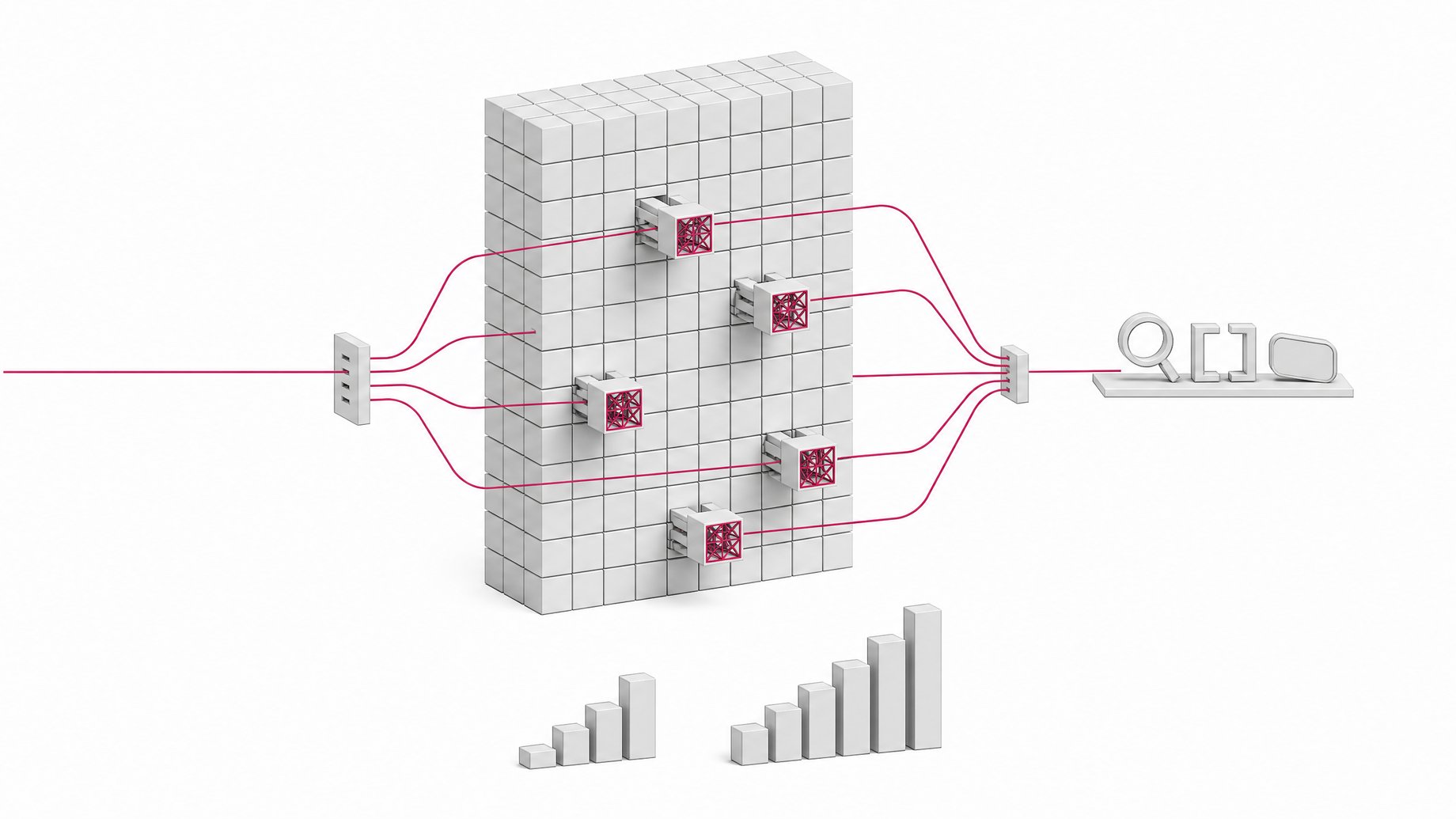
Sage-A1.5 is a 35B Mixture-of-Experts model from Shanghai AI Laboratory, built on Qwen3.6 and the earlier Agents-A1. By its own reported numbers it is strong for its size: 95.1 on GAIA (above Kimi-K3, GLM-5.3 and GPT-5.6-sol), 81.7 on BrowseComp and 61.2 on SWE-bench Pro. It still trails the larger models on several coding and browsing tests. All scores come from the model card, not independent testing.
TL;DR
- Sage-A1.5 is an open-weight 35B MoE agentic model that works with Transformers, vLLM and SGLang.
- It scores 95.1 on GAIA, ahead of Kimi-K3 (92.2), GLM-5.3 (92.2) and GPT-5.6-sol (88.3), though its predecessor Agents-A1 posts 96.0.
- On BrowseComp and SWE-bench Pro it lands close to but below the larger models, so it does not replace them on hard browsing or coding.
- Two features set it apart: parallel subagents with isolated contexts, and an opt-in Verification Mode that reviews progress inside the chain of thought.
- It natively supports 256K context and can be stretched to 512K with YaRN (factor 2.0) in SGLang.
- Every number here is self-reported by the developers, so test on your own workload before committing.
What is Sage-A1.5?
Sage-A1.5 comes from Shanghai AI Laboratory and is published under the InternScience organization on Hugging Face and ModelScope. The model card says it is a 35B Mixture-of-Experts model based on Qwen3.6 (the linked base is Qwen3.6-35B-A3B) and Agents-A1. It targets long-horizon scientific problem solving.
The pitch is that the model learns to organize work, not just solve single tasks. The card names three capabilities: agentic orchestration, verification, and open scientific discovery. The last one means exploratory research that produces inspectable artifacts instead of only answers to predefined questions.
It also lists native function calling, tool use with APIs, code interpreters and search engines, and multi-constraint instruction following.
How do Sage-A1.5's benchmark scores compare to larger models?
The card compares Sage-A1.5 against two other ~35B models (Agents-A1 and Ornith-1.5) and three larger systems (Kimi-K3, GLM-5.3, GPT-5.6-sol). Here are selected results from the developers' table.
| Benchmark | Sage-A1.5 | Agents-A1 | Kimi-K3 | GLM-5.3 | GPT-5.6-sol |
|---|---|---|---|---|---|
| GAIA | 95.1 | 96.0 | 92.2 | 92.2 | 88.3 |
| BrowseComp | 81.7 (82.8 with orchestration) | 75.5 | 91.2 | 76.2 | 90.4 |
| SWE-bench Pro | 61.2 | 43.6 | 63.3 | 64.6 | 64.6 |
| SWE-bench Multilingual | 72.7 | 58.7 | 80.8 | 81.3 | 74.1 |
| XBench-DS-2510 | 92.0 | 86.0 | 85.0 | 84.0 | 90.0 |
| IFBench | 81.6 | 80.6 | 72.1 | 53.4 | 72.7 |
| FrontierScience-Research | 48.3 | 40.0 | 21.7 | 16.7 | 26.7 |
| HLE w/ tools | 55.1 | 47.6 | 56.0 | 62.5 | 64.5 |
A few readings of this table:
- Search and agentic tasks are the strong suit. The card claims overall best on XBench-DS-2510, IFBench, PinchBench (90.0) and OmniDocBench (91.5).
- Science benchmarks look good too. It leads on FrontierScience-Olympiad (81.0), FrontierScience-Research (48.3) and CMT (80.0).
- Coding is competitive but not leading. SWE-bench Pro at 61.2 is within about three points of the top score, but SWE-bench Multilingual shows a gap of roughly eight points against GLM-5.3.
- BrowseComp has a real gap. Even with orchestration, 82.8 sits well under Kimi-K3 (91.2) and GPT-5.6-sol (90.4). It does beat GLM-5.3 (76.2).
- DeepResearch-Bench2 and ChemCOTBench favor the big models. Sage scores 47.5 (with orchestration) and 66.5, against 57.9 and 82.5 for the leaders.
Compared with A1, the card reports gains of 17.6 on SWE-bench Pro, 14.0 on SWE-bench Multilingual, 13.1 on PinchBench and 21.3 on MLE-Lite. That is the largest jump, and it is on engineering work.
One caution on methodology. The SWE-bench runs use the mini-SWE-agent harness at temperature 1.0, top-p 0.95, a 200K-token context and automatic context compaction, fully offline. Your harness will differ, and so will your results.
How does agentic orchestration work?
Orchestration lets the model delegate pieces of a task to subagents that run in parallel. Each subagent has an isolated context, which the card says reduces interference between concurrent workers. The subagents are meant to challenge assumptions, refine conclusions with evidence, and report back so the main agent can synthesize a result.
The measured payoff is modest but visible. On BrowseComp, the card lists 81.7 without orchestration and 82.8 with it. On DeepResearch-Bench2 the gap is larger, 43.7 versus 47.5. So orchestration helps most on broad research tasks that split into independent threads, and less on benchmarks that reward a single deep search path.
For builders, the practical point is that isolated contexts keep the lead agent's window clean. Whether that matters depends on how much your tasks fan out. The card does not document the delegation tool interface in the portion available here, so check the GitHub repository for the exact schema.
What is Verification Mode?
Verification Mode is an opt-in self-review behavior inside the model's own chain of thought. Mid-trajectory, the model pauses to review what it has established and what has failed. It then acts on a revised direction in the same turn. The card stresses there is no external critic involved.
This targets a common failure in long agent runs: the model keeps pushing down an unproductive search path. The card describes progress checking, evidence validation and reflective strategy revision as the mechanism. It does not publish a standalone ablation for this mode in the material available, so the size of its benefit is unclear. Expect extra tokens and latency when it is on.
How do you serve Sage-A1.5 with SGLang or vLLM?
The weights are in Hugging Face Transformers format and the card lists compatibility with Transformers, vLLM and SGLang. Both servers expose an OpenAI-style endpoint at http://localhost:8000/v1.
Install SGLang with uv:
uv venv --python 3.12 --seed --managed-python
source .venv/bin/activate
uv pip install sglang
Then launch the standard configuration:
python -m sglang.launch_server \
  --model-path InternScience/Sage-A1.5 \
  --port 8000 \
  --mem-fraction-static 0.8 \
  --context-length 262144 \
  --reasoning-parser qwen3 \
  --tool-call-parser qwen3_coder
The parser flags matter. They split reasoning from the final answer and extract tool calls, which an agent loop needs.
For speed, the card offers a Multi-Token Prediction variant. It adds the EAGLE speculative algorithm with --speculative-num-steps 3, --speculative-eagle-topk 1 and --speculative-num-draft-tokens 4 on top of the standard flags.
vLLM installs from the main branch:
uv venv --python 3.12 --seed --managed-python
source .venv/bin/activate
uv pip install vllm --torch-backend=auto
The vLLM serve commands are cut off in the material I had, so take the exact flags from the model card. The card does not state VRAM or GPU requirements in the sections available either, so size your hardware from the 35B parameter count and your context target.
Can Sage-A1.5 handle 512K context?
Yes, with a change. The model supports 256K natively. To reach 512K, the card serves it with YaRN at factor: 2.0 by overriding RoPE parameters in SGLang. You set SGLANG_ALLOW_OVERWRITE_LONGER_CONTEXT_LEN=1, pass --context-length 524288, and supply the override through --json-model-override-args. That JSON sets rope_type to yarn, factor to 2.0 and original_max_position_embeddings to 262144, along with the other RoPE fields listed in the card. The card also raises --mem-fraction-static to 0.88 for this setup.
Copy the full override block from the model card rather than retyping it. The mrope settings must match exactly.
Is Sage-A1.5 worth using?
It makes sense if you want a self-hostable agent model for web research, document parsing, instruction-heavy pipelines or scientific question answering. The GAIA, XBench-DS and FrontierScience results suggest it punches above its weight there.
It is a weaker pick if your workload is hard browsing or multilingual software engineering, where the largest models keep a clear lead. The benchmarks are also vendor-reported, and some of them (such as the offline SWE-bench setup) differ from real deployments. Run a small evaluation on your own tasks, with and without orchestration and Verification Mode, before you decide.
Frequently Asked Questions
Is Sage-A1.5 open weight?
Yes. The weights and config files are on Hugging Face and ModelScope in Transformers format. The card also links a GitHub repository, a technical report and a free trial page.
Does Sage-A1.5 beat GPT-5.6-sol?
On some benchmarks, such as GAIA (95.1 vs 88.3), XBench-DS-2510 and IFBench. On others it falls behind, including BrowseComp (81.7 vs 90.4) and SWE-bench Pro (61.2 vs 64.6). These are the developers' own numbers.
Does it support tool calling?
Yes. The card lists native function calling and integration with APIs, code interpreters and search engines. When serving with SGLang, use --tool-call-parser qwen3_coder and --reasoning-parser qwen3.
How do I extend the context window past 256K?
Serve it in SGLang with YaRN at factor 2.0 and a context length of 524288. The model card gives the full RoPE override and the environment variable needed to allow it.
How we source, write, and correct our articles. Editorial standards