How engineers use AI, how to do it well, and what it means for your job. Written for people who ship and run the software, not people who build models.
The Roast Room is a council of persona sub-agents in Claude Code that debate your idea and vote. See how it works, how to add members, and why sub-agents.
Set up the open-source Qwen Audio Agent with Claude Code over ACP: install, config, voice-built app tests, interruptions, task cancellation and cost notes.
Run DiffuSpace's Clover-35B-A3B diffusion model locally: about 69 GB of BF16 weights, Transformers 5.19.0 setup, block diffusion defaults, controls and SGLang.
run Clover-35B-A3B locallyClover VRAM requirementsClover SGLang
A simple AI second brain stack: Claude Code, an Obsidian markdown vault, Excalidraw, Open Router, Slack, a $20/month VPS and Arcade tool recommendation.
AI second brain stackClaude Code second brainObsidian AI memory vault
An AI second brain needs four parts: context, connections, capabilities and cadence. See how to build one with Claude Code and Obsidian, and audit each part.
AI second brainsecond brain Claude Code Obsidianfour Cs framework
Stanford's NCM writes text coarse to fine. Independent DGX Spark tests show about 4x speed for one user, slower batching, and a Sudoku result with a caveat.
OpenAI says its model disproved the Exponential Time Hypothesis. Here is what ETH is, how it relates to P vs NP, and what the claim does and doesn't mean.
Exponential Time HypothesisOpenAI ETH disprovedP vs NP AI
Learn how to fine-tune Liquid AI's LFM3-1.7B with TRL using SFT, DPO, GRPO and continued pre-training, and which recipe fits JSON, RAG, tools or new languages.
How to run Baidu's Unlimited OCR 2 on your own GPU: about 8.3 GB VRAM at full precision, Transformers and SGLang setup, and test results on real documents.
Unlimited OCR 2 scores about 77 on a 100-page document test while most rivals fall under 30. How SR-SWA attention works, plus where the model still fails.
Four principles for managing AI agents in Claude and Codex: count human follow-up work, run light experiments, set stop conditions, and budget your attention.
AI agent productivitymanaging AI agentsrecurring agents stop conditions
Anthropic argues teams overuse sub-agents. Learn the keep-in-loop test, the skills/tools/lookup split, the 30 to 50 tool limit, and how to fold safely.
sub-agents vs single agentfold sub-agents main agent loopprogressive disclosure skills
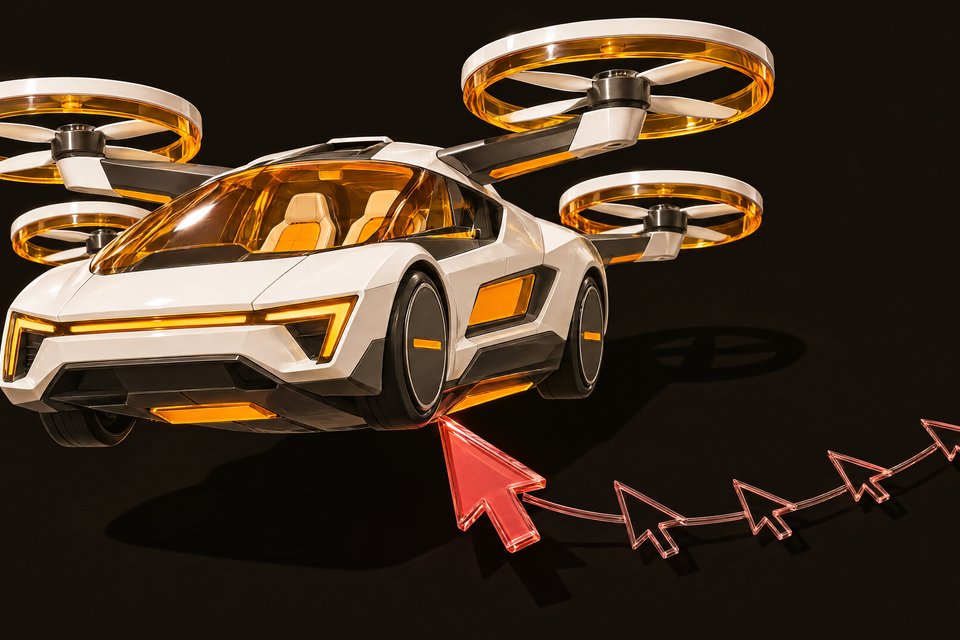
ALEF's flying car starts around $300,000, has 3,600+ pre-orders and targets first deliveries by year-end after its 1,000th test flight. Here is what we know.
ALEF flying car priceALEF flying car pre-orderALEF vs Tesla Roadster
OpenBot is a free app, hosted EU servers start at €20/$25 a month, and the PolyForm Noncommercial license limits commercial use. Here is the cost picture.