What Is Dessa? Block's Full-Duplex Speech-to-Speech Model
Dessa is Block's unreleased speech-to-speech model, trained on conversation audio only. What the team claims, what the demos show, and what is unverified.

What is Dessa?
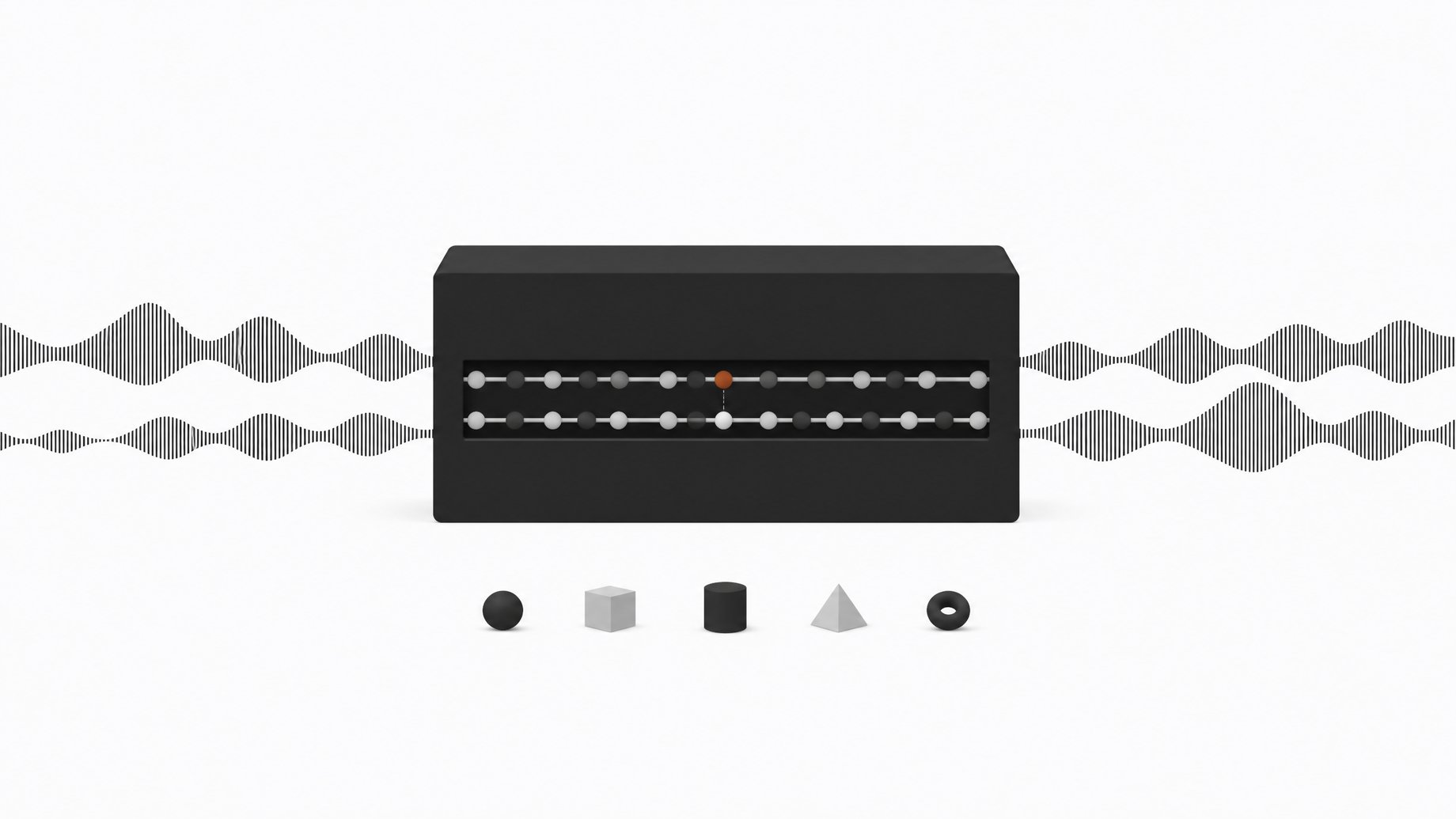
Dessa is an unreleased speech-to-speech AI model from a small research lab at Block, the company led by Jack Dorsey and behind Square and Cash App. The team says it trained the model from scratch on human conversation audio only, with no text and no pre-trained model underneath. It is also described as full duplex, meaning it listens and talks at the same time. As of now, nobody outside the team has been able to test it.
TL;DR
- Dessa is a speech-to-speech model from a research lab inside Block, and it has not been released.
- The team claims it was trained from scratch on conversation audio only, with no text data and no pre-trained base model.
- It is described as full duplex, so it can laugh mid-sentence, say "yeah" while you talk, and cut in at natural moments.
- The team says it runs faster than real time on a MacBook Pro with an M4 Max or better, but this is an unverified claim.
- The published demo recordings show moments of real naturalness alongside a plasticky, synthetic quality, especially in the male voice, according to one reviewer.
- No architecture details, weights, or release date have been published, so treat every claim as provisional.
Who is behind Dessa?
The lab is led by someone named Ragavan, and the team says it was founded by former members of a Toronto deep learning startup that was also called Dessa. They say they have built deep learning models since 2012 and generative speech models for more than eight years. Block is the parent company, with Dorsey also known as a co-founder of Twitter (now X).
Those are the team's own statements about its history. The sources do not include independent verification of the lineage or timeline.
How is Dessa different from a typical voice assistant?
Most voice assistants chain three systems together. Speech is transcribed to text, a language model reads that text and writes a reply, and a speech system reads the reply aloud.
The Dessa team argues this pipeline throws away information. Tone, pauses, laughs, sighs, and sarcasm disappear when speech is flattened into text. Dessa is built to work on audio directly, so that paralinguistic information stays in the loop.
| Approach | How it works | What gets lost |
|---|---|---|
| Cascaded pipeline | Speech to text, LLM reply, text to speech | Tone, timing, laughter, sarcasm |
| Dessa (as claimed) | Speech in, speech out, trained on audio only | Unknown until tested |
What does full duplex mean here?
Full duplex means the model listens while it speaks. Most assistants wait in silence until you finish, then respond. A full-duplex model can produce backchannel sounds like "yeah" during your turn, laugh in the middle of a sentence, and interrupt at a natural moment.
The published samples show some of this behavior. In one clip the model tells a speaker it can't hear them well and asks them to speak up, then confirms the audio is clearer. That is the kind of responsiveness a turn-based pipeline rarely shows.
What does Dessa claim about training and hardware?
The claims come from the team's social posts and blog page, not from a paper or model card.
- Training data: audio of human conversation only. No text, no pre-trained model underneath.
- Language learning: the team says Dessa learned language from hundreds of times fewer words than a typical large language model. It also notes that speech is harder in other ways, since a spoken word carries far more data than the same word in text and no sentence sounds exactly the same twice.
- Training compute: a single Nvidia GB200 NVL72 system.
- Inference: faster than real time, and able to run locally on a MacBook Pro with an M4 Max or better.
No parameter count, quantization format, memory requirement, latency figure, or benchmark score has been published in the material available. The architecture has not been shared either. Any diagram floating around is an outside attempt to sketch the idea, not an official one.
How good do the demo recordings sound?
The team says the recordings feature a person talking to the model live, with nobody steering it. That framing is the team's, and it cannot be checked from outside.
One reviewer who went through the samples gave a mixed read:
- A casual greeting clip sounded "plasticky," particularly the male voice.
- A winter small-talk clip and a faster-paced excited exchange also came across as synthetic to that reviewer.
- The laugh in one clip was natural, though similar laughs have appeared in other models, including open-weight ones.
- The clip where the model asks someone to speak up and then confirms the audio improved was judged quite good.
- In a conversation about Christopher Nolan's Batman films, the model held a casual back-and-forth but appeared to stumble when asked who Bryan Singer was, answering with "Superman Returns." That is a reasonable association, but the exchange was uneven.
These are subjective impressions of curated clips. Published demos are chosen by the team, so they show a ceiling, not an average.
Is Dessa a breakthrough?
Probably too early to say. The design idea is sound and not new in spirit: keeping audio end to end preserves information that a text bottleneck discards, and full-duplex speech models have been an active research direction. What would be distinctive is the combination of claims: audio-only training from scratch, small-data language learning, and local real-time inference on a laptop.
Each of those is checkable once the model ships. Until then, the demos show a capable conversational voice with good timing, not proof of a leap over existing voice models.
Can you trust Dessa's claims before release?
Not yet, and the reasons are specific.
- No public access. No weights, API, or hands-on testing exist in the sources.
- Self-reported numbers. The M4 Max claim, the GB200 training setup, and the "hundreds of times fewer words" comparison all come from the team.
- No architecture disclosure. Without it, nobody can assess how text-free training yields language ability.
- Curated samples. Demos tell you little about failure rates, long conversations, or noisy audio.
- No release date. The sources give none.
Useful things to check on release: whether weights are open, real latency on Apple silicon, behavior with interruptions and background noise, factual accuracy in conversation, and how it compares side by side with established voice systems.
Frequently Asked Questions
Is Dessa released?
No. It is unreleased, and a reviewer who tried to get access reported being unable to. No release date appears in the available material.
Is Dessa open source?
Unknown. The team has not stated a licensing or weights policy in the available sources. Open weights would be welcome, but that is a hope, not an announcement.
Can Dessa run on a laptop?
The team says it runs faster than real time locally on a MacBook Pro with an M4 Max or better. That is unverified, and no memory or latency numbers have been given.
Is Dessa related to the earlier Toronto startup called Dessa?
The team says it was founded by former members of that Toronto deep learning startup. The sources do not offer independent confirmation beyond that statement.
Does Dessa use a language model underneath?
According to the team, no. It describes Dessa as trained from scratch on conversation audio only, with no text and no pre-trained model. That claim cannot be audited until more technical detail is published.
How we source, write, and correct our articles. Editorial standards