Best AI Model for Internal Tools in 2026: GPT-6 Astra vs Claude Opus 5.5
Compare GPT-6 Astra, Claude Opus 5.5, and open-weight models like DeepSeek V4.1 Flash for internal tools, with pricing, benchmarks, and self-hosting costs.

What is the best AI model for internal tools in 2026?
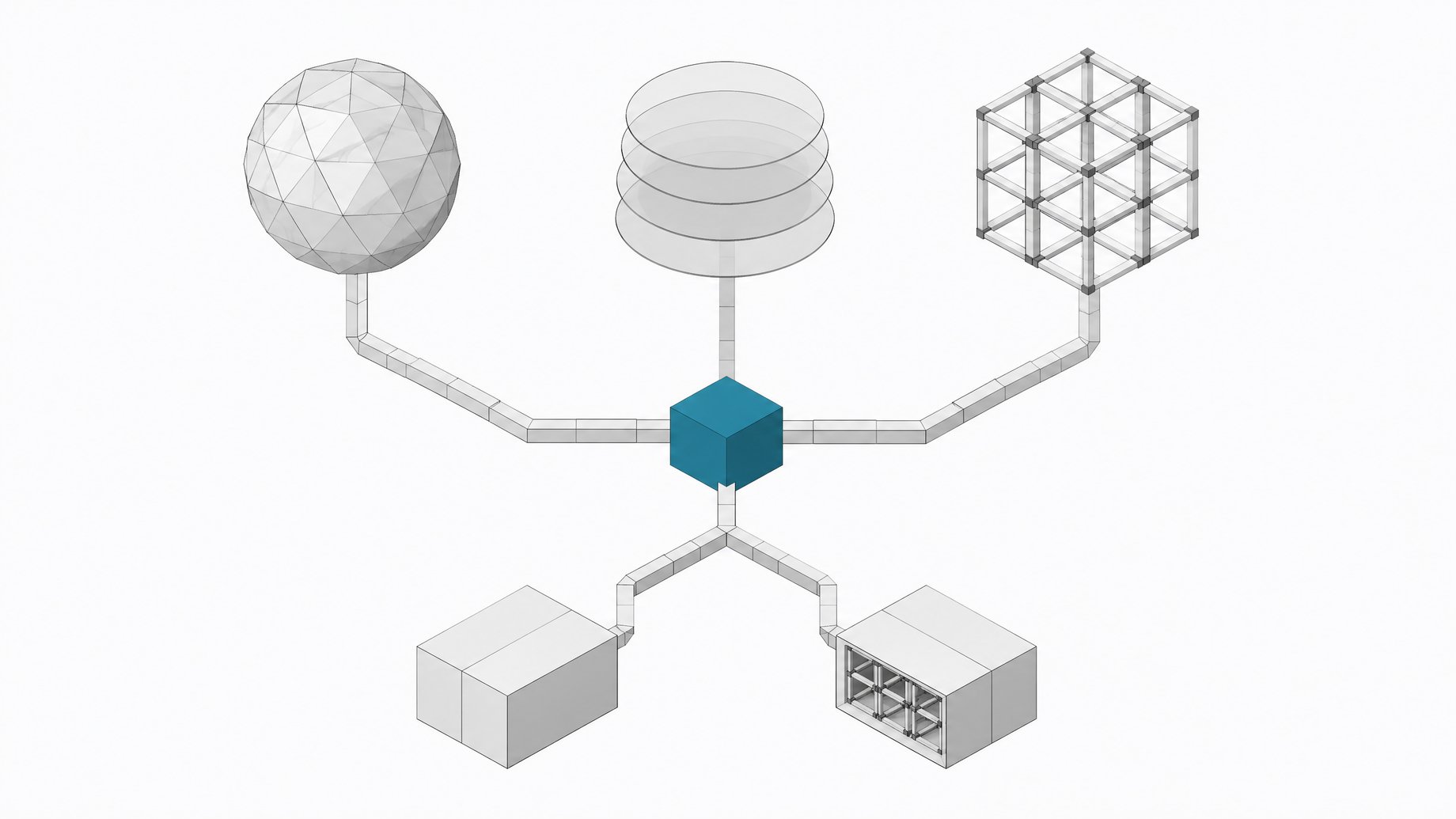
The best AI model for building internal tools in 2026 isn't one model. It's a pairing: a model tier matched to a deployment mode, picked against your cost-per-task budget, your compliance obligations, and whether you're willing to own GPUs. For most teams, that means Claude Opus 5.5 or GPT-6 Astra for hard agentic work, a mid-tier API model for high-volume routine tasks, and a self-hosted open-weight model like DeepSeek V4.1 Flash, GLM-5.3, or Kimi K3 for anything touching sensitive data.
TL;DR
- Stop debating which model is smartest and instead pair a model tier with a deployment mode based on cost, compliance, and whether you'll own GPUs.
- Discount launch-day vendor benchmarks by about a fifth, since they run roughly 20 points above independent, standardized-harness scores.
- Judge models by cost per completed task that ships without a human fixing it, not by the raw per-token API price.
- Tools that touch regulated or sensitive data should use self-hosted open-weight models so data never leaves your infrastructure.
- Building your own internal tool is not automatically cheaper than SaaS once ongoing maintenance and compliance updates are counted.
- Route hard agentic work to Claude Opus 5.5 or GPT-6 Astra, and treat every number as a snapshot to re-check before you commit budget.
Why has the question about the best model changed?
Three flagship model families cleared frontier-grade coding benchmarks within weeks of each other this year, and open-weight entrants arrived close behind. That pace makes "which model is smartest" the wrong question to spend your planning cycle on. By the time you've picked a winner, the leaderboard has moved. The real question, the one this piece answers, is which combination of model and deployment mode fits what you're actually building: a weekend internal dashboard, an unattended build-test-deploy pipeline, or a tool that touches regulated data.
We've already run the head-to-head benchmark math for GPT-6 Sol against Claude Opus 5.5 and for Fable 5.1 against Astra. This piece zooms out to the full landscape, including the open-weight tier that now makes self-hosting a real option for internal tooling, not just a hobbyist's side project.
How do the frontier three compare: GPT-6 Astra, Claude Opus 5.5, and Fable 5.1?
On Anthropic's own launch table, Claude Opus 5.5 leads Terminal-Bench 4.0 at 66.4%, ahead of GPT-6 Astra at 57.9% and Claude Fable 5.1 at 55.8%. Flip to Arena.ai's Frontend Code Arena and Astra takes the top spot instead, scoring 1793. Which model is "best" depends on which benchmark you trust and which task shape you're building for, a point we dug into in our benchmark reality check.
Treat every vendor-reported number with suspicion. Vendor benchmarks run roughly 20 points above independent, standardized-harness scores. Anthropic reports Claude Fable 5 at 80.0% on SWE-bench Pro, but Scale SEAL's identical-scaffolding leaderboard tops out at 61.5%, held by Meta's Muse Spark 1.1. The gap isn't fraud. It's effort settings and scaffolding differences. But it means you should discount any launch-day number by about a fifth before you plan a budget around it.
Pricing at this tier sits around $4 to $10 per million input tokens and $20 to $50 per million output tokens, with Opus 5.5 at $4/$20 and both Astra and Fable 5.1 at $10/$50. That's the frontier tax: you pay a premium for the top of the leaderboard, whichever leaderboard you pick.
Has the open-weight tier closed the gap?
The real surprise of 2026 isn't which closed model won. It's how close the open-weight models got. On Vals AI's now-archived, saturated SWE-bench Verified board, DeepSeek V4 Pro scored 96.4% and GLM-5.3 scored 95.4%, both ahead of several legacy Claude and GPT models. Kimi K3, a 2.8-trillion-parameter model, scored 93.4% on the same board and ranks as the top open-weight entry on the Frontend Code Arena.
That capability now comes cheap. DeepSeek V4.1 Flash costs $0.30/$1.20 per million tokens at peak, dropping as low as $0.15/$0.60 off-peak, against Opus 5.5's $4/$20 and Astra's or Fable 5.1's $10/$50. That's a 17x to 42x gap on output pricing alone.
Self-hosting isn't free. It trades API fees for infrastructure. Frontier-scale open weights like DeepSeek-V4-Pro, Kimi K2.6, and GLM-5.2-class models need a 16x H100 80GB cluster to run, full stop. Without that cluster, or the ops team to run it, you're not choosing between "open" and "closed." You're choosing between an API bill and a GPU bill you don't yet have a budget line for. Smaller models change that math. Qwen3.6-27B runs on a single workstation-class RTX GPU, and Gemma 4 31B is free at $0 per token. We cataloged the single-GPU options in our local coding model guide, and the broader self-hosted stack, from inference servers to orchestration, in our local infrastructure roundup.
Why is per-token price a trap?
Per-token price looks like the obvious comparison metric. It isn't the one that matters. What matters is cost per completed task, because a cheaper model that needs three retries and a human cleanup pass isn't actually cheaper.
Anthropic's own claim makes the point: Opus 5.5 reportedly delivers the same Terminal-Bench 4.0 score as GPT-6 Astra at 40% of the cost. That's not a per-token comparison. It's a cost-per-point comparison, and it's the right frame for budgeting internal-tools spend. Run the same evaluation shape your tool will actually face, agentic multi-step work, long-horizon tasks, UI generation, whatever applies, and measure dollars spent per task that shipped without a human fixing it. A model that costs twice as much per token but finishes in one pass can beat a bargain model that needs three.
When is self-hosting required for data privacy and compliance?
Zero data retention is table stakes for most API usage now. OpenAI offers ZDR to eligible API customers and is piloting Private Safety Processing to keep that promise even as models take on longer, more autonomous tasks. Anthropic has moved the other way for its most capable models: Fable 5 and Mythos 5 now carry a 30-day retention requirement for business customers, a change Anthropic says is "essential to detect and prevent sophisticated attacks that span multiple requests," despite offering ZDR elsewhere.
For most internal developer tooling, that tradeoff is manageable. Under the EU AI Act, internal developer tooling and coding assistants generally fall into the minimal-risk tier. High-risk obligations, EU data residency, automatic logging, documented data governance, apply to systems used in employment, credit, or critical infrastructure decisions. Those obligations are enforceable from August 2026, though the Annex III deadline has been pushed to December 2027. If your internal tool touches HR decisions, lending, or safety-critical infrastructure, that's your signal to look hard at self-hosted open weights, where data never leaves your infrastructure, rather than negotiating retention terms with a frontier API vendor.
Why is this decision urgent now?
This isn't theoretical. Employees are already building internal tools with whatever model is at hand, often with no IT visibility at all. Sixty percent of builders surveyed by Retool have built something outside official IT oversight in the past year, and 93% of builders use large language models to code, build, or automate at work, typically more than one model rather than staying loyal to a single vendor. Thirty-five percent of surveyed teams have already replaced at least one SaaS tool with a custom AI-assisted build, and 78% expect to build more custom internal tools in 2026.
That's the shadow-AI problem in one stat set: the model-and-deployment choice is already being made, just not by anyone accountable for compliance. A deliberate framework isn't a nice-to-have anymore. It's governance catching up to what builders are already doing. We've covered the system-1 end of that stack, the cheap routing and triage models that sit underneath agentic work, in our CLM vs. Jev comparison, and the coding-agent layer in our roundup of Claude Code, Cursor, and Devin.
It also isn't automatically cheaper to build your own tool than to keep paying for SaaS. A mid-sized internal tool that costs $200,000 to build upfront can run close to $750,000 over five years once hosting, roughly a third of an engineer's ongoing maintenance time, and compliance-update sprints are counted. That's comparable to or higher than an $80,000-a-year SaaS subscription's five-year total of around $700,000. The build-vs-buy math only favors building when maintenance discipline is real, not just when the first version shipped fast. We go deeper on that tradeoff in our build vs. buy comparison of open-source infrastructure versus enterprise SaaS. The pressure to build is real too: US companies spend an average of $349,000 a year on SaaS, and AI tools grew from 8.8% to 26.4% of all SaaS purchases between April 2025 and March 2026.
Which model should you route to for which internal tool?
Most teams don't need one model. They need a routing rule.
- Hard agentic work with high stakes (unattended build-test-deploy pipelines, complex multi-file refactors): route to Claude Opus 5.5 or GPT-6 Astra, and benchmark both against your actual task shape rather than trusting either vendor's launch table.
- High-volume, routine generation (CRUD scaffolding, boilerplate, internal admin screens): route to a mid-tier API model or an off-peak open-weight model like DeepSeek V4.1 Flash, where the per-token savings compound fast at volume.
- Anything touching regulated or sensitive data: route to a self-hosted open-weight model, Kimi K3, GLM-5.3, or a smaller single-GPU option, where data residency and audit requirements are satisfied by owning the infrastructure outright rather than negotiating retention policy with a vendor.
- Compliance-heavy regulated industries: factor in that over 100 security vendors already integrate with Anthropic's Claude Compliance API, which can shortcut audit-trail requirements if you stay on the API path instead of self-hosting.
| Token cost | Infrastructure ownership required | Data residency control | Fits regulated/sensitive data by default | |
|---|---|---|---|---|
| Frontier API (Opus 5.5 / Astra)hard agentic work and high-stakes pipelines | $4-$10 in / $20-$50 out per million tokens | Low | Low | No |
| Mid-tier or off-peak open-weight APIhigh-volume routine generation | $0.15-$1.20 per million tokens | Low | Medium | No |
| Self-hosted open-weight modelanything touching regulated or sensitive data | $0 per token (GPU cluster or workstation cost instead) | High | High | Yes |
For teams past the proof-of-concept stage, this is also where an agent-native IDE pays off, letting you swap models per task without rebuilding your workflow each time. We covered that shift toward owning the workspace itself in our piece on open-source AI IDEs.
What should you re-check before you ship?
Treat every number in this piece as a snapshot, not a permanent ranking. Three flagship launches landed within a single September, and the gap between vendor-reported and independent benchmark scores runs about 20 points, wide enough to flip a decision. Before you commit real budget: re-run the current pricing pages, re-check whichever standardized harness is still live, and re-verify the retention policy for whatever model you're about to put into production. At least one major vendor changed its retention terms this year without much warning. The model that wins this comparison in six months probably doesn't exist yet. The deployment framework will still hold.
Frequently Asked Questions
What is the best AI model for building internal tools in 2026?
There isn't one universal answer. Claude Opus 5.5 and GPT-6 Astra lead different frontier benchmarks and cost roughly the same per task, while open-weight models like Kimi K3, GLM-5.3, and DeepSeek V4.1 Flash now score within a few points of them on SWE-bench Verified at a fraction of the price. Pick based on task difficulty, volume, and whether your data needs to stay on infrastructure you own.
Are open-weight models actually good enough to replace Claude or GPT for coding?
For many internal tooling tasks, yes. DeepSeek V4 Pro and GLM-5.3 scored above 95% on Vals AI's SWE-bench Verified board, and Kimi K3 scored 93.4%, putting them ahead of or close to several legacy closed models. The tradeoff is infrastructure: frontier-scale open weights need a serious GPU cluster to self-host.
How much GPU infrastructure do I need to self-host an open-weight coding model?
It depends on the model tier. DeepSeek-V4-Pro, Kimi K2.6, and GLM-5.2-class models need a 16x H100 80GB cluster. Smaller models like Qwen3.6-27B or Gemma 4 31B run on a single workstation-class RTX GPU, making them realistic for teams without a dedicated ops budget.
Is it cheaper to build an internal tool than to keep paying for SaaS?
Not automatically. A mid-sized internal tool that costs $200,000 upfront can total around $750,000 over five years once hosting and maintenance time are counted, which is comparable to or higher than an $80,000-a-year SaaS subscription's five-year cost of roughly $700,000. The savings only show up with real maintenance discipline.
Does the EU AI Act affect which model I can use for internal developer tools?
Usually not directly. Internal developer tooling and coding assistants generally fall into the EU AI Act's minimal-risk tier. The stricter obligations, EU data residency, automatic logging, documented governance, apply to high-risk systems used in employment, credit, or critical infrastructure decisions, with those rules enforceable from August 2026 and the Annex III deadline deferred to December 2027.
How we source, write, and correct our articles. Editorial standards