What Can Gemini 4 Argon Do? Five Practical Tests Explained
Five practical prompts for Gemini 4 Argon: game cloning, API vs subscription research, a 3D-printable STL, scheduling logic and a physics sandbox.

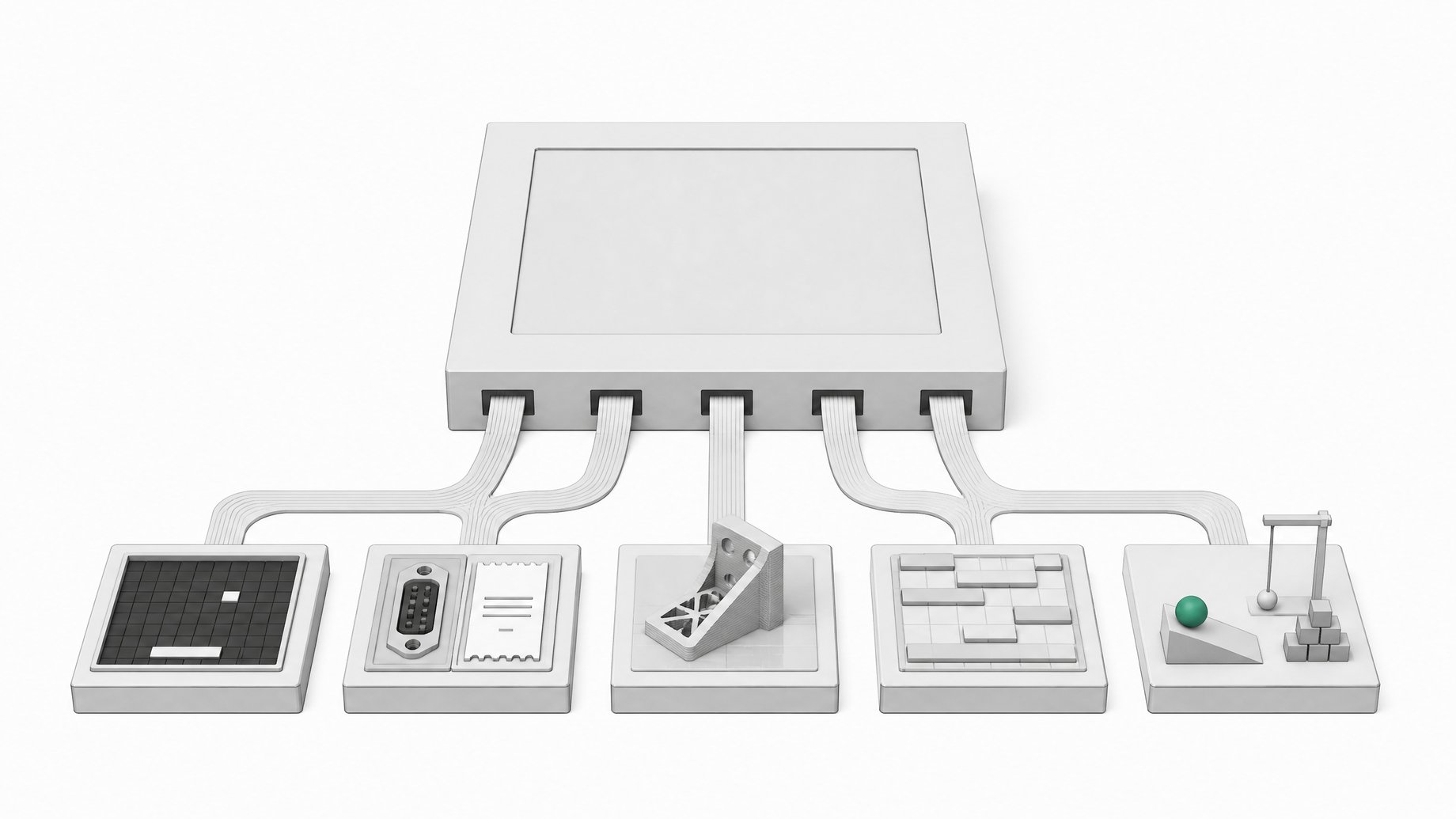
What can Gemini 4 Argon actually do in practical tasks?
In one hands-on round, Gemini 4 Argon was given five jobs: recreate another game from a reference, research whether paid chatbot subscriptions include API access, turn a photo into a 3D-printable STL, solve a two-person scheduling puzzle, and build an adjustable physics playground. On the scheduling logic test, the creator said it looked like the model did a great job, and called it a new state-of-the-art model from Google. The sources include no benchmarks, pricing or specs, so this is a qualitative picture.
TL;DR
- Gemini 4 Argon was tested on five distinct task types: game recreation, product research, 3D model generation, constraint scheduling and interactive physics code.
- The game test was a one-shot attempt to look at an existing game and rebuild it, which probes visual understanding and code generation together.
- The scheduling prompt used hard constraints (a shared 9:00 a.m. start, a noon to 12:30 gap, one task at a time), and the creator said the model handled it well.
- The 3D printing test asked for a printable STL from a photo, aimed at a Bambu Lab printer.
- No benchmark scores, pricing, context window or parameter figures were provided, so treat the verdict as early and anecdotal.
What were the five tests?
| Test | What the prompt asked for | What it probes |
|---|---|---|
| Game cloning | Look at another game and recreate it | Visual understanding, code generation, one-shot completeness |
| Subscription vs API research | Compare ChatGPT Plus, Claude Pro and Google AI Pro on whether the plan covers API use in your own app | Factual research, comparison, clarity |
| Image to STL | Turn a photo of Gary Busey into a 3D-printable file for a Bambu Lab printer | Spatial reasoning, file-format output |
| Scheduling | Plan tasks for Alex and Blair under availability limits | Constraint reasoning |
| Physics playground | Build a sandbox with adjustable settings that visibly change the physics | Interactive code, parameter wiring |
Each one stresses a different weakness that models commonly show. That spread is what makes the set more informative than a single showcase demo.
Can Gemini 4 Argon clone a game in one shot?
The first test pointed the model at another game and asked it to recreate it. The creator said this was the one-shot output the model gave.
Game cloning is a demanding test. The model has to interpret what it sees (layout, rules, motion), choose a way to implement it, and write code that runs on the first try. Common failure points include broken controls, missing game states like win and lose screens, and art that only loosely resembles the reference.
The source does not say which game was used or how faithful the result was beyond presenting it as a success. A fair reading is that the model produced something playable enough to show. If you try this yourself, check three things: does it run without edits, do the core mechanics match, and does it handle restart and game-over states.
Does a paid chatbot subscription include API access?
The second prompt was practical research. The question: if you pay for ChatGPT Plus, Claude Pro or Google AI Pro, does that subscription also cover using those models through an API in an app you build? The model was asked to compare the three services.
The source does not reproduce the answer, so there is nothing to verify against the model's output. As general background, consumer chat subscriptions and developer API access are typically billed separately by these providers. That is the answer you would want a model to get right, and it is easy to check against each company's current pricing and terms pages.
This is a useful test because the topic changes often. A model with good search or fresh knowledge should land on the same answer the official docs give. A model relying on stale memory might blur the two products together. Always confirm against the provider's own pages before you budget for anything.
Can it make a 3D-printable STL from a photo?
The third prompt supplied an image of Gary Busey and asked for a 3D-printable STL file to send to a Bambu Lab printer.
STL is a plain mesh format, so a model can generate one through code or a script, but a good result requires real spatial reasoning. A printable file needs a closed (watertight) mesh, sensible dimensions and a base that sits flat on the print bed. A likeness from a single photo is harder still, since the model must infer depth that a flat image does not contain.
The source does not show a finished print, so how well the file printed or how closely it resembled the subject is unconfirmed. Before printing any generated STL, open it in your slicer and look for holes, thin walls and overhangs that need supports.
How well does it handle scheduling logic?
The fourth prompt gave a compact constraint problem. Alex and Blair both start at 9:00 a.m. Both are unavailable from noon to 12:30. Each person can do only one task at a time. The model had to work out when different tasks could be done and who would be free to do them.
The creator said it looked like the model did a great job. This is the type of test where errors are easy to spot. You can check the output by hand:
- Does any task overlap the 12:00 to 12:30 gap?
- Does either person have two tasks at the same time?
- Do dependencies between tasks respect their order?
- Is the finish time actually the earliest possible?
The last check separates a valid schedule from an optimal one. Models often produce the first and miss the second. The source gives no task list, so that part is not verifiable here.
What does the physics playground show?
The final prompt asked for a small physics playground where the user can adjust settings and see how the physics respond. That means the model has to write a simulation loop, expose controls such as gravity or friction, and connect each control to the running simulation.
The weak spot in this kind of output is usually wiring. Sliders appear on screen but change nothing, or changes only apply after a reset. A convincing result lets you tweak values live and see objects behave differently right away. The creator presented the output as working, though the source offers no details on which parameters were adjustable.
Is Gemini 4 Argon actually state of the art?
The creator's framing was that this is a new state-of-the-art model and that Google has finally caught up. That is an opinion drawn from five prompts, not a measured ranking.
What the sources do not include matters:
- No benchmark scores or head-to-head numbers against other models
- No pricing, rate limits or API details
- No context window, parameter count or hardware requirements
- No failure cases, retries or side-by-side comparisons
Five successful demos show range, not reliability. The better question for builders is how often it succeeds across many runs of the same type of task, and what it costs to find out.
How should you test it yourself?
Reuse the structure. Pick one task from each category above, write a prompt with clear constraints, and judge the result against a checklist rather than a first impression. Run each prompt more than once. A model that nails a demo once and fails on the second try is a different tool from one that is consistently good.
Frequently Asked Questions
What is Gemini 4 Argon?
It is described in the source as Google's newest model. The source gives no technical specifications, release details or pricing, so anything beyond that should come from Google's official announcements.
What tasks was Gemini 4 Argon tested on?
Five: recreating another game, researching whether chatbot subscriptions include API access, generating a 3D-printable STL from an image, solving a scheduling problem for two people, and building an adjustable physics playground.
Did the 3D printing test produce a working print?
The source says the prompt asked for a file suitable for a Bambu Lab printer, but it does not confirm a finished print. Inspect any generated STL in a slicer before printing.
Is Gemini 4 Argon better than other frontier models?
The creator called it state of the art and said Google had caught up, but the sources include no benchmarks or direct comparisons. Treat it as a promising first impression and run your own tests on your own workloads.
How we source, write, and correct our articles. Editorial standards