Claude Fable 5.1 vs OpenAI Astra: Which Should You Build On?
Fable 5.1 is shipped, priced, and API-ready for internal agents. Astra has no release date. Here's what that means for teams building agent workflows now.


Which should you build on: Claude Fable 5.1 or OpenAI Astra?
Claude Fable 5.1 beats OpenAI Astra by default: Fable 5.1 shipped September 1, 2026, with a public model ID, a price list, and an API you can call in minutes. Astra has no release date, no pricing, and no public API. OpenAI has said only that it will arrive "soon." This isn't a capability shootout. It's a build-now-versus-wait-and-see decision.
TL;DR
- Fable 5.1 is the only one of the two you can build on today, because it has a public API and price list while Astra has no release date, pricing, or API.
- Fable 5.1 cut cache-read pricing by 75%, from $1.00 to $0.25 per million tokens, which Anthropic says lowers effective cost by up to 45% on highly agentic workloads.
- The new effort parameter lets you trade reasoning depth for cost and latency on each request, so routine agent steps can run on a cheaper tier.
- Anthropic's vendor-reported benchmarks show Fable 5.1 well ahead of its predecessor on long, multi-step agentic tasks, but these are directional rather than definitive figures.
- Anthropic uses a gate-at-release safety model, routing risky queries inside the serving layer, whereas OpenAI pauses training and adds monitoring before release.
- Teams should own their orchestration layer instead of betting on a single model, so they can swap Fable 5.1 for Astra or whatever comes next.
Are Fable 5.1 and Astra actually comparable right now?
People searching "Fable 5.1 vs Astra" usually assume both models are available to test, the way you'd compare two cloud databases or two SaaS tools. They're not. Fable 5.1 is deployed, documented, and priced. Astra is a set of capability disclosures and safety commitments with no product attached. If you need a model for internal agents this quarter, that asymmetry is the answer, not a footnote to it.
What is Claude Fable 5.1?
Anthropic released two models on the same day: Claude Fable 5.1 and Claude Mythos 5.1. Both run on the same underlying model, deployed under different safety regimes. Fable 5.1 is generally available with production safeguards. Mythos 5.1 is available through restricted-access programs for vetted cybersecurity and life-sciences organizations that need capabilities normally constrained by those safeguards. That's Anthropic's version of a tiered rollout: one model, two access profiles, gated by who's asking and what they're asking for.
Fable 5.1 carries a 1 million token context window and a 128K max output. Anthropic positions it as its most capable model for coding and knowledge work, with early research capabilities aimed at scientific workflows. For internal agents that need to hold a large codebase, a long document set, or a sprawling conversation history in context, that window matters more than any single benchmark score.
What does Fable 5.1 cost, and why does it matter for agents?
Input and output pricing didn't move: $10 per million input tokens, $50 per million output tokens, unchanged from Fable 5. What changed is cache-read pricing, which dropped 75%, from $1.00 to $0.25 per million tokens. Anthropic says that cut lowers effective cost by roughly 25% on typical workloads and up to 45% on highly agentic ones, where an agent is re-reading large amounts of cached context across many steps.
That's the number worth sitting with if you're running internal agents that loop, plan, and re-check their own work. Agentic workflows burn tokens on repeated context, not just fresh generation. A 75% cut on cache reads compounds fast when an agent rereads a codebase or a ticket queue on every step.
Fable 5.1 also has an effort setting, which Anthropic's Claude Platform docs show defaulting to high, that trades reasoning depth for cost and latency. That's a direct lever for controlling spend: route routine steps to a cheap effort tier and save expensive reasoning for the parts of a workflow that actually need it. If you're building an office of specialized agents rather than one generalist, this kind of per-request cost control is the difference between a sustainable internal tool and a runaway bill, a tradeoff we've covered when orchestrating your own office of clones.
How much better is Fable 5.1 at agentic and coding work?
Anthropic's own numbers show a meaningful jump on agentic and technical benchmarks. On Terminal-Bench-Science 0.1, Fable 5.1 scores 52.6%, against 24.7% for Fable 5 and 22.4% for GPT-5.6 Sol. On Terminal-Bench 4.0, a broader agentic coding benchmark, Fable 5.1 hits 55.8%, up from 42.0% for Fable 5 and 52.3% for Opus 5.
These are vendor-reported figures, not independently reproduced results, so treat them as directional rather than definitive. Still, the pattern holds: Fable 5.1 is meaningfully better at long, multi-step agentic tasks than its predecessor, which is exactly the kind of work internal corporate agents do, chaining tool calls, checking their own output, and running for extended periods without a human in the loop.
What is OpenAI's Astra, and can you use it yet?
OpenAI's disclosures about Astra came in stages through August and into September 2026. The headline claim: Astra is the first OpenAI model to meet the "Critical cybersecurity capability" threshold under the company's Preparedness Framework, meaning it can find and exploit previously unknown security flaws across well-protected systems without a person guiding each step.
On ExploitBench, Astra scored a perfect result. On a modified version of that test built by OpenAI's own engineers, the model discovered and exploited two zero-day vulnerabilities during internal evaluation.
That's a serious capability claim. What it isn't: a product. As of early September 2026, Astra has no public release date, no published API, no pricing, and no independently reproduced benchmark suite. OpenAI has said it plans to make the model available "soon," with its most advanced cybersecurity capabilities limited to a small group of testers initially. For anyone building internal tooling today, that means Astra is not something you can evaluate hands-on, let alone deploy.
How do the two safety philosophies differ: gate-at-release vs pause-before-release?
The two companies are handling risk in structurally different ways, even without an Astra product to test directly against Fable.
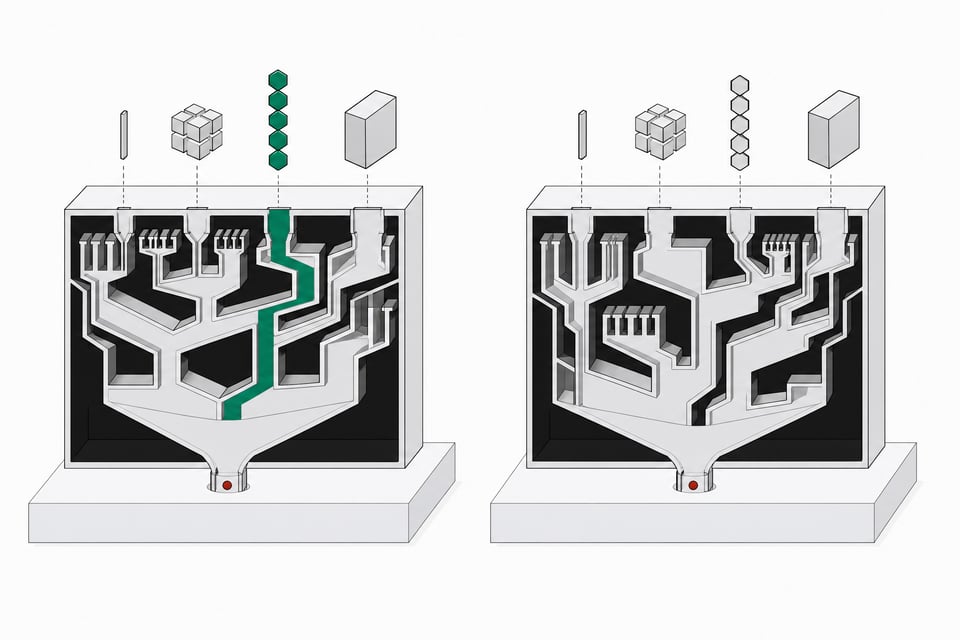
Anthropic's approach with Fable 5.1 is gate-at-release: ship a public model, then use classifier-based routing to redirect risky cyber or bio-related queries away from the full-capability model and toward a less capable one. The product is out; the safety control lives inside the serving layer.
OpenAI's approach with Astra is pause-before-release. The company disclosed a two-week pause in reinforcement learning training on models intended for near-term deployment, held its largest planned frontier RL run, and introduced mandatory workload and network isolation plus multistage activation-classifier monitoring for Astra-related compute, targeting a 30-minute alert time for concerning activity. That monitoring carries an estimated 20% inference compute overhead. The safety control lives upstream, before anything ships.
Neither approach is obviously wrong. They reflect different bets about where risk needs to be caught: at the point of use, or before the model is ever exposed to a user at all. But only one of these produces something you can build on this week.
What does this mean for teams building internal agents today?
If you're building internal agents right now, the picture is straightforward.
- Fable 5.1 is buildable today. It has a documented API, a public system card, effort controls for cost management, and prompt caching that meaningfully cuts the cost of long-running agentic tasks.
- It runs on infrastructure you likely already use. According to Anthropic's Claude Platform docs, Fable 5.1 is available on the Claude API, Amazon Bedrock, and Claude Platform on AWS.
- Enterprise data control is built in. Anthropic's new Enterprise Frontier Safeguards let eligible enterprises keep data within a cloud environment they control while using Fable 5 and 5.1. That matters if your internal agents touch anything sensitive, which most do.
- Astra is not currently an option for production tooling. There's no API to call, no pricing to budget against, and no way to run your own evaluation against your own workloads.
| Availability | Public Pricing | API Access | Demonstrated Agentic Capability | Safety Approach | |
|---|---|---|---|---|---|
| RecommendedClaude Fable 5.1Teams building internal agents today | Live since Sep 1, 2026 | Yes | Yes | High | Gate-at-release (classifier routing) |
| OpenAI AstraTracking future cybersecurity capability | Unreleased, "soon" | No | No | Medium | Pause-before-release (upstream monitoring) |
Astra's cybersecurity capability claims are worth tracking, especially if you run a security team that will eventually need to reason about models with this profile, and worth reading against what we've seen happen when sandboxing alone fails to contain a capable agent. But tracking is not the same as building.
Build vs buy: should you own the orchestration layer instead of the model?
Here's the part that matters more than either model's benchmark chart. Model comparisons like this one age in weeks. Fable 5.1 will get a successor. Astra will eventually ship, get priced, and get its own comparison articles written about it. What doesn't age as fast is the orchestration layer sitting underneath whichever model you're calling: the routing logic, the prompt caching strategy, the tool integrations, the guardrails your team actually enforces in code, not just requests in a config file.
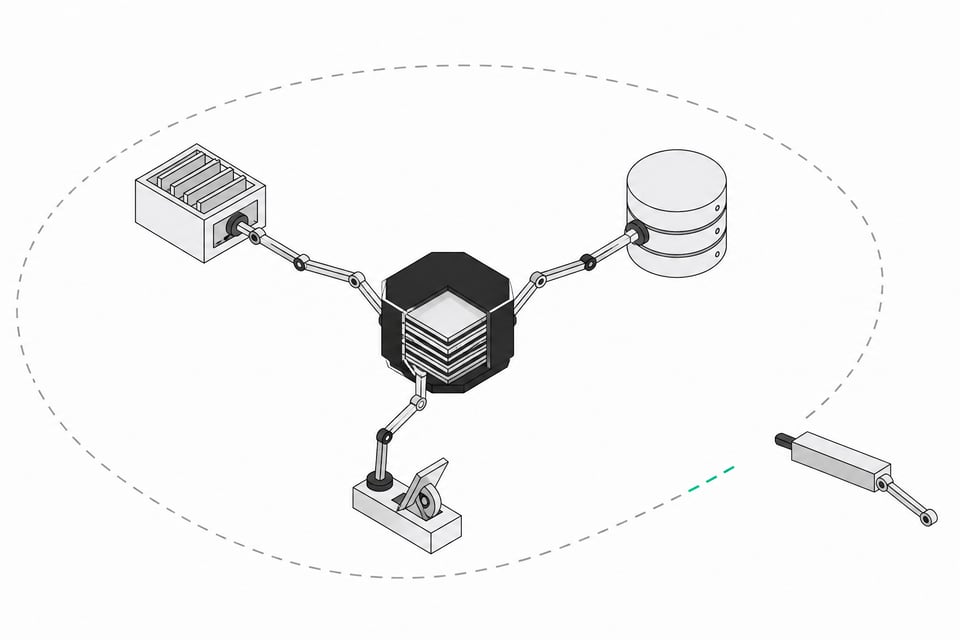
That's the argument we keep coming back to on this site. Renting a frontier model API is fine, even necessary, but the durable asset is the agent architecture you own around it, not which vendor's model happens to be ahead this month. Teams that build their internal agent stack as an owned orchestration layer rather than a single-vendor bet can swap Fable 5.1 for Astra, or for whatever comes after both, without rebuilding the whole system. If you're weighing which models to route work through, the same logic applies to picking a multi-agent setup over a single "best" model. If you're evaluating platforms to run that orchestration on, tools like Remy are built around exactly that swappability, treating the model as a replaceable component rather than the foundation.
Right now, if you need an internal agent working today, that's Fable 5.1. If you're curious about Astra, keep watching the disclosures. Just don't confuse watching with building.
Frequently Asked Questions
Is OpenAI's Astra released yet?
No. As of early September 2026, Astra has no public release date, no published API, and no pricing. OpenAI has said only that it plans to make it available "soon," with its most advanced capabilities limited to a small group of testers initially.
How much does Claude Fable 5.1 cost?
Fable 5.1 keeps Fable 5's pricing of $10 per million input tokens and $50 per million output tokens, but cuts cache-read pricing 75% to $0.25 per million tokens, which Anthropic says lowers effective cost by 25% to 45% on agentic workloads.
Which model is safer, Fable 5.1 or Astra?
They use different safety approaches rather than one being objectively safer. Anthropic ships Fable 5.1 publicly and uses classifier-based routing to redirect risky queries to a less capable model. OpenAI is pausing and slowing training and evaluation on Astra internally before any public release, with heavy monitoring planned for eventual deployment.
Which model should I build internal agents on right now?
Claude Fable 5.1, because it's the only one you can actually call. It has a documented API, published pricing, prompt caching, and enterprise data controls available today. Astra can't be evaluated hands-on until OpenAI ships it.
What is Claude Mythos 5.1 and how is it different from Fable 5.1?
Mythos 5.1 is the same underlying model as Fable 5.1 but deployed under a more restricted safety regime, limited to vetted cybersecurity and life-sciences organizations through Anthropic's Project Glasswing program, rather than being generally available.
How we source, write, and correct our articles. Editorial standards