
How to Run the Edited Qwen3.5 0.8B Locally With vLLM
Serve Hugging Face's rebuilt weight-edited Qwen3.5 0.8B beside the original in vLLM and compare looping on a 2^100 mod 7 prompt and MATH-500 problems.
Run AI models on your own laptop, GPU or server: setup guides, hardware, benchmarks and when local beats the cloud.
Most read by people in Engineering, IT and Legal & Compliance.
Serve Hugging Face's rebuilt weight-edited Qwen3.5 0.8B beside the original in vLLM and compare looping on a 2^100 mod 7 prompt and MATH-500 problems.

Northka is an open-weight computer-use model family (397B Pro, 35B Mini, 9B Nano) scoring 78.9 to 88 on OSWorld Verified. Sizes, scores and harness explained.
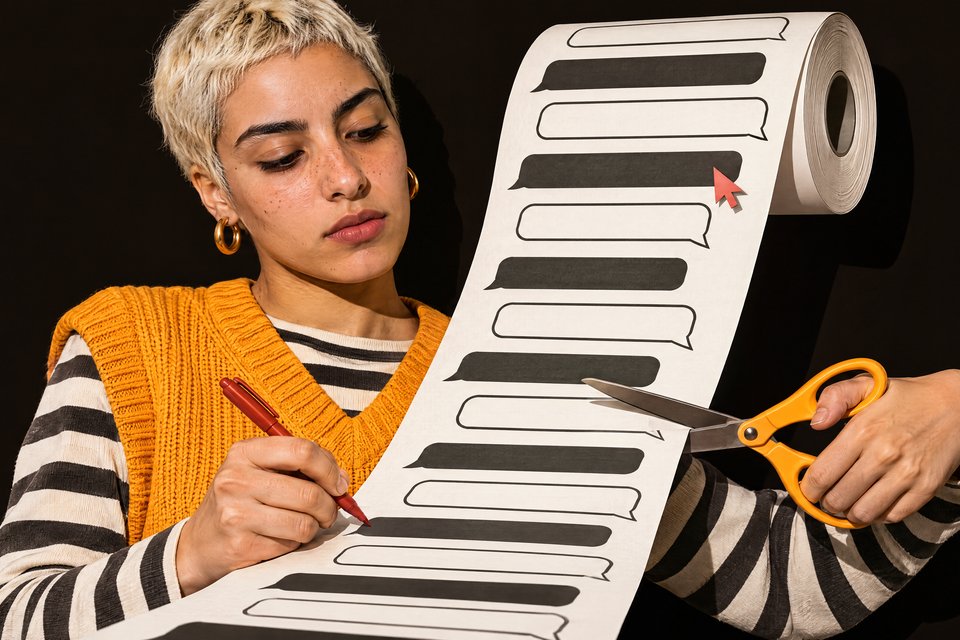
Small reasoning models often loop until the token limit cuts them off. Count truncated answers first, then adjust mode, temperature and output limit.
Run Qwen 3.8 27B locally with Ollama and Simon Willison's LLM tool. Observed VRAM use is about 26 GB, plus how it handled the weights-reading puzzle.

An MIT-linked paper says GPT-6 Astra edited 0.016% of Qwen3.5-0.8B's weights for a sixfold math gain. Here is what changed and what to doubt.
What it takes to self-host Ripple-65B: about 75 GB VRAM quantized on a 96 GB RTX Pro 6000 Blackwell, inference code changes, a Hermes agent, and DGX Spark fit.

Ripple-65B is a 65B dense Apache 2.0 model aimed at agentic coding. See its benchmark wins and gaps, plus a bug-fix, simulation and SQL test.

Tencent's Hy4 was tested on a sketch-to-Blender scene, a multi-agent IPO report with a planted error, and 82-language output. Results and caveats.

Run CCORE's Qwen3.5-4B GLB 3D Coder locally from a GGUF, set the sampling and system prompt, then export Three.js scenes as GLB files for Godot.

Run NVIDIA's 3.97B Dory looped model locally: pick a loop count in vLLM, choose per-loop or last-loop KV cache, and pick BF16, MXFP8, NVFP4 or GGUF.
How to decide if you can replace a frontier model with a self-hosted open-weight one: build a swap layer, step down generation by generation, then fine-tune.
Install the 5B MOSS-Image text-to-image model in ComfyUI: where the files go, the node setting that matters, about 28 GB VRAM use and layout mode.
Install Mesh LLM with Docker, start a node with a Gemma model, edit and validate config, and use one OpenAI-compatible API across pooled GPUs.

Run SenseNova-Loop-9B-Preview with Transformers 5.18, LightLLM or an SGLang PR build: environment, BF16 loading, thinking mode, MTP and fine-tuning commands.

Hands-on MOSS-Image results: bounding-box layout control, English, Chinese and Urdu text, plus portraits and landscapes from many regions.

Liquid AI's LFM3-1.7B-Base is a 1.73B model with 256K context that takes about 1 GB at 4-bit. Specs, inference code, thinking toggle and fine-tuning with TRL.

Colibri 2.1 runs large MoE models on one GPU by spreading experts across VRAM, RAM and disk. See the install flow, GGUF import, expert map and profiling tab.

Artificial Analysis Intelligence Index v5 uses 60% private tests and harder agentic coding. The open-model gap grew from 3 to 12 points. Here is what it means.

When does one shared on-prem GB300 workstation beat cloud APIs or a Spark per person? Privacy, token costs, model policy control, and scaling.

Phonon 2 averages 5.21% WER on Open ASR leaderboard English sets in 164MB, 15x smaller than Parakeet. See where it holds up and where it fails.

Run Fermion Research's 164 MB Phonon 2 ASR model on CPU only. Install steps, CPU timings, the OpenAI-compatible server, accuracy numbers and license notes.

Install Surya OCR 2.5 with pip, launch the Streamlit GUI, and run it on CPU or about 1.8 GB of VRAM. Covers backends, output formats, speed, and limits.

Surya OCR 2.5 tested on invoices, handwriting, an 1883 newspaper, LaTeX, Hindi, Arabic, Urdu and Yoruba. See where it works and where it fails.
HP's ZGX Fury puts Nvidia's GB300 under a desk with 748GB of memory and 7.1 TB/s HBM. Here are the specs, ZRT software and measured multi-user throughput.