What Is Agent-Native Software?
Agent-native software means AI agents and humans share the same callable actions, data, and permissions. Here's the architecture, the jargon, and a checklist.

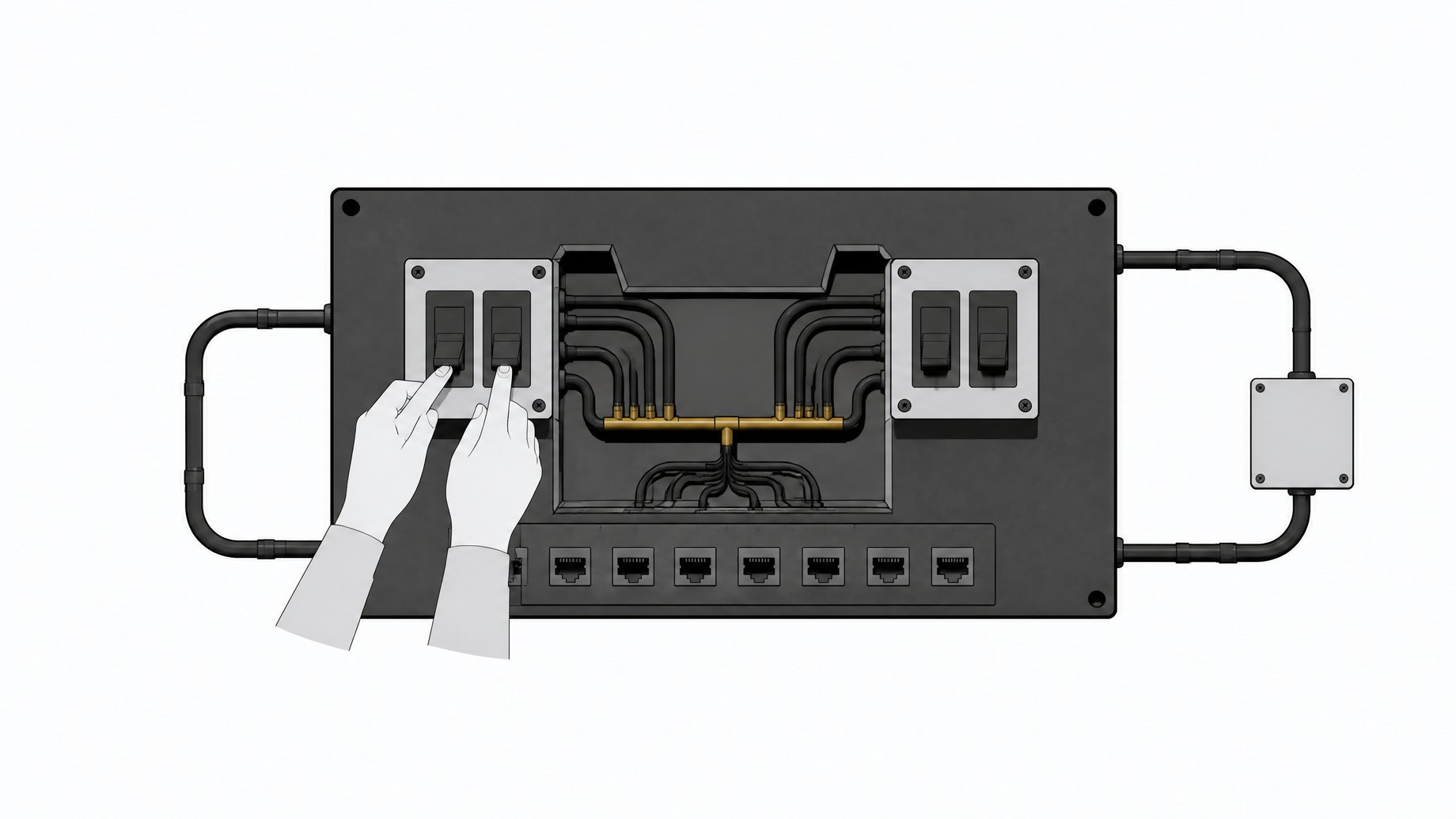
What is agent-native software?
Agent-native software is built so that AI agents and human users operate the same product through the same shared actions, data, and permissions, rather than through a chatbot bolted onto an interface the agent can't fully see or control. Anything a person can click, an agent can invoke. That's the whole idea, and it's a much narrower claim than "has an AI feature."
TL;DR
- Agent-native software lets humans and agents use the same shared actions, data, and permissions, so anything a person can click, an agent can invoke.
- Most "AI-powered" products fail this test because the chatbot has its own separate path to the backend and can't act on your data the way you can.
- The architectural fix is to define the app's capabilities as discrete actions that the frontend and the agent both call, which gives you one definition with two callers.
- Agent-native, AI-native, and agentic are different terms: they describe who is allowed to operate the software, how models are used in the architecture, and how the system behaves, respectively.
- A genuinely agent-native product shows action parity, readable state, structured errors, idempotency, and approval gates.
- Adoption is still rough, with Gartner and Forrester both pointing to widespread agent washing and stalled pilots.
Why is a chatbot on the side a problem?
Most software that calls itself "AI-powered" today has a chat window stapled to one corner of the screen. The chatbot has its own path to the backend, often through a separate integration layer built after the product shipped. It can answer questions about your data. It usually can't act on your data the way you can, because nobody built it a route to every button.
Builder.io's engineering team describes this as two brains sharing one body that can't feel it. The chatbot reasons well but can't reach the controls. The UI has the controls but no reasoning. Ask the assistant to create a note and tag it urgent: if the UI supports that action but the agent has no matching tool, the agent is stuck. It can describe what you should click. It can't click it.
This isn't a cosmetic complaint. It's the core failure mode agent-native architecture is reacting against: an assistant that drifts from the product it's supposed to represent, because the two were never built from the same source of truth.
Why are actions the shared primitive?
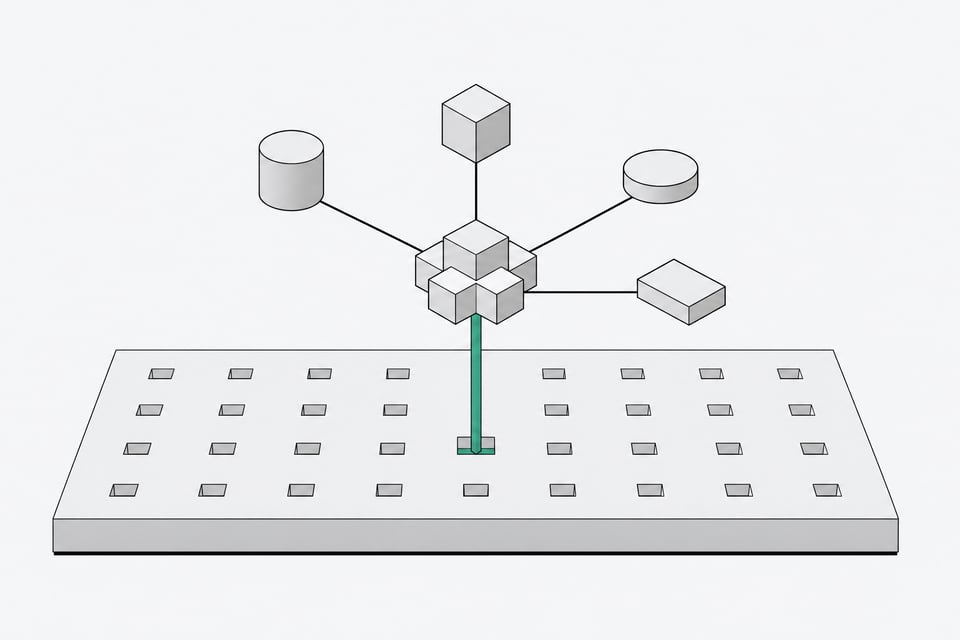
The fix proposed by Builder.io and Every.to is architectural, not conversational. Define what the application can do as a set of discrete, callable actions. The frontend calls those actions when a user clicks a button. The agent calls the exact same actions as tools. One definition, two callers. Nothing drifts because there's nothing to drift from.
Every.to's guide to agent-native architecture lays out five principles that make this concrete:
- Parity. Whatever a user can do through the UI, the agent should be able to achieve through tools. If a feature exists for humans, it exists for agents too.
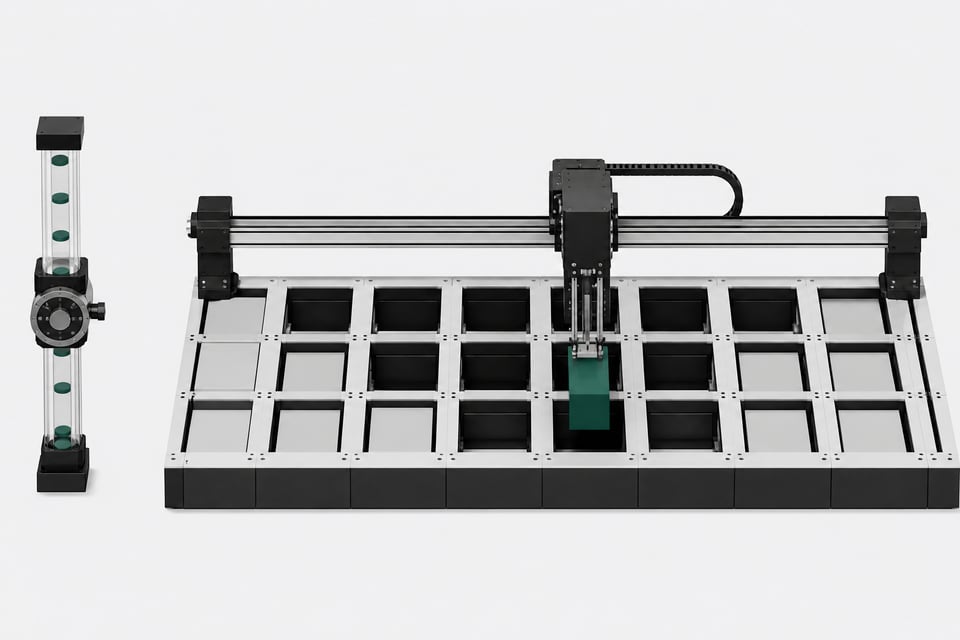
- Granularity. Tools should be atomic primitives, not giant workflow-shaped functions. Create, read, update, delete, each exposed separately rather than bundled into one opaque "do the task" call.
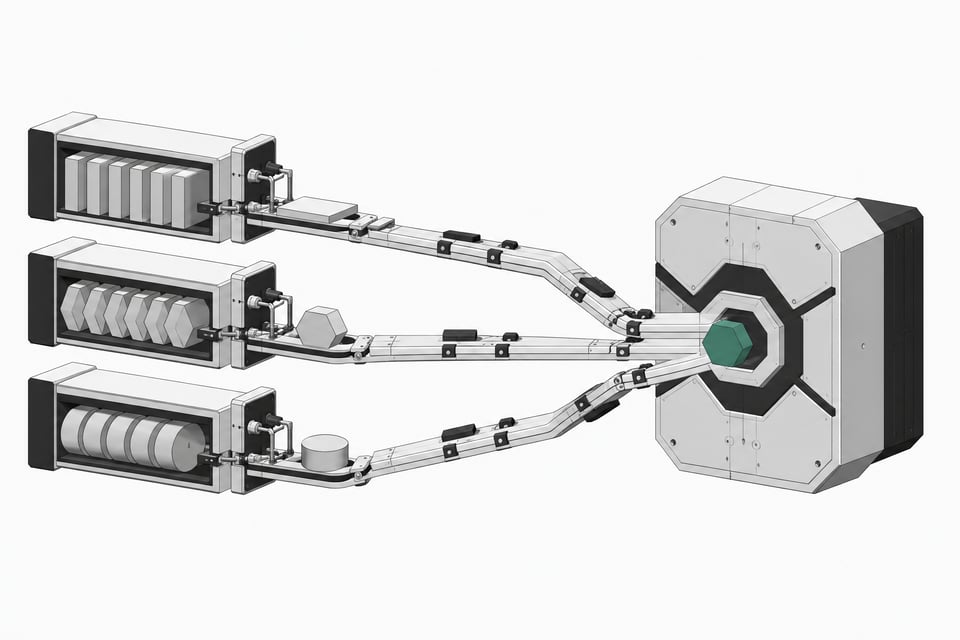
- Composability. New capability comes from new prompts and combinations of existing actions, not from shipping new endpoints every time a use case shows up.
- Emergent capability. Because actions compose, agents end up accomplishing things nobody explicitly designed for. That's a feature of the architecture, not a bug.
- Improvement over time. The system gets more capable as agents get better at combining the same primitives, without a developer shipping new code for every scenario.
Every.to flags a common failure worth repeating: a team builds create_note and read_notes, ships it, and forgets update_note and delete_note. The UI quietly supports editing and deleting. The agent doesn't. Parity breaks on the boring half of CRUD, not the exciting half. This is also where the API-era approach to extensibility runs out of road. Some teams are rethinking the whole relationship between software and the agents calling it, not just patching in a few more endpoints: extensible software built to be read and rewritten by an agent, rather than software you can only call through a rate-limited API, is the broader version of this same argument.
How do agent-native, AI-native, and agentic differ?
These three terms get used interchangeably and shouldn't be. Each answers a different question:
- AI-native describes architecture: is a model load-bearing in how the product works, even if a human still operates it step by step?
- Agentic describes behavior: does the system plan, act, read the result, and revise on its own, with or without a human in the loop?
- Agent-native describes who's allowed to operate the thing: is the software designed so something other than a human can run it end to end, using the same callable surface a human would use?
All four combinations show up in real products. A tool can be agentic without being agent-native, if its autonomy runs through a private backend path a human can't audit or extend. A tool can be agent-native without being especially agentic, if agents can call every action but mostly just execute single steps on request. The term is also genuinely contested across industries, with cloud infrastructure vendors, application builders, and process-design consultants all using "agent-native" to mean somewhat different things. Worth knowing before you repeat the phrase in a vendor meeting.
Where did the term come from?
This isn't pure marketing coinage. Anthropic open-sourced the Model Context Protocol in November 2024, a standard for letting AI assistants securely call tools and read or write data across systems instead of relying on one bespoke integration per app. By February 2025, Gartner had published an Innovation Insight titled "Agent-Native I&O." By March 2025, Andreessen Horowitz was writing about "agent-native architecture" in a deep dive on MCP, arguing that APIs unified how software talks to software the way MCP is starting to unify how AI models talk to tools. A standards body, a research firm, and a venture firm all converged on this language within four months of each other. That's a real signal, not just vendor positioning. For more on what MCP actually standardizes versus what it leaves for other layers to handle, the distinction between MCP and an orchestrator is worth untangling separately.
What does agent-native software look like in practice?
Attio, an AI-native CRM, runs a hosted MCP server at mcp.attio.com that exposes structured tools: search, create, update records, add notes and tasks, run reports. An agent working inside Claude, ChatGPT, or Cursor can act directly on live CRM data through OAuth, with read operations auto-approved and write operations gated for human sign-off. That gating detail matters. It's parity with a safety valve, not parity without one.
Builder.io's own open-source Agent-Native framework takes the pattern further: a single action definition can simultaneously power a UI control, an agent tool, an HTTP endpoint, an MCP or A2A capability, and a CLI command. Its app suite, covering things like scheduling, mail, forms, and content, is built as a reference implementation of the idea rather than a chatbot wrapper around existing software.
How do you tell if software is genuinely agent-native?
Plenty of products now claim the label. Gartner has a name for the gap between the claim and the build: agent washing. Five checks separate the real thing from the marketing copy:
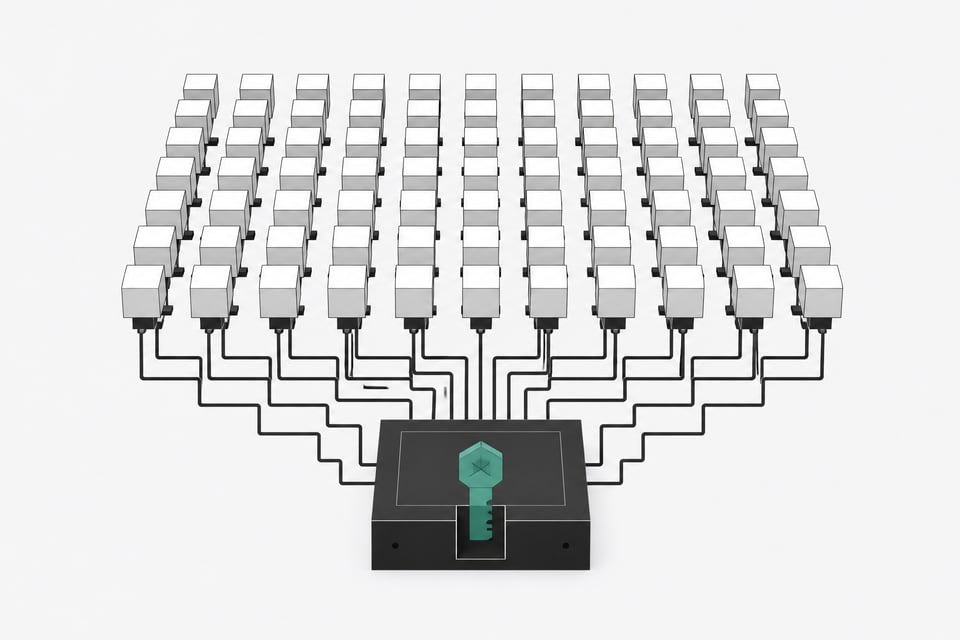
- Action parity. Every action a person can take through the UI is reachable through a callable interface for an agent, not just the popular ones.
- Readable state. An agent can check the outcome of an action by reading structured data, not by parsing a screenshot or scraping rendered HTML. This is the same problem solved by serving internal docs as markdown an agent can actually parse instead of rendered HTML built for human eyes.
- Structured errors. Failures come back as machine-readable error types an agent can reason about, not a generic toast notification meant for human eyes.
- Idempotency. Calling the same action twice doesn't duplicate the effect. Agents retry. Software that breaks on retry isn't ready for them.
- Approval gates. Destructive or high-stakes operations stop and wait for explicit human sign-off before executing.
Run any tool claiming the label through this list before you take the claim at face value.
What does the adoption reality check show?
None of this should be read as uncritical hype. Gartner predicts more than 40% of agentic AI projects will be canceled by the end of 2027, citing escalating costs, unclear business value, and inadequate risk controls. Of the thousands of vendors claiming agentic capability, Gartner estimates only about 130 are building something that genuinely deserves the term.
Forrester's "State of Agentic AI, 2026" tells a similar story from the buyer side: three-quarters of enterprise leaders say they're adopting agentic AI, but only a small minority have anything running in meaningful production beyond what the report calls "agentish" chatbots. Forrester names ROI uncertainty, governance gaps producing "agentic sprawl," and platform confusion as the three barriers keeping pilots from becoming production systems. Separately, 49% of security decision-makers named agentic AI a top concern in Forrester's 2026 security survey, which tracks with how much access action-parity architectures actually hand over.
Why does this matter if you're deciding whether to build or buy?
Here's the part that connects back to ownership. Genuine action parity, readable state, and approval gates require architectural access that most SaaS contracts simply don't grant you. You can't retrofit parity onto a vendor's closed system from the outside. You either get it because the vendor built it in, as Attio did, or you don't get it at all.
That's the real argument for treating your software's action and data layer as something you own rather than rent: the agent-native case isn't really about chat interfaces. It's about who controls the callable surface underneath them, and whether that surface was ever designed to be read and operated by something other than a person clicking through a browser.
Builders experimenting with this shift, including the team behind Remy, are treating that action layer as the thing worth owning in the first place, not an afterthought bolted on once the chatbot ships.
Frequently Asked Questions
What is agent-native software in simple terms?
It's software designed so AI agents and human users work through the exact same actions, data, and permissions. If a person can click a button to do something, an agent can call the same underlying function to do it too, with no separate, limited path for the agent.
How is agent-native different from AI-native?
AI-native describes architecture: whether a model is structurally essential to how the product works. Agent-native describes operability: whether something other than a human, like an agent, can run the software end to end using the same callable surface a human uses. A product can be one without the other.
Is agent-native the same thing as agentic AI?
No. Agentic describes behavior, specifically a system that plans, acts, checks results, and revises on its own. Agent-native describes architecture, specifically whether the software exposes a shared set of actions that both humans and agents can call. A chatbot can be agentic without being agent-native if it operates through a private backend path a human can't audit.
What is agent washing?
Agent washing is Gartner's term for vendors marketing agentic or agent-native capability without actually building the underlying architecture. Gartner estimates that of thousands of vendors claiming agentic AI capability, only around 130 are building something that genuinely deserves the label.
How do you test whether software is genuinely agent-native?
Check for five things: action parity across every UI function, readable structured state an agent can check without screenshots, machine-readable structured errors, idempotent operations that don't duplicate effects on retry, and explicit human approval gates on destructive actions.
| Action Parity | Readable State | Approval Gates | Who Controls the Surface | |
|---|---|---|---|---|
| RecommendedAgent-native softwareproducts where agents must act, not just answer | Yes | High | Yes | You own the callable surface |
| Chatbot bolted onproducts that only need an AI feature, not full agent access | No | Medium | No | Vendor controls it; agent can't reach the backend |
| Traditional SaaS (no AI)workflows with no agent involvement at all | No | Low | No | Vendor controls it; no agent access exists |
How we source, write, and correct our articles. Editorial standards