What Are AI Connectors and Why Do They Need Your Data?
ChatGPT and Claude connectors let AI models read your company's files, chats, and tickets on demand. Here is how that access works, and why some companies are choosing to own the index instead of renting it.

- 01OpenAI connectors sync an encrypted copy of company files to build a search index on their servers.
- 02Anthropic's open MCP standard lets AI query data where it lives without syncing it to a vendor.
- 03Enabling connectors expands your security blast radius by exposing data to prompt injection risks.
- 04Building your own knowledge graph prevents vendor lock-in compared to renting closed AI connectors.
The short answer
AI connectors are integrations that let ChatGPT or Claude reach into your company's apps, Google Drive, Slack, GitHub, SharePoint, and pull real-time data into a conversation instead of relying only on what the model learned during training. In ChatGPT this means encrypted syncing and search across connected accounts.1 In Claude it works through the Model Context Protocol (MCP), an open standard Anthropic released so any app can expose its data to any AI client through one common interface.2
Both approaches solve the same problem: a model is only as useful as the context it can see. Connectors are the plumbing that gets your internal knowledge in front of the model at the moment you ask a question.
How ChatGPT connectors actually work
OpenAI first tested connectors in March 2025, letting ChatGPT Team subscribers link Google Drive and Slack so the assistant could answer questions using files, spreadsheets, and Slack conversations.3 The mechanism is straightforward: a custom version of the model syncs an encrypted copy of company files and conversations to OpenAI's servers to build a search index, then retrieves relevant snippets at query time.3
Permissions are supposed to carry over. Slack channel memberships and Drive file permissions sync continuously, so in theory an employee cannot see through ChatGPT anything they could not already see directly.3
By October 2025, OpenAI expanded this into "company knowledge," a feature for ChatGPT Business, Enterprise, and Edu plans that pulls from Slack, SharePoint, Google Drive, Gmail, GitHub, and HubSpot at once and cites its sources.4 The connector list has kept growing since, now covering Box, Canva, Dropbox, Linear, Notion, Outlook, Teams, and custom MCP servers.
The practical upside is real. A prompt like "summarize this account's risks from CRM and support tickets" used to mean tabbing between five tools. Now it is one query.4 The practical cost is that OpenAI now holds a synced, searchable copy of whatever you connect.
How Claude connectors work, and why MCP is different
Anthropic took a different technical path. In November 2024 it open-sourced the Model Context Protocol, describing it as a universal standard so developers do not need a custom integration for every data source.2 Anthropic's own framing: "even the most sophisticated models are constrained by their isolation from data, trapped behind information silos and legacy systems. Every new data source requires its own custom implementation, making truly connected systems difficult to scale."2
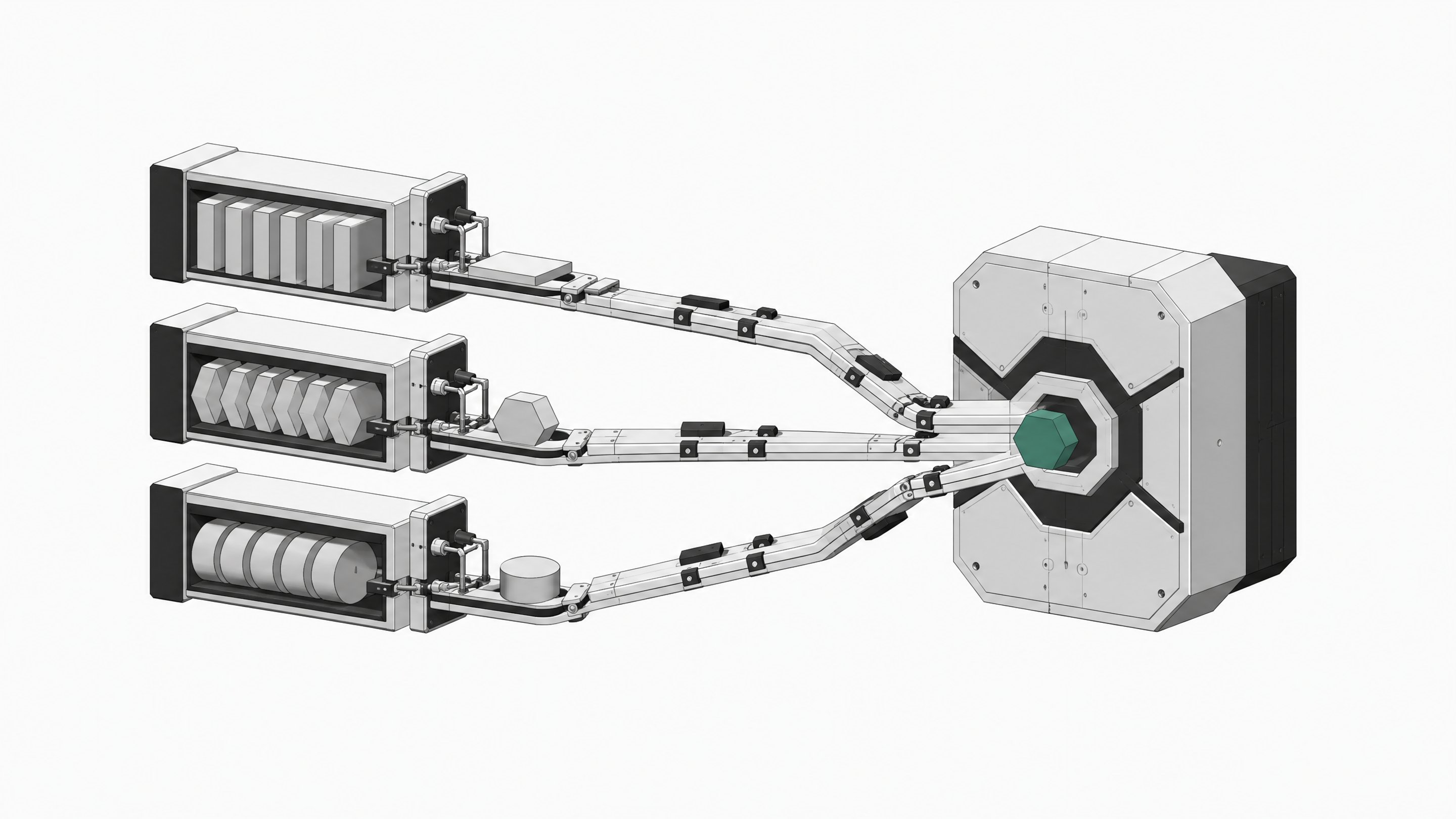
MCP has two sides. A server exposes a company's data or tools (Slack, GitHub, Postgres, an internal wiki), and a client, like Claude Desktop, connects to that server. Because it is an open protocol rather than a single vendor's closed pipe, any AI application can in principle talk to any MCP server.2 That is a meaningfully different posture than OpenAI's approach: the data does not have to live inside Anthropic's index at all. It can stay wherever you host the server, and Claude just queries it.
That distinction matters more than it sounds. A connector built on a closed sync model means a third party is holding a mirror of your knowledge. A connector built on an open protocol pointed at infrastructure you control means the AI is a client, not a custodian.
Why this is a data problem, not just a feature
Every connector you turn on expands what security teams call the blast radius. One detailed review of ChatGPT Enterprise connectors flagged unauthorized access, data leakage, insider misuse, compliance exposure under GDPR or HIPAA, and "connector sprawl" as more third-party integrations get added to the registry.1 The same analysis notes a persistent visibility gap: many organizations lack a way to see what sensitive data was actually referenced during an AI session, even when permissions are technically correct.1
The core risk is structural, not accidental. As that review puts it, "ChatGPT will find the data if the connector is enabled" regardless of whether an organization has properly locked down permissions beforehand.1 Prompt injection and RAG-based data poisoning compound this, because a model retrieving from many repositories at once can be misled by untrusted content sitting in one of them.1
None of this means connectors are unsafe to use. It means every connector you flip on is effectively handing a rented vendor a live, permissioned window into your proprietary knowledge, and asking that vendor's infrastructure to be your access control layer.
Data flow: two connector models compared
The build vs buy question
Here is the actual tradeoff, stripped of vendor language. Renting a connector means your company's knowledge graph, the relationships between your customers, code, contracts, and conversations, gets built and held inside someone else's product. You get convenience today. You also get a dependency: if that vendor changes terms, gets breached, or simply prices you differently next year, your institutional knowledge is stuck inside their system.
Building your own index, whether through an MCP server you host or a lightweight internal knowledge layer, keeps that graph as an asset your company owns rather than a subscription you rent. It costs more engineering time up front. It also means the map of what your company knows does not live and die with someone else's roadmap. Teams exploring this path sometimes look at platforms like Remy that are built specifically to let companies own their internal knowledge infrastructure instead of leasing it piecemeal across every SaaS connector they turn on.
The honest framing: connectors are a feature. A knowledge graph is infrastructure. Confusing the two is how companies end up locked into whichever AI vendor got there first.
ChatGPT connectors sync an encrypted copy of your data to OpenAI's servers to build a search index. Claude connectors typically run on MCP, an open standard where Claude queries a server you can host yourself.
OpenAI says connector data is not used for model training, though it may feed synthetic data generation. Anthropic's MCP does not require sending data to Anthropic at all if you self-host the server.
Connectors are built to respect existing app permissions, but security researchers point out that misconfigured source permissions, prompt injection, and RAG poisoning can still expose data even when access controls look correct on paper.
MCP, the Model Context Protocol, is Anthropic's open standard letting AI assistants connect to external data sources through one common interface instead of a custom integration per tool.
If your competitive advantage lives in proprietary data, owning the index gives you control over access and retention that a rented connector cannot fully guarantee.
- 1Security Risks in ChatGPT Enterprise Connectors: How to PrepareVaronis
- 2Introducing the Model Context ProtocolAnthropic
- 3OpenAI to start testing ChatGPT connectors for Google Drive and SlackTechCrunch
- 4OpenAI launches company knowledge in ChatGPT, letting you access your firm's data from Google Drive, Slack, GitHubVentureBeat