Omarchy Linux Review: AI Capabilities, Tested Hands-On
Omarchy ships 10 AI coding agents built into the desktop. A hands-on look at what works, what's shaky, and who should actually run it.

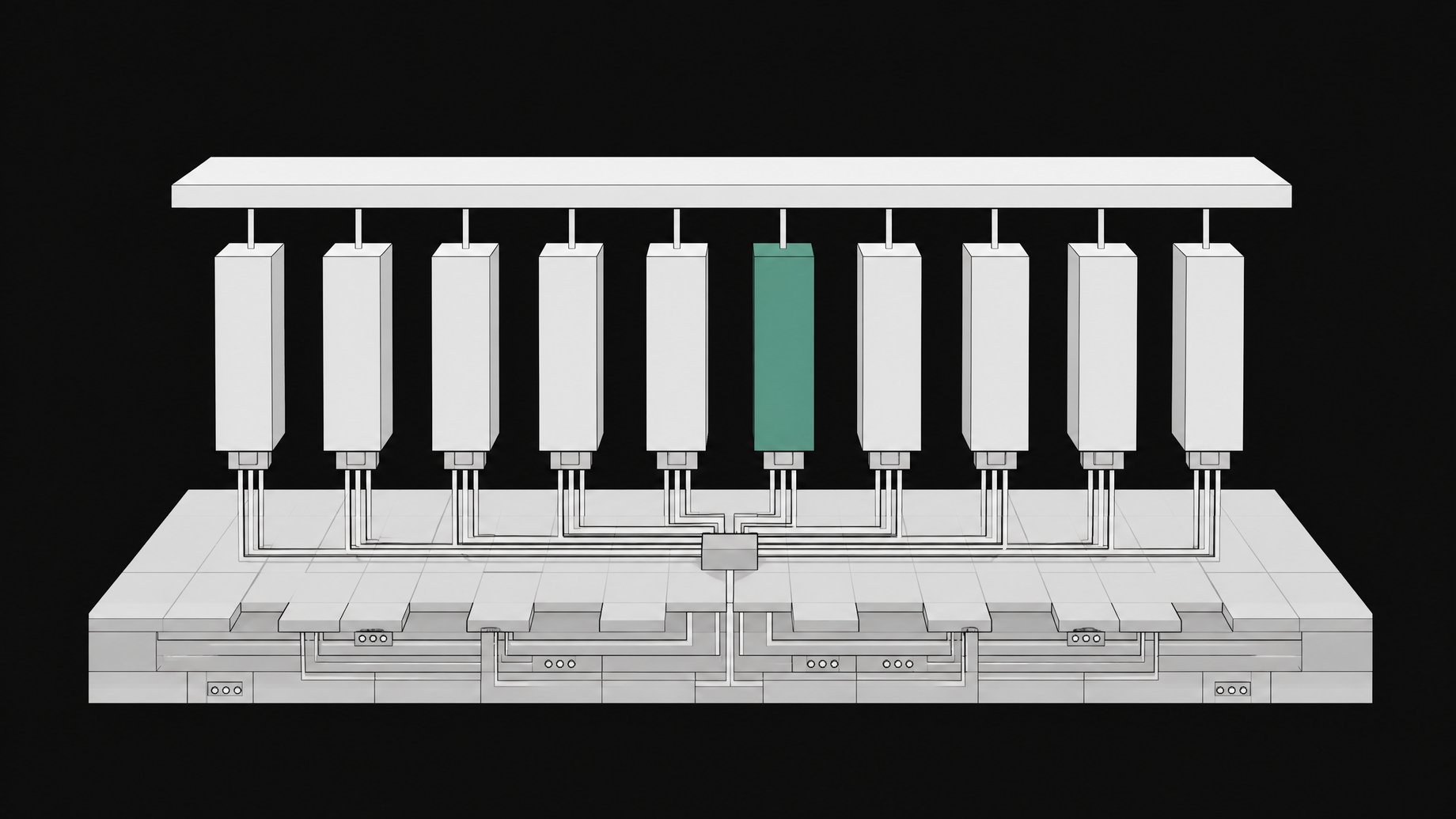
What AI capabilities does Omarchy Linux actually have?
Omarchy Linux answers the AI capabilities question directly: ten coding-agent CLIs pre-wired as lazy-loaded launchers, token usage tracked in the top bar, crash dumps handed straight to your default agent, and a local model running alongside a cloud one without a single setup script. That's the mechanical answer. The real question, for anyone deciding whether to build on this thing, is what kind of desktop it leaves behind once the agent has done its work.
TL;DR
- Omarchy ships ten pre-wired agent CLIs as lazy-loaded launchers, and it doesn't pick a favorite.
- The top bar tracks token and usage limits, and crash dumps can be handed to your default agent with one click.
- Its plaintext config under
~/.configis git-trackable by default, which makes the machine legible to both a human and an agent. - A security audit found weak defaults, including a firewall that was configured but not enabled and ten password retry attempts instead of three.
- The Omacom Foundation raised roughly $15.5 million in pledges, mixing cash with AI-lab model tokens, which signals that the agent integration is expected to stay central.
- Omarchy suits developers who want their config in git and will harden it themselves, and it is a poor fit for anyone who needs security-hardened defaults or a stable production base.
What Is Omarchy Linux, Really?
Strip away the AI framing and Omarchy is an opinionated assembly of existing parts: Arch Linux underneath, the Hyprland tiling Wayland compositor on top, curated defaults instead of a blank install. David Heinemeier Hansson (DHH) of 37signals and Ruby on Rails built it as a sister project to his Ubuntu-based Omakub, first released in June 2025. It's free, open source, and installs from USB in roughly 35 seconds to two minutes. DHH has demonstrated it running on a 2011 ThinkPad X220 with 2GB of RAM, which tells you the resource floor here is low by modern standards.
None of that is new technology. It's Arch plus Hyprland plus dotfiles, curated by someone with strong opinions about what a desktop should feel like. Even Omarchy's admirers and critics agree on that much. The novelty, such as it is, showed up with version 4.0, nicknamed "Quattro," when the project's positioning shifted hard toward AI.
What AI Capabilities Does Omarchy Actually Ship?
DHH now describes Omarchy as "the malleable OS for the age of agents," and has said the project is "leaning fully into the future and the age of agents... If that's not your jam, there's a lot of anti-AI distro options." Here's what that means on disk:
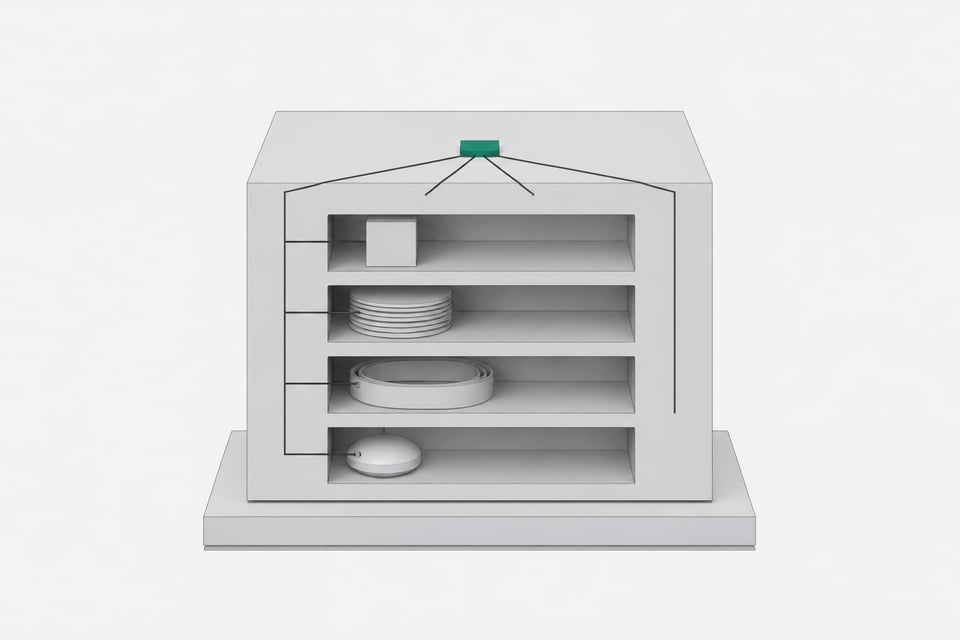
- Ten pre-wired agent CLIs. claude, codex, opencode, agy, copilot, crush, grok, pi, omp, and ori ship as lazy-loaded launcher stubs. Nothing downloads until you run one for the first time, and Omarchy doesn't pick a favorite.
- A usage panel in the top bar. The first time Omarchy detects AI coding activity, an agent icon appears showing subscription plan, percentage of session or weekly limits used, or prepaid balance remaining, broken down by day and by model. It refreshes every 15 minutes, or on demand with
omarchy agent usage-update. - Crash-to-agent diagnostics. Omarchy watches systemd-coredump. When a process crashes, clicking the notification hands the crash dump to your default agent along with a built-in "diagnose-crash" skill.
- Local LLM support out of the box. LM Studio (GUI) or Ollama (CLI) install from the Install > AI menu, and you can run a local model next to a cloud agent at the same time.
- A self-tailoring Omarchy Skill. A symlinked skill file that Claude Code, Codex, Pi, Antigravity, and other agents pick up automatically, teaching them to edit the system's own Hyprland config, top bar, and themes. The manual flags this one as experimental and tells you to run it in plan mode first.
That's a lot of surface area for AI to touch, and it's touching the OS itself, not just a project folder.
What Does Setting Up Omarchy's AI Agents Actually Feel Like?
The cleanest independent test came from ZDNET's Jack Wallen, who set up Quattro and tried to authenticate a Gemini-based agent. The OAuth browser window opened behind the AI agent setup overlay, unreachable, and the Google login failed outright. He worked around it by generating an API token instead. Small bug, real consequence: the AI-first pitch trips on an ordinary UI layering problem on day one.
Once past that, the same review confirmed the core promise works: a local model via LM Studio ran alongside a cloud CLI agent without conflict. DistroWatch's reader reviews back this up from the user side, repeatedly citing an agent inspecting Hyprland config to fix a broken multi-monitor dock setup as the standout feature. One reviewer put it plainly: "That loop of 'here is the hardware, fix the config' is what sold me on the agent setup." Omarchy currently averages 8.8 out of 10 across 54 DistroWatch reviews, though several 1-3 star reviews call it bloated and reliant on undocumented scripts.
Is This Actually a Good Environment for Software Owners?
Here's the part that matters more than the chrome. An AI agent is only as useful as the surface it's operating on. If your config lives in a proprietary settings database or a GUI-only control panel, an agent can't read it, can't diff it, can't safely change it. Omarchy's config lives as plaintext under ~/.config, which is git-trackable by default. One reviewer testing Omarchy as a home-lab workstation put it directly: "I really like this approach to configuration as it means that we can then put our configuration for our Omarchy setups in git."
That's the real unlock for people building and running self-owned software instead of renting it. Terminal-first defaults, Tmux, LazyDocker, Lazygit, SSH config helpers, and modern CLI tooling like fzf, zoxide, ripgrep, and eza make the box legible to both a human and an agent at the same time. A crash isn't a support ticket, it's a coredump an agent can read immediately. A broken display config isn't a forum search, it's a file the agent already knows how to parse. If you're the kind of team pulling AI tool sprawl into something you actually own, that legibility matters as much as the agents themselves. It's the same instinct behind building an AI-native development workflow you actually control rather than scattering vendor subscriptions across a stack, and it's the whole premise behind something like Remy.
What Is the Skeptic's Case Against Omarchy?
The hype needs a counterweight, and there's a real one. A security audit by a former Framework Computer engineer found Omarchy's firewall was configured but not actually enabled by default, a bug that persisted from a claimed fix in v2.1.1 all the way through v3.0.2, only genuinely resolved in v3.1.0. The same audit documented weaker security defaults than most distros ship: ten password retry attempts instead of the more common three, reduced faillock timeouts, and no default SSH hardening despite leaving port 22 open. It also found Omarchy leans on unstructured, non-idempotent bash migration scripts with no rollback support, and called the current v3.0.2 ISO a hefty 6.2GB for what's marketed as a lean, opinionated setup.
Separately, reviewer Mo Bitar spent hours testing the system and landed on a measured verdict: "it's plausible. Not busted. Not confirmed. Plausible." He argued Omarchy's real value is as an agent workstation rather than the marketed AI-first framing, and flagged a security finding that every process in a session could become root. None of this sinks the project. It does mean the "takes security seriously" marketing needs a second look before you point an autonomous agent at a production box.
Who's Funding Omarchy's AI Pivot?
The agentic pivot isn't a solo project decision. The Omacom Foundation, a nonprofit formed to hold the Omarchy trademark and fund its infrastructure, had raised roughly $15.5 million in pledges by early September 2026: about $13.5 million in cash plus $1.95 million in AI-lab model tokens. Anthropic and OpenAI each committed $150,000 in tokens as Distinguished Token Patrons, Meta Superintelligence Labs put in $1.5 million, and the foundation launched on August 21, 2026 with $8 million in cash from eight founding patrons at $1 million each, including Tobi Lütke, Patrick Collison, Jack Dorsey, and Michael Dell.
That kind of money, and that mix of AI labs paying in tokens rather than cash, tells you the ecosystem expects the agent integration to stay central and get funded like infrastructure, not a side feature. If you're deciding whether to build tooling and habits around Omarchy for the long haul, that funding signal matters more than any single release note.
Verdict: Who Should Actually Run This?
Omarchy earns its AI capabilities headline honestly. The mechanics are real, the agent tooling runs deeper than a theme pack, and the plaintext, scriptable config underneath gives an agent something legible to operate on. It's also rougher than the polish suggests: security defaults need tightening, and the setup flow can trip on its own UI.
- Good fit: developers who already run self-hosted infrastructure, want their config in git, and are comfortable hardening a firewall themselves before handing an agent the keys.
- Good fit: teams evaluating whether an agent-run desktop fits an ownership-first stack, where the payoff is a legible, scriptable machine rather than a chat window bolted onto a browser.
- Bad fit: anyone who wants security-hardened defaults out of the box without checking them, given the documented firewall and password-retry issues.
- Bad fit: teams that need a stable, slow-moving base for production work, since Arch's rolling-release model and Omarchy's bash migration scripts favor people who like to tinker.
Run it on a spare machine first. Read the crash logs before you trust the agent with a production box. Decide, honestly, whether you want the plumbing exposed like this. For the right person, that exposure is the entire point.
Frequently Asked Questions
What AI capabilities does Omarchy Linux actually have?
Omarchy ships ten coding-agent CLIs (claude, codex, opencode, agy, copilot, crush, grok, pi, omp, ori) as lazy-loaded launchers, a top-bar panel that tracks token and plan usage, crash diagnostics that hand coredumps to your default agent, built-in local LLM support via LM Studio or Ollama, and an experimental Omarchy Skill that lets agents edit the system's own config.
Is Omarchy Linux secure by default?
Not fully. An independent audit found the firewall was configured but not actually enabled through several releases up to v3.0.2, and documented weaker-than-typical defaults like ten password retry attempts and no default SSH hardening despite leaving port 22 open. Both were reportedly fixed only as of v3.1.0.
Can I run a local AI model alongside a cloud agent in Omarchy?
Yes. Omarchy's Install > AI menu adds LM Studio or Ollama, and a hands-on review confirmed a local model can run at the same time as a cloud-based CLI agent without conflict.
Who is behind Omarchy and is it well funded?
It was created by David Heinemeier Hansson (DHH). The nonprofit Omacom Foundation, formed to hold the trademark and fund infrastructure, had raised about $15.5 million in pledges by early September 2026, including token commitments from Anthropic, OpenAI, and Meta Superintelligence Labs.
Is Omarchy just Arch Linux with dotfiles?
At its core, yes: it's Arch Linux plus the Hyprland compositor plus a curated set of configs and themes. Critics and fans both acknowledge this. What's arguably new is the coherence of that curation and the agent tooling layered on top, not the underlying technology.
How we source, write, and correct our articles. Editorial standards