What Is Omarchy? Inside the 'AI Operating System' Debate
Omarchy calls itself an AI operating system. Strip away the branding and it's Arch Linux with ten agent CLIs pre-wired in. The real story is who controls the config, the money, and the politics behind it.

- 01Omarchy is essentially Arch Linux with a pre-configured layer of ten AI agent CLIs.
- 02Crash-to-agent routing and agent-editable plaintext config provide genuinely useful defaults.
- 03The distro restricts package updates to its own repository, creating potential vendor lock-in.
- 04The project is backed by $18.5 million, sparking controversy over its corporate sponsors.
Omarchy is an open-source Linux distribution, built by David Heinemeier Hansson on top of Arch Linux, that ships with ten AI coding-agent CLIs pre-wired in at the OS level.1 It uses the Hyprland tiling Wayland compositor and the Quickshell desktop shell, started in June 2025 as a post-install config script, and has since grown into its own ISO installer with a dedicated package repository.1 The agent CLIs, including Claude Code, OpenAI Codex, GitHub Copilot CLI, and OpenRouter's Ori, ship as lazy-loaded launcher stubs: none of them download anything until you actually run one.2 That's the whole product, in plain terms. The question worth arguing about is whether wiring ten agent CLIs into a Linux config makes it a new kind of operating system, or just a very well-marketed dotfiles repo.
Under the Hood: Arch Linux Plus an AI Layer
Omarchy doesn't touch the kernel, the compositor, or the package manager. It configures Arch and Hyprland, which already exist, and layers a curated set of defaults on top.34 The installer is fast (some users report going from USB stick to a working desktop in 35 seconds), and the hardware bar is low: DHH demoed it running on a 2011 ThinkPad X220 with 2GB of RAM.2 It's free, no paid tier. So far, this reads like any other opinionated Arch spin.
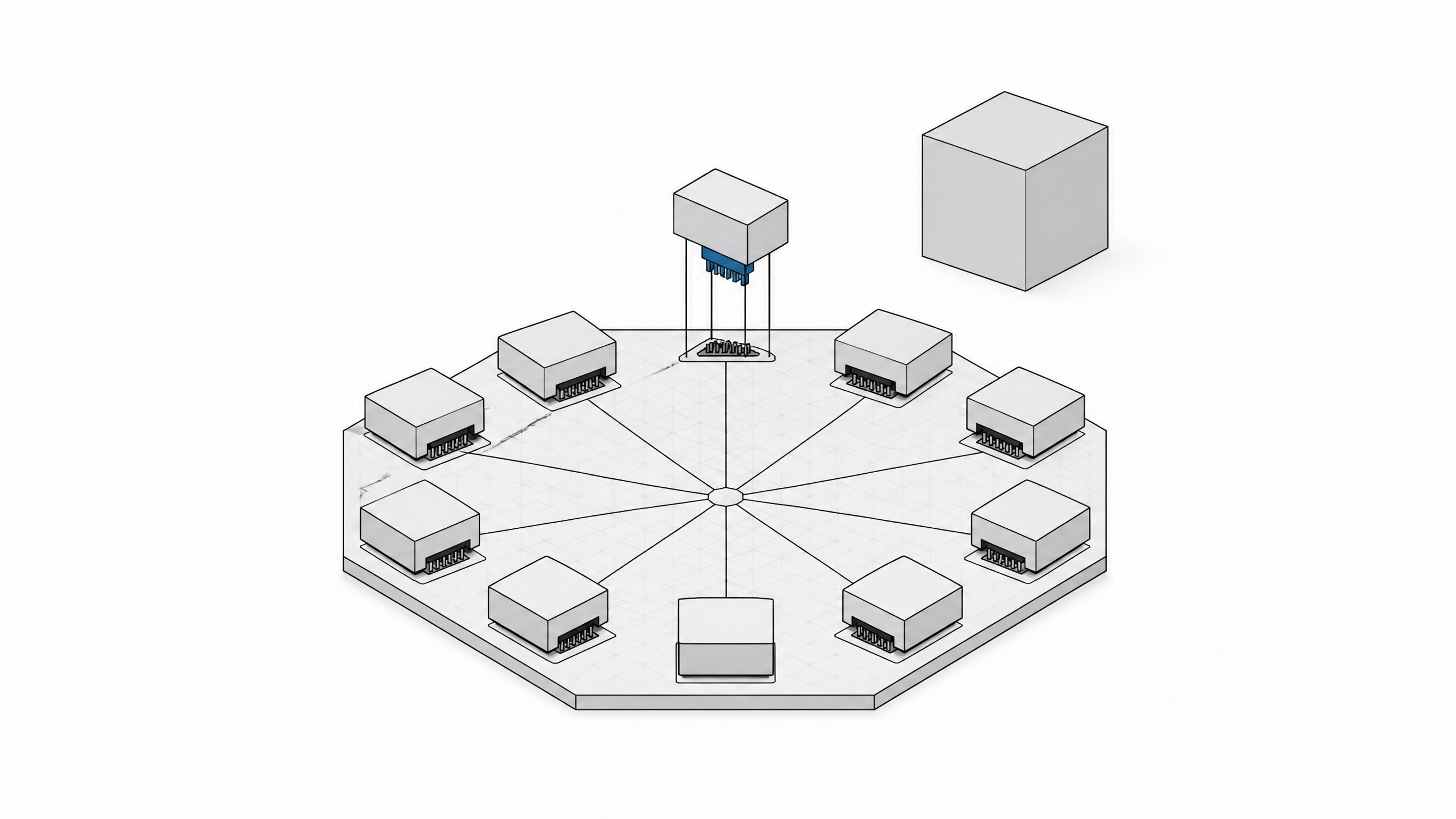
What's different is the AI layer. Omarchy treats agent CLIs as installed, on-path tools from first boot, exposes a scriptable CLI and plaintext config that an agent can read and edit, and routes crashed processes straight to your default agent for diagnosis.25 DHH doesn't hide the intent: "Omarchy is leaning fully into the future and the age of agents. This is how we truly democratize Linux... If that's not your jam, there's a lot of anti-AI distro options."6 That's a branding choice as much as a technical one, and it's the crux of the whole debate.
What Makes Omarchy Feel Like an AI Operating System?
The strongest pro-argument isn't about novelty at the OS level. It's about defaults. Most developers who want an agent-integrated Linux box today assemble it by hand: install the CLI, wire it into PATH, write a crash hook, build a usage dashboard. Omarchy does that wiring for you, and treats agents as OS-level citizens rather than optional apps. A few specifics stand out:
- Crash-to-agent routing. Omarchy watches systemd-coredump for process crashes. When something segfaults, a notification appears; click it, and the crash dump is handed directly to your default agent for diagnosis.5
- No forced favorite. The distro pre-wires ten separate agent CLIs as lazy-loaded stubs and doesn't push you toward any single vendor by default, a meaningfully neutral stance in a market where owning your model choice instead of renting one vendor's API is increasingly the whole point.25
- Agent-editable config. The system config is plaintext and scriptable, meaning an agent can read and modify it directly instead of going through a GUI settings app built for humans.5
- Zero-cost onboarding. Nothing downloads until you run a given agent, so the OS doesn't bloat itself with ten toolchains you never touch.2
ZDNET's hands-on test found the integration functional but rough. Browser-based OAuth for Gemini failed during their test and they had to fall back to an API token, and their conclusion was that Omarchy Quattro is "built for power users who want AI front and center. This OS isn't for Linux newbies."6 That's a fair summary: the agent-first defaults are real and useful, but this isn't a beginner-friendly reimagining of what an operating system does.
The Case Against: 'It's Just Dotfiles With a Marketing Budget'
The rebuttal from Linux veterans is blunt. One widely shared take: "the entire 'omarchy distribution' amounts to little more than Arch linux + DHH's personal dotfiles... if you're new to Linux, skip omarchy and install a real distribution."4 A Hacker News thread makes the more precise version of this point: Omarchy invents no new window manager, compositor, package manager, or kernel, and the AI layer is a thin integration over agent CLIs that anyone could install manually in an afternoon.32
That criticism isn't really about the AI features. It's about the label. Calling a configuration layer an "operating system" implies architectural innovation that doesn't exist here. Arch already has a package manager, a kernel, and a compositor ecosystem. Omarchy curates and configures those pieces, then wraps agent tooling into the curation. That's a legitimate product decision. It is not a new operating system in any technical sense, and pretending otherwise is where the branding outruns the engineering.
Who Actually Owns an Omarchy Machine?
This is where the ownership question gets interesting, and it's the part most reviews skip. Omarchy's own doctrine leans hard into ownership language: "Own the machine... No tollbooths, no gatekeepers, no platforms that can change the terms on you... The malleable machine of the future is here today and it's yours to own."7 That's a strong claim, and it's mostly true at the config layer. You get plaintext files, a scriptable CLI, and an agent that can edit your own setup on your own machine.
But the same documentation admits Omarchy ships some closed-source, commercial applications by default, which sits awkwardly next to "no gatekeepers."72 And several longtime users have flagged a more concrete friction: Omarchy expects you to update through its own package repo and tooling rather than freely mixing upstream Arch, which cuts against the traditional Linux freedom to pull packages from wherever you want. One Hacker News commenter put it plainly: "if you install Omarchy, you have to update via Omarchy or risk some mayhem, you use DHH's separate package repo."3 That's a smaller, quieter version of the same lock-in pattern we've written about before, where controlling the device or the update channel ends up mattering more than who technically holds the license.
So the honest framing is: you own the machine, mostly, but you're renting the update path and part of the app layer. That distinction matters more than the "AI operating system" label, because it's the distinction that determines whether you can actually walk away from Omarchy's defaults without breaking your system. For developers who want the agent-first defaults without handing config control to any single vendor's repo, the more durable move is treating the agent skills and config as something you own outright, similar to how tools like Remy let you keep the agent configuration portable instead of tied to one distro's update channel. If you're already building a fully self-hosted AI dev stack, Omarchy is one ingredient, not the whole answer, and the math on running compute, storage, and AI without renting a SaaS subscription is worth reading before you commit a whole workflow to any single distro's opinions.
The Money and the Politics Behind the 'OS'
The "AI operating system" brand doesn't exist in a vacuum. It's backed by real money and real controversy. The Omacom Foundation, a nonprofit launched in August 2026 to fund Omarchy, has secured roughly $18.5 million in pledges and donations, including multiyear commitments and AI-model token pledges.8 The money breaks down like this:
- Individual patrons. Twelve people contributed $1 million each, including Stripe's Patrick Collison, Michael Dell, Jack Dorsey, and Shopify's Tobias Lütke.9
- DigitalOcean. Committed $3 million as a Founding Corporate Patron.9
- 1Password. Pledged $300,000 as a "Distinguished Corporate Patron."9
That last donation blew up. 1Password faced immediate backlash from customers after critics resurfaced DHH blog posts using dehumanizing language about immigrants and Romani people in Europe, and calls for a boycott followed.9 1Password's CEO said the donation was "not in any way an endorsement of his personal views," but the damage was done.9 Free-software advocate Matthew Garrett went further, arguing Omarchy is "fundamentally incompatible with the goals of free software," and a "Stop Omarchy" campaign has framed the project's funding as a political movement disguised as a Linux distro.81
None of that is a technical critique of the software. But it means the "AI operating system" story is inseparable from a well-funded, personality-driven campaign with real reputational stakes for its corporate backers. When you evaluate Omarchy, you're not just evaluating a config layer. You're evaluating whose brand and whose politics you're adopting alongside it.
Is This the Future of the Desktop, or a One-Off?
Zoom out and Omarchy looks less like an isolated stunt and more like an early data point in a broader shift. KDE's own community proposed an "AI-native desktop" concept at its 30th-anniversary Akademy conference, which suggests mainstream desktop Linux projects are independently arriving at the same bet: agents belong at the infrastructure layer, not bolted on as browser extensions or third-party apps.1
That's the useful signal buried in all the Omarchy noise. Developers want crash handlers that hand off to an agent, config files an agent can edit directly, and usage visibility for the agents they run, wired in at the OS level instead of assembled by hand. Whether Omarchy specifically survives its funding controversies is a separate question from whether that underlying demand is real. It fits the broader pattern of developers rebuilding their stacks around things they own instead of things they rent, and that pattern isn't going away.
Verdict: Shiny Config, Real Signal
Omarchy is not a new operating system in any technical sense. It's Arch Linux, Hyprland, and a curated set of dotfiles, and the harshest critics are right about that.34 But the agent-first defaults it ships, crash-to-agent routing, agent-editable plaintext config, and neutral multi-agent support, are a genuine and useful pattern that most developers currently have to build by hand.25
The part that should actually worry you as an owner isn't the kernel debate. It's the update channel, the closed-source apps bundled into a distro that markets itself on "no gatekeepers," and the fact that the whole brand now carries $18.5 million in donor money and a live political controversy.789 Judge Omarchy on the config it gives you and the strings attached to who's paying for it, not on whether it deserves the word "operating system" on the tin.
Omarchy is a free, open-source Linux distribution built by David Heinemeier Hansson on top of Arch Linux, using the Hyprland Wayland compositor and Quickshell desktop shell. It ships ten AI coding-agent CLIs pre-wired as lazy-loaded launchers and integrates agents into crash handling and system config.
No, not technically. It doesn't add a new kernel, compositor, or package manager. It configures existing Arch Linux and Hyprland components and layers curated defaults, including AI agent integration, on top. Critics call it a dotfiles repo with an ISO installer.
No. It pre-wires ten agent CLIs, including Claude Code, OpenAI Codex, GitHub Copilot CLI, and OpenRouter's Ori, as lazy-loaded stubs that don't download anything until run, and it doesn't set a default favorite among them.
1Password pledged $300,000 to the Omacom Foundation, which funds Omarchy. Customers and employees pushed back after critics resurfaced past DHH blog posts using dehumanizing language about immigrants and Romani people, prompting boycott calls despite 1Password's CEO stating the donation was not an endorsement of his personal views.
Mostly, but not entirely. Omarchy's own doctrine promises ownership with no gatekeepers, and its config is plaintext and agent-editable, but it also ships some closed-source apps by default and expects updates through its own package repo rather than freely mixed upstream Arch sources.
- 1Omarchy (Wikipedia)Wikipedia
- 2What Is Omarchy? DHH's Agentic Linux Distro ExplainedMindStudio
- 3Omarchy – Linux that is capitalizing on AI momentum (comment thread)Hacker News
- 4your_dotfiles_are_not_a_distroabyss.fish (independent blog)
- 5Omarchy Manual: AIOmarchy (official documentation)
- 6I tested Omarchy Quattro, one of the first Linux distros to go all in on AI – and I didn't hate itZDNET
- 7The Omarchy DoctrineOmarchy (official)
- 8Omarchy gains $18.5M in backing, fresh converts – and fierce criticsThe Register
- 91Password wades into a right-wing mess after funding a Linux projectThe Verge