Is Omarchy Linux Good for Developers? Pros, Cons, and Who It Fits
Omarchy is DHH's Arch and Hyprland desktop with built-in AI coding agents. See review scores, security issues, costs vs Codespaces, and who should switch.

Is Omarchy Linux good for developers?
Yes, if you live in a terminal, run AI coding agents daily, and would rather debug your own system than wait on a vendor's ticket queue. No, if you want a desktop that works out of the box with real support behind it. Omarchy isn't a drop-in replacement for Windows or macOS. It's a bet on a specific kind of developer, and the early evidence says that bet pays off for exactly that profile and nobody else.
Omarchy isn't really a story about a Linux distro. It's a story about where the "own it, don't rent it" instinct goes next.
TL;DR
- Omarchy fits terminal-first developers who run AI coding agents daily and would rather debug their own system than wait on a vendor.
- Quattro ships Claude Code, Codex, Copilot, Gemini, Grok, and OpenCode launchable by keyboard shortcut, treated as part of the desktop rather than apps you install afterward.
- Trajectory Labs found Codex's "full access" mode had a 19.03% prompt injection success rate, compared to 5.83% under auto-review.
- Reviews split: DistroWatch readers average 8.9 out of 10, but critics flag weak plugin security and thin community support when an update breaks the system.
- Traction is real, with ISO downloads near 10,000 per day at peak and an Omacom Foundation that has raised more than $18.7 million.
- 37signals is migrating its Ops and Ruby engineering teams onto Omarchy as hardware comes up for refresh, giving the transition about three years to wrap up around 2028.
- Unlike GitHub Codespaces' metered rental model, an owned Linux desktop running local agents has no per-hour meter, just the upfront cost of hardware and configuration time.
How did the cloud exit lead to a desktop exit?
In 2022, David Heinemeier Hansson started moving 37signals off AWS and Google Cloud. The migration was done by mid-2023. The company bought its own Dell hardware, ran it on KVM, Docker, and Kamal, and projected savings of at least $1.5 million a year from owning instead of renting compute. A year later, after also moving off AWS S3 storage onto Pure Storage, that projection grew to more than $10 million over five years.
That was a server story. Omarchy pushes the same instinct one layer down, onto the machine on a developer's own desk. DHH launched it in June 2025, calling it "my Platonic ideal of what a developer environment should look like" and describing the moment as ripe for "a big switch. At least among developers." If the cloud exit was about not renting infrastructure from Amazon, Omarchy is about not renting your workflow from Apple, Microsoft, or a managed cloud IDE. We've gone deeper on what Omarchy actually is once you strip away the branding.
What is Omarchy, actually?
Strip the branding and Omarchy is Arch Linux paired with the Hyprland tiling window manager, pre-configured and themed. It's not a new distro built from scratch. It's a curated, opinionated layer on top of Arch, the same move DHH made earlier with Omakub, his Ubuntu-based setup.
What makes it feel different from a bare Arch install is the packaging:
- Out-of-box theming and shortcuts. The New Stack describes it as shipping with "carefully selected tools, shell aliases, themes and shortcuts" rather than a blank slate.
- A fast, minimal install. The ISO is 5.8GB, and How-To Geek clocked a full install on modest hardware (a Ryzen 3 2200G with 16GB of RAM, no dedicated GPU) at barely two minutes.
- A real desktop shell, not just a window manager. Version 4.0, nicknamed "Quattro" and released in August 2026, added a Quickshell/Qt-based shell, Lua-based Hyprland configuration, and a plugin system that generated more than 1,000 community plugins in its first week.
In other words: dotfiles as product. Someone else's tuned configuration, shipped as an installable system instead of a repo you clone and fight with.
How does Omarchy make AI agents first-class citizens?
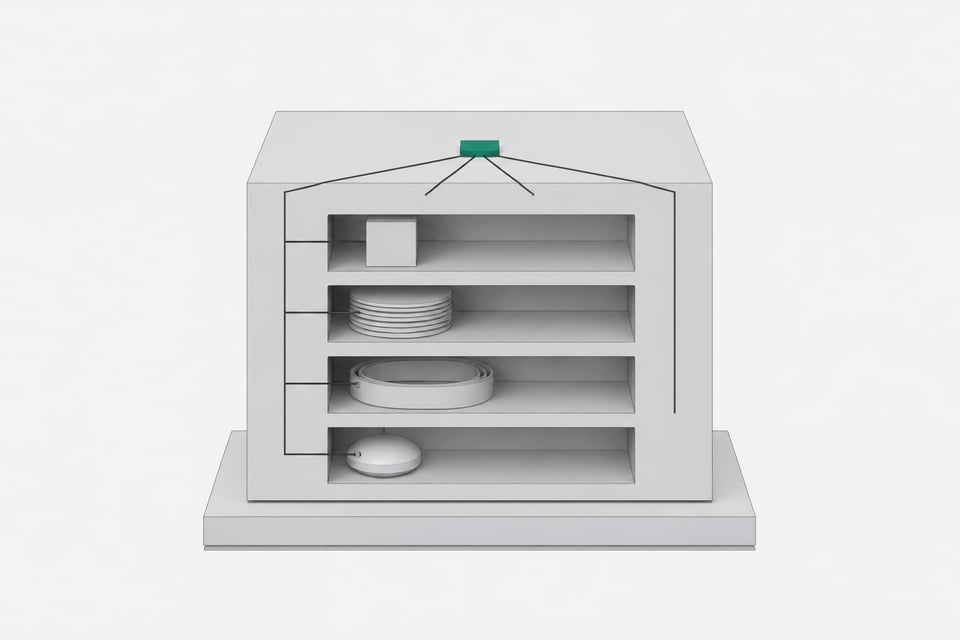
The part that separates Omarchy from a nicely themed Arch spin is how deliberately it wires AI coding agents into the OS itself. Quattro ships with Claude Code, Codex, Copilot, Gemini, Grok, and OpenCode all launchable by keyboard shortcut, treated as part of the desktop rather than apps you install afterward. ZDNet's reviewer put it plainly: this is "a Linux distribution built for power users who want AI front and center," and explicitly not for "Linux newbies or those who aren't in favor of AI being involved in more and more aspects of the operating system."
That's the direct wedge against cloud IDEs like GitHub Codespaces and Gitpod, which bundle a dev environment, compute, and increasingly an AI assistant into a single rented product. Omarchy's pitch: why rent that bundle when your own machine can run it, locally, for the cost of hardware you already own. We go deeper on this setup in the 2026 self-hosted AI development stack.
This agentic wiring isn't risk-free. An investigation by Trajectory Labs, commissioned by Anthropic, found Codex's "full access" mode had a 19.03% success rate for prompt injection attacks, compared to 5.83% under auto-review. Giving an AI agent a keyboard shortcut and real system access is convenient. It's also a bigger attack surface, and Omarchy's maintainers have had to respond to that in real time.
Is it actually good for developers, and where does the evidence split?
Here's where the reviews genuinely diverge, and the divergence tells you who Omarchy is actually for.
On the favorable side:
- DistroWatch's reader reviews average 8.9 out of 10 across 78 submissions, with praise centered on "cohesion" and AI-agent integration.
- ZDNet called it "powerful, but not for beginners," a compliment aimed squarely at experienced developers.
- How-To Geek called the install process "one of the most ridiculously streamlined" it had tested on any Linux distribution.
On the critical side, the same DistroWatch review pool flags real gaps: there is still no proper unified settings application, default keybindings strike some reviewers as odd, and plugin security is a genuine weakness since community plugins "can run unsandboxed code" with immature verification controls. A Hacker News-discussed finding showed a path for any user process to escalate to root under certain configurations. Maintainers patched default Docker-group auto-membership and disabled overly permissive agent "bypass permissions" defaults just 11 days after Quattro shipped. That's a fast patch cycle, which is good. It's also evidence the first release shipped with holes serious enough to need one.
Then there's support. A Medium reviewer who tried Omarchy for a week had an update break the system entirely, with no clear community path to fix it, and concluded that "the best product, specifically as open source, in the world means nothing without community support." That's the flip side of the ownership pitch: own the machine, and you own the breakage too. Nobody is contractually obligated to fix it for you.
A more measured skeptic put it this way: Omarchy is "plausible," not a breakthrough, a competent skin and workflow improvement whose attention outpaces its substance, asking pointedly, "if anybody other than DHH built this, would you be hearing about it?" Fair question. Probably not at this scale. But the underlying workflow improvements are real regardless of who built them.
Is the traction real, and how serious is the backlash?
Hype alone doesn't explain the numbers. DHH has reported ISO downloads running near 10,000 per day at peak, pulled straight from Cloudflare CDN logs. The project is now backed by the Omacom Foundation, which has raised more than $18.7 million, including an initial $10 million commitment from eight Founding Patrons at $1 million each: Shopify's Tobi Lütke, Stripe's Patrick Collison, Dell's Michael Dell, and Cloudflare's Matthew Prince among them. This is well past a personal side project now.
But look at how 37signals is rolling this out internally, and the picture sobers fast. The company is migrating its Ops and Ruby engineering teams onto Omarchy as hardware comes up for refresh, with the transition expected to wrap around 2028. The company that popularized the "we left the cloud" story is giving its own OS migration three years. That's not the behavior of a team that thinks this is a weekend swap.
Is Omarchy Cheaper Than a Cloud IDE Like GitHub Codespaces?
The dollar comparison mirrors the AWS story almost exactly. GitHub Codespaces charges compute starting at $0.18 per hour plus $0.07 per GB-month of storage, a metered rental model that scales with usage the same way AWS bills did. An owned Linux desktop running local agents has no per-hour meter running. The upfront cost is the hardware and the time to configure it. After that, another coding session costs close to nothing. That's the same arithmetic 37signals ran against AWS, just moved from the server rack to the laptop. We've run the full version of this math in the 2026 local-versus-cloud cost case.
Who Should Switch to Omarchy, and Who Shouldn't?
Omarchy rewards a specific profile and punishes impatience with everyone else. It's a good fit if you:
| Cost Model | Upfront Cost | Ongoing Cost | Control / Customization | Vendor Support | |
|---|---|---|---|---|---|
| Omarchy (owned desktop)Developers who live in the terminal and want AI agents wired into the OS | One-time hardware + setup time | Hardware + configuration time | Near $0 per session | High | Low |
| GitHub CodespacesTeams that want managed infrastructure and vendor support | Metered, pay-per-use | $0 | $0.18/hr compute + $0.07/GB-month storage | Medium | High |
- Already use AI coding agents daily and want them wired into your window manager instead of bolted onto a browser tab.
- Are comfortable with Arch, or willing to become comfortable with it, including its update cadence and its "you broke it, you fix it" culture.
- Work keyboard-first and don't need a GUI settings app for every system preference.
- Can tolerate early-release security patches as part of the deal, the way Quattro's 11-day fix cycle required.
It's a bad fit if you need managed security and vendor support, run Windows-only tooling, or manage a team that can't absorb an occasional broken update with no formal support line. That's the exact scenario the Medium reviewer hit. For teams in that camp, the honest move is to track what agent tools your developers are already running informally before standardizing on any OS-level AI integration.
What does this mean for the broader ownership movement?
Omarchy isn't really competing with Ubuntu. It's the same "own, don't rent" logic that moved 37signals off AWS, now applied to the OS, the IDE, and the AI agent running inside it. Whether Omarchy specifically wins that fight or not, the direction is clear: the instinct that started with servers has reached the desktop, and it won't stop there.
Frequently Asked Questions
Is Omarchy Linux good for developers who are new to Linux?
Not really. Reviewers consistently describe it as built for power users who already know keyboard-driven, tiling workflows. ZDNET called it 'powerful, but not for beginners,' and the lack of a unified settings app means configuration happens through files and shortcuts rather than menus.
How is Omarchy different from a plain Arch Linux install?
Omarchy is Arch Linux and the Hyprland window manager pre-configured by DHH, with themes, shell aliases, shortcuts, and AI coding agents already wired in. It's packaged like a product rather than assembled piece by piece the way a manual Arch install usually is.
Is Omarchy secure enough for daily development work?
It has had real security issues, including a privilege-escalation path and overly permissive AI agent defaults that required a patch just 11 days after the 4.0 'Quattro' release. The maintainers responded fast, but the pattern shows early releases carry real risk that cautious teams should weigh.
Why is 37signals taking three years to move to Omarchy internally?
37signals is migrating its Ops and Ruby engineering teams onto Omarchy gradually, tied to normal hardware refresh cycles, with completion expected around 2028. Even the company most associated with the 'own, don't rent' philosophy treated this as a deliberate, multi-year transition rather than an overnight switch.
Does switching to Omarchy actually save money compared to a cloud dev environment?
The marginal cost comparison favors ownership once you're past the setup effort. GitHub Codespaces charges metered fees starting at $0.18 per hour of compute plus storage costs, while an owned Linux machine running local agents has no per-hour meter after the initial hardware and configuration investment.
How we source, write, and correct our articles. Editorial standards