Local LLM vs API Cost: Which Is Cheaper to Run?
Compare local LLM vs API cost with real numbers: break-even periods by model size, hardware TCO, utilization thresholds, and when owning GPUs beats renting tokens.

Is it cheaper to run a local LLM or pay for an API?
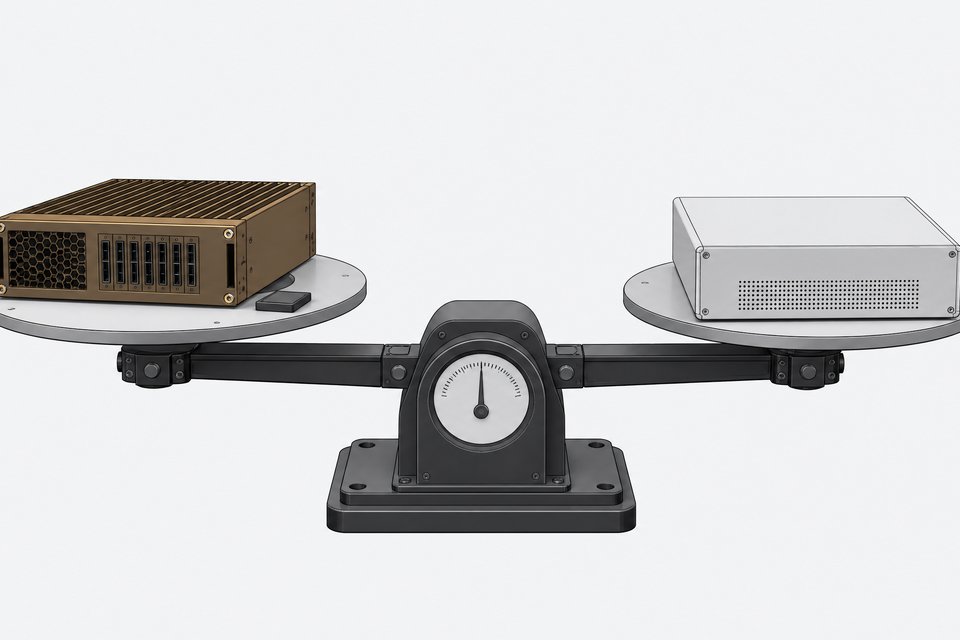
There's no universal answer to "local LLM vs API cost," but there is a usable rule: API rental is cheaper at low or spiky usage, and owning hardware gets cheaper once usage turns sustained and predictable. Break-even typically lands somewhere between a few weeks and three years, depending on model size and how hard you run the machine. That's the whole answer. The rest of this piece is the arithmetic that gets you there.
This is the same decision businesses have been making about SaaS for a decade: rent when you're small and uncertain, own when you're big and steady. The only thing that's changed is that "owning" now applies to intelligence itself, not just the software wrapped around it.
TL;DR
- API rental is cheaper at low or spiky usage, while owning hardware wins once usage is sustained and predictable.
- Small models on consumer hardware can reach break-even in 0.3 to 3 months against commercial APIs, the fastest payoff of any tier.
- Utilization drives the result, and in one throughput study self-hosting only beat the API once the request rate crossed roughly 2 requests per second.
- On-premise ownership beats cloud rental somewhere between 40% and 77% sustained utilization, but enterprise GPU usage often sits at 35% to 55%, in rental-favorable territory.
- In 2025, 76% of enterprise AI solutions were purchased rather than built, showing how strongly companies are renting the application layer of AI.
- Electricity prices shift the math, since at EU rates the break-even daily token volume rises 40% to 60% compared with US rates.
What does it actually cost to rent an LLM through an API?
API pricing looks simple until you add up what you're really paying for.
The sticker price is per-token, and it scales with model tier. Budget-tier models from OpenAI, Anthropic, Google, and open-weight hosts are cheap enough that a modest workload barely registers on a bill. Flagship models cost meaningfully more per token, and that gap is where most of the local-vs-API decision lives. One real comparison: a developer running an 8B model at 500,000 tokens a day found a budget API would cost about $6/month, while the same volume against a local RTX 4090 setup cost roughly $59/month once hardware amortization and electricity were counted. At that tier, renting wins outright. Nobody should buy a GPU to save $53 a month.
But run the same math against flagship-tier pricing instead of budget tiers, and the picture flips. At roughly $150/month for that same 500K-tokens-a-day workload, the $1,800 GPU pays for itself in about 20 months. The API isn't overpriced. It's priced for convenience, and convenience has a cost that compounds with volume.
The sticker price also hides real friction that doesn't show up on the invoice:
- Rate limits that throttle you exactly when you need throughput most.
- Egress and integration costs from moving data in and out of a vendor's infrastructure.
- Vendor lock-in, where your prompts, fine-tuning data, and workflows are built around one provider's quirks.
- Price volatility, since API pricing can change on the vendor's schedule, not yours.
None of these are catastrophic on their own. Together, they're why renting intelligence starts to feel like every other SaaS bill that crept past the budget it was approved at.
What does it actually cost to run a model yourself?
The local side of the ledger isn't just "GPU price." It's hardware amortization, electricity, and the labor to keep the thing running, and the real number is usually dominated by the first of those.
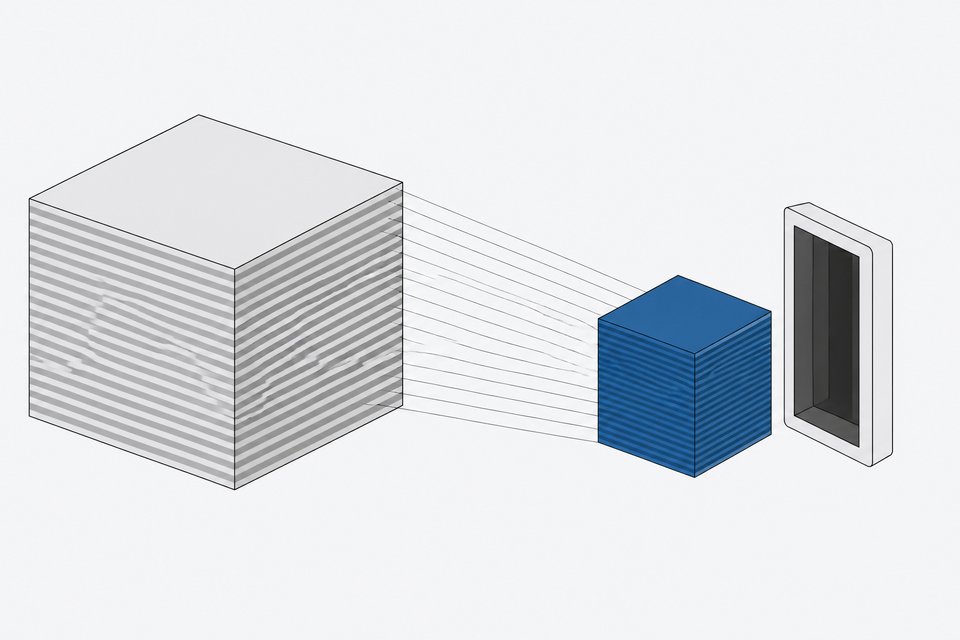
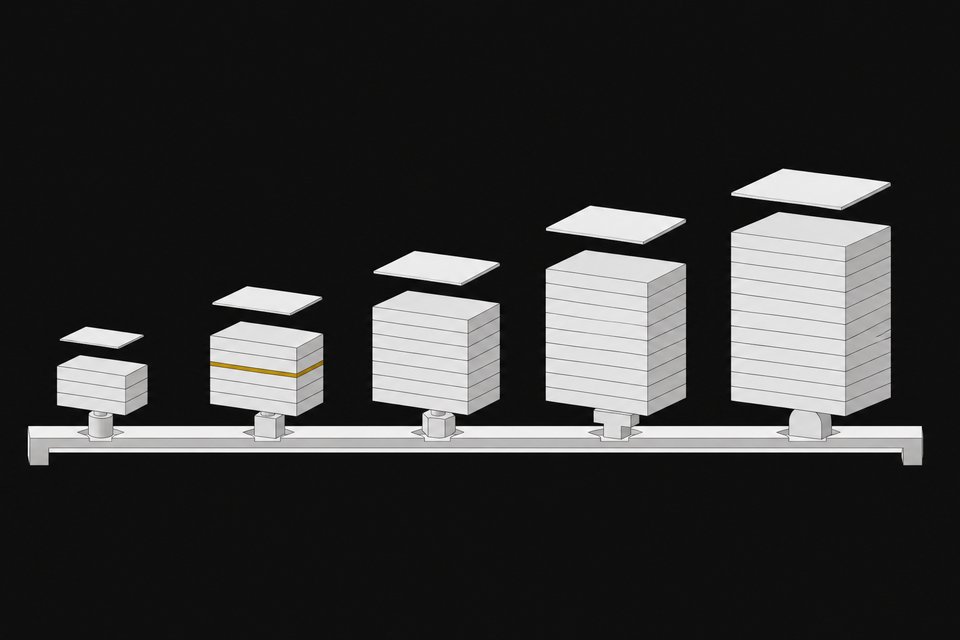
An academic cost-benefit study covering 54 deployment scenarios, nine open-source models against six commercial APIs, found break-even periods of roughly 0.3 to 3 months for small sub-30B models on consumer GPUs, 2.3 to 34 months for 70B to 120B models, and 3.5 to 69.3 months for 235B-plus models, depending entirely on which commercial API you're displacing. That's a wide range, and the reason it's wide is utilization, not hardware specs.
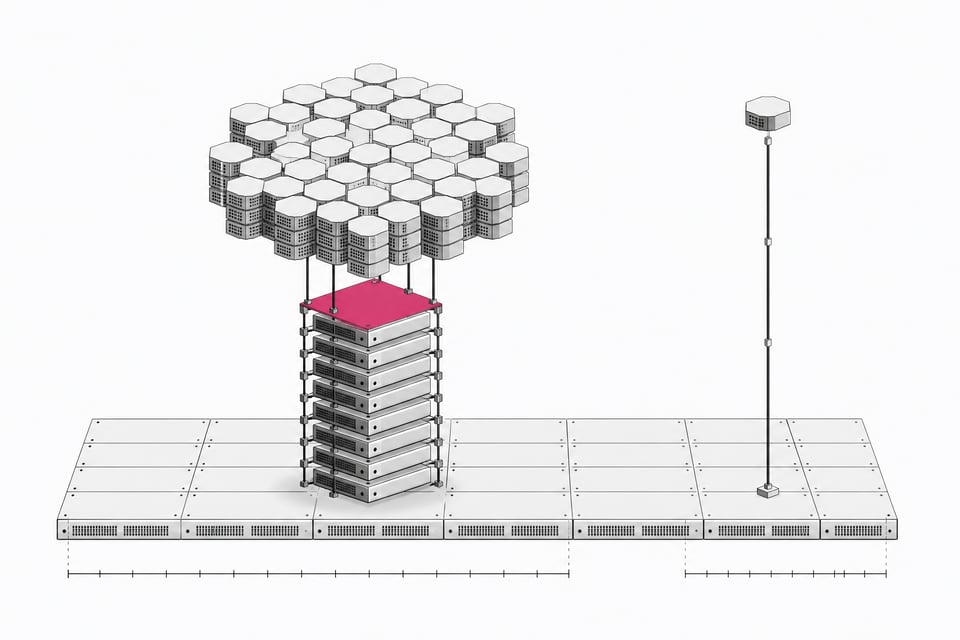
A separate methodology that held hardware constant (identical H100 GPUs) and only varied request throughput found effective cost per million tokens swinging from $0.21 to $15.25, a 36x range, purely based on how many requests per second the box was handling. Self-hosting only beat the API once request rate crossed roughly 2 requests per second. Below that, you're paying full hardware cost to serve a trickle of traffic, which is the local equivalent of over-provisioning a server for load you don't have.
At the enterprise end, the gap narrows further than people assume. A full TCO analysis of an 8-GPU H100 node, counting power, cooling, networking, financing, and 15-20% annual depreciation, put a 3-year on-premise total at $590,000 to $900,000, against $735,000 to $814,000 for the equivalent hyperscaler rental over the same period. Ownership wins, but only modestly, and only if utilization holds up.
That utilization caveat matters more than anything else in this piece. The same report found on-premise ownership beats cloud rental somewhere between 40% and 77% sustained utilization, but most organizations that actually measure their GPU usage for the first time discover it sits at 35% to 55%, squarely in rental-favorable territory. In other words: plenty of companies that bought GPUs assuming they'd save money are, measurably, not using them hard enough to be right.
Where does the break-even point actually land?
Synthesizing the independent studies gives a usable rule of thumb, segmented by model size and workload intensity:
- Small models (sub-30B), consumer hardware. Break-even against commercial APIs in 0.3 to 3 months. This is the fastest-paying-off tier, and the one most individuals and small teams should look at first.
- Medium models (70B-120B). Break-even in 2.3 to 34 months, with the wide range driven by which API tier you're replacing and how busy the hardware stays.
- Large models (235B+), enterprise clusters. Break-even in 3.5 to 69.3 months, meaning some large-model deployments only make financial sense if usage is heavy and sustained for years.
- High-volume consumer setups. SitePoint's 2026 TCO model puts the crossover against OpenAI's GPT-4.1 at roughly 2 to 3 million tokens a day at the 12-month mark, with heavy-tier local deployments at 50 million tokens a day beating OpenAI and Anthropic on effective cost-per-token once amortized over 36 months: $7.15 per million tokens locally versus $6.90-$9.86 for the proprietary APIs.
Locale changes the math too. At US average electricity rates ($0.12/kWh), power cost is a rounding error next to hardware depreciation. At EU rates ($0.25-0.30/kWh), the break-even point in daily token volume rises 40% to 60%. If you're in Frankfurt instead of Phoenix, your spreadsheet needs a different number in row one.
For a deeper walk through this exact arithmetic with worked examples, our companion piece on the real break-even math between local models and API costs builds out the full model.
Why did consumer hardware just change the math?
The break-even thresholds above are already lower than they were two years ago, because the hardware needed to hit them got radically cheaper and more capable.
NVIDIA's DGX Spark, a Grace Blackwell "AI supercomputer" with up to 128GB of unified memory, retails for $4,699 and puts serious local inference capability on a desk rather than in a data center. Apple's unified-memory Mac Studios are doing something similar from the consumer side. One small SaaS operator's $1,487/month frontier API bill dropped to $96/month after moving a tuned small open-weight model onto a Mac Studio for high-volume classification and extraction work. That's not a marginal improvement. That's a 94% reduction on a workload that's exactly the kind most businesses run every day.
The deflection goes further down-market than anyone planned for. Hobbyists have gotten a 27-billion-parameter model (Qwen3.8-27B) running on a jailbroken PlayStation 5 at roughly 20 tokens per second, by routing inference through the console's AMD GPU instead of its CPU. That's hardware tens of millions of households already own, repurposed into a local inference box. And the living room isn't done evolving on its own terms: both Microsoft and Sony have confirmed next-generation console silicon, AMD's "Magnus" chip for Xbox and Sony's "Project Amethyst," will include dedicated NPU/AI silicon for the first time in console history, with leaked Magnus specs describing up to 110 TOPS of AI performance, targeting a 2027 launch. Neither the Xbox Series X nor the PS5 shipped with a dedicated NPU. The next generation, on both platforms, will not ship without one.
This is the same curve every piece of consumer compute has followed: gaming GPUs becoming good enough for deep learning, laptops becoming good enough for local dev environments. For a wider pass at how to use hardware you probably already own, see how to run local AI on old hardware without a GPU.
Why does this look like the SaaS own-vs-rent debate?
Because it is the same debate, applied one layer deeper. Companies have spent years arguing over whether to rent software or build it, and the enterprise answer has swung hard toward renting: in 2024, 47% of enterprise AI solutions were built internally versus 53% purchased; by 2025 that reversed to just 24% built internally versus 76% purchased, even as enterprise generative AI spend surged 3.2x to $37 billion. Most companies are choosing to rent the application layer of AI.
But the infrastructure layer underneath that application is pulling in the opposite direction. Owning the model itself, rather than the product wrapped around it, gives you zero marginal cost per token, no vendor lock-in, no dependency on an endpoint someone else can rate-limit or deprecate, and data that never leaves your network. Those aren't abstract virtues. They're the same arguments made for owning a software stack instead of renting it indefinitely, and the same logic is now reaching down into the compute layer that powers the software. If your API endpoint goes down, your product goes down with it; owned infrastructure doesn't have that failure mode, a point explored in why local AI is becoming the safer default for reliability.
Who should own, and who should keep renting?
The decision isn't really about ideology. It's about where your usage sits on three axes: volume, predictability, and compliance need.
| Upfront cost | Break-even time | Maintenance burden | Flexibility to scale down | Data control | |
|---|---|---|---|---|---|
| Rent via APIlight or spiky usage | $0 | N/A, pay-as-you-go | Low | High | Low |
| RecommendedOwn hardware (small model, consumer GPU)steady sub-30B workloads | $1,500-$5,000 | 0.3-3 months | Medium | Medium | High |
| Own hardware (enterprise cluster)heavy, sustained 70B+ workloads | $590K-$900K (3yr) | 18-36 months | High | Low | High |
- Light, spiky usage. If your workload is under a few hundred thousand tokens a day and unpredictable, rent. The math in every study here says the API wins decisively at this tier, and the operational overhead of running your own box isn't worth it.
- Medium, steady usage on a small model. If you're running sustained volume on a sub-30B model, buy. Break-even arrives in weeks to a few months, and the hardware (a single consumer GPU or a Mac Studio) is a small capital outlay.
- Heavy, sustained usage on a medium or large model. If you're running 70B+ models at genuine volume, and you can realistically keep utilization above 40%, buy, but budget an 18-to-36-month horizon and don't assume your utilization is higher than it is.
- Regulated or privacy-sensitive workloads. If data residency or auditability matters more than marginal cost, own regardless of the raw break-even number. The compliance case often outweighs the spreadsheet.
- Anyone unsure of their real utilization. Measure it before buying anything. The single biggest reason on-premise deployments underperform their projected savings is utilization sitting at 35-55% instead of the 40-77% needed to beat rental.
For a sizing walkthrough that turns this into a concrete hardware shopping list, see how to run AI models locally in 2026.
What is the bottom line on local LLM vs API cost?
There's no single dollar figure that answers "local LLM vs API cost," because the honest answer is a crossover curve, not a number: APIs win at low or unpredictable volume, local hardware wins once usage is sustained enough to amortize the purchase, and the crossover point ranges from under a month for small models on consumer GPUs to roughly 18 to 36 months for medium and large models on serious hardware, assuming real-world utilization rather than optimistic projections. What changed in 2025 and 2026 is that the hardware side of that curve got dramatically cheaper and more capable, Mac Studios, DGX Sparks, RTX cards, even a hacked game console, which means more readers than ever are sitting past the break-even point without realizing it. Check your actual token volume and your actual utilization before you decide. The spreadsheet, not the hype, should make this call.
Frequently Asked Questions
Is local LLM cheaper than API at low usage?
No. At low, spiky volume, APIs almost always win because you're not paying for idle hardware. A real comparison found a budget API cost about $6/month for 500,000 tokens/day, versus roughly $59/month for a local RTX 4090 setup running the same load.
How long does it take to break even on local AI hardware?
It depends heavily on model size and which API tier you're displacing. Small sub-30B models on consumer GPUs break even in as little as 0.3 to 3 months, medium 70B-120B models in 2.3 to 34 months, and large 235B+ models in 3.5 to 69.3 months.
What hardware do I need to run a serious open-weight model at home?
Options now range from a consumer RTX 4090 for smaller models, to a Mac Studio with unified memory for mid-size models, to NVIDIA's DGX Spark ($4,699) for larger local deployments with up to 128GB of unified memory.
Does GPU utilization actually change whether local AI saves money?
Yes, dramatically. Identical H100 hardware can cost anywhere from $0.21 to $15.25 per million output tokens depending purely on request throughput, and on-premise ownership only beats cloud rental once sustained utilization crosses roughly 40-77%, a bar most organizations miss when they actually measure it.
Why are enterprises buying AI software but still considering owning AI infrastructure?
These are different layers. At the application layer, enterprises have swung hard toward buying over building, 76% of AI use cases purchased in 2025 versus 53% in 2024. But at the infrastructure layer, owning the underlying compute still has distinct advantages, like zero marginal token cost and no vendor lock-in, which is why local hardware investment is rising even as app-layer renting increases.
How we source, write, and correct our articles. Editorial standards