Best Open Source AI Models for Internal Tools: Which to Pick?
Compare Llama, Qwen, Mistral, DeepSeek, gpt-oss, and small models by license, hardware needs, and self-hosting break-even to pick one for internal tools.

What are the best open source AI models for internal tools, and which should you pick?
There's no single best open source model for internal tools in 2026. The right pick depends on your workload size, your licensing tolerance, and your hardware budget, not which lab had the loudest launch week. This guide ranks the six realistic options (Llama, Qwen, Mistral, DeepSeek, gpt-oss, and small models) by the job they're actually good at, then walks through the math for choosing between them.
TL;DR
- Small open models on a single consumer GPU can break even against premium commercial APIs in as little as 0.3 months.
- The best open-weight models now sit within about four months of the best closed frontier models, down from much wider gaps a year earlier.
- Inference now makes up 74% of compute spend at startups, so the cost of running models is where the money goes.
- More than half of workers already use unapproved generative AI tools, so a sanctioned, owned model foundation helps keep shadow tools from multiplying unmanaged.
- Licenses are set per checkpoint rather than per brand, and none of the major families indemnify you against third-party IP claims.
- The decision comes down to token volume, team size, compliance sensitivity, and task type, so match model size to the workload instead of chasing the biggest model.
Is open source AI one category or a spectrum?
Most of what gets called "open source AI" is really open-weight: you can download the model and run it, but the license governing that use varies by brand, and even by checkpoint. Llama ships under Meta's custom Community License. Qwen, DeepSeek, GLM, OLMo, and Granite ship most current sizes under OSI-approved Apache 2.0 or MIT with no usage threshold at all. Mistral mixes Apache 2.0 with a Modified MIT license capped at $20 million a month in global revenue. Gemma uses a custom Terms of Use with a Prohibited Use Policy that defines even hosting the model behind an API as "Distribution."
The license is set per checkpoint, not per brand. Two sizes of the same model family released the same week can carry different terms, so the question isn't "is Llama open source," it's "does this specific Llama 4 checkpoint's license fit what I'm building." None of the major families, including Llama, Qwen, Mistral, Gemma, DeepSeek, Phi, GLM, OLMo, Granite, and Falcon, indemnify you against third-party IP claims. All of them ship "as is."
| License | Usage Threshold | Ecosystem Support | Best Fit | |
|---|---|---|---|---|
| Llama 3.3 / 4General-purpose internal chat and agents at 70B scale | Meta Community License | 700M MAU cap | High | Tooling-first default, dual-GPU scale |
| Qwen 3 / 3.5Multilingual, coding, and math workloads | Apache 2.0 | None | High | 0.8B-235B range, no license friction |
| Mistral Large / SmallEU data sovereignty requirements | Apache 2.0 / Modified MIT | $20M/mo revenue cap on some checkpoints | Medium | Compliance-sensitive, EU-aligned builds |
| DeepSeek V3 / R1Reasoning-per-dollar, fully self-hosted | MIT | None | Medium | Max reasoning capability per hardware dollar |
Why is Llama 3.3 / Llama 4 the default ecosystem pick?
Llama's real advantage isn't raw benchmark score. It's tooling. Every serving framework, fine-tuning library, and local runtime supports Llama first, which matters when your team is debugging a deployment at 11pm. The license allows commercial use for nearly everyone, with a carve-out requiring a separate agreement only once your product crosses 700 million monthly active users, a threshold that excludes essentially every internal tool team reading this.
- Good fit: general-purpose internal chat, reasoning, and agent backends at 70B-class scale, where ecosystem support matters more than squeezing out the last few benchmark points.
- Hardware reality: a 70B model needs roughly 35-40GB of VRAM at 4-bit quantization, which usually means dual high-end GPUs or an A100-class card.
If you're setting up the serving layer yourself, the local runtimes that make this practical, Ollama, llama.cpp, and the surrounding infrastructure stack, are covered in our rundown of the best local open-source AI infrastructure tools.
Why choose Qwen 3 / 3.5 as a multilingual, benchmark-leading all-rounder?
Alibaba's Qwen family ships most sizes under plain Apache 2.0, which removes the licensing conversation entirely for most internal builds. The range is the real selling point: Qwen spans from 0.8B parameters up past 235B, so the same family can power a lightweight classifier and a heavyweight reasoning agent without switching vendors. It's consistently strong on coding, math, and multilingual benchmarks, which makes it a reasonable default for teams building anything customer-facing in more than one language.
When is Mistral Large 3 / Small the right European, Apache-first option?
Mistral splits its lineup between full Apache 2.0 and a Modified MIT license that caps free commercial use at $20 million a month in global consolidated revenue. For most internal tool teams that ceiling is irrelevant, but it's worth checking the specific checkpoint before you build anything revenue-adjacent on top of it.
Mistral is the pick to reach for when data sovereignty is a real constraint rather than a talking point: European headquarters, European model training, and licensing terms written with EU regulatory language in mind. It's not meaningfully behind Llama or Qwen on general capability, and for teams already standardizing on European infrastructure, it removes a cross-jurisdiction question from the compliance review.
Is DeepSeek V3 / R1 the reasoning-per-dollar champion?
DeepSeek ships under a straightforward MIT license, with no revenue cap and no usage threshold. On reasoning benchmarks it competes directly with much larger closed models, which is exactly why it got so much attention. The practical complication is that a meaningful share of enterprises remain reluctant to route data through Chinese-origin model APIs, and the broader open-source adoption numbers reflect that hesitation.
Running DeepSeek's weights on your own hardware sidesteps the API-routing concern entirely: nothing leaves your infrastructure. And the capability gap that used to justify sticking with closed frontier models has narrowed sharply: independent indices now put the best open-weight models, DeepSeek among them, within about four months of the best closed frontier models, down from much wider gaps a year earlier.
What is gpt-oss, OpenAI's own open-weight bet?
In August 2025, OpenAI released gpt-oss-120b and gpt-oss-20b under a plain Apache 2.0 license, its first open weights since GPT-2. The 120B model runs on a single 80GB GPU and lands near parity with OpenAI's own o4-mini on reasoning benchmarks, while the 20B model needs only 16GB of memory, putting it within reach of edge and local deployment on a single workstation card.
That a frontier lab shipped a fully open, no-threshold license is itself the signal worth paying attention to. It means the open-weight tier isn't a consolation prize anymore. For teams weighing frontier-adjacent performance against hardware they can actually own, we go deeper on gpt-oss and its peers in the best local AI models for enterprise data.
Why right-size with small language models for narrow internal tools?
Most internal tools don't need a 70B-class model. Support ticket triage, internal document search, structured extraction, and routing logic are narrow, repetitive tasks, and small models like Phi-4-mini, Gemma, SmolLM3, and Qwen3.5-0.8B now handle them well. Distillation from frontier models and better post-training have closed much of the historical quality gap at small scale, and for domain-specific tasks a well fine-tuned small model can outperform a much larger general-purpose one.
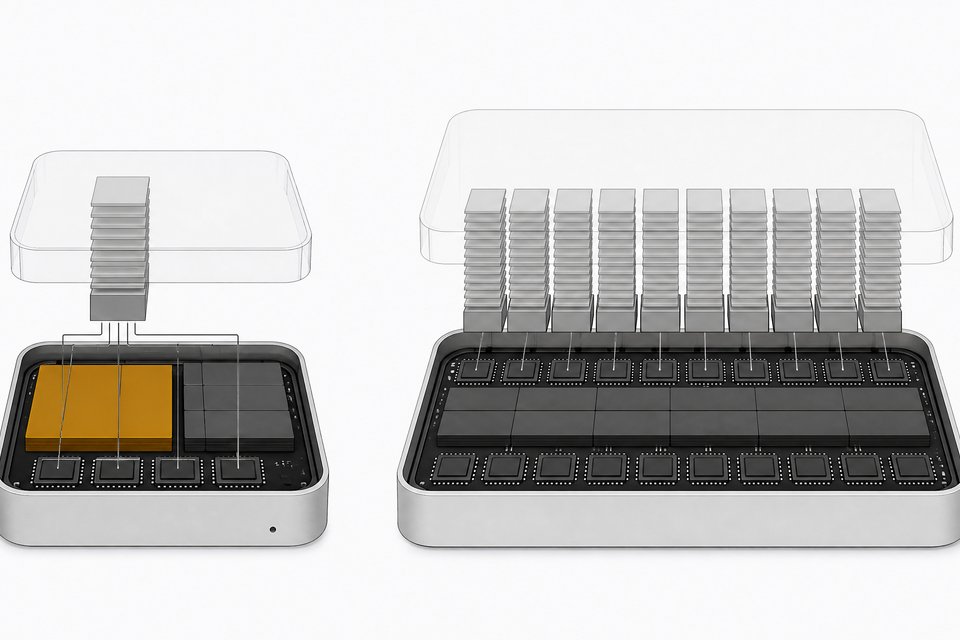
The hardware math makes the case on its own. As a rule of thumb, you need roughly 0.5GB of VRAM per billion parameters at 4-bit quantization, so a 7-8B model fits in 4-6GB on a consumer GPU, while a 70B model needs ten times that. If your workload is classification, routing, or extraction rather than open-ended reasoning, a model one-tenth the size will do the job for a tenth of the hardware cost. We cover five specific picks in the best small AI models for local inference.
What licensing fine print decides build-vs-buy risk?
Before any of this becomes a procurement decision, someone needs to read the actual license file. The categories worth knowing:
- Apache 2.0 / MIT. No usage threshold, no revenue cap, OSI-approved. Covers most current Qwen, DeepSeek, GLM, OLMo, Granite, and gpt-oss checkpoints.
- Llama Community License. Commercial use allowed unless your product exceeds 700 million monthly active users.
- Mistral Modified MIT. Free commercial use capped at $20 million/month in global consolidated revenue on specific checkpoints.
- Gemma Terms of Use. A custom license whose Prohibited Use Policy defines even hosting the model behind an API as "Distribution," which changes what counts as compliant deployment.
And across every one of these families, there's no indemnification against third-party IP claims. You're deploying "as is." That's not a reason to avoid open weights, but it is a reason to put the license file in front of legal before, not after, you ship.
How much does self-hosting actually cost compared to an API or SaaS wrapper?
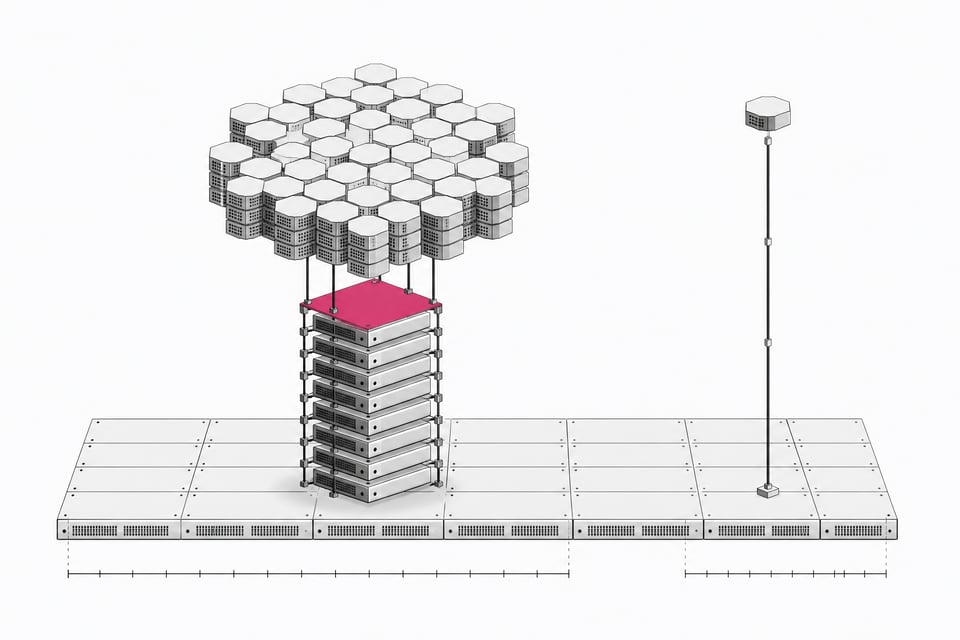
A Carnegie Mellon cost-benefit study modeled 54 deployment scenarios and found the break-even math varies enormously by model size. Small open models like Qwen3-30B or EXAONE 4.0 32B, running on a single ~$2,000 consumer GPU, broke even against commercial APIs in as little as 0.3 months when compared to premium services like Claude-4 Opus. Medium, 70B-class deployments on $15,000-$30,000 of hardware broke even in roughly 2.3 to 34 months. Large, 200B+ open models on $60,000-$240,000 of hardware ranged from 3.5 months to as long as 69.3 months against the cheapest commercial API, GPT-5.
Separately, a widely used industry rule of thumb puts the crossover point for self-hosting at around 2 million tokens per day of volume: below that, a managed API is usually cheaper once you count engineering and maintenance overhead; above it, your own hardware starts winning.
The stakes are rising either way. Enterprise LLM API spend more than doubled from $3.5 billion in late 2024 to $8.4 billion by mid-2025, with inference now making up 74% of compute spend at startups and 49% at large enterprises. And despite the improving models, open-source's actual share of production enterprise workloads fell from 19% to 13% over that same window, held back by a persisting 9-12 month performance gap against frontier closed models and plain deployment complexity.
How do you match model size to your internal build?
Strip out the hype and the decision comes down to four variables: token volume, team size, compliance sensitivity, and task type.
- High volume, narrow task (ticket triage, extraction, classification): a sub-10B model like Qwen3.5-0.8B, SmolLM3, or Phi-4-mini on a single consumer GPU. Cheapest hardware, fastest break-even, lowest license risk.
- Moderate volume, general reasoning (internal copilots, document Q&A, drafting): a 30B-class model like Qwen3-30B or gpt-oss-20b, still within reach of a single capable GPU, with break-even against commercial APIs often under three months.
- Lower volume, high-stakes reasoning (code review, complex agent workflows): a 70B-class model like Llama 3.3 70B or Mistral Large on dedicated multi-GPU hardware, justified when the compliance or data-residency need outweighs a longer break-even period.
- Compliance-heavy or data-sovereignty-sensitive builds: weight the license as heavily as the benchmark. Mistral's Apache-first lineup or an MIT-licensed DeepSeek checkpoint removes legal review friction that a custom Terms of Use won't.
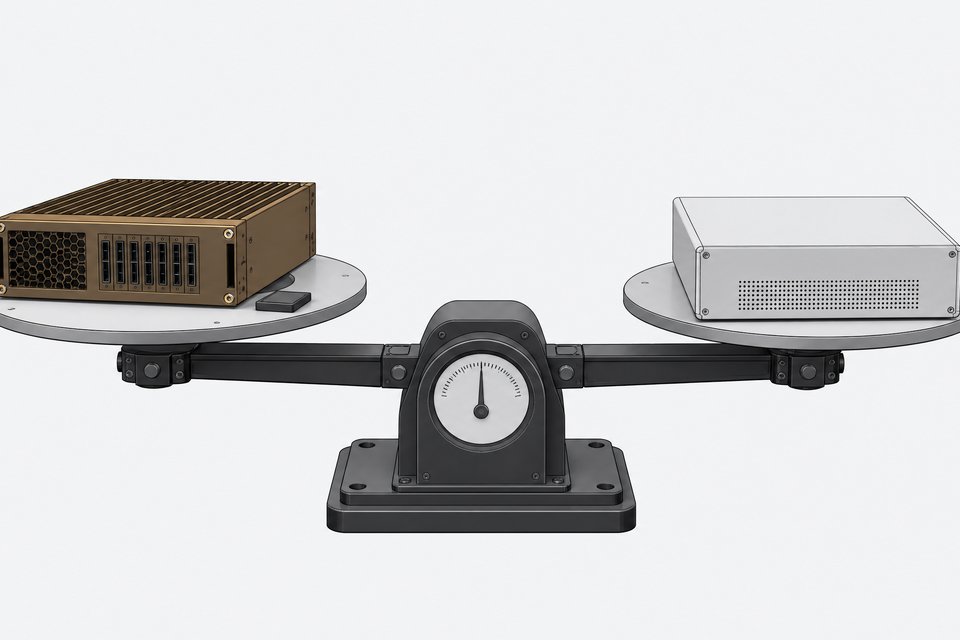
This is build-vs-buy logic, not a model shootout. The same question that decides whether to build an internal tool instead of renting a SaaS subscription decides which model powers it: does the workload justify owning the infrastructure, and does the license let you own it cleanly.
Why does this matter now?
Employees are already building their own AI tools whether IT approves or not. Gartner projects that by 2027, 75% of employees will have acquired, modified, or built technology outside IT's visibility, up from 41% in 2022, and more than half of workers already admit to using unapproved generative AI tools at work. That's the real argument for picking an open-weight model deliberately rather than letting the choice happen by default. Give teams a sanctioned, owned foundation and the shadow tools stop multiplying unmanaged, a problem we cover in more depth in how to govern shadow AI tools.
The open-weight ecosystem in 2026 is good enough, in enough sizes, under enough different licenses, that "which model is best" is the wrong question. The right one is which model, at which size, under which license, fits the workload you're actually running. Answer that first and the rest of the build gets a lot simpler.
Frequently Asked Questions
What is the best open source AI model for internal tools?
There isn't one universal answer. Qwen 3/3.5 is the strongest general-purpose, Apache 2.0 option across a wide size range. Llama has the deepest tooling ecosystem. gpt-oss offers frontier-lab reasoning at single-GPU sizes. For narrow tasks like triage or extraction, a sub-10B model like Phi-4-mini or Qwen3.5-0.8B is usually the better fit than any of the larger names.
Is Llama actually open source?
Not in the OSI sense. Llama ships under Meta's custom Community License, which permits commercial use for nearly everyone, with a separate licensing requirement only once a product exceeds 700 million monthly active users. It's open-weight, not OSI-approved open source.
How much hardware do I need to self-host an open-weight model?
As a rule of thumb, budget about 0.5GB of VRAM per billion parameters at 4-bit quantization. A 7-8B model fits on 4-6GB, suitable for a consumer GPU. A 70B model needs roughly 35-40GB, typically dual high-end GPUs or an A100-class card.
When does self-hosting an open model become cheaper than a commercial API?
Industry estimates put the crossover around 2 million tokens per day of volume. Below that, a managed API is usually cheaper once engineering and maintenance overhead are factored in. A Carnegie Mellon cost-benefit study found small open models on a single consumer GPU can break even against premium APIs in as little as 0.3 months, while large 200B+ models can take anywhere from about 3.5 months to over 5 years depending on the comparison API.
Are Chinese-origin models like DeepSeek and Qwen safe to use for internal tools?
Technically yes when self-hosted, since running the weights on your own hardware means no data is routed through a third-party API. Enterprise reluctance toward Chinese-origin model APIs specifically, not the weights themselves, is one reason overall open-source production adoption dipped from 19% to 13% between late 2024 and mid-2025, even as the models' benchmark performance improved.
How we source, write, and correct our articles. Editorial standards