How to Stay Valuable as a Software Engineer When AI Writes the Code
Which software engineering skills matter when AI writes the code? Learn five: directing agents, verifying output, system design, governance, and ownership.

Which software engineering skills still matter when AI writes the code?
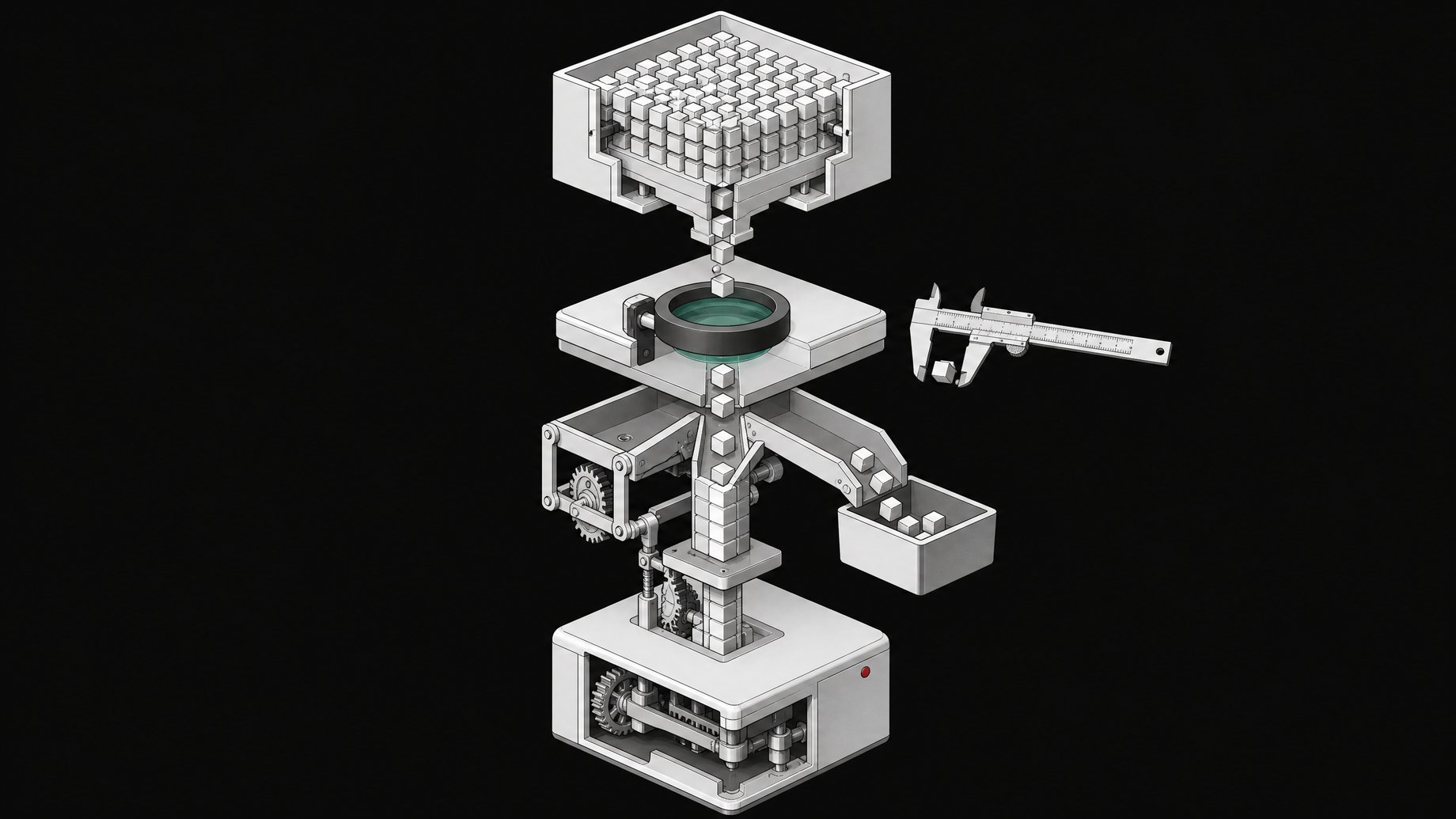
AI now writes most of the code. The skills that still matter are the ones it can't do on its own: directing agents, verifying their output, designing the systems they write into, governing where they're allowed to touch, and owning what gets shipped.
TL;DR
- AI generates about 75% of new code at Google (and 70-90% at Anthropic), so the job is shifting from writing code to orchestrating AI agents.
- Only 48% of developers say they always verify AI-generated code before committing, which creates a massive trust gap in production.
- Without strong system design, AI coding tools helped push duplicated code blocks up eight-fold in 2024, so architectural judgment is what keeps a codebase changeable.
- Engineers are now responsible for the data flowing through their software, which means bringing shadow AI sprawl back under governance.
- Software built fast with AI still needs company ownership, meaning it is documented, auditable, and maintainable without its original author.
- Junior developers adopt AI tools faster than veterans but capture almost none of the productivity gains, so the skill gap is widening.
Did AI eliminate engineering, or just the boilerplate layer?
The adoption numbers aren't a frontier curiosity anymore. At Google, 75% of new code is AI-generated and approved by an engineer before it ships. Anthropic says the company-wide figure runs between 70% and 90%, and Claude Code lead Boris Cherny says he hasn't hand-written code in over two months, shipping 22 to 27 pull requests a day that Claude generated end to end. Microsoft and Salesforce put their own numbers closer to 30%, a reminder that AI-native labs and traditional enterprises aren't on the same curve.
Outside the frontier labs, a peer-reviewed Science study that ran a machine-learning classifier over 30 million-plus GitHub commits from roughly 170,000 developers found AI-generated code accounts for an estimated 29% of Python functions in the US as of late 2024, up from near zero a few years earlier. Separately, developers surveyed by Sonar say 42% of their committed code is now AI-generated or AI-assisted, up from 6% in 2023, and they expect that to hit 65% by 2027.
Whatever the number at your company, the trend line points one way. Writing syntax is commoditized. The job moved up a layer.
Why should you direct AI agents instead of writing every line yourself?
GitHub's own framing of the shift is blunt: developers are becoming system orchestrators who define triggers, scope agent permissions, and design the handoffs between what an agent does and what a human has to check. You still write code. But the valuable work now is deciding what an agent should attempt, what guardrails it runs inside, and where a human has to step back in.
Cherny is the extreme case, not the norm, but he points the right direction: Anthropic now hires mostly generalists rather than narrow specialists, because syntax-level programming skills matter less when an agent fills in the implementation. What doesn't matter less is the ability to scope a task precisely enough that an agent executes it correctly on the first pass. That skill has a name now, and it starts with writing a spec that actually constrains the agent instead of leaving it to guess at intent. It's also the core discipline behind running a multi-agent setup instead of betting everything on one model: someone still has to decide which agent gets which job.
How real is the trust gap when you verify AI output?
Here's the uncomfortable number: 96% of developers in Sonar's survey say they don't fully trust that AI-generated code is functionally correct. Only 48% say they always verify it before committing. That gap, between what engineers believe about AI code and what they actually check, is where risk accumulates quietly.
The stakes aren't abstract. Veracode tested over 100 large language models across Java, JavaScript, Python, and C# and found AI-generated code introduced a security vulnerability in 45% of test cases. Bigger, newer models didn't produce safer code. Scale doesn't fix this. Review does.
Verification is a core engineering skill now, not a QA afterthought. GitHub's own guidance on developer skills in the AI era says it plainly: developers need their coding competence and organizational knowledge to keep faulty code out of production, because the agent won't catch its own mistakes. Deterministic checks, linting, tests, security scans, are the trust layer an agent can't supply on its own.
Why can't AI design the system for you?
Agents are good at producing a working function. They're not good at knowing whether that function belongs in the system at all. GitClear's analysis of 211 million changed lines of code found an eight-fold increase in blocks of five or more duplicated lines during 2024 alone, alongside a decline in code that gets refactored and reused instead of simply copy-pasted. One API evangelist quoted in the research called it the fastest accumulation of technical debt he'd ever seen.
That's what happens when nobody is architecting the system the agents are writing into. The fix isn't slowing down generation. It's an engineer who understands the shape of the system well enough to say no to a working-but-wrong solution, enforce module boundaries, and decide where duplication is actually acceptable. That judgment doesn't show up in a benchmark. It shows up two years later, in the gap between a codebase you can still change and one you can't, the same gap that makes patching an old internal system harder than rebuilding it from scratch.
Where do AI tools create shadow risk?
The boundary of what an engineer is responsible for has widened. It's no longer just the application's logic. It's whether the data flowing through it is governed at all.
Varonis's 2025 State of Data Security Report, based on 1,000 real-world IT environments, found that 98% of organizations have employees using unsanctioned apps, including shadow AI, averaging 1,200 unofficial apps per company. Shadow AI specifically, tools adopted without IT approval or oversight, is now common enough that Varonis treats it as a distinct risk category alongside shadow IT.
That matters to engineers directly, because non-engineers are now building their own software with the same AI tools, often outside anything the engineering org can see or audit. An engineer who only knows application logic is missing half the job. The other half is understanding data residency, access control, and auditability well enough to bring that sprawl back under governance instead of pretending it isn't happening.
How do you build software the company owns, not a disposable prototype?
The skill underneath all four of the above is a mindset shift: software built fast with AI still has to be owned by someone after it ships. Not rented through someone's personal account. Not dependent on the one person who remembers how it works.
The risk is concrete: when an employee who built a tool in a personal account or personal repo leaves, the application, and everything it knew, leaves with them. The alternative is full-stack, modern code the organization owns outright, the same logic behind teams choosing to run their own infrastructure instead of renting it piece by piece. The underlying skill is the same regardless of tooling: knowing the difference between software that's merely working and software the company actually owns, documented, auditable, and maintainable without its original author in the room.
Why does this matter for your career right now?
The pressure here isn't evenly distributed, and that should worry early-career engineers specifically. Entry-level hiring at the 15 biggest tech firms fell 25% from 2023 to 2024. Overall US programmer employment fell 27.5% between 2023 and 2025, per Bureau of Labor Statistics data, while the more design-oriented "software developer" category fell just 0.3% in the same window. That gap between "programmer" and "developer" is the whole argument of this piece, compressed into two numbers.
The Science study's most important finding backs it up with a wrinkle junior engineers should worry about. Junior developers adopted AI coding tools at higher rates than veterans, 37% versus 27%, but captured almost none of the productivity gain. At 29% adoption, experienced developers saw a 6.2% increase in output. For less experienced developers, the effect was statistically insignificant. AI isn't closing the skill gap between junior and senior engineers. It's widening it, because the leverage only shows up once you already have the judgment to direct the tool well.
That's the actual stakes of this list. Orchestration, verification, system design, governance fluency, and ownership aren't a hedge against AI replacing engineers. They're what determines whether an engineer captures the productivity gain AI makes possible, or just produces more code someone else has to clean up later.
Frequently Asked Questions
Will AI replace software engineers?
The data doesn't support a full replacement story. AI now writes most new code at frontier labs, but senior engineers who direct, verify, and architect around that code are capturing productivity gains that junior engineers and pure syntax-writers are not. The role is shifting, not disappearing.
What is the most important skill for engineers to learn right now?
Verification. Sonar found 96% of developers don't fully trust AI-generated code is correct, yet only 48% always check it before committing, and Veracode found AI code introduces a security flaw in 45% of test cases. Closing that gap is now core engineering work, not optional review.
Why does AI-generated code create more technical debt, not less?
Without a human actively designing the system around it, AI tends to duplicate rather than reuse. GitClear found an 8-fold rise in duplicated code blocks in 2024 alone, a sign that system-level judgment, not raw code output, is the actual bottleneck.
What is shadow AI and why should engineers care about it?
Shadow AI is AI tooling and software employees adopt without IT approval or oversight. Varonis found 98% of organizations have employees using unsanctioned apps, averaging 1,200 per company. Engineers increasingly need governance and data-access fluency to bring that sprawl under control, not just coding skill.
Are entry-level software engineering jobs disappearing because of AI?
Entry-level hiring at major tech firms fell 25% from 2023 to 2024, and overall programmer employment fell 27.5% from 2023 to 2025, while the more judgment-heavy 'software developer' role fell only 0.3% in the same period. The jobs most exposed are the ones closest to pure syntax writing.
How we source, write, and correct our articles. Editorial standards