How Developers Reuse Old Hardware with Local AI Scripts
Learn how developers turn rotary phones, old laptops, Kindles, and spare phones into a subscription-free smart home using open-source local AI scripts.

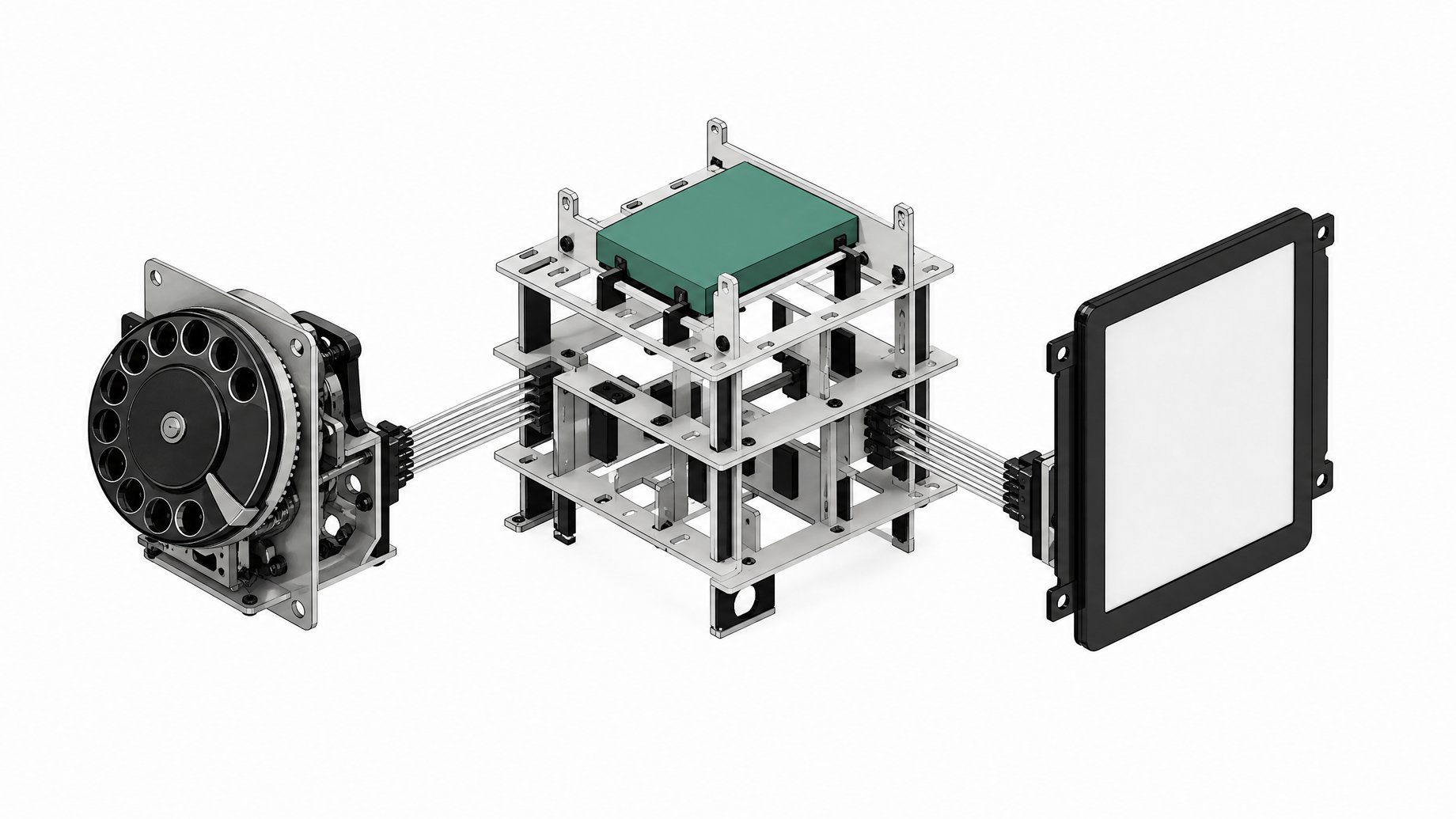
How do developers reuse old hardware with local AI scripts?
You reuse old hardware with local AI scripts by flashing free, open-source firmware and software onto devices you already own: an ESP32 board for sensors, Frigate for camera AI, Home Assistant for voice and automation, Ollama for a private LLM. Total cost usually lands under $50 in parts, plus your time. None of it phones home.
That's the whole point. The commercial smart home runs on rent. Ring Protect Plus costs about $100 a year, and a comparable Nest setup with 30-day video storage can run $798 a year. Multiply that across a doorbell, a couple of cameras, a voice assistant, and a streaming box, and you're well inside the $273 a month the average U.S. household now spends on subscriptions, a number 89% of people underestimate.
Meanwhile the drawer of dead electronics keeps growing. The world generated 62 million tonnes of e-waste in 2022, and only 22.3% of it was formally collected and recycled. Small IT and telecom gear, the phones and routers piling up in junk drawers, accounted for 5 million tonnes of that on its own.
A growing number of developers have connected those two problems and landed on the same answer: stop renting the smart home, and stop throwing away the hardware that could run it. Here are five ways they're doing it.
TL;DR
- Developers are replacing expensive smart home subscriptions with free, local AI scripts running on hardware they already own.
- Frigate is a free, open-source NVR that delivers local AI object detection on an old laptop or spare PC, with no monthly cloud fees.
- A cheap ESP32 board with open firmware can bring a vintage rotary phone back to life as an input for home automation over MQTT.
- Old Android phones can idle as low-power home servers, and a dead Kindle can become an always-on dashboard.
- Home Assistant's local voice pipeline and a self-hosted LLM through Ollama make a private voice assistant whose data never leaves the house.
- Reusing old devices helps with e-waste, since the world generated 62 million tonnes of e-waste in 2022 and only 22.3% of it was formally recycled.
How do you turn a rotary phone into an ESP32 project?
The archetypal old-hardware-plus-local-code project starts with a $9 microcontroller. Bare ESP32 boards run about $9, and one hobbyist flashed a stock ESPHome Bluetooth proxy onto one in roughly ten minutes with no wiring, instantly bringing a whole category of Bluetooth devices into Home Assistant with no app and no cloud account.
That same board is the workhorse behind a wave of projects that wire vintage rotary phones back to life. The open-source rotaryphone project on GitHub uses an ESP32 to read the pulses from a dialed rotary phone and publish the digits over MQTT, so a home automation system can act on them. No SIM card, no telecom service.
The pattern generalizes: cheap microcontroller, open firmware, local message broker. Once you understand it, you can apply it to almost anything with a switch, a dial, or a button.
How do you build a security camera system that replaces Ring and Nest for free?
This is where the subscription math gets embarrassing for the big brands. Frigate is a free, open-source network video recorder that runs real-time AI object detection, including semantic search and face or plate recognition, entirely on hardware you already own. An old laptop or spare PC is enough.
Ring and Nest charge monthly fees specifically to store and analyze video that someone else controls. Frigate keeps every recording local and never sends a frame to the cloud. There's an optional paid tier, Frigate+, but it only improves custom model accuracy. The core NVR, running on repurposed hardware, is free forever, permanently undercutting the roughly $100 to $798 a year that Ring and Nest ask for comparable coverage.
How do you turn your old phone drawer into a smart-home brain?
Most people have at least one old Android phone sitting unused. Developers are turning them into home servers instead of letting them rot in a drawer, and the power math works in their favor: a repurposed Android phone can idle at as little as 1 watt.
Old phones and laptops are showing up as:
- Home Assistant satellites. Cheap, low-power nodes that handle a sensor or a single automation task without needing a dedicated server.
- Camera or sensor relays. Feeding a Frigate instance or an MQTT broker with no cloud middleman.
- Lightweight media or file servers. Running at near-zero idle power, useful for a household that already has better hardware for heavier jobs.
- Local LLM nodes. Enthusiasts on r/LocalLLaMA describe pairing old ThinkPads or Latitudes with 32GB of RAM and a used GPU in an eGPU enclosure to run dedicated local AI agent nodes.
None of this requires new hardware. It requires software that respects the hardware you already have.
| Upfront Cost | Recurring Cost | Data Stays Local | Setup Effort | Customization | |
|---|---|---|---|---|---|
| RecommendedLocal AI on repurposed hardwaredevelopers who want ownership and no recurring bills | Under $50 in parts | $0 | Yes | High | High |
| Ring / Nest commercial smart homeusers who want plug-and-play with no setup | Device purchase only | $100-$798/yr | No | Low | Low |
How do you turn a dead Kindle into an always-on dashboard?
E-ink displays are quietly perfect for one job: showing information all day without burning power. A dead Kindle Paperwhite, jailbroken and paired with a Raspberry Pi, can become that display. One build generates a 758x1024 grayscale PNG using Python's Pillow library and pushes it to the e-reader, turning a device headed for a landfill into a weather, calendar, or Home Assistant dashboard.
The appeal isn't just cost. E-ink holds an image with no power draw at all, so an old Kindle running a local Python script sips power for years in a way a tablet or smart display never will. It's a small project, but it's a clean demonstration of the whole movement: take something a company stopped supporting, and keep it useful with code you control.
How do you build a private voice assistant and LLM server from spare parts?
The most ambitious upcycling project is a full Alexa replacement. Home Assistant declared 2023 its "Year of the Voice" and brought on Rhasspy creator Mike Hansen specifically to build a local, offline speech pipeline, wake word detection, Whisper for speech-to-text, Piper for text-to-speech, so a voice command never has to leave the home network. As the project put it, you can send your data to Google's or Amazon's cloud to get voice control, "but you shouldn't have to give up your privacy to turn on the lights by voice."
Pair that with a self-hosted large language model and you get something closer to a private Alexa than a smart speaker. A used RTX 3090 with 24GB of VRAM costs roughly $700 to $900 and is enough to serve capable open-weight models through an OpenAI-compatible endpoint via Ollama, with data that never leaves the house and no per-token bill. Drop that GPU into an old laptop chassis or a spare desktop, and the "server" is hardware that would otherwise be sitting in a closet.
What does this pattern say about software ownership?
None of these five projects are exotic. They're built from parts that already exist in most homes, wired together with free, well-documented, open-source code. What they share is a philosophy that predates the current AI moment: local-first software, the idea that people should own their data and run their tools on their own machines, despite the convenience the cloud offers. Researchers at Ink & Switch framed local-first as a way to get collaboration and ownership at the same time, instead of trading one for the other.
That's the real story behind the rotary phone and the Frigate box and the jailbroken Kindle. Developers aren't just being frugal or nostalgic. They're applying the same logic to their homes that a growing number of companies are applying to their software stacks: treat the tool as an asset you own, not a service you rent by the month. The same instinct that leads a business to self-host instead of paying for enterprise SaaS is leading individual developers to flash a $9 board instead of paying Ring or Nest forever. It's a small-scale, personal version of a much bigger shift: software and hardware you control outlasts software you merely subscribe to. Platforms built for exactly this kind of local-first, agent-driven automation, tools like Remy, are extending the same ownership logic into the software people build for themselves at work.
The e-waste numbers make the case even without the economics. Only 22.3% of the world's e-waste gets properly recycled. Every rotary phone that gets a second life as an MQTT sensor, every laptop that becomes a Frigate NVR instead of landfill, is a small vote for a different default: build it once, own it, keep it running.
Frequently Asked Questions
What is the cheapest way to start reusing old hardware with local AI scripts?
An ESP32 microcontroller board costs about $9 and can be flashed with free ESPHome firmware in roughly ten minutes with no wiring, giving you a working local smart-home node with no cloud account required.
Can an old laptop really replace a Ring or Nest camera subscription?
Yes. Frigate is a free, open-source NVR that runs AI object detection on hardware you already own, including an old laptop, and keeps all footage local, eliminating the roughly $100 to $798 a year that Ring and Nest subscriptions charge for comparable coverage.
Do I need a powerful GPU to run a local voice assistant or LLM at home?
Not for voice. Home Assistant's local voice pipeline (wake word, Whisper, Piper) runs offline on modest hardware. For a local LLM server, a used RTX 3090 in the $700 to $900 range, often dropped into an old laptop or desktop, is enough to run open-weight models through Ollama.
Is it legal or safe to jailbreak an old Kindle for a dashboard project?
Jailbreaking your own out-of-warranty Kindle to run local scripts, such as a Python and Pillow-based dashboard pushed over SSH or USB, is a common hobbyist practice and one of the more popular e-waste-to-dashboard builds documented online.
Why are developers doing this instead of just buying new smart devices?
Two forces are pushing them: the average U.S. household already spends about $273 a month on subscriptions, often without realizing it, and the local-first software movement argues that owning your data and hardware is a direct, viable alternative to renting cloud-dependent services.
How we source, write, and correct our articles. Editorial standards