AI Decision Models vs. LLMs: Which Should You Use?
Compare AI decision models like Jev, OpenAI's Decisions API, and Laya with LLMs: how they work, cost, latency, benchmark results, and when to use each.


When should you use an AI decision model instead of an LLM?
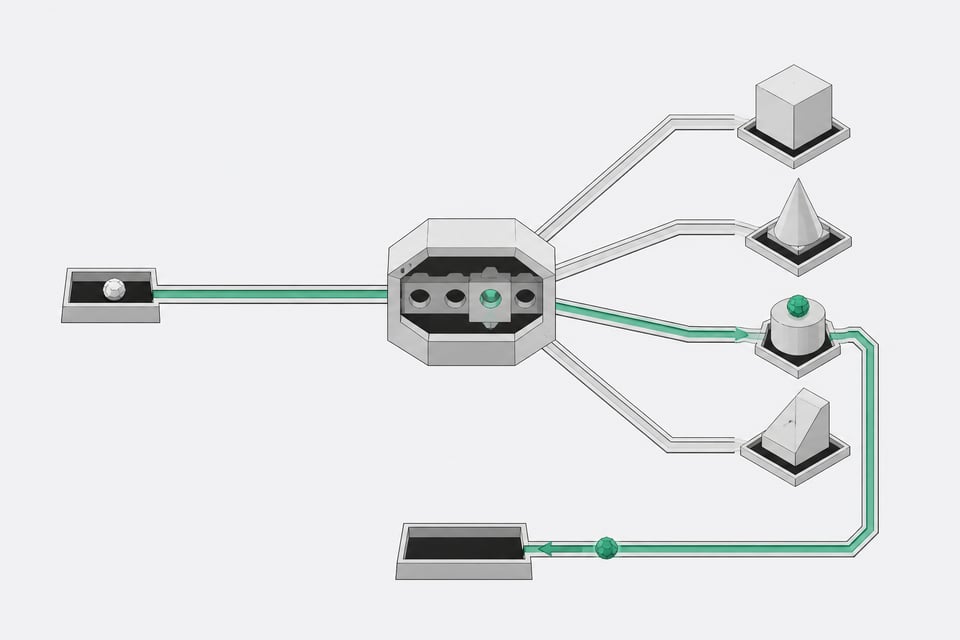
AI decision models are a separate category from large language models. Instead of generating text token by token, they score a fixed set of possible answers in a single pass and return a typed choice, a probability, or a score. They're built to replace LLMs in the high-volume routing, classification, and gating calls inside your software, not in the writing, planning, or open-ended reasoning work LLMs are good at.
That one distinction explains why TypeSafe's Jev, OpenAI's new Decisions API, and the open-weight model Laya all showed up within weeks of each other in late 2026. They're not smaller, cheaper LLMs. They're a different tool for a different job.
TL;DR
- Decision models return a fixed typed answer, score, or probability instead of generating text token by token.
- Because there are no output tokens to generate, decision models drastically reduce API costs on high-volume routing tasks.
- Independent tests show decision models beat LLMs on narrow judgments, but they lose their edge on wide, multi-field contracts.
- A Red Hat benchmark found that well-tuned LLM-as-a-judge models still outperformed decision models on adversarial tasks like prompt-injection detection.
- Decision models have no text generation and no reasoning trace, so workflows that need explanations or plans still need an LLM.
- The best fit is a call that is bounded, frequent, and latency-sensitive, which a short checklist can help you identify.
What Is an AI Decision Model?
Every LLM call, however narrow the question, generates its answer the same way: one token at a time, pulled from the model's entire vocabulary. Ask GPT-6 Luna to classify a support ticket as "billing," "bug," or "feature request," and it still produces that answer by predicting tokens in sequence. You still have to parse the output to make sure it didn't say "Billing issue" or hedge with a full sentence.
A decision model skips that step entirely. Before the forward pass runs, you declare the answer space: a yes/no question, a list of choices, a score on a defined scale. The model can only return something inside that space. As one write-up on OpenAI's launch put it, a decision model "fixes the answer set before the forward pass. It is structurally impossible for it to return a fourth option to a three-option question."
TypeSafe calls this a "System One" model, borrowing Daniel Kahneman's language for fast, intuitive judgment versus slow, deliberate reasoning. Jev takes text input and outputs only floating-point numbers, which are the answers to whatever yes/no questions, choice lists, or scoring requests you send it. Laya, an open-weight model built on a 421-million-parameter encoder, does something structurally similar, scoring each declared option with its own mask token instead of generating free text. OpenAI's Decisions API, built on a specialized version of GPT-6 Luna, evaluates text or images and returns the same kind of typed answer.
We've covered the mechanics of Jev specifically already: Jev-class models skip text generation entirely and return typed choices, scores, and probabilities instead. The training method behind that behavior, which TypeSafe calls Reinforcement Learning for Calibrated Decisions, is its own story if you want the mechanics.
How Are Decision Models Different from LLMs?
Four mechanical differences separate a decision model from an LLM doing the same job:
- Output space. An LLM's output space is its entire vocabulary at every single generation step. A decision model's output space is a fixed list you declare up front, so it cannot return anything outside it without a validation layer.
- Generation pattern. LLMs generate sequentially, token by token. Decision models score every declared option in one forward pass, and can answer several questions about the same input from that single pass.
- Answer type. LLMs produce prose, which may include a stated confidence level as text. Decision models produce a calibrated probability or score directly, with no generated language around it.
- Pricing and latency structure. LLM pricing charges for both input and output tokens, with output typically priced several times higher than input. Decision models charge only for input tokens because there's effectively no output to generate: Jev's output tokens are free, and so are the Decisions API's.
That last point drives most of the economics. Jev lists input at $0.042 per million tokens with free output, while OpenAI's Decisions API charges $0.10 per million input tokens, also with free output. Compare that to an LLM like Claude Fable 5.1, priced at $10 per million input tokens and $50 per million output tokens, and the gap is obvious before you even account for latency.
Why Do Decision Models Matter for Routing?
Routing isn't new. AWS has shipped multi-LLM routing patterns for a while, including a classifier LLM sitting at the front of an application to decide which downstream model should handle a request. Amazon Bedrock's Intelligent Prompt Routing claims up to 30% cost reduction without hurting accuracy by routing requests across models in the same family.
Decision models push that same idea one step further. Instead of using an LLM to classify and route, you use a model purpose-built for exactly that narrow judgment, cutting the per-token generation cost out of the one place in your control flow where it runs thousands of times a day. If your app already asks a model "is this urgent?" or "which of these five handlers should take this request?" on every single incoming event, that's not a reasoning task. That's a lookup with a confidence score attached, and it's the textbook case a decision model was built for.
What Do the Benchmarks Actually Show?
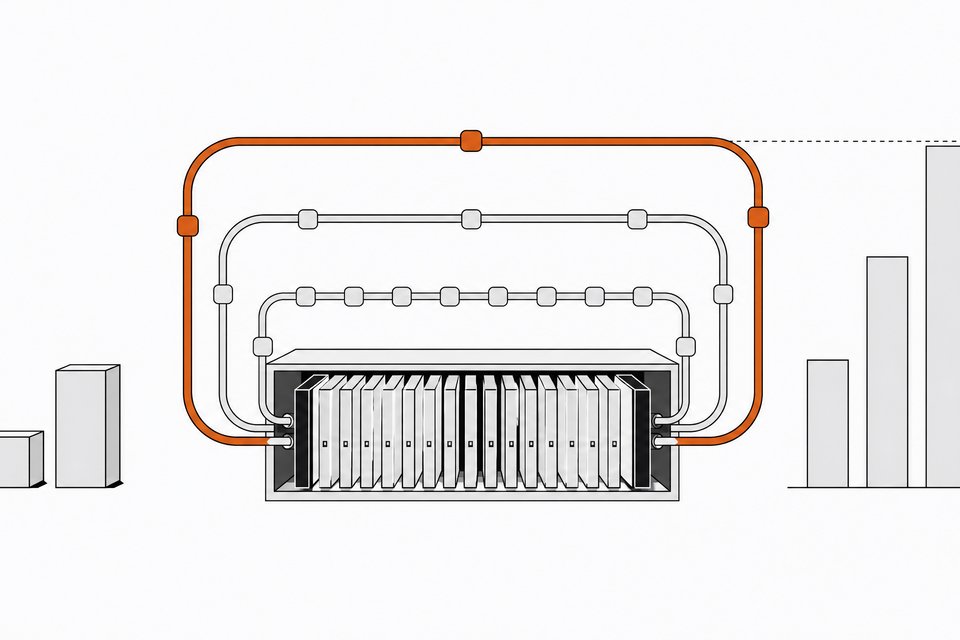
TypeSafe's own figures claim an end-to-end response time of 70 to 500 milliseconds for Jev, against 3 to 329 seconds for frontier LLMs on comparable tasks. OpenAI reports roughly 150 milliseconds per call for the Decisions API, about ten times faster than calling the underlying GPT-6 Luna model through its standard Responses API.
Independent testing complicates the picture in useful ways. Researchers at the University of Technology Sydney benchmarked Jev and two self-hosted decision models against three hosted LLMs on edge-service orchestration tasks and found Jev reduced median decision latency by 22.7% to 64.5% relative to the fastest LLM, with latency barely moving as input size or catalog size grew. On narrower, four-field decision contracts, Jev's API cost per correct decision was 59.7% to 80.9% lower than the LLMs it was tested against. But the researchers were explicit that this advantage narrowed as the "contract width," meaning the number of fields requested per call, grew. Their conclusion: "wide contracts mark the limit of the substitution."
A Red Hat AI Safety benchmark went further and pushed back on the speed claim outright. Testing Jev, Laya, pretrained classifiers, and LLM-as-a-judge guardrails on prompt-injection and content-safety detection, Red Hat found decision models did not reliably beat LLM-as-a-judge or lightweight classifiers on either speed or accuracy. Jev's median latency on the prompt-injection test, 348.1 milliseconds, was actually higher than a competing LLM-as-a-judge setup using Qwen3.6-35B, which came in at 312.5 milliseconds with higher accuracy. The lesson isn't that decision models are overhyped. It's that the advantage is task-shaped: it shows up clearly on narrow, repeated, high-volume judgments, and it shrinks or disappears on tasks that already favor a well-tuned classifier or judge model.
What Can't a Decision Model Do?
A decision model is not a drop-in replacement for everything an LLM does inside your stack. A few limits are structural, not just current-generation weaknesses:
- No text generation. A decision model returns a typed value and a score, nothing else. If a workflow needs a written explanation, a drafted email, or a plan, you still need an LLM, or a second step that generates one.
- No reasoning trace. Because there's no generated text, there's no chain of reasoning to audit. In regulated or human-in-the-loop decisioning, that absence of explainability is a real gap, not a minor inconvenience.
- Deterministic format, not deterministic content. The output always matches your declared schema, but the same input can still produce a different score on a repeat call. One researcher working on Jev put it plainly: "There are also still non-deterministic elements to Jev... its format is deterministic, but its content isn't." That makes decision models a poor substitute for rule-based logic anywhere you need fully reproducible outcomes.
- Weaker on adversarial and precise input. The Red Hat results above suggest decision models don't automatically win on accuracy against a well-chosen LLM-as-a-judge, particularly on content that requires catching subtle manipulation.
The System One / System Two framing holds up here: decision models handle the fast, narrow, repeated judgment calls, and an orchestrator plus LLM still handles planning, tool use, and anything that requires writing. A deterministic policy layer should still gate anything consequential, regardless of which model produced the input to it.
What Decision Framework Should Engineering Teams Use to Decide If They Need One?
Before you add a decision model to a stack, run the actual decision through a short checklist:
- Is the answer space bounded? If the honest answer to a question is "it depends" or requires explanation, that's an LLM job. If it's always one of a known set of options, it's a candidate.
- Is the call volume high? A decision made twice a day doesn't need a separate model layer. A decision made thousands of times a day, inside a hot path, is where the token-cost math actually bites.
- Is latency on the critical path? Routing and gating decisions that block a user-facing response benefit most from sub-second scoring; background jobs tolerate LLM latency fine.
- Do you need a probability threshold to automate on? If you're deciding whether to auto-approve, auto-escalate, or auto-flag something, a calibrated confidence score is exactly the output you want, as long as you've tested where that confidence number actually tracks accuracy for your task.
- Does the task resemble the UTS benchmark's "narrow contract" case, or a wide one? Four or fewer fields per call is where the cost and latency advantage was strongest in independent testing. Pile on more fields per request and the advantage erodes.
| Output Space | Generation Pattern | Typical Latency | Cost per Call | Reasoning Trace | |
|---|---|---|---|---|---|
| RecommendedDecision Model (e.g., Jev, Decisions API)high-volume routing, classification, and gating calls | Fixed, declared set | Single forward pass, scores all options at once | Low | Low | No |
| LLM (e.g., Claude Fable 5.1)writing, planning, and open-ended reasoning | Entire vocabulary | Sequential, token by token | High | High | Yes |
If most of those point toward "narrow, frequent, bounded," pulling that logic out of an LLM call and into a dedicated decision model is a sound build decision, not just a cost optimization. For teams already comparing the open-weight option, CLM proves you can run that same model class on your own hardware and fine-tune it, which matters if you'd rather own that piece of your stack than call another vendor's API for every routing decision your app makes.
How Do Decision Models Create a Shadow AI Governance Problem?
The same thing that makes decision models useful also makes them easy to misuse. They're cheap enough and fast enough that an individual engineer can wire one into an internal tool's control flow on a weekend, without a review, without documentation, and without anyone else on the team knowing a probability threshold is now deciding what gets auto-approved. That's the same accountability gap this publication has tracked with self-built internal software generally: software employees build themselves with AI needs the same ownership discipline as anything else running in production, whether it's a dashboard, an agent, or a decision model quietly gating a workflow. If you're going to own that layer of your stack instead of renting it from a vendor API, treat a decision model embedded in an internal tool as documented, reviewed infrastructure instead of a line of code nobody remembers writing.
Decision models earn their place for a specific, narrow reason: they turn a repeated judgment call that used to cost a few hundred milliseconds and a non-trivial API bill into something closer to a lookup. That's worth doing wherever your app is actually making that kind of call thousands of times a day. It's not worth doing anywhere the answer still needs a sentence attached to it.
Frequently Asked Questions
Are AI decision models just smaller or cheaper LLMs?
No. They're structurally different. An LLM generates text token by token from its full vocabulary. A decision model declares a fixed set of possible answers before running and scores all of them in a single forward pass, returning a typed choice, probability, or score instead of prose.
Can a decision model replace an LLM entirely in an application?
No. Decision models can't generate explanatory text, lack a reasoning trace for auditing, and aren't fully deterministic in content even though their output format is fixed. Anything requiring writing, planning, or open-ended reasoning still needs an LLM.
Are decision models actually faster and cheaper than LLMs in practice?
Often, but not always. Independent benchmarking found Jev cut median latency by up to 64.5% and cost per correct decision by up to 80.9% versus LLMs on narrow tasks, but a separate Red Hat benchmark found Jev's latency was sometimes higher than competing LLM-as-a-judge setups, and accuracy wasn't consistently better either.
What's a good example of when to use a decision model instead of an LLM?
High-volume, bounded-answer tasks on the critical path: routing a request to one of a known set of handlers, flagging content as safe or unsafe, or scoring priority on a fixed scale. If the task happens thousands of times a day and the answer is always one of a known set of options, it's a strong candidate.
Do decision models create new governance risks?
Yes. Because they're cheap and fast to wire into a control flow, an individual engineer can embed one into an internal tool without review or documentation, creating the same shadow AI accountability gap as other self-built software.
How we source, write, and correct our articles. Editorial standards