What Is Mercury Decide? Inception's Diffusion Decision Model Explained
Mercury Decide returns an answer and probability in about 0.16 seconds, now with images. How it works, its independent evals, and how to pair it with Mercury 3.


What is Mercury Decide?
Mercury Decide is a diffusion-based decision model from Inception. It does not write text. You give it a state (text, or now an image) and a set of typed questions, and it returns an answer plus a probability for each, in a single fast call. Third-party testing put the median latency around 0.16 seconds for one judgment. It is meant for the quick yes/no and classification checks that agents make constantly.
TL;DR
- Mercury Decide is a decision model, not a chat model: state and typed questions go in, answers and probabilities come out, with no generated prose.
- Vals AI measured a median of about 0.16 seconds for one judgment and about 0.4 seconds for 64 judgments.
- On LegalBench it scored roughly 87% versus 74% for the decision model it was compared against, at about a quarter of the cost.
- Artificial Analysis's Decision Index ranked it third on not hallucinating, at 32%, which matters when you want a model to say it is unsure.
- The newest release adds image input, so visual checks like "did the page load?" fit the same pattern.
- The suggested architecture is cheap System 1 checks wrapped around one System 2 call, with the probabilities deciding when to escalate to a human.
What is a decision model?
A decision model is built for judgments, not generation. Agents spend a lot of their time on small questions. Is this a billing ticket? Is the agent stuck? Did the page actually load? A general LLM can answer these, but it generates tokens, takes a full completion's worth of time, and gives you text you then have to parse.
A decision model skips that. You pass in some state and a question. It returns an answer and a probability in one call. The probability is the useful part. It gives your code something concrete to branch on: proceed, retry, or hand off to a person.
How does Mercury Decide work?
The interface has three pieces:
- State. The context the model should judge. This can be text or, in the latest release, an image.
- Typed questions. A set of questions with defined answer types, so the output is structured rather than free text.
- Output. An answer and a probability for each question, returned in a fraction of a second.
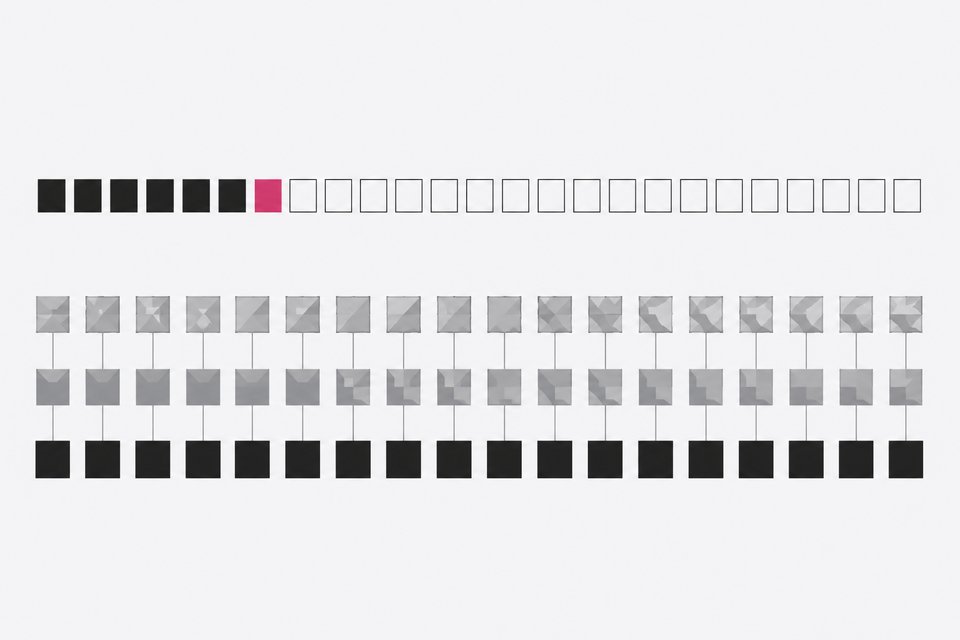
Under the hood it is a diffusion model. Autoregressive LLMs write one token at a time, and every token costs a pass through the model. Diffusion language models start from a masked draft of the whole response and refine many tokens in parallel over a handful of passes. Inference is limited mostly by memory bandwidth rather than compute, so getting more useful tokens out of each pass is where the speedup comes from.
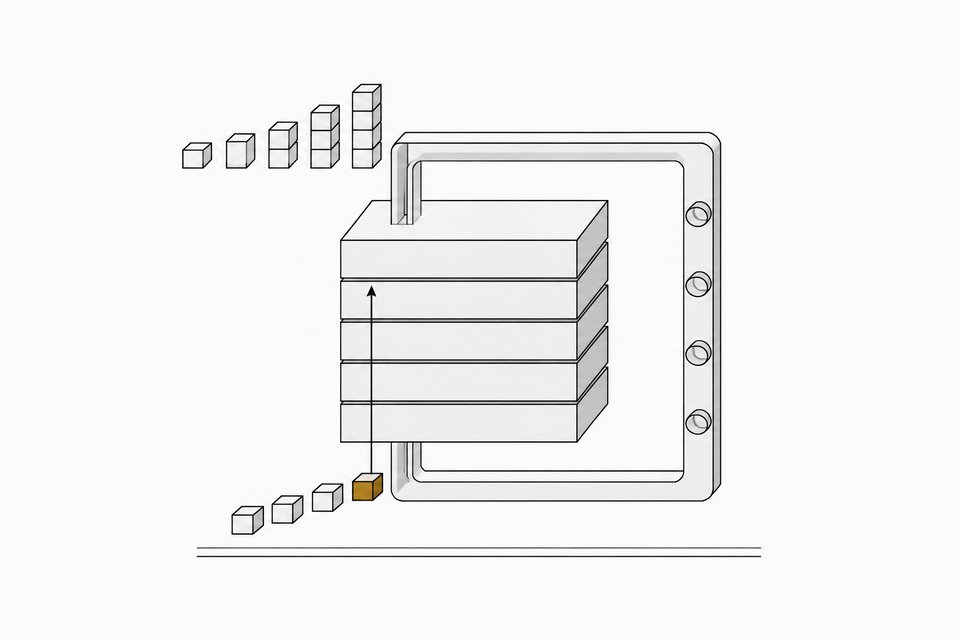
The batching result hints at why this suits decisions. Vals AI measured about 0.4 seconds for 64 judgments, against about 0.16 seconds for one. If you have one context and many questions about it, asking them together is far cheaper than 64 separate calls.
How good is Mercury Decide in independent tests?
Inception's own numbers are one thing. The more useful data comes from outside evaluators.
| Test | Result |
|---|---|
| Claim verification (Vals AI) | Matched the decision model it was compared against |
| LegalBench (Vals AI) | About 87% vs 74% for that model, at roughly a quarter of the cost |
| Artificial Analysis Decision Index, not hallucinating | Third place at 32% |
| Latency, single judgment (Vals AI) | Median about 0.16 seconds |
| Latency, 64 judgments (Vals AI) | About 0.4 seconds |
Treat these as a starting point. The hallucination result is the one to read carefully. A decision model is only trustworthy if it reports low confidence when it does not know, and that is what the index is probing. Run it on your own labeled cases before you route anything important through it.
At the time the source video was recorded, Mercury Decide was free on OpenRouter. Free access tends to change, so check current pricing before you plan around it.
What does the vision update add?
The newest release accepts images as state. That widens the set of checks an agent can run cheaply. A browser agent can ask whether a page rendered correctly or whether a modal is blocking the screen. A support workflow can classify a screenshot. The output stays the same: typed answers with probabilities.
When should an agent use a decision model instead of a full LLM call?
Use a decision model when the task is a bounded judgment with a small set of possible answers. Use a full LLM when you need reasoning, planning, or generated text.
Good fits for a decision model:
- Routing and triage (ticket category, intent, urgency)
- Progress checks (is the agent looping or stuck?)
- Verification (did the action succeed, does this claim match the source?)
- Gating (is confidence high enough to continue without a human?)
Poor fits:
- Open-ended questions that need an explanation
- Multi-step planning or code generation
- Anything where you need the reasoning itself, not just the verdict
How do Mercury Decide and Mercury 3 fit together?
Inception frames the two as System 1 and System 2. Mercury 3 is the thinking model. Mercury Decide is the fast reflex.
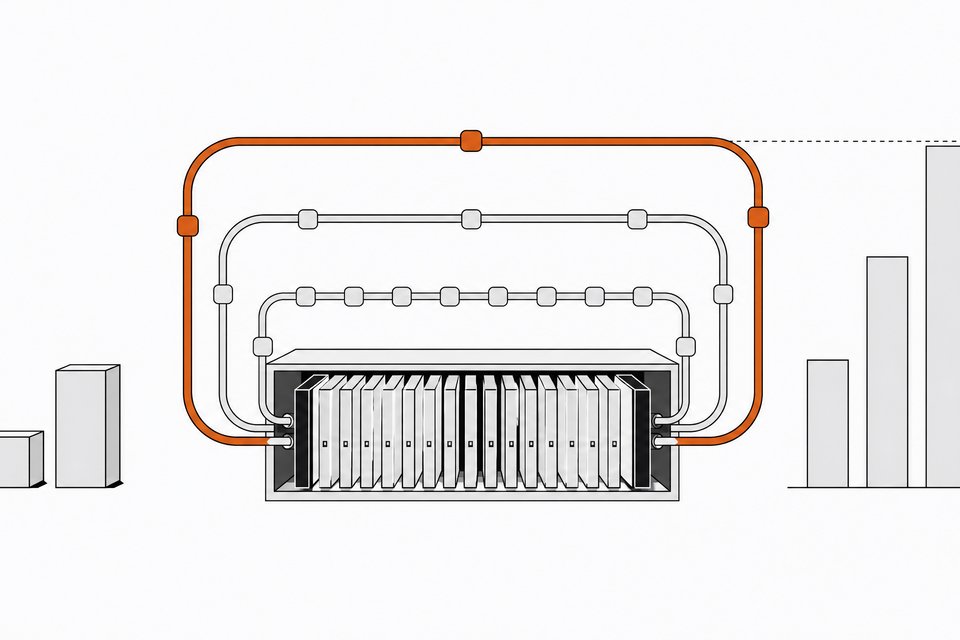
The pattern is simple. Run Mercury Decide checks before and after a single Mercury 3 call (or any stronger model). Decide handles routing, validation, and sanity checks. The expensive call handles only the part that needs real reasoning. Because every Decide check returns a probability, you can set thresholds and escalate low-confidence cases to a human.
Mercury 3 itself is worth knowing about for this pipeline:
- It runs at 1,068 tokens per second on Nvidia Blackwell, per Inception's figures. That is about eight times GPT-6 Luna and 4.5 times Claude Haiku 5.5, according to the source.
- On Inception's benchmarks it sits in the same range as those two models, and is strongest on reasoning, instruction following, and search. It trails Opus 5.5 on coding.
- Launch pricing was 10 cents in and 35 cents out per million tokens, described as 50% off at the time. Cached inputs are 90% off.
- It is OpenAI compatible, so switching is mostly a base URL change. It supports tool calling and structured outputs, and its context window is 1 million tokens, up from 260K.
- It is available through Inception's API, OpenRouter, Baseten, and Vercel.
One early customer, Octane, builds search for smart glasses. Their model-side generation time dropped to 0.9 seconds with Mercury 3. On a wearable, a few seconds feels broken, so that kind of latency changes what is usable.
Is a diffusion model reliable enough for agent work?
The old objection to diffusion LLMs was quality. They were fast but weaker. Inception's scaling chart shows total parameters up more than 40 times from Mercury 1 Mini to Mercury 3, with its intelligence average up 3 times. The jump from Mercury 2 to 2.5 came at roughly the same size, which points to training gains rather than scale alone.
In the creator's hands-on tests, Mercury 3 passed 10 of 10 agentic tool-calling tests and all eight in a harder set. It also produced a roughly 4,200-word response to a 5,000-word essay prompt without truncating or promising to continue. That is a small sample from one tester, not a benchmark, but it matches the claim that quality has caught up with the speed.
Frequently Asked Questions
Does Mercury Decide generate text?
No. It returns answers and probabilities for the typed questions you send. If you need an explanation or a drafted response, pass the case to a generative model like Mercury 3.
How fast is Mercury Decide?
Vals AI measured a median of about 0.16 seconds for a single judgment and about 0.4 seconds for 64 judgments. Batching many questions against one context is where it looks most efficient.
Can Mercury Decide handle images?
Yes. The latest release accepts images as state, in addition to text. That allows visual checks, such as whether a page loaded, using the same question-and-probability format.
Where can I try Mercury Decide?
It was available free on OpenRouter when the source video was recorded. Mercury 3 is on Inception's API, OpenRouter, Baseten, and Vercel. Confirm current availability and pricing before building on it.
Why use probabilities instead of just answers?
A probability lets your code decide what to do with uncertainty. You can proceed on high confidence, retry on medium, and escalate to a human on low. A model that admits it is unsure is more useful than one that guesses.
How we source, write, and correct our articles. Editorial standards