Do Diffusion LLMs Scale? Mercury 3 vs Claude Haiku 5.5 and GPT-6 Luna
Mercury 3 is a diffusion LLM that hits 1,068 tokens/s. See how it differs from autoregressive models and how it compares with Haiku 5.5 and GPT-6 Luna.


Have diffusion LLMs caught up with autoregressive models?
Mostly, for mid-tier work. Inception's Mercury 3, a diffusion language model, runs at 1,068 tokens per second on Nvidia Blackwell and, on Inception's own benchmarks, lands in the same range as GPT-6 Luna and Claude Haiku 5.5. It still trails top-tier models on coding. But the old trade-off, where diffusion meant fast and weak, no longer holds for reasoning, instruction following and search. Most of these numbers come from the vendor, so verify them on your own workload.
TL;DR
- Diffusion LLMs refine a whole draft in parallel instead of emitting one token at a time, which is where the speed comes from.
- Inception reports Mercury 3 has over 40x the total parameters of Mercury 1 Mini and about 3x the intelligence average.
- Mercury 3 hits 1,068 tokens/s on Blackwell, which Inception puts at roughly 8x GPT-6 Luna and 4.5x Claude Haiku 5.5.
- It is strongest at reasoning, instruction following and search, and it falls short of Opus 5.5 on coding, so it fits sub-agents and mid-level tasks.
- Launch pricing is $0.10 input and $0.35 output per million tokens, with a 1M-token context window and OpenAI-compatible endpoints.
- Mercury Decide, a companion decision model, returns an answer and a probability in one call instead of generating text.
How are diffusion LLMs different from autoregressive ones?
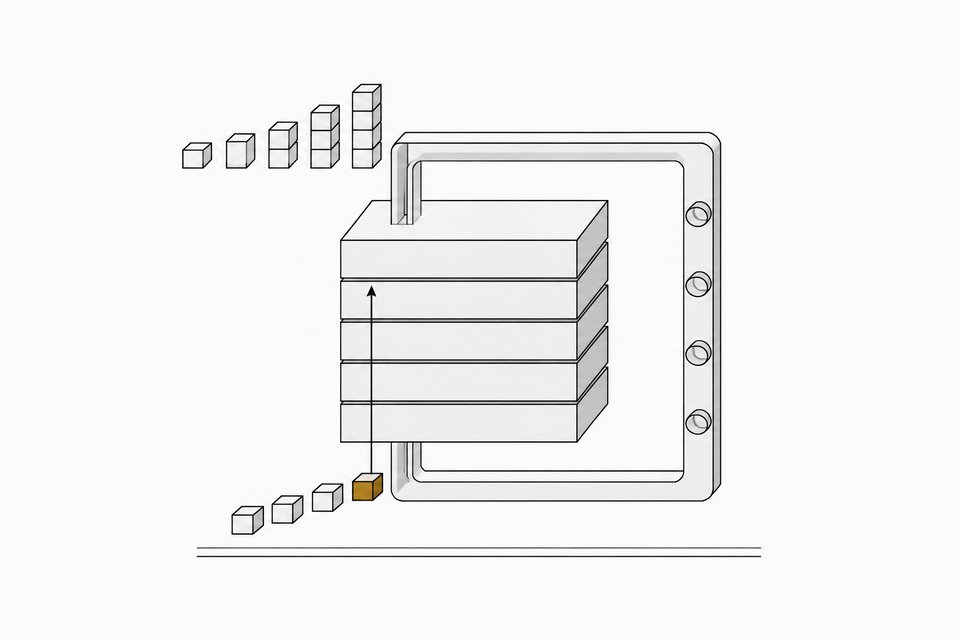
Think typewriter versus editor. An autoregressive model writes one token, then the next, then the next. Each token costs a full pass through the model, and once a token is committed the model generally cannot revise it.
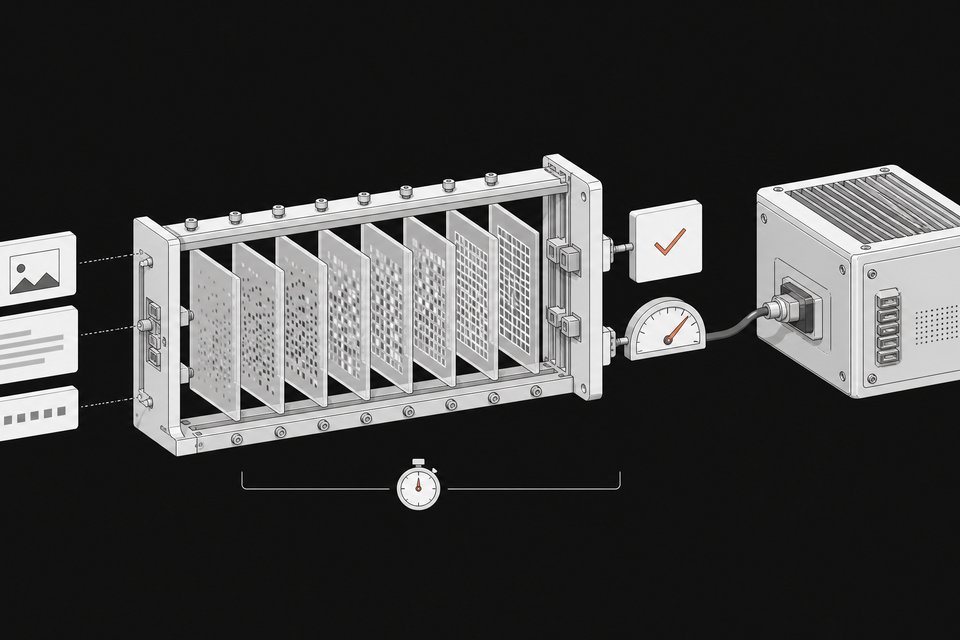
A diffusion LLM starts with a rough, masked-out draft of the entire response. It then refines many tokens in parallel over a handful of passes. Each pass does more useful work than a single-token step.
Speed follows from hardware reality. Inference is limited mostly by memory bandwidth, not compute. If each pass through the weights yields many tokens instead of one, you get far more output per unit of memory traffic.
The idea will sound familiar. Diffusion is the basic approach behind most image and video generators. Inception's CEO, Stefano Ermon, is a co-inventor of some of the diffusion methods behind modern image and video generation, and the founding team has also worked on techniques such as DPO and FlashAttention.
The output itself reads like any other model's. Only the way it gets assembled differs. In a replay of the generation, you can watch the paragraphs take shape across frames and the tokens get fixed up as the passes proceed.
Do diffusion LLMs scale?
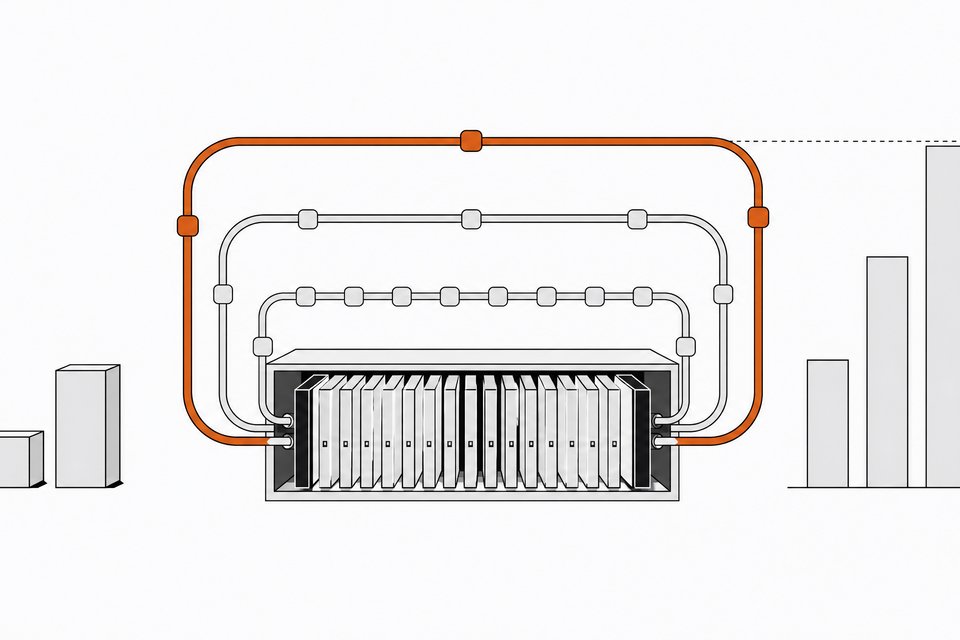
That was the open question for years. As of 2024, nobody had clearly shown diffusion text models growing into strong general-purpose language models. Inception's chart is the best public evidence so far.
From Mercury 1 Mini to Mercury 3, Inception reports total parameters up by more than 40x and its intelligence average up by 3x. Two details matter:
- Mercury 2 to 2.5 used roughly the same size model. That gain appears to have come from better training, not scale.
- Mercury 2.5 to 3 was a big jump in size. So scale helps too.
Both levers working is the encouraging part. This is also a small startup competing against labs with far larger budgets, which makes the result harder to dismiss as a resource story.
How does Mercury 3 compare with Claude Haiku 5.5 and GPT-6 Luna?
Inception's comparison puts Mercury 3 against Luna and Haiku 5.5. It does well on reasoning (including GPQA Diamond), instruction following and search benchmarks. On coding it is not at Opus 5.5 level.
That profile points to specific uses:
- A default model for coding sub-agents.
- Swarms of agents that read large codebases or split a big pile of data between them.
- Recursive self-improvement loops, where many cheap fast calls beat a few slow ones.
- Search agents and support bots, where instruction following and latency both matter.
Treat these as vendor-supplied results. The tester who demonstrated the model also said Inception sponsored the video and gave early access, so independent evals matter here.
How fast is Mercury 3, and what does it cost?
| Item | Reported figure |
|---|---|
| Throughput | 1,068 tokens/s on Nvidia Blackwell |
| Versus GPT-6 Luna | About 8x faster |
| Versus Claude Haiku 5.5 | About 4.5x faster |
| Launch price | $0.10 input / $0.35 output per million tokens |
| Cached inputs | 90% off |
| Context window | 1M tokens (up from 260K) |
| Reasoning effort | Adjustable up and down |
The launch price was described as 50% off, so it may rise. Longer term it could cost somewhat more than Luna or Haiku. The pitch is paying for speed, not for cheaper tokens. Cached-input discounts help agents that resend the same context at every step.
The API is OpenAI compatible, so switching is mostly a base URL change. It supports tool calling and structured outputs. You can reach it through Inception's own API, OpenRouter, Baseten and Vercel.
One early customer example: Octane, which builds search for smart glasses, said the model was the bottleneck in its pipeline. With Mercury 3, generation time is 0.9 seconds. On a wearable, a delay of a few seconds makes users think something is broken.
What did hands-on tests show?
A creator ran Mercury 3 through a custom test app and reported three results:
- Long-form writing. A prompt for a 5,000-word essay produced about 4,200 words. The model did not stop halfway or trail off into "if I were to continue" notes, which some open models do. Time to first token was noticeable, but the document assembled in chunks quickly.
- Tool calling. It passed 10 of 10 agentic tool-calling tests, with no visible overthinking.
- Harder tool-calling set. It passed all 8 of a tougher set.
This is one person's test suite, and the model fell short of the 5,000-word target. It is a useful smoke test, not a benchmark. The replay feature was the more interesting artifact, since it shows the parallel refinement directly.
What is Mercury Decide?
Mercury 3 is the "thinking" model. Mercury Decide targets quick, System 1 style calls: is this a billing ticket, is an agent stuck, did a page load. A decision model generates no text. You give it a state and a set of typed questions, and it returns an answer plus a probability in one call. The state can be text or, in the latest release, images.
Reported third-party results from Vals AI and Artificial Analysis:
- Matched an existing decision model on claim verification.
- Scored about 87% on LegalBench versus 74% for that model, at roughly a quarter of the cost.
- Ranked third on the Artificial Analysis Decision Index for not hallucinating, at 32%.
- Median latency of about 0.16 seconds for one judgment and 0.4 seconds for 64 judgments.
A free version was available on OpenRouter at the time of recording. The pattern worth copying is cheap System 1 checks wrapped around a single System 2 call. The probability lets you escalate to a human when confidence is low.
Is Mercury 3 worth testing?
If your workload is latency-bound (agents making many sequential calls, search, support, voice or wearables), yes. A swap is cheap because of the OpenAI-compatible API. If you need the strongest possible coding model, Mercury 3 is not that, by Inception's own comparison. Run your own evals, since the headline speed and benchmark figures come from the vendor.
Frequently Asked Questions
What is a diffusion language model?
It is a text model that begins with a masked draft of the full response and refines many tokens at once over several passes. Autoregressive models predict one token at a time. The output text looks the same, but the generation process differs.
Why are diffusion LLMs faster?
Inference is mostly limited by memory bandwidth, not compute. Producing many tokens per pass makes better use of each trip through the weights, so throughput rises. Mercury 3 reaches 1,068 tokens per second on Nvidia Blackwell.
Is Mercury 3 better than Claude Haiku 5.5 or GPT-6 Luna?
On Inception's benchmarks it sits in the same range as both, and it is much faster. It does well on reasoning, instruction following and search, but it is not at Opus 5.5 level on coding. Whether it beats them depends on your task.
Can I use Mercury 3 as a drop-in replacement?
Largely, yes. The API is OpenAI compatible, so you mainly change the base URL. It supports tool calling and structured outputs, and offers a 1M-token context window. Test your prompts first, because behavior differs between models.
How we source, write, and correct our articles. Editorial standards