What Is Shadow AI Voice Agent Risk? TCPA, BIPA, EU AI Act
No-code voice bots from Vapi, Bland AI, Retell and Synthflow can bypass IT. See the TCPA, BIPA, EU AI Act, and PCI/HIPAA risks and how to govern them.

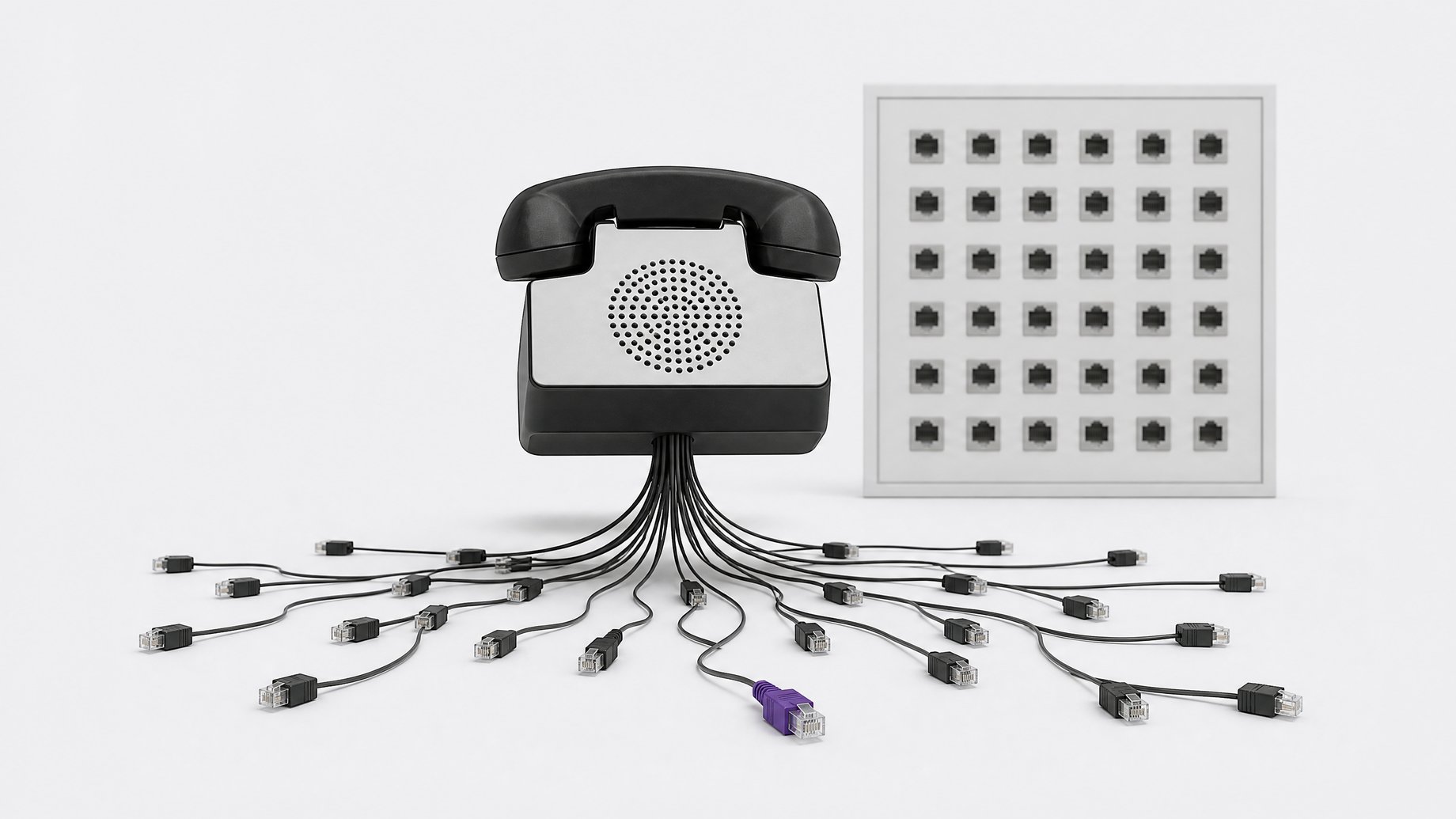
What is shadow AI voice agent risk?
AI voice agents create enterprise compliance risk the moment a sales or support team builds a phone bot without looping in legal and security. That's happening right now, at scale. Tools like Vapi, Bland AI, Retell, and Synthflow let anyone with a laptop and a credit card stand up a human-sounding voice agent in hours, for pennies a minute, while official enterprise AI rollouts sit stuck in procurement.
TL;DR
- A Vapi voice bot can cost roughly six times its advertised $0.05-a-minute sticker price once speech-to-text, the LLM call, text-to-speech, and telephony are stacked on top.
- Deepfake voice fraud attempts in contact centers surged more than 1,300% in a single year, according to Pindrop's 2025 report.
- Breaches involving a high level of shadow AI cost organizations $670,000 more on average than breaches with low or no shadow AI.
- Employees at more than 90% of companies regularly use personal AI tools for work, even though only 40% of companies have purchased official enterprise LLM subscriptions.
- AI-generated voices count as an "artificial or prerecorded voice" under the TCPA, so outbound AI calls require prior express consent.
- Banning no-code voice platforms won't work, so governance should rely on inventory and co-ownership instead of enforcement.
Who's building these voice bots, and why?
Walk into most contact centers today and you'll find at least one team running a voice bot nobody filed a security review for. The pattern repeats: a CX manager watches hold times climb, a sales ops lead needs outbound call volume, a support team wants after-hours coverage. IT's roadmap says "next quarter" at best. So the team signs up for a no-code voice platform itself.
This isn't an edge case. MIT's Project NANDA found that only 40% of companies have purchased official enterprise LLM subscriptions, while employees at more than 90% of companies regularly use personal AI tools for work, often invisible to IT. The researchers call this a "shadow AI economy," and note it frequently delivers better ROI than the sanctioned initiatives sitting in a backlog. Voice is just the latest, and riskiest, extension of that pattern into the one channel that touches customers directly: the phone call.
How cheap and fast is it to build a voice bot?
The economics explain why a single team can skip procurement entirely. A side-by-side comparison of the major no-code voice platforms shows build times as low as 1 to 4 hours for Synthflow and 4 to 12 hours for Bland AI, with advertised per-minute rates between $0.05 and $0.24 depending on the platform.
| Approach | Build Time | Cost per Minute | Control | |
|---|---|---|---|---|
| Retell AIDevelopers | Code first | 8–20 hours | $0.07–$0.18 | High |
| VapiMaximum control | Code first | 20–60 hours | $0.05–$0.20 | High |
| Bland AIOutbound campaigns | Hybrid | 4–12 hours | $0.09–$0.24 | Medium |
| SynthflowSmall business | No code | 1–4 hours | $0.13–$0.20 | Low |
The headline number is misleading on its own. Vapi markets $0.05 per minute, but that figure only covers orchestration. Stack on speech-to-text, the LLM call, text-to-speech, and telephony, and the real all-in cost runs $0.30 to $0.33 per minute, roughly six times the sticker price. Even at the real cost, it's still cheap and fast enough that a department can route around a budget process built for six-figure software contracts. That's the Build vs Buy calculus breaking down in real time: teams aren't choosing between buying a platform and building one internally with proper review. They're doing a third thing: buying a tool that lets them build without review.
Why does this count as shadow AI?
Shadow AI is unsanctioned AI usage that happens outside IT's visibility and control, and the data says it's already the norm, not the exception. UpGuard's November 2025 State of Shadow AI report found that over 80% of workers use unauthorized AI tools at work, including nearly 90% of security professionals and 68% of security leaders who admit to using unapproved tools themselves. If the people whose job is to stop shadow AI are doing it too, a sales team spinning up a voice bot barely registers as a decision at all.
Voice agents deserve their own category inside shadow AI, though, because of what they handle. A rogue ChatGPT tab might leak a pasted document. A voice agent ingests live customer PII and biometric voice data in real time, on every call, by design. That's a fundamentally different risk surface, one covered in depth in our broader look at shadow AI risks enterprises need to govern, because unsupervised bots fail in ways security teams never planned for.
What compliance risks do AI voice agents create?
Four separate legal regimes already apply to a voice bot that most teams building one have never read:
- TCPA consent rules. In February 2024, the FCC unanimously ruled that AI-generated voices used in calls qualify as an "artificial or prerecorded voice" under the Telephone Consumer Protection Act. Any outbound AI voice agent call to a US residential or wireless line now legally requires prior express consent, exactly like a traditional robocall. A sales team dialing a purchased lead list with a Bland AI script is making a TCPA-covered call whether anyone realizes it or not.
- BIPA voiceprint claims. Illinois' Biometric Information Privacy Act, written in 2008 for fingerprint scanners, now covers voiceprints, and plaintiffs' firms have noticed. Call centers, retailers, telecoms, and AI notetakers face a growing wave of class actions, including Walmart, sued in two Illinois districts over a voice authentication system allegedly built on customer voiceprints without the written consent BIPA requires. Damages run $1,000 per negligent violation and $5,000 per reckless or intentional one, before fees, and those numbers add up fast across thousands of calls.
- EU AI Act exposure. Emotion and sentiment detection, a common bolt-on feature in contact center platforms, is classified high-risk under Annex III, with compliance obligations deferred to December 2027 and fines up to €15 million or 3% of global turnover for misuse. Using emotion recognition on a company's own employees has been outright prohibited since February 2, 2025, carrying fines up to €35 million or 7% of global turnover. Any contact center that flipped on a sentiment-analysis toggle to monitor agent calls may already be in violation.
- PCI DSS and HIPAA gaps. Voice bots that take payment information or discuss health details, stood up without a security review, routinely skip the data-handling controls those frameworks require. Cisco's 2025 Cybersecurity Readiness Index found 60% of organizations lack confidence they can even detect shadow AI tool use in their own environment, which compounds the risk when a bot nobody logged is processing payment data on live calls.
How does a shadow voice bot multiply fraud risk?
The same cloning technology that makes it cheap to stand up a convincing voice bot is also arming fraudsters. Voice cloning now requires as little as a few seconds of sample audio, and deepfake voice fraud attempts in contact centers surged more than 1,300% in 2024, rising from roughly one attempt per month to about seven per day, according to Pindrop's 2025 Voice Intelligence & Security Report. Knowledge-based authentication, the standard "verify your identity" question set most call centers still rely on, is failing against this threat: fraudsters passed KBA checks 92% of the time, while genuine customers passed correctly only 46% of the time.
That's the uncomfortable symmetry. A department building a shadow voice bot to sound convincingly human is using the exact same tooling, often the exact same vendors, that a fraudster uses to impersonate a real customer or employee. Every unsanctioned voice deployment adds one more plausible-sounding voice to an environment already struggling to tell real callers from cloned ones.
What does shadow AI actually cost when it breaks?
Compliance exposure is one problem. Breach math is another, and it's the number that should get a CFO's attention. IBM's 2025 Cost of a Data Breach report found that breaches involving a high level of shadow AI cost organizations $670,000 more on average than breaches with low or no shadow AI: $4.63 million versus $3.96 million. Shadow AI was a contributing factor in roughly one in five breaches studied, and 97% of organizations lacked proper AI access controls at the time. A voice agent nobody in security knows exists is a textbook example of exactly the gap IBM is describing.
What should AI voice agent governance look like?
Banning no-code voice platforms outright won't work. MIT's research on the broader shadow AI economy is explicit that prohibition just pushes usage further underground, and the economics of a $0.05-a-minute tool make that underground easy to reach. The better response looks like inventory and co-ownership, not enforcement, the same sandbox-over-ban approach that works for employee-built agents generally:
- Find what already exists. Run a discovery pass across procurement cards, Twilio and telephony billing, and finance expense reports for Vapi, Bland, Retell, and Synthflow line items before writing a single policy.
- Require consent and disclosure by default. Any outbound call needs a documented consent trail under TCPA, and any inbound call that could capture a voiceprint needs the written disclosure BIPA demands.
- Turn off emotion detection unless legal has signed off. Given the EU AI Act's prohibition on employee-facing emotion recognition and high-risk status elsewhere, treat sentiment-analysis features as opt-in, not default.
- Set data-residency and retention rules before go-live. Voice recordings and transcripts are biometric and often payment or health data. They need the same retention and access controls as any other regulated system.
- Co-own, don't ban. Security and the business unit should jointly own the build, the same model this blog has argued for with agent registries and identity controls elsewhere in the shadow AI stack. The goal is making the sanctioned path faster than the shadow one, not making the shadow one impossible.
Teams that get this right stop treating voice agents as a rented point tool bought on a department card. They start treating the stack, telephony, model, data pipeline, as infrastructure the company owns and can audit, closer to how governed platforms treat AI agents generally. The alternative is finding out which bots exist only after a regulator, a class action, or a breach report tells you.
The gap between how fast these tools let a team move and how slowly enterprise AI governance usually moves is the whole story. Until that gap closes, every cheap, fast voice bot a department ships this week is a liability someone else in the building has to explain next year.
Frequently Asked Questions
What makes AI voice agents a compliance risk compared to chatbots?
Voice agents capture live customer PII and biometric voice data in real time on every call, which triggers TCPA consent rules, BIPA voiceprint protections, and EU AI Act emotion-recognition provisions that a text chatbot typically does not. A rogue chatbot might leak a pasted document; a voice bot generates regulated biometric data by design.
Does the TCPA apply to AI-generated voice calls?
Yes. In February 2024 the FCC unanimously ruled that AI-generated voices qualify as an 'artificial or prerecorded voice' under the TCPA, meaning any outbound AI voice agent call to a US residential or wireless line requires prior express consent, just like a traditional robocall.
Can a customer sue a company over a voice bot under BIPA?
Illinois' Biometric Information Privacy Act covers voiceprints, and class actions against call centers, retailers, and telecoms for capturing voiceprints without written consent are already active. Statutory damages run $1,000 per negligent violation and $5,000 per reckless or intentional one, which scales quickly across call volume.
How much does ungoverned shadow AI actually cost after a breach?
IBM's 2025 Cost of a Data Breach report found breaches involving high levels of shadow AI cost $670,000 more on average than breaches with low or no shadow AI, and shadow AI was a contributing factor in roughly one in five breaches studied.
How should an enterprise handle voice bots teams already built without approval?
Start with discovery: check procurement cards, telephony billing, and expense reports for platforms like Vapi, Bland AI, or Retell. Then bring security and the business unit together to add consent tracking, disable unapproved emotion-detection features, and set data-retention rules, rather than banning the tools outright, which research shows just pushes usage further underground.
How we source, write, and correct our articles. Editorial standards