How to Secure Employee AI Agent Usage: A Step-by-Step Framework
Learn how to secure employee AI agent usage: inventory shadow agents, set a fast approval policy, broker MCP access, and monitor continuously, with data.

How do you secure employee AI agent usage?
You secure employee AI agent usage by doing four things in sequence: inventory every AI tool and connection already running in your company, publish a policy with a fast approval lane instead of a blanket ban, broker identity and access for every MCP or API connection through a central control point, and monitor continuously instead of auditing once a quarter. Skip the inventory step and the rest doesn't work. You can't govern what you can't see.
That's the short version. The long version starts with a distinction most governance conversations miss: shadow AI and shadow agents are not the same problem.
TL;DR
- Shadow agents run unsupervised using personal credentials, so nobody approves their access, logs their actions, or owns their tokens.
- Research cited by Palo Alto Networks found that 38% of MCP servers in the wild have no authentication at all, which leaves agent connections highly vulnerable.
- Shadow AI was involved in 43% of breaches, and those breaches cost an average of $5.39 million against a $4.99 million global average.
- Effective governance means building a fast approval lane instead of issuing a blanket ban, because a policy that only says no pushes usage underground.
- Routing MCP traffic through a centralized authorization proxy replaces server-by-server trust decisions with one governed control point.
- Start with a full inventory of AI tools and connections, then monitor continuously rather than quarterly.
What are shadow agents, and how are they different from shadow AI chat?
Shadow AI chat is an employee pasting a contract into ChatGPT to summarize it. It's risky, but it's bounded: one person, one prompt, one output, in a browser tab IT can at least theoretically see with the right monitoring. The governance answer for that kind of use is a tiered framework for employee ChatGPT use rather than a ban.
Shadow agents are different. An employee connects a personal Claude or ChatGPT subscription to a third-party automation tool, a Zapier flow, a custom script, or a Model Context Protocol (MCP) server, and gives it standing access to read email, write to a database, push code, or post in Slack. The AI isn't answering a question anymore. It's running continuously, acting on tools, and making decisions with credentials that never show up in a procurement record. Nobody approved the OAuth grant. Nobody logs the actions it takes. Nobody owns the token if it leaks.
The research in this piece is really about that layer: not whether people use AI, but what happens when a chat subscription quietly becomes an unsupervised, always-on worker with real system access.
How big is the shadow agent problem, really?
Bigger than most security teams assume, and growing faster than official adoption.
- Workers at more than 90% of companies regularly use personal AI chatbot accounts for work tasks, while only 40% of companies have purchased an official LLM subscription, according to MIT's Project NANDA.
- 66% of office professionals surveyed by PagerDuty admitted using AI tools at work despite believing it violated company policy, and 88% have shared work-related information with public tools like ChatGPT, Claude, or Gemini.
- In the UK, Microsoft and Censuswide found 71% of employees have used unapproved consumer AI tools at work, and 51% still do so weekly.
- Harmonic Security's analysis of over 176,000 enterprise AI prompts found the average company's employees interact with 254 distinct AI applications, and 45.4% of sensitive AI interactions came from personal, non-corporate accounts.
This isn't fringe behavior from a handful of power users. It's the default way most knowledge workers touch AI now, and the gap between what IT has sanctioned and what employees actually run keeps widening.
Why do employees build shadow agents instead of waiting for IT?
Mostly because waiting doesn't work. CrowdStrike puts the number of employees who bring their own AI tools to work at nearly 80%, and the pattern behind it is consistent: procurement cycles move in weeks, employee frustration moves in minutes. If there's no sanctioned equivalent for the specific automation someone needs, they build it themselves with whatever subscription they already pay for personally.
Thomson Reuters' 2026 Future of Professionals research found 34% of professionals across industries admit to using AI tools their organization hasn't sanctioned, with government-sector use at roughly 27%. This isn't confined to loosely regulated startups. It shows up in regulated industries too. Gartner-sourced data cited by The Hacker News puts it even more starkly: 69% of organizations suspect or confirm employees are using prohibited AI tools, and only 37% have a governance policy in place to respond. The habit employees built on personal devices migrated to work because nothing stopped it.
How do MCP and third-party bots turn a personal AI subscription into an open door?
This is the part most governance conversations miss, because they're still arguing about chat, not connections.
Model Context Protocol, the standard many employees use to wire Claude and similar assistants into third-party tools and scripts, was built for flexibility, not security. The NSA's own guidance on MCP calls out that authorization is optional in the spec, not every implementation uses it, and many omit authentication entirely with no role-based enforcement layered on top. That's not a theoretical gap. Security researchers at Invariant Labs demonstrated a real exploit against the official GitHub MCP server, where a malicious GitHub Issue used prompt injection to coerce an agent connected through Claude Desktop into leaking a user's private repository data, including salary and relocation plans, into a public pull request, without the user ever knowing.
Research cited by Palo Alto Networks found 38% of MCP servers in the wild have no authentication at all, and even when a server does use OAuth 2.1, it typically only authenticates the human's delegated consent. The agent itself stays invisible to identity and access management, which means nobody can trace its actions back to a specific agent or revoke a long-lived token after a compromise. If you've already looked at how to govern database access for internal agents, this is the same problem wearing a different coat: a connection with real permissions and no one accountable for what it does with them.
What does it cost when a shadow agent goes wrong?
IBM's 2026 Cost of a Data Breach Report puts a number on this, and it's not small. Shadow AI was involved in 43% of breaches, more than doubling from 20% the year before, and those breaches cost an average of $5.39 million against a $4.99 million global average. About one in five shadow AI breaches also triggered a regulatory fine.
Governance is moving the wrong direction while this happens. 68% of breached organizations in the 2026 study had no AI governance policy at all, up from 63% the year before, and the share requiring IT approval before AI deployment actually fell, from 45% to 38%. Only 19% of organizations said governance and security teams even coordinate on AI efforts. Meanwhile, one in four malicious breaches were AI-enabled, a 56% increase year over year, costing an average of $6 million, roughly a million dollars above the global average, driven mostly by deepfake impersonation and AI-enabled malware. Organizations that used AI and automation in their own security operations cut breach costs by nearly $2 million, which is the clearest signal in the whole report: the fix for AI risk is better AI governance, not less AI.
How do you actually secure employee AI agent usage?
Here's the sequence that works, pulled from what CrowdStrike, Palo Alto Networks, the NSA, and the Hacker News/Adaptive Security framework all converge on independently.
- Inventory everything first. Build a full list of the AI tools, MCP connections, and automation scripts already running, including personal accounts wired into work tasks. You cannot govern a connection you don't know exists, and most companies are shocked by what surfaces here.
- Write a policy that names approved tools and a fast path for new ones. A policy that only says "no" pushes usage further underground. Name what's sanctioned, and give employees a request process that resolves in days, not quarters.
- Build a fast lane for new tool approval. This is the piece most companies skip. If the sanctioned path is as slow as the old one, employees go back to building their own. The fast lane is what makes the policy credible.
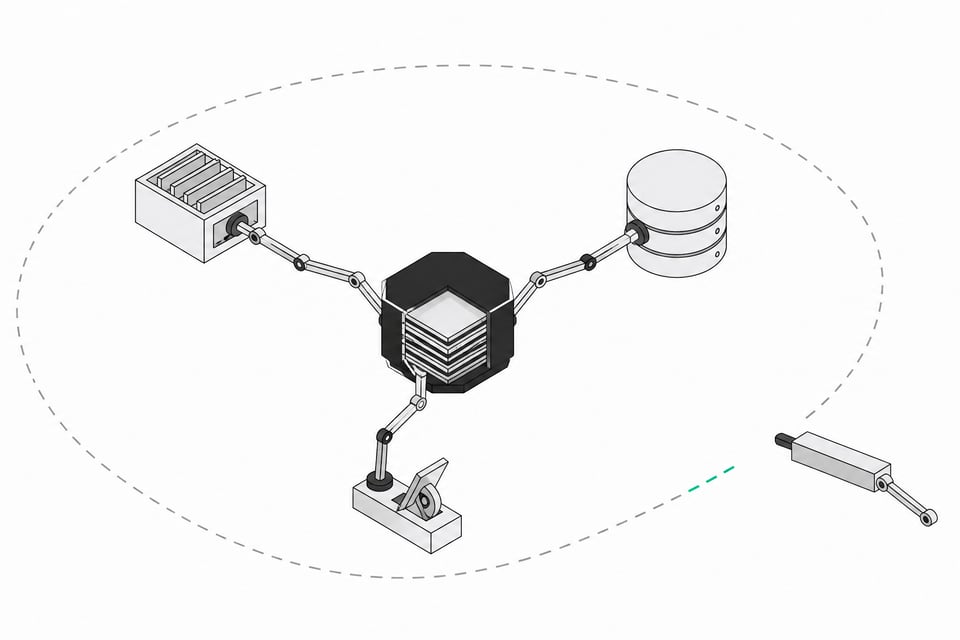
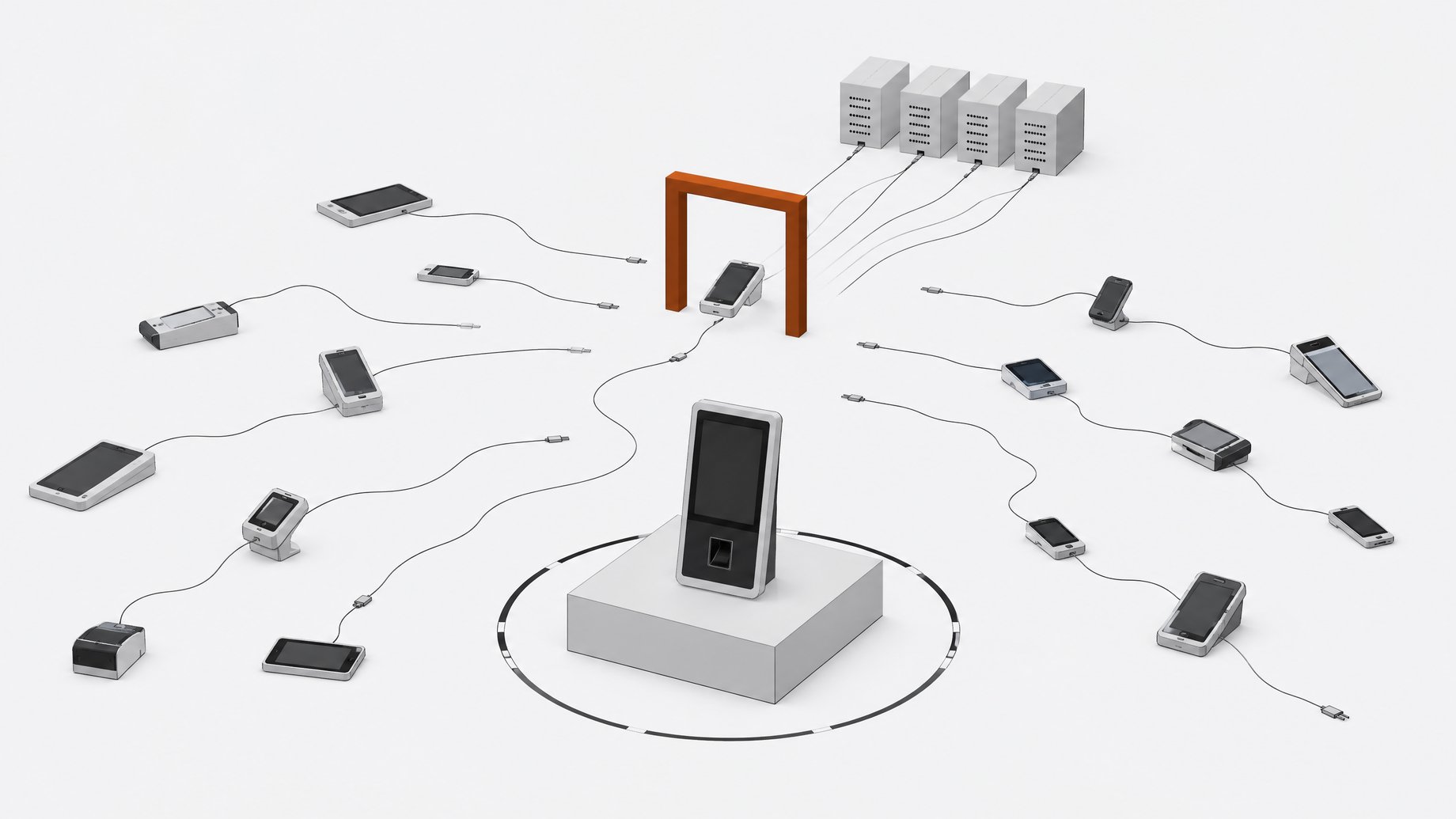
- Broker identity for every MCP and agent connection. Route MCP traffic through a centralized authorization proxy so no new MCP server goes live without a human-in-the-loop approval. This replaces fragmented, server-by-server trust decisions with one governed control point, and it directly answers the authentication gap the NSA and Palo Alto both flagged.
- Monitor continuously, not quarterly. Add browser-native monitoring and watch the three channels where most shadow activity actually flows: OAuth connections into Workspace or 365, browser extensions, and AI features bundled inside tools you already approved.
- Coach in the moment, don't punish after the fact. Just-in-time coaching, flagging risky behavior as it happens with a clear explanation, reduces shadow usage organically without making employees feel like suspects.
This sequence mirrors what we've laid out in more depth in the sandbox framework for employee AI agents: build the fast lane before you build the ban, because the ban never actually arrives in time.
Should you build your own governance layer or buy one?
Full disclosure on our own bias here: owning your governance infrastructure usually beats renting it, but not always, and not right away.
Building your own MCP gateway and identity broker gives you full visibility into every agent connection, custom policy logic for your specific risk tolerance, and no dependency on a vendor's roadmap. It's the right call if you already have the engineering capacity and if agent usage is central enough to your business that owning the control plane is itself a competitive advantage. That's consistent with the broader argument we've made about governing the software employees build with AI coding tools: the agents and the apps are the same governance problem now.
Buying a platform makes more sense if you need coverage this quarter, not this year. Vendor platforms built specifically for agent identity brokering, like the approach Palo Alto Networks describes for MCP traffic, get you a working control point fast, with less engineering investment up front. Some teams land on a hybrid: a bought identity broker for the connection layer, with homegrown policy and monitoring logic on top.
| Upfront Investment | Time to Deploy | Control & Customization | Ongoing Maintenance Burden | Depends on a Vendor Roadmap | |
|---|---|---|---|---|---|
| Build Your Ownteams with engineering capacity where agent usage is a competitive advantage | High engineering cost | Months | High | High | No |
| Buy a Platformteams that need coverage this quarter, not this year | Low, subscription-based | Weeks | Low | Low | Yes |
| RecommendedHybridteams wanting fast coverage with custom policy logic on top | Medium | Weeks | Medium | Medium | Yes |
Either path beats the status quo, which is no control point at all.
What is the bottom line?
Shadow agents aren't a future risk. They're running today, in most companies, with personal credentials and no logging, and the IBM data shows exactly what that costs when it breaks. The fix isn't banning Claude, ChatGPT, or Gemini. It's building an inventory, a fast approval lane, and a single identity broker for every agent connection, so the agents employees already depend on run inside controls instead of around them.
Frequently Asked Questions
What is a shadow agent, as opposed to shadow AI?
Shadow AI usually refers to employees pasting data into a chatbot like ChatGPT without approval. A shadow agent goes further: an employee wires their personal AI subscription into a third-party tool, script, or MCP server and gives it standing access to act on email, databases, code, or chat tools, running continuously without IT's knowledge or logging.
Is banning AI tools an effective way to secure employee AI agent usage?
No. Bans push usage underground rather than eliminating it. Research shows workers at over 90% of companies use personal AI accounts for work regardless of policy, and 66% of professionals have used AI tools they believed were against company policy. The effective approach is a fast, sanctioned path plus visibility, not a ban.
Why is MCP specifically a security risk for AI agents?
The Model Context Protocol, used to connect AI assistants like Claude to third-party tools, was designed with authorization as optional rather than mandatory. The NSA has flagged that many implementations skip authentication entirely, and research cited by Palo Alto Networks found 38% of MCP servers in the wild have no authentication at all, leaving agent actions untraceable.
What does it cost a company when a shadow AI agent causes a breach?
IBM's 2026 Cost of a Data Breach Report found shadow AI was involved in 43% of breaches, more than double the prior year's 20%, with those breaches averaging $5.39 million compared to a $4.99 million global average. About one in five shadow AI breaches also triggered a regulatory fine.
Should IT build its own AI agent governance tooling or buy a platform?
It depends on engineering capacity and how central agent usage is to the business. Building an in-house MCP gateway and identity broker gives full visibility and custom control, while buying a vendor platform gets coverage faster with less upfront investment. Many teams end up with a hybrid: a bought identity broker layered with homegrown policy and monitoring.
How we source, write, and correct our articles. Editorial standards