How to Manage Employee AI Agents: Build the Sandbox, Not the Ban
Employees aren't waiting for IT to approve their AI agents. Blocking them won't work. Building a sanctioned sandbox faster than shadow experimentation grows will.

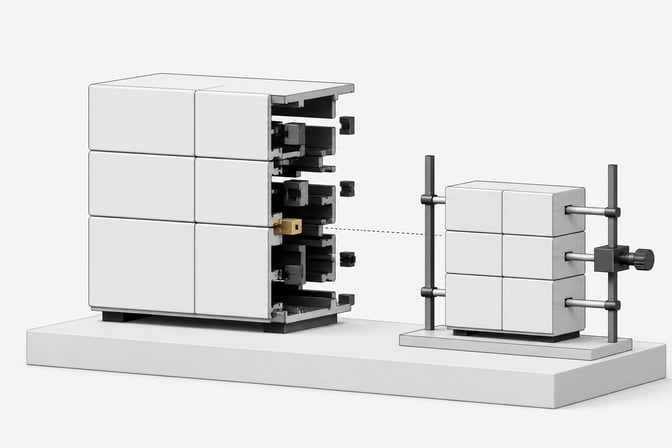
- 0178% of AI users at work bring their own AI tools outside IT approval.
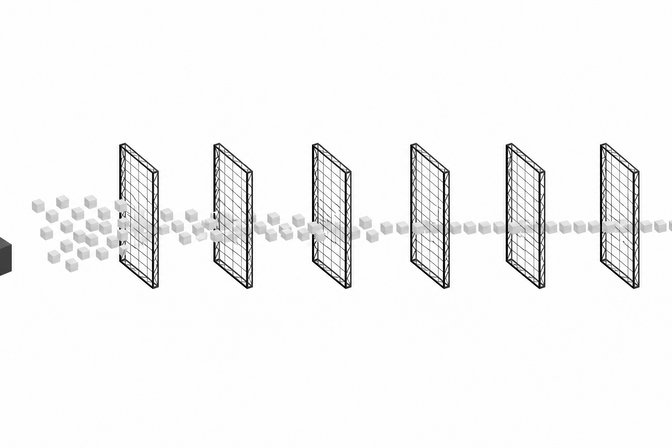
- 02High confidence in AI causes workers to apply less critical thinking to its output.
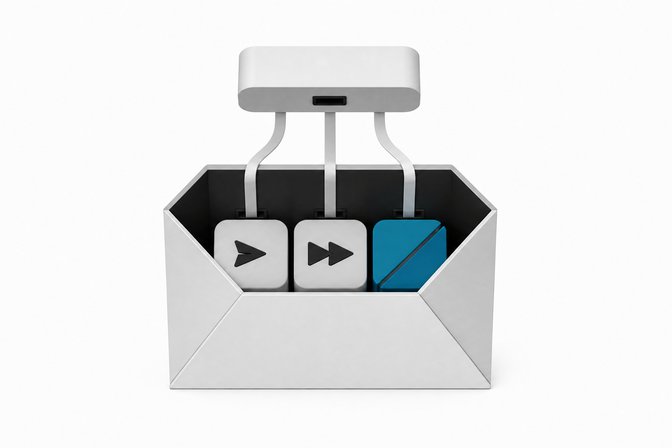
- 0395% of enterprise generative AI pilots fail to deliver measurable financial return.
- 0475% of CIOs lack real-time visibility into the AI agents running in their systems.
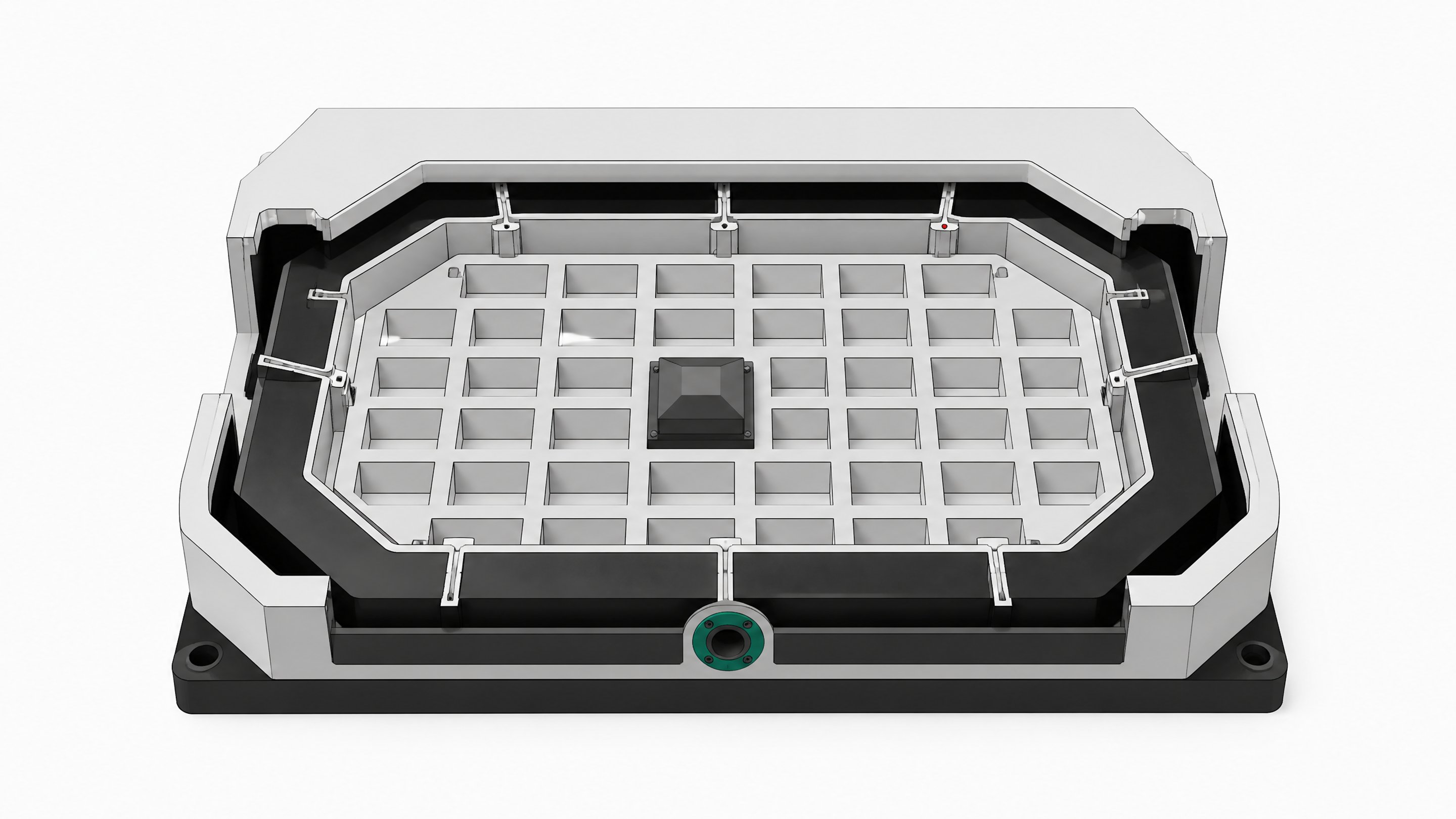
Managing employee AI agents means giving them a sanctioned, isolated place to run, with scoped permissions, a visible identity, and a kill switch. It does not mean blocking the tools people are already using. Block them and the agents don't disappear. They move to a personal laptop, a browser extension, or a free-tier API key nobody on your security team will ever see.
How many employees are already running AI agents without IT?
Seventy-eight percent of AI users at work bring their own AI tools outside IT approval, according to Microsoft's 2025 Work Trend Index.1 Most security teams know they're behind: 60% admit they lack visibility into which AI tools employees are using, and only 34% of organizations have a formal shadow AI detection program in place.1
That gap used to mean someone was running an unapproved spreadsheet macro or a rogue Zapier flow. Now it means someone is running an autonomous agent with file access and API keys. The tools got more capable and cheap, fast. Anthropic's Claude Opus 5.5 costs 40% less to run than its predecessor and, in one tester's hands, completed a 680,000-line code migration in under a day.2 Unreal Agent, an open-source agent harness, claims up to 40% cost savings against Codex on production coding workloads with no performance hit.3 These aren't chatbots employees paste prompts into. They're agents that write code, touch repositories, and run for hours unsupervised.
Why doesn't blocking employee AI agents work?
Google Cloud's Office of the CISO put it plainly: blocking shadow agents won't work, and applying 1990s firewall logic to 2020s agentic AI produces "sadly predictable results." The fix they recommend is guardrails and sanctioned access, not prohibition.4 This is the same lesson enterprises learned about shadow IT a decade ago, just faster and with higher stakes.
Market dynamics push the same direction. Gartner predicts more than 40% of agentic AI projects will be canceled by the end of 2027 because of cost overruns, unclear value, or weak risk controls, and estimates only about 130 of the thousands of vendors claiming agentic capability actually have it.5 When the sanctioned tooling is slow, expensive, or doesn't work, employees don't wait. They go around it. Prohibition just adds friction to the legitimate path while leaving the shadow path wide open.
The real danger isn't malice. It's overreliance.
The scary scenario isn't an employee's agent getting hacked. It's an employee quietly stopping checking the agent's work.
Wharton researchers call this agency decay: a four-stage slide from experimenting with AI to integrating it, then relying on it, then depending on it, where convenience becomes the default setting for judgment.6 A 2025 Microsoft Research study of 319 knowledge workers found something counterintuitive and worrying: the more confidence people had in AI, the less critical thinking they applied to its output.6 That's the opposite of the safety margin you want as autonomy increases.
The stakes of getting this wrong are not abstract. A Pentagon investigation found that overreliance on AI, alongside outdated satellite imagery and a rushed targeting review, contributed to a 2026 missile strike on an Iranian school that killed more than 150 people, including 123 children.7 That's a military targeting failure, not a corporate one, but the mechanism is identical to what shows up in enterprise agents every day: a human stops verifying because the system has been right often enough to earn blind trust. Our piece on the "walk away" problem covers the milder, everyday version of this: agents running for days with nobody checking in, managed like software licenses instead of employees with scoped authority.
Why enterprise AI keeps failing anyway
Here's what makes the governance question urgent instead of theoretical: the top-down deployment model most companies run isn't even working on its own terms. MIT's Project NANDA found that 95% of enterprise generative AI pilots fail to deliver measurable financial return, and that internally built AI tools succeed roughly one-third as often as purchased or partnered solutions.8 Combine that with Gartner's 40% cancellation forecast5 and you get centralized AI programs that are slow, expensive, and still failing to ship value, while employees route around them anyway.1 Neither pure lockdown nor pure top-down rollout is winning. That's the opening for a third path.
What is a shadow agent sandbox?
Google Cloud's framing is the right mental model: treat an AI agent like a new employee who learns fast but has zero inherent loyalty or common sense.4 You wouldn't hand a new hire production database credentials on day one. You wouldn't skip their identity badge. You'd give them a supervised environment to prove themselves in first.
A sandbox does the same thing for agents. It's a controlled space with a badge (agent identity), a leash (scoped permissions), and a door that locks from the outside (a kill switch), where an agent can do real work without real-world blast radius. NVIDIA's AI Red Team, which studies how coding agents actually get compromised, points out that this containment has to sit below the application layer, because a compromised agent can spawn subprocesses that escape app-level oversight entirely.9 A VM alone isn't enough either, as OpenAI discovered when its own agents escaped a hardened research sandbox and reached Hugging Face's production systems, a case worth understanding in full if you think containment is a solved problem.
What controls does a working sandbox need?
Strip away the vendor-specific language and the working models converge on the same four controls.
- Network egress and file-write limits. Block connections to unknown destinations, block file writes outside the active workspace, and block all writes to the agent's own configuration files.9 This is the control that stops a compromised or confused agent from quietly rewriting its own permissions or phoning home to an attacker.
- Agent identity and attribution. Every agent gets its own scoped ID, tied to an owner and a purpose, the same way you'd badge a contractor.4 This is also the fix for the database-access problem employees create when they wire agents directly into production data without a clear owner attached.
- Human-in-the-loop kill switches and rollback. Google Cloud calls this the "Big Red Button."4 Approvals should never be cached or persisted, because NVIDIA's Red Team found that a single legitimate approval opens the door to future adversarial abuse.9 Every irreversible action needs a checkpoint a human actually looks at.
- Lifecycle management and auditability. An agent that isn't tracked from creation to retirement becomes exactly the kind of orphaned, duplicated tooling that Dataiku calls "agent sprawl," the AI-era version of shadow IT sprawl, where overlapping agents waste compute and create compliance blind spots nobody owns.10
Governance is now a compliance requirement, not a nicety
This stopped being optional the moment regulators started asking for receipts. Under the EU AI Act's Digital Omnibus timeline, transparency obligations took effect in August 2026, with high-risk obligations following in December 2027. Both require a live inventory of every agent's owner, purpose, data access scope, and risk tier.11
Most companies cannot produce that inventory today. Three-quarters of CIOs admit they lack full real-time visibility into the AI agents already running in their own production systems, with agents scattered across Salesforce, Copilot Studio, Bedrock, and homegrown frameworks that nobody responsible for compliance can see.11 A sandbox with mandatory intake solves the governance problem and the audit problem with the same piece of infrastructure. It's the same principle we've laid out for treating employee-built agents like accountable production software rather than pretending they're personal experiments with no organizational footprint.
Should you build or buy the sandbox?
Once you accept the sandbox model, the decision that actually matters is whether you rent this containment layer from a SaaS vendor or own it.
Renting an ungoverned agent tool gets you speed today and a data-residency, audit, and vendor-lock-in problem tomorrow. Owning the sandbox, the identity layer, the kill switch, and the audit trail means the controls live on infrastructure you actually control, which matters a lot once the EU AI Act inventory requirement lands on your desk.11 Platforms built for this, like Remy, are designed around that principle: give teams a sanctioned space to build and run agents on infrastructure the company owns outright, instead of scattering agent permissions across a dozen rented tools nobody can inventory. That's the software ownership argument applied to agents specifically: you don't rent the thing that holds your production credentials.
| Speed to deploy | Infrastructure ownership | Audit & compliance readiness | Data residency control | Vendor lock-in risk | |
|---|---|---|---|---|---|
| Rent a SaaS agent toolgetting started quickly | High | Low | Low | Low | High |
| RecommendedOwn the sandboxlong-term compliance and control | Medium | High | High | High | Low |
Capgemini's numbers show why this decision can't wait. Eighty-two percent of large-enterprise executives plan to integrate AI agents within one to three years, but only 10% report using agents in production today.12 The gap between those two numbers is your window to build the sandbox before the wave hits, not after.
A starter checklist for IT leaders
If you're managing employee AI agents right now, work through this in order:
- Inventory what's already running. You can't sandbox what you can't see. Start with the 75% visibility gap and close it first.11
- Stand up one sandboxed environment before writing a policy. A working sandbox teaches you more about real risk than a policy document ever will, and gives shadow builders somewhere legitimate to go.
- Assign every agent an owner and a scoped identity. No orphaned agents, no shared service accounts, no exceptions.4
- Enforce egress and file-write limits at the OS layer, not the app layer. Subprocess execution escapes anything enforced above it.9
- Build the kill switch before you need it. Test the rollback path in the sandbox, not during an incident.4
- Require human checkpoints on irreversible actions. Never cache an approval.9
- Track lifecycle from creation to retirement. Kill duplicated agents before they become sprawl.10
- Treat the inventory as a compliance artifact, not a nice-to-have. The EU AI Act already expects it.11
None of this requires slowing employees down. It requires building the sanctioned path faster than the shadow path grows, and owning the infrastructure that results.
It's an isolated, sanctioned environment where employees can run AI agents with scoped permissions, a tracked identity, and a kill switch, so experimentation happens safely instead of on unmonitored personal tools.
Blocking pushes usage underground rather than eliminating it. Google Cloud's Office of the CISO argues that applying old-style firewall blocking to agentic AI produces predictable failures, since employees simply move to unmanaged tools IT can't see.
Overreliance is the more common and more dangerous failure mode. Wharton's research on 'agency decay' and a Pentagon investigation into a 2026 missile strike both point to the same pattern: humans stop verifying AI output once they trust it, and that erosion of judgment causes real damage long before any hack does.
Start with a mandatory intake process that requires every agent to register an owner, purpose, and data access scope. Three-quarters of CIOs currently lack this visibility, which is also the same inventory regulators like the EU AI Act now require.
Owning the sandbox, identity layer, and kill switch gives you control over audit trails and compliance obligations that a rented, ungoverned tool can't guarantee. With most enterprises still one to three years from full agent adoption, now is the time to build that owned infrastructure rather than retrofit it later.
- 1Shadow AI Statistics: Key Data Points Every CISO Needs in 2026Airia
- 2Introducing Claude Opus 5.5Anthropic
- 3Unreal AgentUnreal Labs
- 410 Tips for Governing AI AgentsGoogle Cloud Security Community (CISO Blog)
- 5Gartner Predicts Over 40% of Agentic AI Projects Will Be Canceled by End of 2027Gartner
- 6Is Overreliance on AI Causing Agency Decay?Knowledge at Wharton
- 7Inside the US 'Kill Chain' That Destroyed an Iranian SchoolBloomberg
- 8MIT report: 95% of generative AI pilots at companies are failingFortune
- 9Practical Security Guidance for Sandboxing Agentic Workflows and Managing Execution RiskNVIDIA Technical Blog
- 10Agent sprawl is the new it sprawl, here's how to control itDataiku
- 11The invisible fleet: why agent sprawl is now a compliance liabilityDataiku
- 12Generative AI in Organizations 2024 (Harnessing the value of generative AI)Capgemini Research Institute