What Does Stepful Do and How Does It Use AI to Train Healthcare Workers?
Stepful raised a $55M Series C led by Oak HC/FT. See how its AI tutors, contracts with 39 health systems, and 5-month programs train healthcare workers.

What does Stepful do and how does it use AI to train healthcare workers?
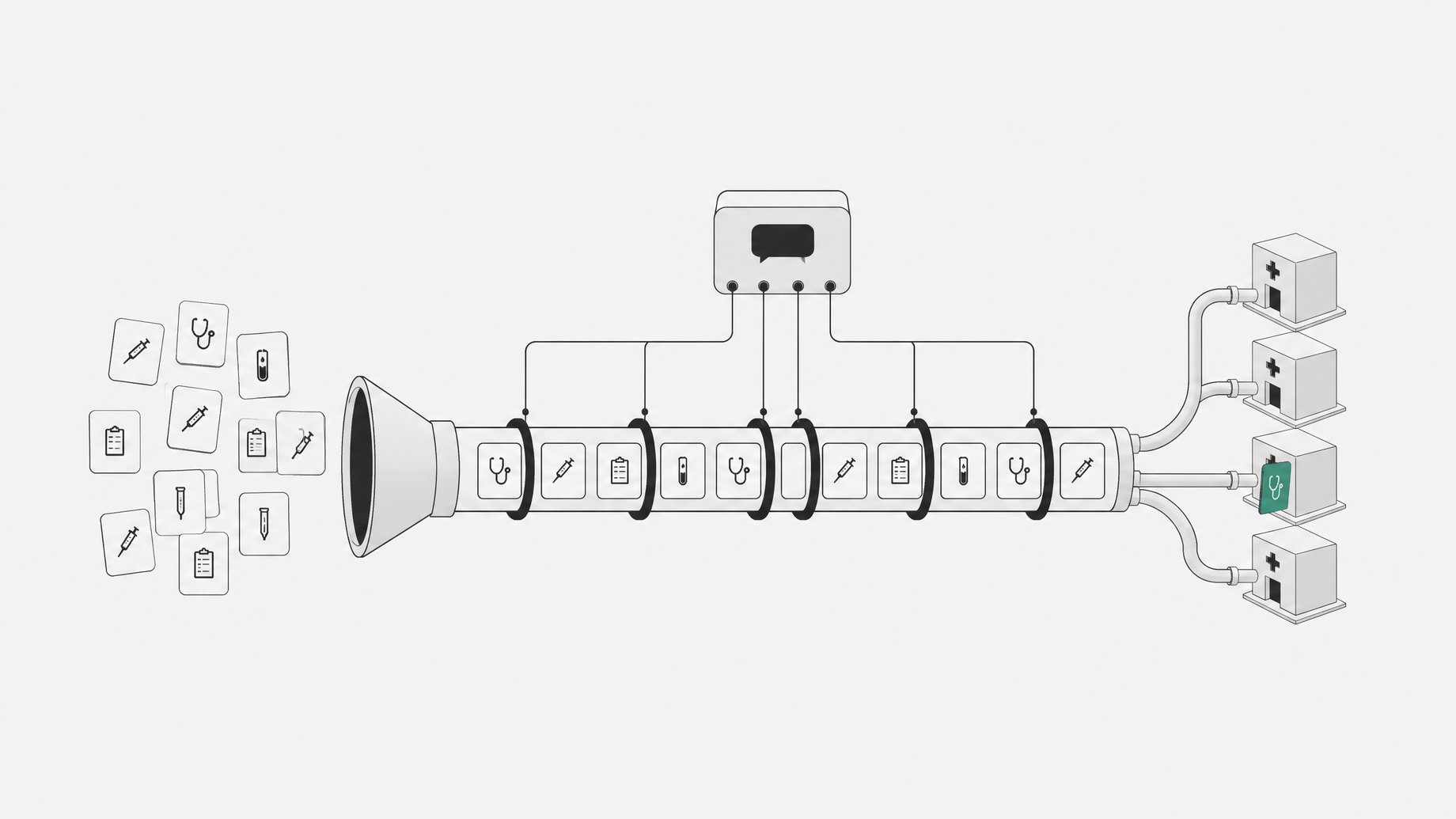
Stepful trains people for entry-level healthcare jobs, such as medical assistant and patient care technician, and uses AI to personalize the training. It recently closed a $55 million Series C led by Oak HC/FT. Students can pay for programs themselves, or health systems can contract Stepful to train workers from their own communities. AI preceptors and tutors give daily feedback, and programs run about five months.
TL;DR
- Stepful closed a $55 million Series C led by Oak HC/FT to scale healthcare job training.
- It sells to two customers: individual students and health systems, with the enterprise side now growing fast.
- The company says it has closed about 39 health systems, including seven of the ten largest in the US, with Providence and Mount Sinai named.
- Training uses AI preceptors that see and hear students (for example, practicing blood draws) plus an AI tutor for hard concepts.
- Founders say programs take 5 months and cost roughly a tenth of the traditional route, which they put at up to $20,000 and two years.
- A newer model sets up schools inside hospitals, so rural workers can train without moving to a city campus.
Who founded Stepful and why healthcare?
The founders are Carl and Tricia, who met at university. Tricia previously worked at Triplebyte and Udacity, which covers recruiting and education. Carl came from Uber and Handy, where he worked on marketplaces.
The idea came from Carl's time at Handy during the pandemic. Many cleaners on the platform lost work, and he wanted a path into stable jobs with room to advance. Healthcare had open roles, and medical assistant is an entry-level position. But the usual routes were community colleges and trade schools. By his account, those cost up to $20,000, take two years, and have little connection to employers. That combination shuts out someone working as a cleaner.
Stepful started in 2021, before ChatGPT. The AI features came later, built on top of a model that was already focused on short, employer-connected programs.
What problem is Stepful trying to solve?
The founders describe a supply and demand mismatch. They cite that one in four Americans earns less than $17 an hour, while health systems have more than one million openings every year. They also say health systems spend around $100 billion annually on staffing agencies and recruiting.
They split the existing training market into two groups:
| Provider type | Strength | Weakness |
|---|---|---|
| Trade schools and community colleges | High quality | Local, low scale |
| Online providers | Scale | Weaker quality and outcomes |
Stepful's pitch is to offer both quality and scale, with AI and technology doing much of the work that makes that possible. These are the founders' claims, and the interview does not include independent outcome data beyond what they report.
How does Stepful use AI in training?
The founders say the goal is to teach each student the exact skills needed for the job and for their certification exam. Two tools came up.
- AI preceptors. Students can learn skills like drawing blood with a preceptor that can see and hear what they do. This gives feedback on hands-on practice without an instructor present for every attempt.
- AI tutor. It breaks down difficult concepts for students on demand.
Students get feedback on a daily basis, according to the founders. The aim is that they arrive at their first job "practice-ready." The interview does not detail the underlying models or how feedback is validated, so those questions remain open.
How does the business model work?
Stepful has two customer types.
- Direct to students. A person pays for their own training, for example to become a medical assistant, and Stepful helps them find a job.
- B2B with health systems. The system hires people from its own community with no clinical skills and uses Stepful's technology and model to train them. Mount Sinai, for instance, uses this approach for patient care technicians.
The company started mostly direct to students. In the last couple of years it moved into enterprise contracts. The founders say they have closed around 39 health systems and now work with seven of the ten largest in the country. Named customers are Providence (described as the seventh largest US system) and Mount Sinai.
One customer reportedly began with a $150,000 contract, having Stepful train about ten nurses. After seeing the quality, it expanded to a contract above $1 million, and the founders say there is a roadmap to triple it next year.
How can hospital-based schooling help rural areas?
Traditionally, a rural resident who wanted to become a nurse had to leave their job, move to a campus in a city, and often stay there to work. The home community loses a potential nurse.
Stepful's newer model asks the person to stay put. The company helps the health system set up the school where the person already works. Hands-on experience happens in the health system's own spaces. The founders say this builds supply in both urban and rural communities.
How much does Stepful training cost and how long does it take?
The founders compare Stepful with the traditional path: up to $20,000 and two years. Their claim is that AI and technology let them deliver training that is 10x cheaper and takes five months. They did not give a specific Stepful tuition price in the interview.
On outcomes, they say students move from minimum wage to pay increases of 25 to 30 percent or more within a few months of training. That figure comes from the founders and was not independently verified in the source.
What are Stepful's growth plans?
The founders point to about 1.3 million healthcare jobs that need filling in the US. Last year Stepful trained 30,000 people. The stated goal is to grow that student base to 4x.
Until now the focus has been entry-level jobs. The company is expanding into longer, more developed programs that cost more. As a rough illustration, the founders say training 100,000 people at around $10,000 each would mean a billion dollars in revenue, which they put at under 7 percent of the US market. That is a back-of-envelope target, not a forecast. They are hiring in product, engineering, and data, with roles based in New York City.
Is Stepful's approach worth watching?
It is a useful case study for anyone building AI into vocational education. The AI features are tied to a concrete need: practicing skills, passing certification, and getting hired. The hiring partner is part of the product, not an afterthought. That addresses the disconnect the founders say plagues traditional programs.
The caveats are real. Most numbers come from the founders. Details on how AI preceptors are assessed, how certification pass rates compare, and how job placement is measured were not provided. Those are the metrics that would show whether the model holds up as it scales.
Frequently Asked Questions
How much did Stepful raise and who led the round?
Stepful closed a $55 million Series C. Oak HC/FT led the round, according to the founders.
What jobs does Stepful train for?
The interview names medical assistants and patient care technicians, and mentions a nurse-training contract with one health system. The company says its focus so far has been entry-level healthcare jobs, with expansion into longer programs underway.
Which health systems work with Stepful?
The founders say about 39 health systems have signed on, including seven of the ten largest in the US. They named Providence and Mount Sinai.
Does Stepful use AI to replace instructors?
The founders describe AI as a way to personalize learning and give daily feedback through preceptors and tutors. They also describe hands-on experiences in health system facilities, so training is not purely virtual. How instructor roles are divided was not detailed.
How we source, write, and correct our articles. Editorial standards