What Is Answer Engine Optimization? How to Get Cited by AI
Ranking #1 on Google doesn't guarantee an AI citation. Learn what AEO is and which tactics work, based on Ahrefs and Princeton data on stats, structure and freshness.

What is Answer Engine Optimization, and how do you get cited by AI?
To optimize content for AI search, stop writing for rankings and start writing for extraction: put the direct answer first, back it with real statistics and quotations, structure the page in self-contained chunks, and keep it current. Classic SEO tactics like keyword density and schema markup barely move the needle once you control for what actually gets cited.
TL;DR
- Holding the top Google ranking gives a page only a coin-flip chance of becoming the top AI Overview citation.
- Adding statistics, quotations, and citations boosts weaker pages far more than top-ranked pages, with a 115.1% visibility gain for a fifth-ranked site versus a 30.3% drop for the top-ranked one.
- JSON-LD schema markup produced no meaningful citation lift on its own, and schema only helped when populated with concrete facts like pricing, ratings, and specifications.
- AI assistants show a strong recency bias, citing content that is 25.7% fresher on average than organically ranked content.
- ChatGPT, Perplexity, and Google AI Overviews share only 14% overlap in the top sources they cite, so no universal AEO checklist exists.
Why doesn't a #1 Google ranking guarantee an AI citation?
Ranking #1 still helps, just not as much as you'd think. Ahrefs found that 76.1% of pages cited in Google AI Overviews also rank in the organic top 10, and 86% rank somewhere in the top 100. That's a real correlation. But the same study found that holding the #1 spot gives you only a "coin flip at best" chance of becoming the top AI Overview citation, in the words of Ahrefs analyst Si Quan Ong. Rank and citation are correlated, not identical. Something else decides which page gets pulled into the answer, and it isn't the thing SEO has spent twenty years optimizing for.
That something is extraction, not authority. AI assistants aren't ranking pages. They're assembling an answer out of passages, and a page can rank first and still lose that fight if its best sentence is buried under three paragraphs of preamble.
What is Answer Engine Optimization, and how is it different from SEO?
AEO is the practice of structuring content so a generative AI system can retrieve, extract, and cite it directly in a conversational answer, rather than simply ranking it in a list of blue links. SEO optimizes for a ranking algorithm; AEO optimizes for an extraction and synthesis pipeline. The term "Generative Engine Optimization," or GEO, comes from a 2024 Princeton, Georgia Tech, and IIT Delhi paper that formally defined generative engines and introduced visibility metrics to measure how often and how prominently a source gets cited in AI-generated responses.
Google itself pushes back on treating this as a separate discipline. Its Search Central guidance states plainly that AEO and GEO are not a distinct ranking system from its perspective: AI search features draw on the same core Search ranking and quality systems as everything else. Google goes further and tells site owners to skip several popular "AEO hacks" entirely, including llms.txt files, content chunked specifically for AI, rewriting copy in AI-friendly phrasing, and over-indexing on structured data. That's a useful corrective. AEO isn't a trick layered on top of SEO. It's a shift in what "good content" means once the reader is a retrieval system instead of a person scanning search results.
How do AI assistants actually find and extract content?
The pipeline has three stages: fan-out, retrieval, and extraction.
Google's generative features use what the company calls query fan-out: a single question gets broken into multiple related sub-queries that run concurrently, and the results get synthesized into one answer. A page built around one broad keyword matches the parent query but misses the long-tail sub-queries the system actually generates underneath it.
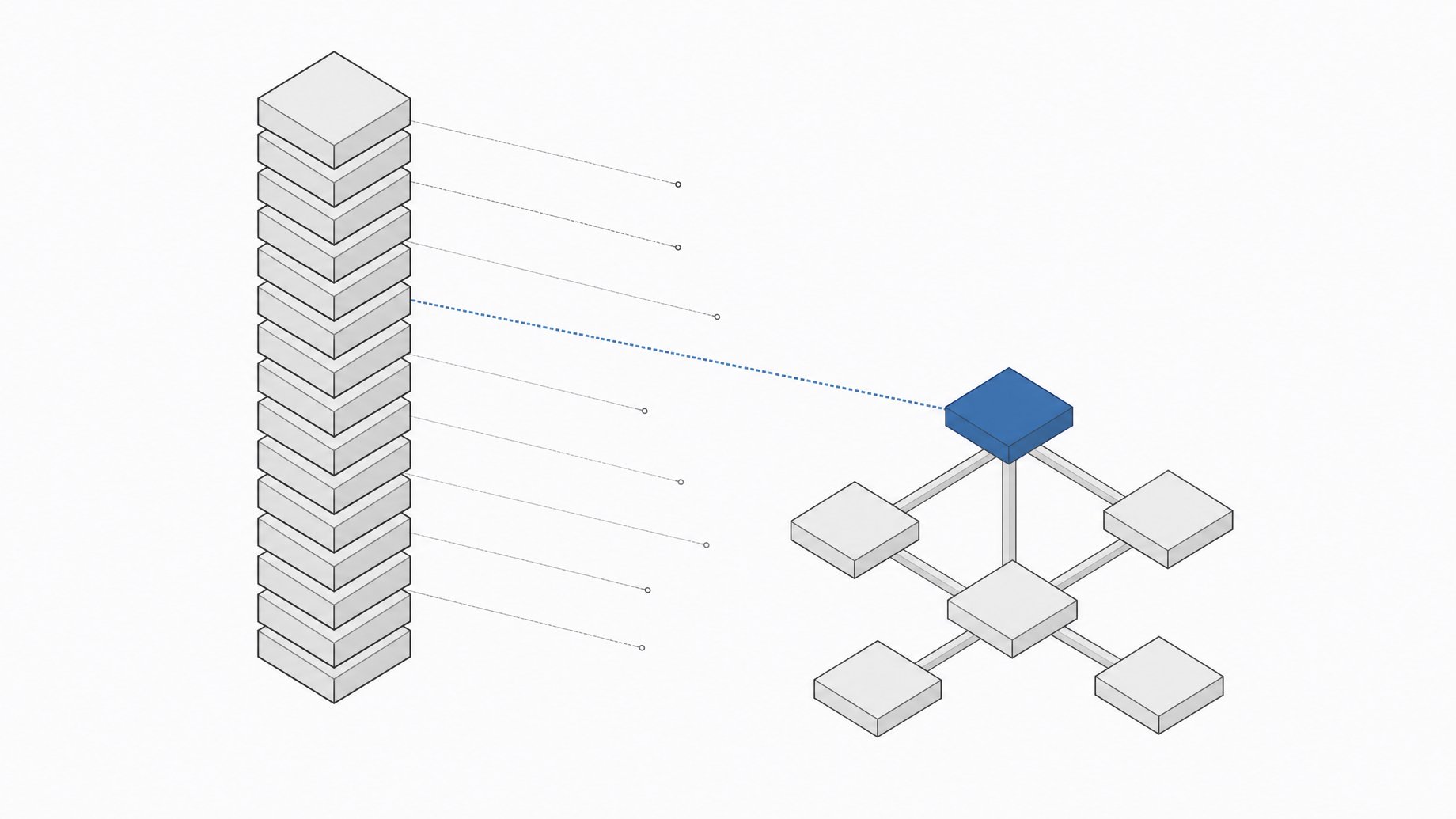
Retrieval happens at the passage level, not the page level. Chrome's own documentation describes a "DocumentChunker Algorithm" that analyzes content in roughly 200-word passages, and the browser only considers the first 30 passages of a page when generating embeddings. If your best statistic sits in paragraph 40, it's invisible to the system before it even gets to extraction.
Chunking strategy itself has measurable consequences. An NVIDIA benchmark testing retrieval accuracy across five enterprise datasets found that page-level chunking produced the highest average accuracy, 0.648, and the most consistent results across content types, while very small (128-token) and very large (2,048-token) chunks consistently underperformed. The same research found the right chunk size isn't universal: simple factoid queries favored smaller 256-512 token chunks, while complex analytical queries did better with larger chunks or whole-page retrieval. There is no single magic word count. There is a structure that keeps each idea self-contained enough to survive being pulled out of context, the same constraint pushing some engineering teams toward baking data directly into model weights instead of stretching a RAG pipeline's context window.
Which AEO tactics actually move citations, and which don't?
The Princeton GEO paper ran the closest thing to a controlled experiment this space has. It tested specific content interventions against generative engine visibility and found that adding statistics, quotations, and citations to source content boosted visibility by up to 40%, while classic keyword stuffing produced no meaningful improvement. More telling: these methods disproportionately helped weaker pages. The "Cite Sources" technique increased visibility by 115.1% for a website ranked fifth in search results, while the top-ranked website's visibility under the identical treatment actually fell 30.3%. AEO can level a playing field that classic authority-driven SEO tilts toward incumbents.
Here's where the oversold tactics fall apart:
- Schema markup. Ahrefs tracked 1,885 pages before and after adding JSON-LD schema against 4,000 matched control pages and found no statistically meaningful citation lift on Google AI Mode or ChatGPT, and a small decline on Google AI Overviews. More tellingly, when researchers watched five AI systems fetch pages live, including ChatGPT, Claude, Perplexity, Gemini, and Google AI Mode, none of them used the JSON-LD at all. Every system extracted only visible HTML.
- Schema with real content, not just markup. A separate cross-platform study found generic schema types had no effect on citation odds once organic rank was controlled for, but schema populated with concrete attributes like pricing, ratings, and specifications was cited at meaningfully higher rates, 61.7% versus 41.6% for generic schema. The lesson isn't "add schema." It's "put extractable facts on the page," and schema is at best a wrapper around that.
- Freshness. Across 17 million citations, Ahrefs found AI-cited content runs 25.7% fresher than organically ranked content, 1,064 days old on average versus 1,432 days. ChatGPT shows the strongest recency bias of any platform; Google AI Overviews shows almost none. Stale pages get skipped even when they still rank.
- Backlink-style authority still matters, just differently. Branded web mentions, not backlinks specifically, correlate with brand appearance in AI Overviews at 0.664 across 75,000 brands studied, stronger than most on-page factors Ahrefs tested. Off-page reputation hasn't disappeared. It's just measured by how often you're talked about, not how many links point at you.
Why do ChatGPT, Perplexity, and Google disagree on sources?
Because they're not running the same retrieval system. Ahrefs compared the top 50 most-mentioned domains across roughly 76.7 million AI Overviews, 957,000 ChatGPT prompts, and 953,500 Perplexity prompts in a single month and found only 14% overlap. Just 7 of the top 50 sources showed up across all three platforms. That means 86% of each platform's favorite sources are unique to that platform.
This kills the idea of a universal AEO checklist. A page tuned for Perplexity's citation style won't necessarily perform in ChatGPT, and optimizing hard for Google's AI Overviews might do nothing for either. The realistic strategy is to build pages that are structurally sound by the principles above: direct answers, dense statistics, clean chunking, current data, and accept platform-level variance as a feature of the ecosystem, not a bug in your execution.
Does the same problem exist inside your company?
This isn't only a public-web problem. Internal AI agents built on top of company wikis and ticket systems, the kind of access AI connectors grant by default, run the exact same retrieval pipeline: chunk, embed, retrieve, extract. A wiki page with a buried answer and no clear structure fails an internal RAG system for the identical reason a buried blog post fails ChatGPT. If your team is building its own internal assistants without governance, the same teams who end up choosing a model by benchmark score instead of fit, that's shadow AI running on broken retrieval, and it's often invisible until someone asks the agent a question it gets wrong with total confidence.
The fix is the same discipline applied internally: structure documentation so machines can serve it directly, including serving markdown to the agents your team already built rather than scraping rendered HTML. An agent is only as good as the chunks it can retrieve, and a messy internal knowledge base produces the same silent failures a messy public page does.
What is a practical checklist for restructuring a page for AI and humans?
Rebuild pages around these levers, in order of evidence strength:
- Lead with the direct answer. Put the plain-language answer to the target question in the first one or two sentences. Don't bury it under a mission-statement paragraph.
- Add statistics, quotations, and citations. This is the single most validated lever, with up to 40% visibility gains in controlled testing.
- Chunk by idea, not by word count. Structure sections so each one stands alone if extracted out of context; page-level organization outperformed both tiny and oversized chunks in benchmark testing.
- Keep content current. Update dates and figures on a real cadence; AI assistants, especially ChatGPT, measurably prefer fresher sources.
- Check crawler access. Roughly 5.89% of all websites block OpenAI's GPTBot via robots.txt, which makes a page invisible to that assistant regardless of content quality. Confirm you're not doing this by accident.
- Skip the schema arms race. Add structured data if it serves users or other tools, but don't expect it to move AI citations on its own; the evidence shows no significant lift from markup alone.
- Build off-page presence, not just backlinks. Branded mentions across the web correlate more strongly with AI visibility than any single on-page tactic.
What should you measure instead of rankings?
Rank tracking tells you where you sit in a results page that fewer people click through entirely. For AI visibility, track citation frequency directly: how often your domain appears in ChatGPT, Perplexity, and AI Overview answers for your target queries, and which specific passages get quoted. Google Search Console's generative AI reporting and third-party brand-monitoring tools built for this purpose are closer to the right instrument than a position-1-through-100 rank tracker. The metric that matters now is whether the model said your name, not where you sit on a page nobody reading an AI summary ever scrolls to.
Frequently Asked Questions
What is the difference between SEO and AEO?
SEO optimizes a page to rank in a list of search results. AEO (Answer Engine Optimization) optimizes a page so an AI assistant can retrieve, extract, and cite a specific passage directly in a conversational answer. Google says AI search features still use its core ranking systems, so the two overlap heavily, but ranking well is not the same as being extractable.
Does adding schema markup help get cited by ChatGPT or Google AI Overviews?
Not meaningfully on its own. Ahrefs tracked 1,885 pages after adding JSON-LD schema and found no statistically significant citation increase on ChatGPT or Google AI Mode, and a small decline on AI Overviews. Live testing also showed none of five major AI systems actually read JSON-LD when fetching a page, they all used visible HTML only. Schema populated with concrete facts like pricing or ratings performed better, but that's the content, not the markup.
Why does ChatGPT cite different sources than Google AI Overviews?
They run different retrieval systems trained and tuned independently. A study of roughly 76.7 million AI Overviews and nearly a million prompts each on ChatGPT and Perplexity found only 14% overlap in the top 50 most-cited domains across all three platforms. There is no single set of sources that wins everywhere.
Does content freshness actually affect AI citations?
Yes, more than it affects traditional rankings. Across 17 million citations, AI-cited pages averaged 25.7% fresher than organically ranked pages. ChatGPT showed the strongest preference for recent content; Google AI Overviews showed almost none, so the effect varies by platform.
What should I measure instead of my Google ranking position?
Track how often your domain and specific pages are cited inside AI assistant answers, not just where they rank in search results. Google Search Console's generative AI reporting and dedicated brand-citation monitoring tools are closer to the right instrument than a traditional rank tracker, since a page can rank #1 and still be skipped in the AI answer.
How we source, write, and correct our articles. Editorial standards