What Does Sam Altman Say AI Math Discoveries Mean for Science and Coders?
Sam Altman on OpenAI's math proofs, a disease-treatment candidate within years, FDA limits, and why coders got busier instead of obsolete.

What does Sam Altman say AI math discoveries mean for science, mathematicians and developers?
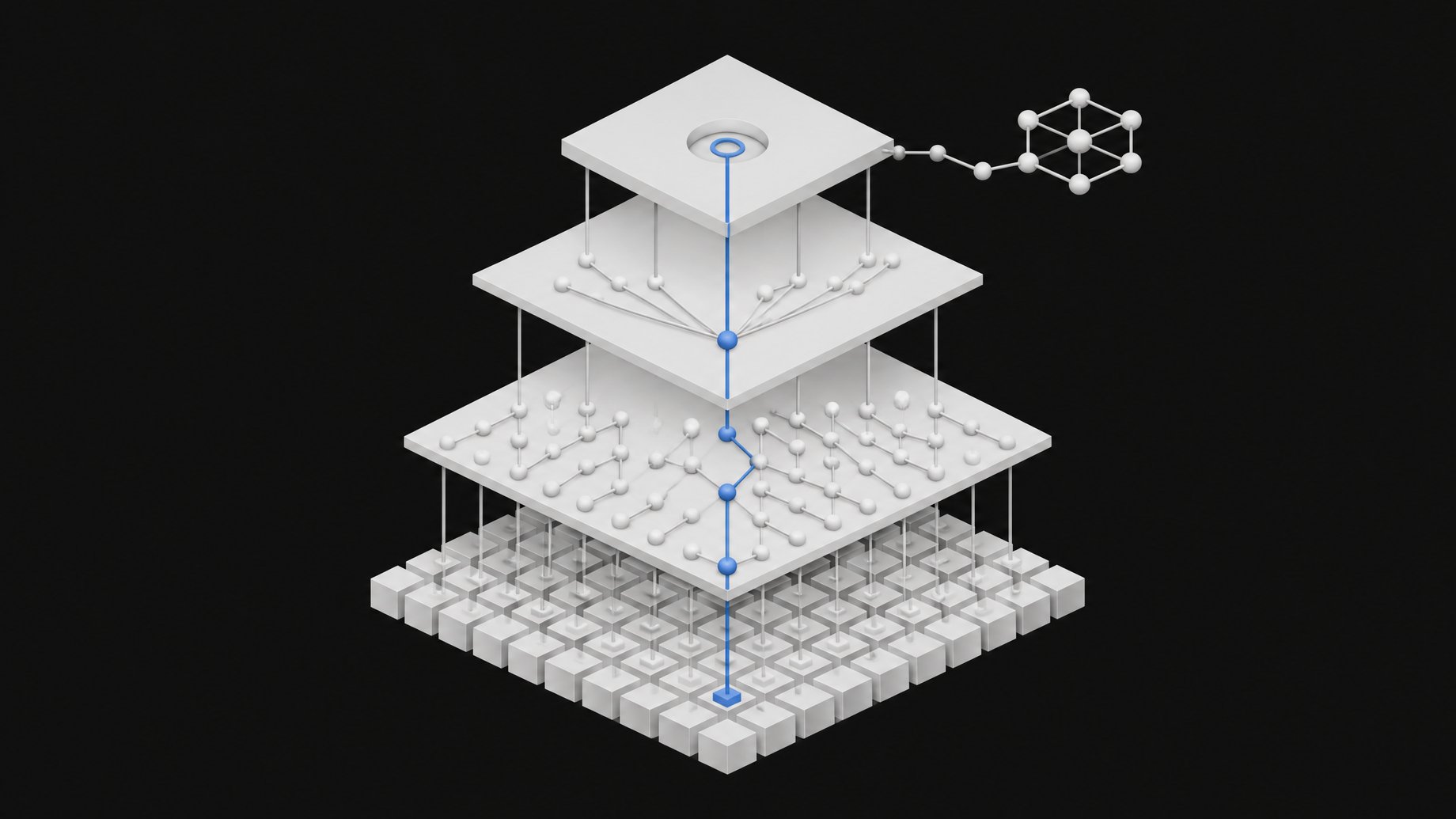
Altman argues that AI has started producing significant new knowledge, and that the approach that worked in math will carry over to biology, materials science and energy. He hopes for a candidate treatment for a major disease within a couple of years, though the FDA process will still take time. For mathematicians and coders, he expects the job to change shape rather than vanish, while admitting that the demand argument that rescued coders may not hold for math.
TL;DR
- Altman says we are entering an era of AI-driven discovery, and that the same method behind the math results should work in biology, materials and energy.
- He hopes a candidate for curing or treating a major disease arrives in the next couple of years, but says that is a candidate, not an approved drug.
- He thinks the post-discovery process probably needs some overhaul, while defending safety testing as something he is grateful for.
- On coding, he says the job's texture changed and that coders are busier than ever, because the world wanted far more software than anyone expected.
- For math, he says it is unclear whether demand will expand the same way, and that mathematicians may shift toward interpreting and explaining machine-found results.
- He admits something real is being lost: the satisfaction of doing hard problems yourself, even though he would still take the cures.
What did Altman actually announce about AI and math?
In the interview, the host refers to announcements from the previous week about math proofs and discoveries. The transcript does not list the specific results, so this article won't either. What Altman offers is the framing. He says the AI is now "doing very difficult things, figuring out very complicated, important new knowledge," and that this marks a move into an era where AI helps humanity discover significant new knowledge.
He also says the effect will mostly be invisible as a product experience. People won't feel like they are using AI. In his words, they will just notice that the world got better and that society kept doing its thing.
Will the same approach work in biology, physics and materials?
Altman says yes. He believes what has worked for math will work for biology (new medicines), materials science, and new sources of energy.
On physics, he gets personal. He says he is most emotionally excited about a major physics discovery and hopes it comes soon. He is careful to add that he doesn't know if it is the most important thing for humanity, only that it is the one he feels sure is coming and expects to be "so cool."
On materials, he describes where things stand now. Until recently, models couldn't go end to end on discovering something important, such as designing a whole chip. Today a company might put a team on a problem and give them Codex or a lot of API credits. As models get smarter, he suggests they might do the discovery themselves, "with enough compute and enough data from the real world," the way they now solve hard math problems.
How soon could an AI-found disease treatment arrive?
Altman's answer is narrower than headlines might suggest. He hopes for a candidate for curing or treating a major disease in the next couple of years. He stresses that a candidate still has to go through testing, and that the FDA process "is going to take a while."
He also says the process after discovery probably needs some overhaul to turn discoveries into cures. Then he balances that. He is glad a process exists, grateful that medicines are generally considered safe and tested, and he doesn't want that part weakened. He allows that there is room for improvement, perhaps more than in most places.
| Stage | What Altman said |
|---|---|
| Discovery | Hopes for a candidate for a major disease within a couple of years |
| Testing and approval | The FDA process will take a while |
| Process reform | Probably needs some overhaul after discovery, but safety testing is valued |
Why did mathematicians react like engineers did to AI coding?
The host noted that some in the math community reacted with something like "we didn't ask for this," similar to how engineers first reacted when AI began writing a lot of code. Altman uses coding as the reference point.
His account of coding goes like this. People once insisted there would be no more jobs for coders. Instead, he says, coders have never been busier, and the texture of the job changed a lot. He says people were so certain 6 or 12 months ago that this was not the case. The lesson he draws is that the world had demand for far more software than anyone thought.
Then he breaks the analogy. It is not clear that the same demand effect applies to math. He suggests the part where humans discover and prove new theorems unaided may be "done or mostly done or ending." In his view, incomprehensible proofs are not that helpful to people on their own.
What happens to the mathematician's job?
Altman sketches a shift that mirrors coding. He says there is already excitement about people who take the machine-generated ideas, work out what is going on, translate them into something people can understand, and write a beautiful proof for them.
He says what it meant to be a mathematician last year won't be what it means next year, in some senses. He expects mathematicians do many other things people will still want done, and that they may do them better. Whether total demand for mathematicians rises or falls, he says plainly, he doesn't know.
He adds a broader point: questions about what people value, and about interpreting and explaining results, are ones where "we'll really want a person to do it."
Is craft being traded for outcomes?
The host framed it as trading the enjoyment of craft, like writing beautiful code, for delivering an end product. Altman mostly agrees, with caveats.
- He wants the trade. He wants cures for diseases "no matter how much someone else would have enjoyed taking decades longer to figure it out themselves," and thinks most people would agree.
- He still sees a real loss. Solving hard problems is, for him, among the most fulfilling parts of his work, and he understands why people grieve.
- He expects people to find craft in new places. He compares it to the shift away from punch cards, when some people said the craft was gone once a compiler could handle the work.
- He feels it personally. He says he hasn't read or looked at a line of code in about a year, and expects that if he ever writes code again it will be like a historical reenactment.
He doesn't claim to have an answer to the grief. He says he is still excited to head into this future and expects people to find new and hopefully better kinds of fulfillment.
Who gets to own AI-made discoveries?
The host asked whether OpenAI would publish a discovery that offered a big commercial advantage. Altman said he would come back to it, and the transcript excerpt does not contain a full answer. What he did say is that some kinds of basic science should belong to the world as a public good. He didn't specify which kinds or what policy would follow, so treat that as a stated principle, not a commitment.
What does this mean for developers building with AI?
The practical reading is modest. Altman's claim is that job shape changes before job demand does. Developers have already lived through this, and his own experience of not looking at code for a year is a sign of how far delegation has gone. The skills he points to as durable are interpretation, explanation, directing the work, and deciding what is worth doing. He also notes that people expected AI to leave them with too little to do, and so far the opposite has happened. He calls this less obvious than it seems on the surface, and says he hopes technology eventually lets people be less busy, though people keep wanting more out of life.
Frequently Asked Questions
Does Altman say AI will cure a disease soon?
No. He says he hopes there will be a candidate for curing or treating a major disease within the next couple of years. That candidate still has to go through testing, and he says the FDA process will take a while.
Does he think mathematicians will lose their jobs?
He doesn't say that. He says the role will change, with more emphasis on understanding machine-found results and explaining them clearly. He openly says he doesn't know whether total demand for mathematicians will go up or down.
Why does he think coders are busier instead of replaced?
His explanation is that the world wanted far more software than anyone predicted. The work changed in texture, but demand grew. He doesn't assume the same dynamic automatically applies to math.
Which scientific discovery is Altman most excited about?
A major physics discovery. He calls it the one he is most emotionally excited about, while noting it may not be the most important for humanity as a whole.
Does Altman regret the loss of craft?
Partly. He says he would take the benefits, such as cures, over the enjoyment of doing the hard work slowly. He also says something real is being lost and understands why people grieve.
How we source, write, and correct our articles. Editorial standards